The nice and the necessary

Congrats to the House Republican Caucus, which finally came up with something like a budget plan, on the very day the House Appropriations Committee passed a budget. Three observations to begin:

— The committee vote was 11-0. Even so, the Republicans were lambasting the budget even before the vote was taken. Are the committee’s Republican members hypocrites, or is it harder to be a simple-minded partisan when the rubber hits the road and you’re in a small room with your Democratic colleagues, than when you’re facing the camera with fellow Republicans?

— The Republicans clearly didn’t take the budget-writing process very seriously, since they waited until Approps had finished its work before offering a single specific cut. Even worse, during the process Republicans frequently objected to cuts proposed by Democrats — again, without suggesting alternatives.

— The Republicans’ budget plan is unworkable on its face. Its major initiative is a call for zero growth, but that’s (a) impossible because some programs are growing, like it or not (Lake Champlain cleanup, for instance), and (b) an abdication of the Legislature’s responsibility to draw up a budget. The responsible course, as Approps chair Mitzi Johnson has pointed out, is to fulfill the legislature’s duty and make the hard choices. Across-the-board slashing is the coward’s way out.

The GOP caucus did identify some cuts they’d like to make — finally. Most of them are short-sighted as well as mean-spirited:

The cuts [House Minority Leader Don] Turner put on the table Monday include eliminating grants to substance abuse recovery centers, scrapping a childcare subsidy for poor mothers, cutting funding for state colleges by 1 percent, and taking $5 million from a fund that would otherwise provide college aid to Vermont students.

Republicans also say spending reductions on items such as the renter rebate, financial assistance for health insurance and the Vermont Women’s Commission are preferable to increasing revenues that would otherwise be needed to fund levels recommended for those programs in Gov. Peter Shumlin’s budget.

Okay, let’s make it harder for addicts to get clean, harder for poor mothers to hold down a job, make higher education less affordable, and make health insurance less accessible. All those cuts would save money in the short term, but cause even more expensive social damage in the long term. The Democrats are trying to walk a fine line, and craft a budget that’s not fiscally irresponsible while still helping to make Vermont a better place to live.

Which brings me to something that Senate Minority Leader Joe Benning said last Friday on The Mark Johnson Show. I don’t have the exact quote, but the gist was, “There are things that are necessary, and things that are ‘nice.’ At a time like this, we cannot do the things that are ‘nice.'”

That sounds good and responsible, but the devil is in the definitions.

Do you think low-income heating assistance is nice or necessary?

How about broadening access to health care? A social obligation, or an extra?

Let’s talk substance abuse treatment, at a time when Vermont is in the throes of an addiction epidemic. Necessary or nice?

The good Senator apparently believes all these things fall into the “nice” category. Many of us don’t agree.

Okay, now let’s look at some items that aren’t on the Republican cut list — and weren’t on the Democrats’ either, for that matter. Necessary or nice — you make the call!

— The state giving $2.5 million to GlobalFoundries, a move that will do nothing to keep the company in the state. On a worldwide corporate scale, that’s nothing. It amounts to a burnt offering meant to propitiate the corporate gods. And it takes a big leap of faith to think it’ll have any effect whatsoever. Necessary?

— The state continuing to let unclaimed bottle deposits go to bottling companies. That’s a $2 million item, I’ve been told. Is that a necessary giveaway? Hell, I wouldn’t even class that one as “nice.” “Noxious” is closer to the mark.

— When ski resorts purchase major equipment, they don’t have to pay sales tax. That’s another $2 million a year. Is that necessary, in any definition of the word?

— For that matter, we’re letting the ski industry make a fortune thanks in large part to bargain-basement leases of public lands. The industry is understandably loath to reopen the leases, but there are ways to get it done. Instead, we’re letting them ride. Necessary? Hell no. Nice? Only for the resort owners.

— Vermont is one of only a handful of states that exempts dietary supplements from the sales tax. Nice or necessary?

In addition, the state gives quite a bit of money in small grants to private and corporate groups. Here’s a few examples:

— The Vermont Technology Alliance gets a $52,250 grant. Why?

— The Vermont Captive Insurance Association gets $50,000 to pay for “promotional assistance.” I realize the industry is a strong positive for Vermont, but the grant is certainly not necessary.

— The Vermont Ski Areas Association gets $28,500. This is the same group that refuses to reopen the leases. Why are we rewarding their intransigence?

That’s just a few I happen to know about. I’m sure there’s lots more. Are grants to industry “necessary” or “nice”? If we’re asking the poor and downtrodden to take major hits to the social safety net, couldn’t we ask our industries to accept at least a haircut?

And if we want to promote business in Vermont, why not take back all these penny-ante grants, put part of the money into a coordinated statewide campaign (like the one proposed by Lt. Gov. Phil Scott’s economic-development crew) and bank the rest?

Also, the state Senate is considering a bill that would make Vermont’s economic development incentives easier to access. Supporters, such as Republican Sen. Kevin Mullin, posit the bill as an investment in Vermont’s future. 

Which is fine. But so is increasing access to higher education, providing child care for working mothers, and helping addicts get clean. Those social programs aren’t just “giveaways,” they are investments in a safer, healthier, more productive Vermont.

Unfortunately, they are investments on behalf of Vermont’s voiceless. LIHEAP recipients and working mothers and addicts and prison inmates can’t hire lobbyists or mount a PR campaign. So we too often fail to invest in them, while we’re more than happy to invest in corporations that might or might not use the money productively — but in either case, it’s definitely in the “nice” category, not the “necessary.”

So you see, Senator Benning, I agree with you. I just have different definitions of “necessary” and “nice.”

So maybe James Ehlers wasn’t such a nut after all.

Not too long ago, most of Vermont’s environmental groups were lining up to give Gov. Shumlin a pat on the back for a strong Inaugural Day commitment to cleaning up Lake Champlain. The notable nonparticipant in the cheerleading was James Ehlers of Lake Champlain International, who saw the plan as inadequate and almost doomed to failure.

Vermont’s waters need more science and less politics. That is what we have taken away from the governor’s inaugural address and the subsequent media events.

… We need and want his plan to succeed. But, sadly, it won’t.

For his trouble, he was cast as the outsider unwilling to accept a pretty good plan that was probably the most that could be hoped for, given current political and fiscal realities. Well, that might have been the nicest way it was put:

To his admirers, Ehlers is a fearless crusader for water quality, willing to speak truth to power — even if that pisses off political officials and establishment environmental groups in the process.

To his detractors, Ehlers is, at best, a bombastic ideologue. Some doubt his motivations, wondering privately if he’s fueled more by ego than environmentalism.

But now, here come the “reasonable” enviros sounding an Ehlers-like alarm.

Shumlin’s [Inaugural] message was celebrated by environmentalists. But two months later, many of the same supporters say the state’s cleanup plan is insufficient to achieve state water quality standards.

“It really doesn’t do much of anything to deal with the several agricultural problems that are present in the most polluted watersheds in Lake Champlain,” said Chris Kilian, vice president and director of the Conservation Law Foundation.

Kilian and others are upset over the Agriculture Agency’s handling of farm-related water quality issues. Ag Secretary Chuck Ross has refused a petition to impose “best practices” on farms near impaired sections of Lake Champlain, and seems more concerned with concocting excuses for inaction than for pushing ahead with an aggressive enforcement plan.

Maybe that’s no surprise, considering that his agency is more of an encourager — and enabler — of the ag industry than an environmental enforcer. As Kilian says, “there is no demonstrated track record that we do share the same goal.”

It’s easy to conclude that the Shumlin administration is ambivalent about Champlain; if not for the threat of the EPA hanging over its head, we’d almost certainly still be in “speak loudly and carry a toothpick” mode. The administration’s goal seems to be devising a plan that will barely be enough to mollify the feds.

Ehlers, of course, was saying so all along. He should be forgiven if he indulges in an ironic chuckle.

Throw your rubbers overboard, there’s no one here but men

Members of the House Republican caucus held a presser this morning, to slam the Democratic majority’s budget and promote their own ideas, whatever the hell they are. I wasn’t at the event, so I’ll have to wait for other media before I can comment on the substance. But I cannot resist commenting on the style. This is a photo of the presser from VPR’s Peter Hirschfeld:

The Men of the VTGOP


Now if that isn’t the very image of Republican diversity, I don’t know what is. Look: they’ve got old white guys — and younger white guys!

C’mon, folks. Couldn’t you get Peg Flory or Heidi Scheuermann or Patti Komline to show up, just for the sake of appearances?

Flynn Center Presents: Serenade for Tiny Violins

A state tax reform measure that would cap itemized deductions at 2.5 times the standard deduction has picked up quite a bit of steam in the Legislature. And right on cue, here comes the Flynn Center’s John Killacky to sound the alarm: limiting itemized deductions “could have dire… consequences for Vermont’s nonprofits.”

tiny violinAwwwwwwwwwwwwww.

Pardon me if my heart doesn’t bleed. What he’s saying is that we have to let our wealthiest keep a whole lot of their money in hopes that they’ll give bits of it to charity. It’s a very inefficient way to encourage philanthropy, especially in a day when our regulation of “nonprofits” is so lax, it’s laughable.

Just one example. The Koch Brothers, and many of their fellow megawealthy conservatives, don’t actually donate much to political parties or candidates. No, they set up networks of nonprofit organizations with “educational” missions and — wowee! — promote their ideology while simultaneously pocketing huge tax savings. Yeah, we’re subsidizing conservative propaganda. Feels good, doesn’t it?

(We’re also subsidizing a fair bit of liberal propaganda. The Vermont Workers’ Center has become a very well-funded organization thanks to dozens of annual gifts from nonprofit foundations, many of them set up by wealthy individuals. Its biggest donor is the Ben & Jerry Foundation. I’m not equating the Vermont Workers’ Center with the Koch Brothers, but they both sail along on a rising tide of tax-deductible contributions.)

Back to Vermont. Killacky cites a survey that shows “67 percent of people interviewed confirmed that a decrease in income tax deductions would cause them to contribute less.”

Perhaps. I’d like to see how the study was conducted and how the questions were worded. But even if it’s legit, it should have little to no impact on Vermont’s debate over itemized deductions.

That’s because the big kahuna is the federal deduction. A change in Vermont law would have no effect on that far larger tax benefit. There would still be abundant incentive to contribute.

Killacky also fails to mention that Vermont’s current tax rules for the wealthy are among the most generous in the nation. If we put a cap on deductions, we’d no longer be an outlier in our generosity to our wealthiest citizens, but we’d still be plenty generous.

The scare tactics are entirely out of proportion to the real situation. I can understand why Killacky feels obligated to scurry to the defense of his fat-cat donors, but his arguments are unconvincing.

Teacher strike ban in line for a rework — at least

Among all the contentious issues facing this year’s legislature, one has made a surprising, and enduring, appearance near the top of the list. Everyone seems to have suddenly decided that teacher strikes are a scourge of our system, and must be put to an end.

This, in spite of the fact that teacher strikes are only a little bit more common than hen’s teeth in Vermont. We would seem to have much bigger fish to fry, but apparently not.

Last week, the House Education Committee approved a bill that appeared even-handed at first glance: H.76 would ban teacher strikes, and would also bar school boards from unilaterally imposing contract terms. The bill sped through the committee without so much as a single amendment, passing on an 8-3 vote.

(The four Democrats who voted “yes” along with all four Republicans, for those keeping score, were Sarah Buxton, Kevin “Coach” Christie, Emily Long, and Ann Manwaring. All four hail from districts on or near the Connecticut River, if that means anything.)

The bill is now pending before the House Committee on General, Housing and Military Affairs, which is responsible for labor-related legislation. And members of that committee are not at all happy with H.76 in its current form. They believe the bill is weighted heavily toward the school boards and against the teachers, and they want significant changes.

H.76 was a subject of conversation at Saturday’s Democratic State Committee meeting. Speaker Shap Smith, as I reported previously, said the bill “will not pass the House in its present form.” And Rep. Tom Stevens of Waterbury, a member of the General Etc. Committee, said H.76 is “not a labor-friendly bill,” and that it “has a million problems.”

I caught up with Rep. Stevens afterward, and asked him what’s wrong with H.76.

This bill says that we will get rid of the right to strike and we will get rid of the right to impose a contract by the school boards, and we will replace it with this somewhat drawn-out process, and it could take eighteen months rather than what we have now.

And there’s the rub. Eighteen months is as good as forever in contract talks. Teachers couldn’t be saddled with an imposed contract, but they might have to work for a year or more under a continuation of their old deal.

…if the teachers can’t strike, they go back to work and they don’t get a pay increase, they don’t get a step increase, their health benefits will remain the same. … So they’re taking a very serious financial hit, and yet the school boards are not penalized equally.

As originally introduced, the bill created an even-handedly draconian process for resolving impasses: mandatory binding arbitration. But that language was struck somewhere along the way, and replaced with a potentially lengthy process of fact-finding and mediation.

The bill’s path through the Education Committee, according to Stevens, was awfully quick: “They only took three hours of testimony, and they passed the bill as it stands.” And it moved at warp speed despite the opposition of committee chair David Sharpe, who was one of three “no” votes on the bill. You’d think he could have done more about this if he cared. To be fair, he’s had an awful lot on his plate this session; he might have let this go through to avoid a fight, secure in the knowledge that it could be amended later on.

The General Etc. Committee had already taken up an earlier version of H.76, but now they’ve taken it back. Stevens:

…we had a reintroduction to the bill because it was way different. We took testimony Friday, we’ll probably take more testimony Tuesday, and then we’ll try to figure out from there what we’re going to do. We have several options, but I would say our committee is not disposed to support it as written.

The committee has several options, but not much time; it needs to act by the middle of this week. It could refuse to take up the bill; it could send it through without recommendation, it could vote the bill down — but that wouldn’t necessarily kill the bill, or at least the concept.

It’s possible we could not have a recommendation, and that’s where we would work with leadership to decide what to do with the bill, because we’re pretty certain that if this particular bill doesn’t come out, that this bill will become an amendment on the floor from another party, and then it will be discussed anyway. So spiking it isn’t really a viable option.

If Speaker Smith’s words to the DSC are taken at face value, the Education Committee’s version of H.76 will not pass the House. It could pass in amended form. That seems the most likely outcome; if the original concept was restored — no strikes, no imposition, binding arbitration — then the bill would most likely win House approval. The school boards don’t like that; as one lawmaker put it, “they’d rather have Ebola than binding arbitration.”

But if the bill sets up a dead end for the teachers and a long and winding road for school boards, it would fundamentally alter the power dynamic between unions and boards. And for what? Teacher strikes are rare in Vermont, and almost always brief. Why upset the applecart — and alienate a core Democratic constituency — to fix such a minor problem?

Thankfully, according to Smith and Stevens, it isn’t likely to come to that.

Shap addresses the faithful

If the Democratic State Committee meeting was short of drama on the wind energy front, there were still a couple of interesting developments to report. I’lll write about one of them — some news about the future of H.76, the bill to ban teacher strikes — in my next post.

My subject this time: House Speaker Shap Smith addressed the gathering. That’s more noteworthy than it seems; the top elected Democrats rarely attend the DSC meetings, especially when it’s not a campaign year.

But Smith had a prominent place on the agenda, and he delivered an effective speech with two purposes: to buck up the party faithful, and to present himself as a person and leader.

Which immediately raises the question, yet again: is he running for Governor?

My own view is that he is not — yet. But he is ticking off the items on the Running For Governor To-Do List, and this was one more check box filled in.

In style, he was reasoned, earnest, articulate, and straightforward. Well, he plausibly appeared so, which is the most you can say for sure about a politician. In substance, he pointed out areas of significant accomplishment for the Democratic regime — things “not reported very much in the media.” They include:

— An improving economy with a low unemployment rate and (finally) some growth in wages.

— On health care, Vermont now has the second-lowest uninsured rate in the country at 3.7%. It was 7% before the Obama/Shumlin reforms took effect. The national rate is still 12%. “We are close to universal coverage in Vermont,” he said. “That’s a good story, and it gets lost in the problems with Vermont Health Connect.”

— Vermont has one of the healthiest populations in the country.

— Our public education system is in the top three nationally. “In the conversation around property tax, we lose sight of the fact that that money is spent for the next generation, and spent successfully.”

— The state has kept its promise to fully fund public-sector pensions and, in fact, “we’re making up for the sins of the past.”

— The Legislature has “kept our commitments” on a range of other issues, in spite of intense budget pressures.

The Speaker then moved to personal narrative, recalling that his parents moved to Vermont in 1970 as part of the “Back to the land” movement, in search of “the promise of Vermont.” As an adult he himself, after working in New York City, moved back to Vermont in search of that same promise. He concluded by saying “I’m proud to be in the House; I’m proud to be a Democrat; most of all, I’m proud to be a Vermonter.”

If he’s testing out a future stump speech, he’s definitely on the right track.

He took some unfriendly questions, especially on the administration’s fractious relationship (in both tone and substance) with labor. The two areas of concern were Gov. Shumlin’s desire to reopen the state workers’ contract, and legislation aimed at barring teacher strikes, usually accompanied by blasts of anti-teacher and anti-union language. One questioner complained about the “barrage of abuse from my leaders” toward teachers and local school boards.

On the former, Smith stood his ground, saying that given the budget situation, “we have to make some adjustments. We’re having ongoing conversations with the VSEA, trying to work things out, but we aren’t going to be able to make everybody happy.”

On the latter, he offered some news on H.76, the bill that would ban teacher strikes and bar the imposition of contract terms by school boards. The bill is seen by many as being much harder on the unions than on the boards. Smith said that “it will not pass the House in its present form.”

All in all, an impressive performance. I haven’t changed my view; it’s too soon to say whether he will run for Governor in 2016 or ever. Heck, we’re less than a year removed from the guy actively considering an exit from the Legislature. But is he positioning himself as a credible candidate for the corner office?

He sure is.

The wind fizzle

There were some rumblings of possible excitement at today’s Democratic State Committee meeting. Word was, the anti-wind energy crowd would push the Committee to adopt a resolution opposing ridgeline wind. And, to add impetus to the push, they might attend the meeting in force.

Well, not so much. There was a resolution on the agenda, courtesy of the Caledonia County Democratic Committee. But attendance was moderate. No busloads from the shadow of Grandpa’s Knob. There was brief and polite discussion, after which the resolution was defeated on a 26-7 vote. Arguments against the resolution mostly cited procedural grounds, arguing that the State Committee is a party-organizing operation, not a place for policy debates and decisions.

And that was it. No confrontations, no immediate blowback; the meeting went on without incident. The after-meeting chatter was no more or less heated than usual.

The resolution was crafted to downplay its anti-wind origins, but its clear intent was to put the Democratic Party on record opposing ridgeline wind.

The Caledonia County Democratic Committee proposes the following resolution that the State Democratic Committee call on the Vermont Legislature and Governor Shumlin to: 

Reassess Vermont’s energy policy to include appropriate changes to Statute 248 to account for high-elevation industrial-scale power projects that are attentive and accountable on issues of environmental destruction, wildlife habitat and human health impacts.

Propose a transparent, sustainable energy policy that preserves the irreplaceable ecosystems of Vermont’s highest elevations.

Okay, well. Aside from the fact that the second paragraph isn’t really a coherent sentence, here’s the problem. The resolution’s purpose is to effectively ban ridgeline wind under the guise of permitting reform. The language is highly inflammatory, written from an extreme anti-wind viewpoint and accepting the anti-wind arguments as fact.

And there’s the rub. If you believe that wind turbines cause unique harm to human health, wildlife and ecosystems and that they somehow cause irreparable and permanent damage to mountaintops, then ridgeline wind is unacceptable.

The rest of us, of course, don’t agree. We see wind power as part of the solution to climate change, and we see the preponderance of scientific evidence as supporting wind energy. Anti-wind people, like anti-vaxxers, are so convinced of their rightness that they unquestioningly accept any evidence that seems to support them (no matter how thin, anecdotal, or unscientific), and instantly dismiss any evidence that undercuts their views.

That’s the faulty foundation of this resolution. I am relieved that it was quickly sent packing by the DSC, even if it used the convenient dodge of a process argument to do so. The Committee, I’m sure, was even more relieved to avoid a public confrontation with one of the party’s extreme elements.

Is this the end of Rico?

Well, if this isn’t the mother of all Friday newsdumps.

After 18 months of headaches caused by Vermont Health Connect, Gov. Peter Shumlin announced Friday that he’s prepared to replace the online health insurance marketplace if it fails to meet two new deadlines.

(Note: According to VTDigger, Shumlin first made his announcement on WDEV’s Mark Johnson Show. Credit where it’s due.)

Yeezus. I make a little day trip to New Hampshire, and this is what happens? I may never leave Vermont again.

“This is not an attractive option,” Shumlin’s chief of health care reform, Lawrence Miller, said at the press conference.

Miller added that “bubonic plague can ruin your day, and zombies are bad news.”

In the past I have occasionally been guilty of hyperbole, so it’s understandable if you take this with a grain of salt, but…

This doesn't end well.

This doesn’t end well.

If Vermont Health Connect fails, it is the end of Peter Shumlin’s political career.

It wouldn’t be the last act; he’d still remain governor for another year and a half. But the abandonment of VHC would be a death blow to whatever’s left of his reputation for managerial competence. And trustworthiness. He will have a simple, stark choice: Serve out his term as best he can, step aside with grace and dignity (and hopefully a big show of unity with a consensus candidate for the Democratic nomination)… or go down in a metaphorical burst of tommygun fire.

Mind, all this is contingent on the failure of VHC, which is far from a sure thing. But given its track record (and the Governor’s), today’s announcement has to send shivers down the spines of everyone who’s invested political capital in the Shumlin Growth Fund.

The song goes like this: assurances of success; bumps in the road; conditional assurances of success; postponements; failures; promises to learn lessons and do better; new plans with later deadlines; fresh assurances; lather, rinse, repeat.

We have just gone from “assurances of success” to “conditional assurances.”

The fallback plan, should VHC again fail to meet functionality targets, is a hybrid marketplace: federally supported but state-regulated. It’s not a terrible Plan B, but it would put the lie to every assurance Governor Shumlin has made about Vermont Health Connect since its launch. It would hand the Republicans a huge quantity of ammunition, and it would permanently sink Shumlin’s managerial reputation.

The Governor’s new timeline:

Shumlin said he would only deploy the contingency plan if Vermont Health Connect is unable to automatically process changes in account information by May or if it’s unable to smoothly reenroll users by October. Even then, the state would not adopt the new system until October 2016, in time for the 2017 open-enrollment period.

Oh great. So if VHC isn’t working by October, then we’ll be activating Plan B right in the middle of the next gubernatorial campaign.

And what if anything — at all — goes wrong? It drags on until after the election. If that happens, it may not matter who the Democrats nominate.

If all that happens, Peter Shumlin will not only go down in history as a failure. He’ll also be the guy who squandered a king’s ransom in political capital for his Democratic Party.

The long and winding (and circular) road

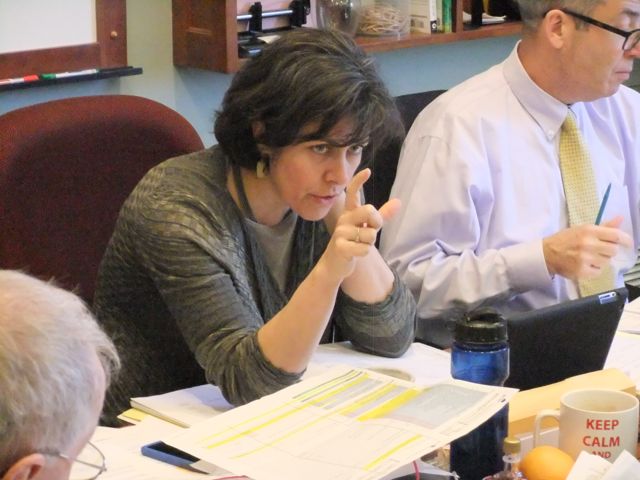
It’s been a very long week at the House Appropriations Committee, which has been trying to close the remaining $18 million or so in the budget gap for Fiscal Year 2016. In today’s session, members tried everything they could think of, and then some, to balance the budget while avoiding some of the “big uglies” — the proposed cuts that nobody wanted to make.

Shall I cut to the chase? After advancing through the five stages of grief, they ended up accepting pretty much the entire list, including $6 million from LIHEAP, $2 million from a Department of Children and Families weatherization program, a $1.6 million hit to Reach Up, a million-dollar cut for the Vermont Veterans Home, a reduction in state funds for Vermont PBS, and $817,000 from Vermont Interactive Television.

This list was dubbed a “wish list” by the committee — not because they wanted to cut the items, but precisely the opposite: their wish was to avoid having to cut these items that were put on the chopping block in Gov. Shumlin’s budget proposal.

There were a couple of adjustments. As reported in my previous post, the committee adopted Rep. Maty Hooper’s plan to phase out the state prison at Windsor and devote some of the savings to re-entry programs aimed at reducing the inmate population and avoiding the export of more inmates to out-of-state prisons. And a $500,000 cut to the judiciary system was technically made a one-time cut, with the understanding that the system will reform itself in the coming year to generate equivalent savings in future years.

All the “wish list” cuts adopted by Appropriations added up to a little over $14 million in savings, mainly from the Agency of Human Services. Which is almost inevitable; the committee was looking for cuts only in General Fund programs, which leaves out a significant share of state spending. Most General Fund spending is in Human Services, so that’s where the cuts had to come from.

Mind you, nothing was finally decided today. Some committee members still hope to restore some of the cuts, but in order to do so, they’ll have to find equivalent cuts elsewhere. (Appropriations has no authority to increase revenues; it only oversees the spending of state funds.) As they put it, “buy back” some cuts. That seems unlikely, however; at day’s end, the committee was still $1.93 million short of a balanced budget. So in order to restore any of today’s cuts, they’d have to find more than $2 million in savings elsewhere.

Appropriations Chair Mitzi Johnson looking for cuts of any size, large or small.

Appropriations Chair Mitzi Johnson looking for cuts of any size, large or small.

And they tried really hard today. Most of the committee’s Democratic majority did not want to impose Shumlin’s cuts. Committee Chair Mitzi Johnson repeatedly invited members to come up with their own substitutes. And they all looked high and low, with almost no success.

At one point, Johnson asked members to split up into “unlike pairs” to discuss the “wish list” and other possible cuts. That session lasted almost an hour, and ended with several members making cellphone calls in pursuit of information on possible savings. Items of as little as a few thousand dollars were offered.

In the end, they wound up back at the “wish list.” In the absence of any alternatives, and with guidance from House leadership that only a certain amount of new revenue would be available, the Appropriations Committee bit the bullet and tentatively approved all the cuts on the “wish list.” It also approved a couple million in additional savings that weren’t on the “wish list.”

Watching all this made me appreciate how hard it is to find savings in the budget. For all the conservatives’ cries of waste and abuse and lavish spending, Republican members had no more success than Democrats in finding fat to trim. In the end, committee members of all stripes were reluctantly united behind a budget proposal that will bring painful cuts to many areas of government. There were no easy calls.

This is an early step in the process. The budget has to get through the full House, where trouble may loom in the form of a Republican/liberal coalition that opposes the budget for very different reasons. If it gets through the House, it’ll have to make its way through the Senate’s often weird and unpredictable gauntlet. But the Appropriations Committee tried and tried and tried; and in the end, it couldn’t find more palatable alternatives to Gov. Shumlin’s budget proposal.

Mary Hooper pulls some fat from the budgetary fire

Previously I brought you bitter tidings of a budget cut that would mean sending more Vermont inmates to for-profit, out-of-state prisons.

Well, my pessimism was premature. Today, Rep. Mary Hooper (D-Breezy Acres) introduced a plan to phase in the closure of the Southeast State Correctional Facility, and devote some of the projected savings to new re-entry programs designed to lower the inmate population. The plan appeared sound and convincing to the House Appropriations Committee. If it all works as planned, Vermont’s inmate census will be low enough when the prison closes, that no out-of-state transfers will be required. (Corrections Commissioner Andy Pallito had estimated that 100 more inmates would have to be exported to the tender mercies of the Corrections Corporation of America.)

And bonus: the released inmates will be better prepared to make a successful re-entry into civilian life. That makes them less likely to re-offend.

Her proposal was accepted by the Appropriations Committee and folded into its budget plan. I don’t know all the details of Hooper’s proposal; I didn’t have a chance to speak with her today. But it’s good news. It turns a negative into a positive, and still allows the state to bank $1.7 million in savings from the prison closure.

More on today’s hot and heavy Appropriations action coming soon. Warning: not a lot of good news.