The latest round of campaign finance reports reveal that the race for governor is very real and very competitive. It’s more evidence to support those recent opinion polls showing Gov. Phil Scott and Democratic challenger Amanda Janoo are in a tight race.
What’s truly remarkable is that Janoo is now in a virtual tie with Scott in cash on hand. Reminder that she began September at a huge disadvantage: Scott $307,000, Janoo $59,000. Now Scott is reduced to a statistically meaningless edge: $296,000 to $280,000.
Janoo outraised Scott in September, $291,000 to $223,000. She also spent far less, $70,000 to Scott’s $234,000. (As previously reported in this space, Scott spent heavily on TV and digital ads in September, with five ad buys totaling more than $150,000.)
Those figures are pocket change by normal gubernatorial standards. But they mean that Scott can’t simply spend Janoo into oblivion. Even if he turns on the fundraising afterburners, time’s running short to spend effectively — and early voting is already underway.
We made a quick trip to Michigan last weekend and were suddenly immersed in American politics, post-Citizens United style. Our main exposure came in the form of campaign ads on bar and restaurant TV screens with the sound muted.
Lots and lots and LOTS of campaign ads. Every commercial break contained at least two political commercials about Michigan’s races for governor and U.S. Senate. The screenshot above is from a conservative attack ad against Democratic senatorial candidate Abdul El-Sayed. These ads blow ALL the dog whistles about El-Sayed’s ethnicity. One ad tries hard to tie him to progressive influencer and Fellow Brown Person Hasan Piker, who’s become the conservative movement’s bête noirein 2026.
It’s exhausting, even with no sound to go with the images. (The only TV we watched with sound was PBS’ Masterpiece Theatre, shout out Marble Hall Murders.) And Michigan voters will have to endure another five and a half weeks of this saturation bombardment. It’ll only get worse as the election draws closer, and even worse than that if the polls continue to show El-Sayed leading the very bland Republican candidate Mike Rogers. The conservatives are getting desperate.
But hey, this isn’t a blog about Michigan politics, so let’s get to the point. Which is, I’d forgotten what it’s like to be immersed in a high-profile election campaign. For the most part, it makes you want to bathe in Purell for a day or six. But there is one undeniable advantage to the nonstop barrage of political advertising: It reminds everyone that there is, in fact, an election with real consequences. Which is not the message you get from Vermont media.
(The above screenshot was taken on the evening of September 9. As of this writing, on the afternoon of September 10, you can still see this on the Bennington County Republicans’ homepage. Which kind of sums up the tactical and strategic genius of the VTGOP’s county party committees.)
This week, I’ve spent waaaay too much time digging through campaign finance reports from September 1. I’d already done the requisite review of statewide candidates*, and then I started looking around at political committee reports, a jungle where few choose to enter.
*Not sure if it’s really “requisite” anymore since our major media completely ignored the filings. Sigh.
And boy, did I ever hit a rich vein of weird.
What I found, in brief, is that the Vermont Republican Party continues to struggle financially, but some of its county committees are raking in the cash while others have little to nothing. The well-funded committees are in solidly Republican or uncompetitive Democratic counties, so the money is kind of pointless. And the fortunate committees are spending their loot in very different ways, many of which seem irrelevant to the presumed goal of winning elections.
I’m telling you, none of it makes sense. Some of it might trigger legal jeopardy if there was any oversight or enforcement regimen for campaign finance. Which there is NOT, at all.
Here’s a little soupçon to whet your appetite.
The Orleans County Republican Committee spent $15,000 on travel expenses for Lt. Gov. John Rodgers.
The good news, if you favor the Democrats, is that many of their candidates have been able to raise impressive amounts of money in advance of next week’s primary.
The bad news: They’ve spent a lot of their cash in ways that are only tangentially related to advancing the cause in November. Here’s hoping there’s more money where all of that came from.
I mean, look: The two top Democratic candidates for lieutenant governor, Molly Gray and Ryan McLaren, have raised a combined total of close to $750,000. That should be more than enough to fuel an entire campaign for the ol’ bucket of warm piss, but Gray and Mclaren are going to spend most of it by next Tuesday. Gray’s reported spending totaled $248,000 as of August 1, while McLaren had spent $293,000 by then — plus another $52,000 on TV ads reported separately after he’d filed his 8/1 report. Add it all up, that’s $593,000 spent, invested, squandered, take your pick, on the Democratic nomination for an essentially ceremonial office.
The two gubernatorial candidates, meanwhile, have raised $742,000 and spent $632,000. (Amanda Janoo: raised $303,000 and spent $255,000; Aly Richards raised $439,000 and spent $347,000.) The winner will have exceeded expectations for fundraising, but August 12 will find her back at the bottom of the mountain having to push the giant boulder up to the top. As of August 1, Richards had $92,000 in the bank but has spent another $30,000 on TV ads since then, which drops her account balance down to $62,000. Janoo had $46,000 in the bank on August 1 and has since spent $2,000 more on Facebook ads, so her known balance is at $44,000.
Gov. Phil Scott, meanwhile, has been coasting along. He entered the campaign with $240,000 left over from 2024. He’s spent virtually nothing and raised a modest amount, bringing his bank balance up to $309,000. In other words, the Democratic winner will have to do some heavy lifting just to catch up with the governor. And if he feels threatened at all, he’ll kick it in high gear and his base will respond. Two years ago Howard Dean estimated that a challenge to Scott would cost a minimum of $2 million; that seems like a reasonable amount. The Democratic nominee will have less than three months to build a warchest and mount a statewide challenge against a popular governor. Calling it “a tall order” seems like an understatement.
This is a screenshot from state Sen. Steven Heffernan’s latest campaign finance report. You may recognize the names; the first is actually Amy Tarrant of the Richard Tarrant Cinematic Universe; the other three are Burlington-area developer/real estate types.
The Addison County Republican, allegedly a champion of rural Vermont, is getting virtually all of his money from greater Burlington. In the month of July, Heffernan received a mere four donations of $100 or less and 54 donations of more than $100. NONE of the large gifts were from his own district. All but a handful came from Chittenden County. Grassroots? More like Astroturf.
Now I ask you, do the Barons of Burlington give a rat’s ass about the problems of rural Vermont? Of course they don’t. All they want is a reliable anti-tax vote in the state Senate. (They also have no qualms about supporting an extremist who holds deeply prejudiced views about gender-nonconforming folk.)
After the July 1 campaign finance deadline, I noted a distinct lack of activity from the Barons. In July 2024 they’d flooded the zone with four-figure gifts to the campaigns of several Republican Senate candidates plus John Rodgers, who went on to win the lieutenant governorship. So I wondered if this year’s August 1 reports would reveal another round of early-summer Baronial largesse.
The answer is yes, but in a much more limited and less impactful way.
This is a screenshot of an ad that’s been circulating on behalf of Democratic gubernatorial candidate Aly Richards. But it didn’t come from her campaign; it was paid for by the (apparently) newborn Independent Expenditure PAC known as “Time for a Change.”
IE-PACs, for those just tuning in, can spend on behalf of favored candidates but can’t coordinate their activities with anyone’s campaign. And this one has a bucket of money to spend by Vermont standards— although it’s getting in gear awfully late in the game.
As of the July 1 reporting deadline, TFAC was in the Secretary of State’s campaign finance system but had yet to raise or spend a single dime. Its August 1 report is a different kettle of fish altogether. TFAC reported raising $230,025 in a single month. The bulk of the total, a flat $200,000, was donated by businesses, not individuals. What’s more, $225,000 came from out of state. Only $5,025 was donated to TFAC by Vermonters. Are anyone else’s hackles raised a little bit, or is it just me?
In its August 1 campaign finance filing, TFAC only reported spending $8,500 (to D.C.-based Liftoff Campaigns LLC for “Media – Consulting”), but that doesn’t tell the story. It has also filed FOUR separate Mass Media filings in the last three days, none of which are reflected in its August 1 report. TFAC sent $50,000 to D.C.-based Middle Seat for online ad buys; another $60,000 to Liftoff Campaigns for “text messaging”; $35,000 to Liftoff for “Online Advertising”; and another $56,500 to Liftoff for more “online advertising.” That’s a total spend of $210,000 in a matter of days!
While us campaign finance sickos breathlessly await the August 1 filing deadline, we can occupy a bit of our time by tracking the mass media buys reported since July 1. There are quite a few, in fact.
Explainer for those who need it: Whenever a candidate spends $500 or more on mass media (radio, TV, digital ads, printing, mailing, etc.), they must report it to the Secretary of State’s office within a couple of days, a rule often honored more in the breach than the observance.
Can you guess where the most money was spent on mass media this month? That’s right, it’s the Democratic race for lieutenant governor by a country mile. Ryan Mclaren, last seen trailing badly in the polls, poured $125,100 into TV ad buys conducted by Georgia-based Canal Partners Media. Apparent front-runner Molly Gray has spent $112,918 on TV ad buys done by Virginia-based Screen Strategies Media and another $26,537 on postcard mailings by Berlin Rosen LLC of New York for a grand total of $168,135.
Couldn’t help noticing as I scanned all these reports that virtually all statewide candidates and some legislative hopefuls are contracting their printing and media buys out of state. I guess the big firms know what they’re doing, but home cooking seems to be a thing of the past.
Anyway, McLaren and Gray have combined to spend almost $300,000 on a non-gubernatorial primary election. That’s got to be an all-time record. If it’s not, make sure to let me know in the Comments.
Whatever, it’s a fuck-ton of money for a bucket of warm piss, and a further indication that incumbent Republican John Rodgers is extremely vulnerable; both Democrats must feel like the primary is their biggest hurdle.
I guess Andrea Murray wasn’t discouraged by a state Senate campaign that, in the Republican wave year of 2024, saw her finish a distant fourth in the deep-blue Windsor district — and blow a big hole in her family’s bank account because she lavishly self-funded her own campaign. Much of her money was spent on two different out-of-state consultancies that shamelessly ripped her off did her no favors at all. Her investment paid the tiniest of dividends; she finished less than two percentage points ahead of two Republicans who barely campaigned at all. (The above screenshot was taken from a two-minute campaign video lavishly produced by one of those consultancies.)
Also, she regularly and wildly flouted campaign finance reporting laws, a practice she has carried forward into 2026. As noted previously, she missed the March 15 and July 1 deadlines despite spending at least some money on Vermont Daily Chronicle ads, a wasteful practice since the vast majority of VDC readers live outside Windsor County. One could argue that the ads could connect her to the wider conservative donor class, except she has yet to attract more than a handful of donors outside her own pocket.
Well, folks, on July 26 she filed both of this year’s reports at once plus the report that was due on July 1 of last year. And there are only five days to go before the next deadline. Great. We’ll probably see her August 1 report sometime in October. Too bad there are no penalties for late filing, thanks to the Legislature’s self-dealing on campaign finance issues.
Anyway, a look at her latest reports shows that she’s not doing anything different from two years ago. Still running in a district that hasn’t elected a Republican to the state Senate since 1994, still pouring her own money into a certain-to-lose campaign, still attracting little money from the rest of the human race.
I’ve done a fairly close reading of the July 1 campaign finance reports for state Senate candidates (So You Don’t Have To), and one thing jumped right out at me: Republican candidates are be doing little or nothing.
Including at least a couple of incumbents. It’s remarkable.
A couple of caveats apply. Few of these people face primary competition, so it’s early. And in 2024, the Barons of Burlington swarmed in after the 4th of July and dumped four-figure checks into the campaign accounts of several Republican Senate candidates plus LG hopeful John Rodgers. They could still do the same this year. We eagerly await the August 1 campaign finance deadline.
But there’s one fact, previously noted in this space, that makes me think it might not happen. In the spring of 2024, Gov. Phil Scott’s campaign blew a bunch of money on polling. A curious expenditure, given that he had clear sailing in his bid for another term. From the course of events it’s easy to infer that the polling focused on other races, specifically LG and the Senate. Because it was after the polling that (a) the Barons activated their checkbooks and (b) Scott himself got off his ass and actively campaigned for those key candidates.
Well, this spring the Scott campaign did virtually nothing. It spent a mere $7,000 between March 15 and July 1, and none of it was for polling. I can’t say for sure that Scott and the Republicans have given up on extending their legislative gains of 2024, but it’s kinda-sorta starting to look that way. They may be content with preventing a return of Democratic supermajorities. Which should be achievable; I think it’ll be a long time before the Dems win 20 seats in the Senate again.
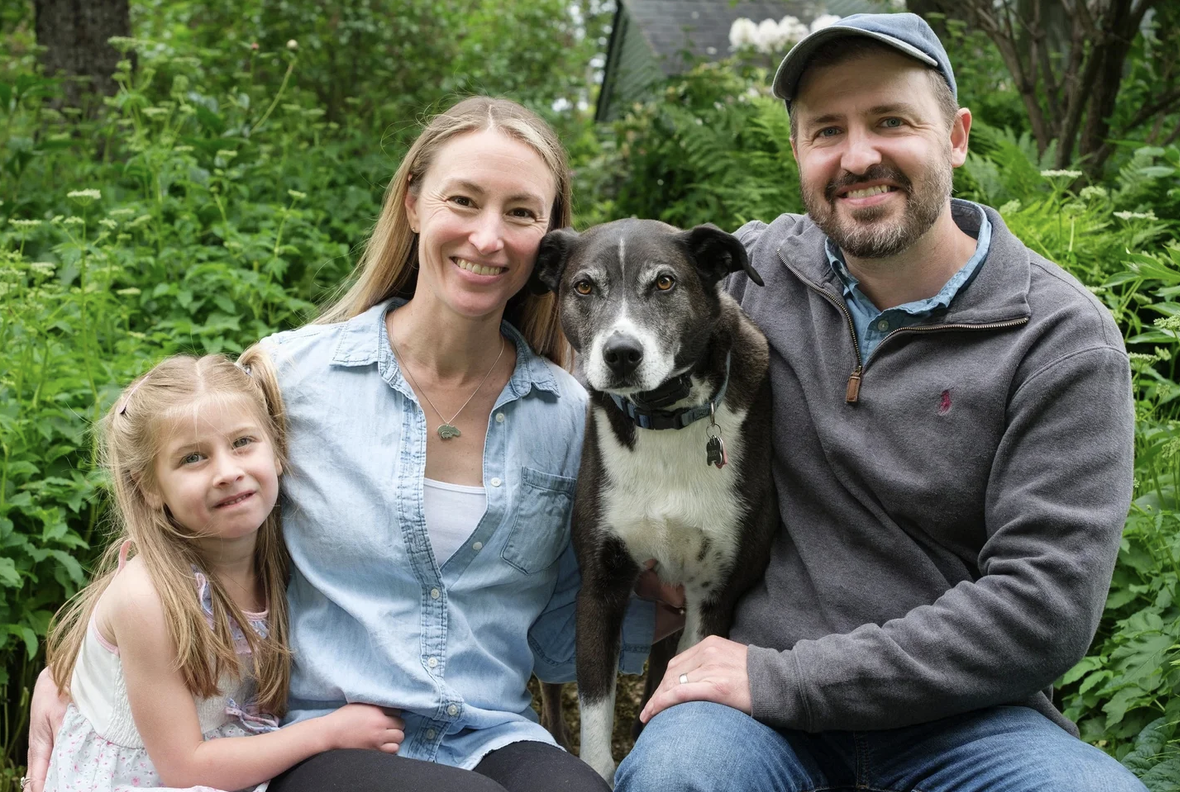
This, friends and neighbors, is Ben Brickner, Democratic candidate for state Senate in the Windsor district.
Practically oozes Vermontitude, doesn’t it? Appropriately faded ballcap, fleece quarter-zip, jeans, rurally appropriate dog, outdoorsy backdrop. Touch of gray in the close-cropped beard. His campaign website leans heavily on his service as chair of the Pomfret selectboard. Cool.
But looky here. This is also Ben Brickner.
Tempting to offer a remark about the Hair Club for Men, but that would be mean. So let’s get to the heart of the matter. The bespoke-suited Ben Brickner is a partner in the New York City law firm Person Ferdinand who specializes in “corporate finance, securities, and capital markets transactions,” according to the Pierson website. Pierson is headquartered in NYC but has 18 offices around the United States plus an outpost in London. Kind of a big deal.
You won’t see a hint of that in any of his campaign materials, nor in a flattering story about his candidacy in The Mountain Times.
What’s more, Brickner’s July 1 campaign finance filing is a real eye-opener. He has raised a stunning $65,000 so far, including 18 maximum individual contributions of $1,940 plus another seven gifts of $1,000 or more.
That would have been virtually unprecedented for any state Senate race until 2024, when the Barons of Burlington threw their weight behind several Republican candidates for Senate and, well, Stewart Ledbetter. But I doubt there’s ever been any candidate for any office in Windsor County who’s raised anywhere near $65,000.
If you live in the Windsor district, you should expect a flood of mailings from Team Ben before the August primary. He spent only $12,000 as of July 1, so he’s got more than $50,000 burning a hole in his pocket.