Category Archives: Housing

Top Lawmakers Desperately Beg Other People to Let Them off the Hook

Turns out, it was too much to expect that this bunch of uninterested dudes would bring themselves to make a tough call. Instead, they kicked the can down the road and begged other parties to, in the words of Our Lord and Savior, “let this chalice pass from me.”

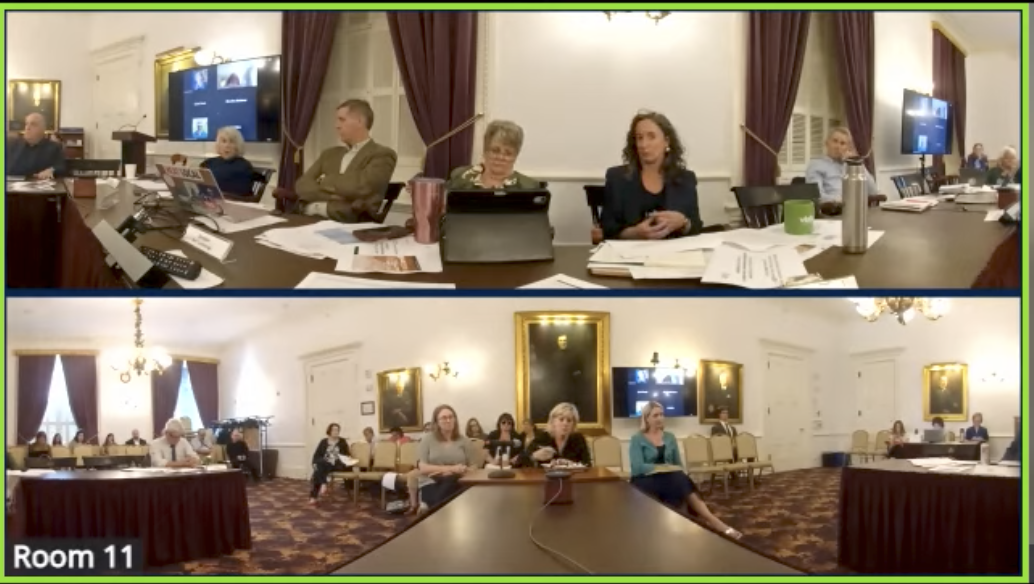
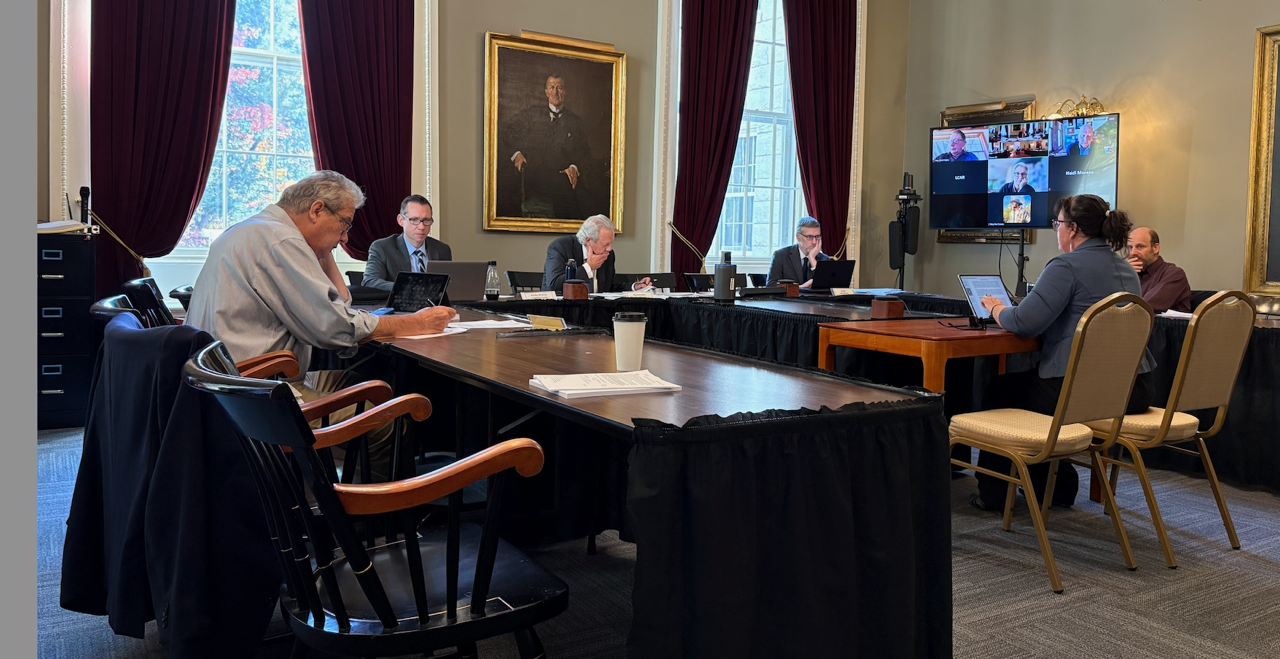
The occasion was a Thursday meeting of the Legislative Committee on Administrative Rules, the House-Senate panel tasked with reviewing and approving how the executive branch implements legislation. The top agenda item was Act 143, the law that set in process a reform of Vermont’s emergency housing program — more specifically, how the Scott administration interpreted the law and put it into practice.

And in the end, LCAR punted. Committee chair Rep. Trevor Squirrell said no decision would be made for two weeks, and practically begged advocacy groups and administration officials to get together in the meantime and work out their differences. In other words, the panel doesn’t want to reject the Act 143 rules, but can’t possibly ignore all the objections to the rules and the chaos they have caused.

This, after the chairs of the relevant policy committees made clear that in most respects, the rules failed to comport with legislative intent. (Squirrell said that LCAR would “rely heavily on” the chairs’ views, and then proceeded to treat them like an inconvenient fly buzzing around his head.) This, after advocate after advocate testified — again — that the rules have been a disaster and ought to be rejected.

The lesson — again: Never underestimate the ability of a legislative committee to duck an unpleasant situation. Also, speaking as Your Political Observer, never underestimate the ability of Democratic leadership to squander a prime opportunity to confront the Scott administration on a point of vulnerability. Which also happens to have deepened Vermont’s moral failure to address its crisis of unsheltered homelessness.

I mean, how often does a political opportunity also happen to be the right thing to do? Yeah, it was too much for the likes of Rep. Squirrel and his fellows* on LCAR.

*Committee members include seven men and ONE woman. Hat tip to legislative leadership for that!

Another crucial dimension: This was a significant dispute between the two branches. By looking for a way out of the quandary, LCAR abandoned an apparent position of strength. There appears to be very firm ground for the argument that the intent of Act 143 has been flouted. It’s clear that Squirrell’s committee would prefer taking the nearest escape hatch over defending the Legislature’s authority.

Continue reading →

The Slow-Motion Train Wreck of Act 143 Continues Apace

Our sadly diminished news media is all but ignoring the fact that (1) a humanitarian crisis and (2) a deeply consequential dispute between the Scott administration and the Legislature are both happening in the closing weeks of an election campaign. It’s been several weeks since this thing has gotten any coverage at all.

At issue is the administration’s implementation of Act 143, the bill designed to reform Vermont’s emergency housing system — making it more responsive to the needs of clients and less dependent on hotel/motel rooms. According to one of Act 143’s primary authors, House Human Services Committee chair Theresa Wood, the bill allowed a full year for implementation of a new system. Instead, the administration rushed it through and launched it on September 1. The result? Predictable chaos.

Last Friday, the two policy committees that shepherded Act 143 through the process (House Human Services, Senate Health & Welfare) held a joint hearing on the law’s implementation. (The video of the hearing can be viewed here.) The proceedings were dispiriting, to say the least. Witness after witness testified to the costs of a rushed implementation: new burdens on already overtaxed providers, local governments, and the health care system, massive confusion, bureaucratic waste, and an increase in unsheltered homelessness.

Aside from that, Mrs. Lincoln, how was the play?

Continue reading →

Scott Administration Policy on Sheltering the Homeless Hits a New Low

The battle over Act 143 has taken place largely out of the public eye, due in large part to our media’s failure to cover a highly consequential dispute between the Scott administration and the Legislature. But it’s about to boil over in ways that should be unignorable by our Wise Heads in editorial offices.

That’s partly because two different legislative hearings on Act 143 implementation will be held in the next ten days. It’s also because the effects of administration policy are coming into focus, and they are truly disastrous. It is, in the words of a blogpost by the ACLU of Vermont, a “Crisis By Design.”

Or in the words of housing advocate Brenda Siegel, we are on a path toward “catastrophic outcomes like we never have before.” For those in the back thinking to themselves, “But isn’t Brenda Siegel a nagging bitch?” my response is, “Sure, and that’s what makes her so effective as an advocate for an unpopular cause.” She has served, very effectively, as the conscience of Vermont on an issue that Our Political Betters would prefer to ignore.

Siegel also calls the current situation “the worst thing I’ve ever seen,” and she has seen more bad shit in her years as a housing advocate than any of us should have to endure in a lifetime. Her words deserve to be taken seriously by all Vermonters with a soul. Which may or may not include Mr. Phil Scott.

Continue reading →

In Which the High and Mighty Look Down from the Clouds and Determine the Fate of Our Most Vulnerable

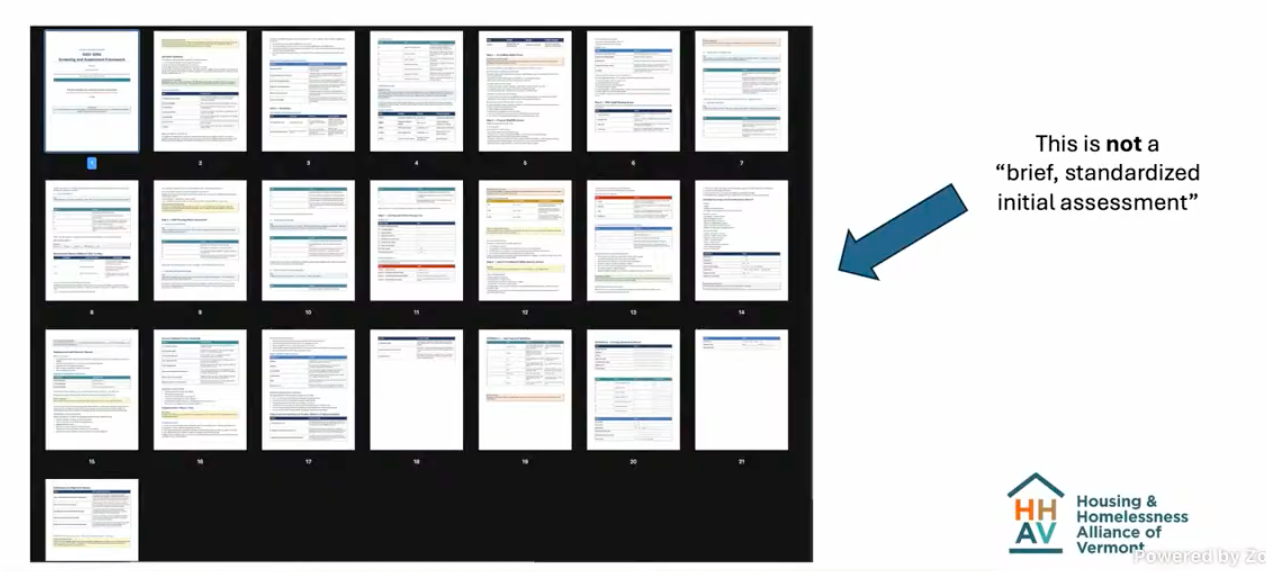
Love the online access for legislative hearings where the audio quality is poor and the view so expansive that you can’t tell who’s talking. It’s even worse when a powerpoint presentation occupies 90% of the screen and all the little people are confined to a small corner.

But the optics seem appropriate when the subject is Vermont’s troubled emergency housing program, taken up briefly today by the Legislature’s Joint Fiscal Committee. (It was one item on a packed agenda, with a mere 30 minutes allocated for multiple witnesses.) There’s something ironically apropos about those remote figures in an ornate room discussing the state’s failure to provide adequate shelter for our neediest Vermonters.

But enough philosophizing. The subject at hand was how the Scott administration is implementing Act 143, the Legislature’s attempt to create a better emergency housing system. In the eyes of advocacy groups, the administration has taken a heavy-handed approach and fast-tracked a new system without much input from outside the boundaries of its own sphincter.

This process has triggered an impassioned response from advocacy groups and helping agencies, up to and potentially including legal action for what they see as the administration’s deliberate flouting of Act 143’s intent. A small next step took place today before JFC, with more hearings to come in the near future. (The Legislative Committee on Administrative Rules is expected to take up the new process on October 1, and there will be a joint hearing of he House Human Service and Senate Health & Welfare Committees on October 9.) Nothing was settled today, but the lines are drawn a bit more clearly now.

Not that that will help anyone caught in the chaos — planned or otherwise — of a situation that seems to have been easily avoidable except that the Scott administration has rarely acted in good faith when it comes to sheltering the homeless. The constant preoccupation is with cost and with making recipients prove they are worthy, instead of meeting a simple basic human need. Or, to put it another way, doing the right thing.

Continue reading →

The Scott Administration’s Homelessness Policy has Jumped the Shark

Our Political Betters have been wrangling with unsheltered homelessness for years now. The Legislature’s priority has been trying to get a roof over the head of every Vermonter, while the Scott administration has been laser-focused on cost control. Well, now they’ve hit a new low in terms of creative problem-solving and pretending to care.

See, apparently people with no access to shelter have been sleeping on the covered porch of the Pavilion Building, one of the Capitol District’s most historic structures. And the administration’s solution was not to find them accommodation elsewhere — it’s to scare them off with piped-in bird noise.

Yeah, we don’t care where you go, but we don’t want you here.

The noise devices were installed earlier this summer by the Department of Buildings and General Services, but were only reported last week after Vermont Public filed a public records request. No word on whether BGS made any attempt to get the Department of Children and Families involved to try to actually solve the problem.

It speaks of the administration’s policy bankruptcy when it comes to finding shelter for the unhoused. They don’t have any answers or any ideas. (Stay tuned for a post about what the administration is doing to Act 143, the Legislature’s well-intentioned reform of the emergency housing program. The governor signed it, seemingly not in good faith, because his minions are reportedly hacking and slashing away at it.)

Continue reading →

The Greatest Little Hellhole on Earth

So, CNN just published a little exercise in clickbait under the try-hard title “We searched for America’s best towns to visit. Here are the top 10.”

And as is often the case, our very own Queen City made the list for, according to the subhead, “Lovely surroundings, farm-fresh food, community spirit.”

Not mentioned: Violence, insecurity, homelessness, substance use, vandalism. You know, the stuff that consumes the imagination and rhetoric of Gov. Phil Scott and his collaborators in the Burlington Democratic Party, not to mention the “if it bleeds, it leads” world of teevee news.

I know, you can’t put too much stock in these kinds of rankings. They aren’t exactly done with the most scrupulous of journalistic standards, and they do gloss over the faults and failings of the communities listed. (New Haven, which has public safety problems that make Burlington look like a daycare, ranked #2 on the list.)

Burlington does have problems, and I don’t mean to minimize them. But it’s also, as CNN put it, “a close-knit community, where civic engagement runs deep.” And there’s the waterfront and the lake and Church Street and Pine Street and the Old North End and the UVM campus and the nearby mountains, among many other positives about our biggest little city.

So maybe Our Political Betters could spend a bit more time actually helping Burlington with positive language and policies instead of trashing it for short-term political gain.

Continue reading →

Without Comment: A Note from a Reader

I received this in the form of a comment on my recent post about Brenda Siegel. I don’t have time to dig into this right now, but it seems very timely so I’m elevating it for your consideration. I will say, this kind of thing would be absolutely in line with Scott administration policy on homelessness. They have consistently fought to minimize cost with no particular concern for the human toll wreaked on the unsheltered. Act 143 seemed like a pretty good idea for a new emergency housing program; I would not be surprised in the least if the administration is trying to undercut it.

Dear John —

Today is the final day for public comments on DCF’s draft rules on Act 143. I don’t know if you have seen the ACLU’s take on these rules, but they rules essentially ignore both the letter and spirit of the law, regardless of what the legislature passed and the governor signed. They are essentially negating the law and creating their own program. …The DCF gave only a week for public comment so advocates are scrambling to meet today’s deadline.

If you would like to make a public comment, the email address is: AHS.DCFVHRCPublicComments@vermont.gov

So Brenda Siegel Was… Right? All Along

When I’ve had conversations with someone in Vermont officialdom and the name “Brenda Siegel” comes up, it usually elicits a bit of a grimace. Siegel isn’t a comfortable character. She’s direct, some would say abrasive. She’s a fierce advocate for an unpopular cause. When she walks into a legislative hearing, the assembled lawmakers brace for impact. When she earned the Democratic gubernatorial nomination in 2022, the party offered some support but endorsements were few and the donor class shunned her campaign.

And now that H.938 has become law as Act 143, she ought to be taking a nice long victory lap. She did issue a press release; otherwise I suspect she got right back to work.

Act 143 is far from perfect, but it’s a much better law than any of our political leaders really wanted. It’s an attempt at creating a comprehensive response to homelessness instead of the box of Band-Aids that is the hotel/motel program. Crucially, it requires for the first time that the state’s homelessness response system must comply with the Americans with Disabilities Act. I bet you thought that was a given, but apparently not.

There are other heroes in this story — House Human Services Chair Theresa Wood and Rep. Jubilee McGill for starters — but it wouldn’t have happened without Siegel’s tenacity and willingness to be unpopular in the service of her cause.

And in the category of poetic justice, End Homelessness Vermont, the nonprofit she founded and ran on a shoestring, is now part of the official system. The state’s FY2027 budget includes a $200,000 appropriation for EHV, which will now work alongside state agencies to try to lift the unhoused into safe, productive lives.

Gee, maybe she could have been a good governor after all.

Continue reading →

House Leadership Suffered an Embarrassing Defeat Last Week, Not That Our Media Took Much Notice

A former House speaker once told me that they never brought a bill to a floor vote unless they were certain of the outcome. Otherwise they’d put it off while they nailed down the necessary votes.

Last Wednesday, Speaker Jill Krowinski fell afoul of that maxim. Or ignored it, or didn’t care.

The full House was considering Act 181 dismemberment reform, which turned out to be a lengthy floor debate with plenty of amendments. And something happened that only rarely happens: the minority Republicans won a couple of votes. They actually had an impact on the process.

“In all of my 18 years, I can’t remember that happening,” Republican Rep. Mark Higley told the Vermont Daily Chronicle — the only media outlet to report on Wednesday’s events as a noteworthy, standalone story. Which is a depressing statement on the health of our media ecosystem, but we’ll get to that later.

Continue reading →

A Futile Defense of Act 181

Democratic lawmakers are in the process of dismantling Act 181, the landmark Act 250 reform measure designed to encourage housing where it makes the most sense while protecting undeveloped land. It’s clear that the Act will be significantly pared back due to (a) political pressure from rural areas and/or (b) garden variety Democratic cowardice in the face of the slightest headwinds.

As they do so, Democrats will be throwing another of their core constituencies under the bus. If they’re willing to ignore the teachers’ union (not to mention principals and school administrators and, well, parents) by pursuing the Act 73 education reform bill, their rewriting of Act 181 is an abandonment of environmental groups. Yep, the Dems to seem to have a tendency to take their strongest supporters for granted. (See also: Women, people of color, LGBTQ+ folk.)

Act 181 was one of the most carefully crafted, inclusive pieces of legislation to come down the pike. It was the product of extensive negotiation and collaboration across the full gamut of interested parties, from environmental groups to developers and business interests. It was meant to strike a delicate balance between development and conservation — a balance that’s now being undone in the Democrats’ retreat.

Act 181 had the added benefit of encouraging development where we need it the most: in settled areas with public services. I don’t know about you, but my definition of “workforce housing” doesn’t involve isolated homes deep in the woods. It means affordable housing where the workers and the jobs are located.

Continue reading →