
The second most notable results from the September 1 campaign finance disclosures were about the race for lieutenant governor, and they once again show that incumbent Republican John Rodgers is in some trouble. Maybe a lot of trouble.
Two years ago, his campaign was buoyed by a wave of four-figure checks from the folks I call the Barons of Burlington: the moguls, developers, landlords, and others capable of making large donations to favored candidates. From July 1 onward, Rodgers’ 2024 campaign finance reports were riddled with familiar names: Pomerleaus, Pizzagallis, Tarrants, Bruce Lisman, Ray Pecor, Doug Nedde, etc., all kicking in sizable donations. The flood of cash may or may not have been the deciding factor in Rodgers’ win over incumbent David Zuckerman, but it sure as hell didn’t hurt.
This year, however, something has changed. The Barons are almost entirely absent from Rodgers’ filings. He did receive $1,000 from Ernie Pomerleau in August, but otherwise his September 1 report was barren of Barons. As a result, Rodgers lags far behind Democratic nominee Molly Gray in total fundraising and cash on hand. (Gray has received $2,250 from former Rodgers backer Brian Boardman plus $2,000 from ski resort tycoon Win Smith, so the balance of Barons tips slightly in her direction.)
Gray’s lead in spendable cash is kind of stunning, since she had to weather a costly primary battle while Rodgers faced no Republican opposition. The bottom line: Gray has raised $412,000 for the campaign to date compared with Rodgers’ $143,000. Gray has spent $339,000, and reported cash on hand totaling $73,000. Rodgers has somehow managed to spend $118,000 despite the lack of a primary challenge, and has only $26,000 in the bank.
Standard caveat: Money isn’t the only factor in a campaign, and Rodgers does have the incumbent’s advantage. But pre-primary polls by the University of New Hampshire Survey Center showed weakness in Rodgers’ position. The disparities in fundraising prowess and cash position are more evidence that Rodgers is on the back foot. And the reticence of the Barons suggests they might just see him as a lost cause.
So who did donate to Rodgers? A whole bunch of prominent Republicans, including plenty of elected officials. The roll call includes Sens. Pat Brennan and Russ Ingalls ($500 apiece), Reps. Joe Luneau $500), Larry Labor ($150), Marty Feltus ($1,400) and Lisa Hango ($175), plus her husband John ($175), the Caledonia County Republican Committee ($500), the Orange County Republican Committee ($5,000, and where are THEY getting their money from?), former Common Sense Radio host Bill Sayre ($500), Whistlepig founder and Christian nutcase Raj Bhakta ($500), the logging firm owned by far-right loser Mark Coester ($250), former House candidate Stephen Thurston ($1,000) and former VTGOP official Deb Ricker ($250).
Oh, Rodgers also got $2,000 from the fine folks at Kalshi, the gambling operation disguised as a prediction marketplace.
As did Gov. Phil Scott, by the way. Hmm.
Rodgers also received contributions from the Vermont Fuel Dealers Association ($1,000) and former Democrat turned aggrieved centrist Paul Ralston ($1,000).
Amongst all these Republicans there is one current Democrat who’s backing Rodgers:
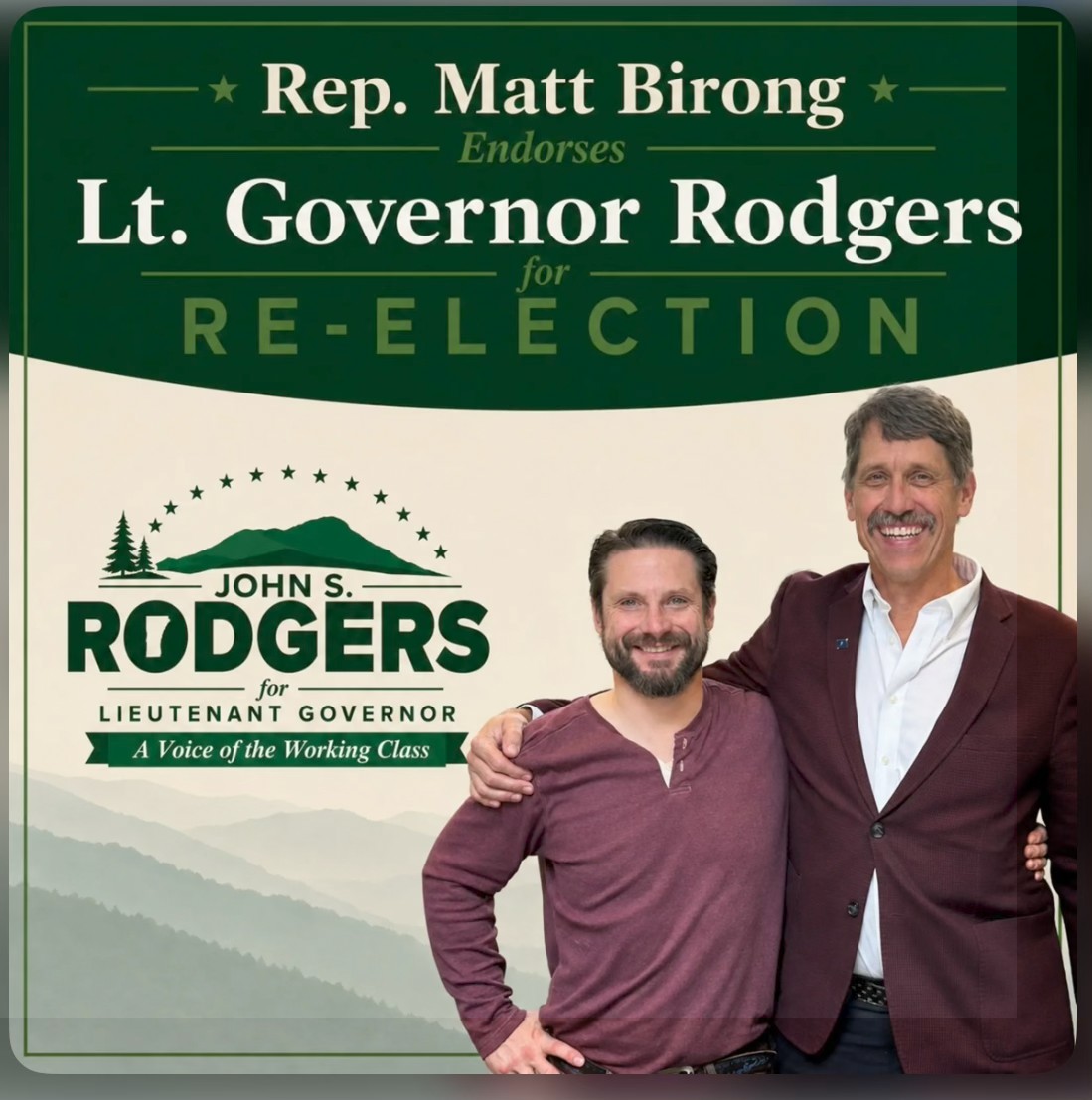
Birong is not seeking re-election, but until January he will remain a prominent leader in the House majority caucus. Isn’t that special.
Anyway. Unlike the Barons, most of the names on Rodgers’ donor list probably lack the means to cough up a lot more cash. Which would leave him incapable of running a robust campaign as he did in 2024 after the Barons’ largesse began to flow.
Gray, meanwhile, took in a bunch of large donations. Benefactors include former governor Howard Dean (campaign total of $3,680), former state reps Tim Briglin ($5,180) and Sara Coffey (campaign total of $3,358), Democratic megadonor Bill Stetson ($3,000), Peter Shumlin’s brother Jeffrey ($5,180), former attorney general TJ Donovan (campaign total of $2,000), former Pat Leahy aide Luke Albee (total of $1,000), and former VT-NEA president Martha Allen (total of $2,750).
Interestingly, Sen. Peter Welch’s campaign fund donated $4,700, which was mighty white of them considering that the good Senator had backed his longtime aide Ryan McLaren in the Democratic LG primary. No hard feelings, I guess.
In sort, Gray is tapping into the rich veins of Democratic money while Rodgers is going begging.
One interesting note from Rodgers’ 9/1 filing. He spent $53,000 during August, and $35,000 of that went to Opinion Diagnostics, a Massachusetts-based polling outfit. Two-thirds of his total expenditures for the entire month. It’s a curious move in expense and timing. I’d love to see the results but I doubt Rodgers will share, especially if they’re as dire as the pre-primary UNH surveys.
There’s still a chance for the Barons to weigh in, but not much. We’re two months away from the general election. It’s not just raising money; it’s having the time to make a plan, spend wisely, and enjoy the maximum impact with voters. The clock is ticking.
(You remember when clocks used to tick, right?)


the Barons are confident they’ll get what they want from Molly – and evidence so far, agrees
Thanks for doing all this digging for those of us who don’t have the time to do this. Now we can see who is running our state government. I do hope you’re right about the Rodgers/Birong team and that they’re history after November. We’ll see, I guess.