Something is happening that almost certainly has never happened before. In the general election campaign (post-primary), the candidates for lieutenant governor have outspent the candidates for governor.
This is mainly because Republican Scott Milne continues to drop large amounts of cash for TV ads. In the past week, Milne has reported mass media buys totaling roughly $140,000, with all but $1,600 going for TV spots. (The remainder was for robo-calls.)
Campaigns filing mass media reports are required to list any candidates mentioned in the material. Milne’s October ads mention himself and Democrat Molly Gray. I’ll assume they don’t paint Gray in a flattering light… and I’ll assume we have heard the last of Milne’s whining about negative campaigning, since he’s gone ham on the whole attack thing.
Since the August primary, Milne has spent a total of $102,000 on TV ads alone. He’s spent nothing on radio, and hardly anything on newspaper ads.
Gray hasn’t reported any mass media buys since 10/15, and has spent $52,000 since the August primary. Her media buys are widely distributed among TV, online and mailing, and she spends a lot more than Milne on staffing, organization and events. As I wrote earlier, Milne has adopted the Disembodied Head style of campaigning.
The race for governor, meanwhile, has been running on the cheap. Gov. Phil Scott has spent $11,000 for online advertising since 10/15, while Lt. Gov. David Zuckerman’s most recent mass media buy was on the 16th — $25,000 for TV ads. Nothing since.
Nothing in this column bears illustration, so let’s go with some clickbait.
In case you were wondering why all the commotion last night — the rowdy partying, the fireworks, the parades, the desperate closing-time hookups — well, the mid-October campaign finance reports are in.
Yippee!
There’s nothing that changes the complexion of the Vermont political season, but there are a lot of fascinating details. Let’s get started!
The Governor is in cruise control. Phil Scott’s campaign didn’t even break a sweat in the first half of October. He pulled in $41K, bringing his campaign total to a measly $376K. (For those just joining us, conventional wisdom has it that you need at least seven figures to seriously compete, and $2 million is a better starting point.) What’s really telling, though, is that he only spent $14K in the past two weeks. He did a bunch of small newspaper ad buys and no TV. He didn’t pay a dime to his big national campaign outfit, Optimus Consulting. He has over $100,000 in the bank, and shows no sign of making a serious dent in it.
Zuckerman fights the good fight. The Democratic/Progressive nominee is a spider monkey battling a gorilla: Impressively crafty, but likely to get squashed. Zuckerman raised a healthy $62K in the two weeks since October 1, for a campaign total of $629K. And there’s the problem: it’s really not enough money to fuel a statewide campaign against an entrenched incumbent.
If you look at his donor list, you see where his problem lies. He’s getting a ton of small gifts, but the Democratic power players are sitting it out.
Look at these numbers. Scott has 1,141 unique donors, and has taken in 768 “small” donations of $100 or less. Zuckerman has 5,234 donors, and has accepted 6,055 donations of $100 or less. (The latter number is higher because many of his donors have made multiple gifts.)
Even with Scott’s late entry into active campaigning because of the coronavirus, those are some telling numbers. Despite his broad popularity, Scott doesn’t have people lining up to give him money. Zuckerman has a much larger base of enthusiastic donors.
But his problem is, he isn’t getting the big money to augment the small fry. The state’s two largest public sector unions wrote big checks to Beth Pearce, Doug Hoffer, Jim Condos and TJ Donovan — but nothing, as far as I can tell, for Zuckerman.
Meanwhile, Democratic megadonor Jane Stetson donated $500 to Zuckerman’s campaign. That’s a buck in the tip jar for Stetson. If she was committed, she and her husband WIlliam would have each kicked in the maximum $4,160.
That’s only one data point, but it illustrates the disconnect between Zuckerman and the Democratic moneybags. He also, apparently, hasn’t received any money from Vermont’s Congressional delegation. (Bernie has done his bit for Zuckerman on the intangible front, but no direct contributions.)
Zuckerman has received a healthy $13,000 from the Vermont Progressive Party, which makes the absence of Democratic cash all the more glaring. And he’s given $22K to his own campaign. He’s needed every dime.
Still to come: The LG race and the PACs, including a surprise entry for most impactful PAC of the cycle.
To paraphrase the great Yogi Berra, it’s getting late early out there. Almost three weeks remain until Election Day, but we’re closing in on 100,000 ballots already cast in Vermont. That’s likely to be between one-third and one-quarter of all the votes. Which means that political spending will be less and less impactful as the ballots keep on rolling in.
So, where’s the big money? It’s absent, for the most part. The next round of campaign finance reports isn’t due until Thursday night, but we’re in the Mass Media reporting window: Within 45 days of an election, any mass media buys over $500 must be reported immediately to the Secretary of State’s office. In recent weeks, there’s little sign of big spends.
This would seem to be terrible news for Scott Milne, Republican candidate for lieutenant governor. On September 24, the Republican State Leadership Committee spent $210,000 on TV ads backing Milne. I took it as a sign that national Republicans saw Milne as a credible contender — perhaps even a future successor to Gov. Phil Scott, whenever he rides off into the sunset or Congress, depending.
But the ballots are pouring in, and the RSLC hasn’t spent a dime here in three weeks. Either they have bigger fish to fry, or they’ve decided that Milne is a lost cause.
“Tis the season for complaints about dirty campaign tactics. It’s a game we love to play in Vermont, because we so ardently cherish the belief that Our Politics Are Better. Smaller scale, personal connections, trust, character, etc., etc. None of that nasty big-money negative attack stuff.
But we have our very own twist on “negative campaigning” — the ever-popular double reverse “accuse your opponent of negative campaigning.”
This has become a dominant theme in the race for lieutenant governor. Scott Milne accuses Molly Gray of being backed by a “shady” political action committee and hints at illegal collusion — without offering any proof. The PAC, Alliance for a Better Vermont Action Fund, produces ads that tie Milne to a national conservative PAC (Republican State Leadership Committee Vermont) that’s spending big money on his behalf — but cannot prove that Milne will feel any obligation to toe the RSLC’s line. Gray offers a selectively-phrased invitation to Milne to stop the negative talk and campaign on the issues. MIlne replies that the only negative advertisements are from the ABVAF, while all his advertisements are positive. Which is true, his ads have been positive*; but his own campaign traffics heavily in attacks on Gray. Gray drops hints that the multi-millionaire Milne is trying to buy the lieutenant governorship with his own money. Yes, Milne has spent roughly $100,000 on his campaign, but that’s far from “buying the election” territory.
*So far. On Friday, Milne reported spending $30,000 on TV ads that mention himself and Gray. Presumably they won’t mention Gray in a positive light.
In the race for governor, incumbent Phil Scott is indirectly (the Phil Scott way) accusing opponent David Zuckerman of negative campaigning — by saying that he would never stoop to such tactics himself, cough, ahem, harrumph.
The truth is, all these attacks about attack politics aren’t going to move the needle.
For the entirety of our general election season, there will be only one public opinion poll that took the temperature of the race. That would be the September VPR/VPBS poll, conducted by the estimable Rich Clark.
The results of said poll, released about two weeks ago, were very good for Republicans. Gov. Phil Scott had a commanding 21-point lead over Lt. Gov. David Zuckerman. In a hypothetical 2022 matchup with Sen. Patrick Leahy, Scott had a rather stunning four-point lead. In the Lite-Gov race, Scott Milne was a little behind Molly Gray; the latter two results were within the poll’s margin of error. Also, the governor had a higher approval rating than any of Vermont’s three members of Congress — even Bernie.
This poll looms large in the narrative of the campaign because, well, it’s the only one. But what if the poll missed the mark? There’s reason to think that it significantly underestimates support for Democrats. We won’t know for sure until the votes are counted, but here’s the case for That Poll Was Hot Garbage.
Scott Milne started the general election season with a vow to run an issues-oriented campaign. He backed it up with his big glossy 60-point ProgressVT action plan.
And ever since, he’s used ProgressVT as a fig leaf for an overwhelmingly negative campaign. Which is par for the course. This is, after all, the guy who ran an entirely negative campaign against Sen. Partick Leahy that included an amateurish TV ad that accused Leahy of having contracted “the DiCa Virus,” short for District of Columbia and a dumb play on the Zika virus. The spot looks even worse in retrospect, now that we’re actually in a battle with a deadly pandemic.
We got another taste of The Gutter’s menu on Monday, aided and abetted by WPTZ anchor/reporter/apparent Milne honk Stewart Ledbetter. (Who, in a mere two days, will be moderating a debate between the two candidates. Yeesh.)
On a day when Gray held a press conference announcing endorsements by 15 state senators, Ledbetter obtained a list of tweets sent from Democrat Molly Gray’s campaign account during business hours — when she was supposed to be working as an assistant attorney general. His report, which is partially available on Channel 5’s website (the video cuts off before the end), begins by recounting the endorsement event. He notes, as did I, that Gray’s list doesn’t include eight members of the majority caucus.
He then pivots to footage of Milne pointing out the senatorial absences with that familiar smirk on his face.
And then Ledbetter rolls out the Twitter bit. Or, as he put it, “A new list of Twitter posts emerged Monday with timestamps suggesting Gray conducted some campaign activities during the workday.”
Yeah, ha ha ha, “emerged.” As if out of the clear blue sky.
We know from one of the earlier debates that someone with the Milne campaign, or someone backing him, submitted a wide-ranging public records request for all Gray’s communications between the launch of her campaign and her taking a leave of absence from the AGO, hunting for signs of electioneering by Gray during business hours.
Well, they labored mightily and produced a mouse: The list of 101 allegedly offending tweets.
Gray’s response? “Every campaign has staff with access to its campaign Twitter account.”
Shocker, that. And yes, it’s standard operating procedure for campaign staff to tweet approved messages. Milne’s got nothing. I’m not surprised; in my experience, Gray was very careful to confine her campaigning to non-work hours until she took her leave.
What Milne or his backers were hoping to find was clear evidence of campaigning on the taxpayer’s dime. And all they got was a few dozen tweets from a campaign account that’s accessible by others in Gray’s campaign team.
Democratic Lt. Gov. candidate Molly Gray kicked off the new week with an Endorse-O-Rama on the Statehouse lawn. She’s won the backing of 15 Democratic/Progressive Senators, including Senate Majority Leader (and President Pro Tem-in-waiting) Becca Balint.
Which is great. But it means she didn’t get endorsed by eight members of the majority caucus. Not so good.
The abstainers include fully half of Chittenden County’s delegation: unsuccessful Lite-Gov candidates slash grudge-nurturers Tim Ashe and Debbie Ingram plus Michael Sirotkin. The rest include some of the most senior and most centrist of Senators: Bobby Starr, John Rodgers, Alice Nitka and Jeanette White.
The final absentee is the most surprising: Prog/Dem Anthony Pollina. I’ve tried to reach him, and will update this post if/when he returns my call.
The roster of Senate abstainers is not a good look. But it has more to do with the foibles of Vermont’s Worst Deliberative Body than it has to do with the merits or demerits of Young Ms. Gray.
Bad lighting, too far from camera, hastily arranged wrinkled-flag backdrop, 0/10.
The latest financial filings from Republican Scott Milne and Democrat Molly Gray reveal two vastly different campaigns in scale, source of funding, organization and tactics.
(I’ll be writing a separate post about the gubernatorial filings.)
Milne’s campaign has adopted what I call the Disembodied Head model, inspired by one of the great bits of political satire from my home state of Michigan. In 2006, Dick DeVos, scion of the Amway pyramid scheme multi-level marketing firm and husband of The Worst Education Secretary In History, decided to run for governor of Michigan. He dumped $36 million of his own wealth into the race… and (schadenfreude alert) got absolutely killed by Jennifer Granholm.
During the campaign, a delightfully snarky liberal created a website called “The Disembodied Head of Dick DeVos,” which is dormant but still extant. And more than a bit relevant, in our post-Citizens United era of fiscal oligarchy.
Extra bonus digression! DeVos’ father Richard was the co-founder of Amway. Dick ran the company after Dad’s retirement. Dick’s major accomplishment was to take Amway international. At that point Amway had pretty much tapped out the domestic market for Raising False Hopes Through Scammery, Dickie found rich fields of suckers in developing countries like Russia and China, where hardworking but financially naive people were desperate to climb the ladder of success. (The DeVos clan also owns the Orlando Magic, one of the worst franchises in the NBA.)
Scott MIlne is a multimillionaire, but a pauper by DeVos standards. Milne’s campaign is pocket fluff compared to DeVos’, but it’s the same basic structure: Largely self-funded, spending the bulk of its money on paid media with little to no grassroots organization.
Gray, on the other hand, has spent much less on TV and much more on staff, travel and events. She’s actually built an organization, how about that.
She also continues to fundraise far more impressively than Milne.
Here’s something on which all political writers can agree: Reporting a red-hot personal beef beats covering policy any day.
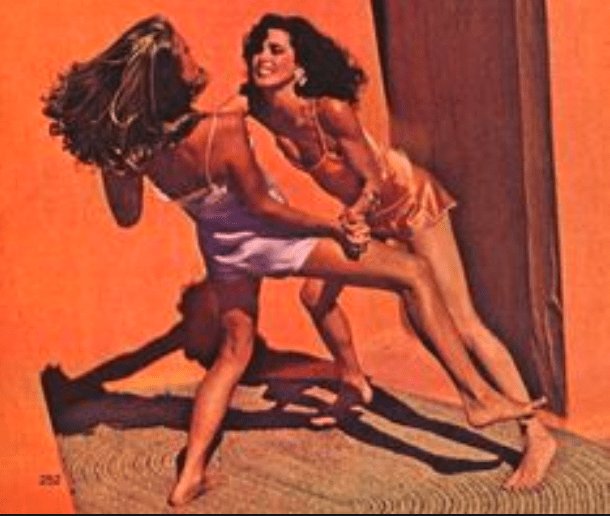
And nothing beats a good catfight.
Yeah, so Rachel Nevitt, Lit. Gov. David Zuckerman’s wife, posted the above on a private friends-and-family Facebook page. The “lying, manipulative, self-serving power-hungry individual” in question is Zuckerman’s ticketmate, Molly Gray.
The political media lives for moments like this. And yes, it may well deepen the divide between Zuckerman and mainstream Democrats, which is one of the two fundamental challenges he faces in his campaign against Gov. Phil Scott. The other is Scott’s popularity.
Relations between Prog-turned-Prog/Dem Zuckerman and the Vermont Democratic Party were iffy to start with. There are too many Dems who’d rather lose — especially to Mr. Nice Guy Phil Scott — than help install a Progressive in the governorship. (After all, we gotta keep it open for when Scott retires and TJ gets his shot.)
But it says here that, even though she’s a political spouse, Nevitt is a self-actualized individual with the right to express herself without any input from Hubby Dearest.
“I shared it with family and friends,” Nevitt told me. “I thought I could share it without a bunch of men fomenting gossip. It’s sad that the media chooses to focus on trashy gossip about two people who aren’t even running against each other.”
Yes. Sad. But it’s the world we live in, not the one we desperately want to beam up to. Also, who can resist a good CATFIGHT!!?!?!!!???
Yeah, that’s the stuff.
One of the political heroes of my youth was Phil Hart, U.S. Senator from the great state of Michigan. He was a fairly garden-variety Democrat until he got a bad case of conscience over the Vietnam War, becoming an early critic of the war and his party’s own president, Lyndon Johnson.
Molly Gray was under some pressure today, to come back from last week’s meh debate performance and stand up against the attacks of Scott Milne. And she had to do so within the strictures placed on women and people of color who run for office: They have far less latitude than white men in displaying emotion of any kind or going on the attack. Obama consciously kept himself in check to forestall any “Angry Black Man” reactions. Hillary Clinton had to walk a tightrope — backwards, in high heels — while Donald Trump threw rotten tomatoes at her.
Gray did a fine job. She stood her ground. She attacked Milne’s record without sounding, in that wonderful world of female stereotyping, bitchy. It helped that Milne had shot his wad last Thursday; he had no fresh attack lines to spring on his opponent. All he could do was lob the old stuff at her, and this time she was fully prepared to answer.
Meanwhile, Milne often seemed churlish. He pushed lines of attack past the point of diminishing returns. He was patronizing. He complained about her answers. He was less skilled than she at deflecting to desired talking points. His performance did nothing to advance his campaign’s positioning of MIlne as Phil Scott 2.0, a nice-guy authentically Vermonty moderate Republican.
His handlers had better get him back into the bubble wrap. It’s time for Operation Deep Freeze to go into effect. Keep him out of the public eye as much as possible, to limit the chances that he’ll go off script and default to his snarky, self-pitying ways.