You may have thought of county sheriffs as just another arm of law enforcement, with a mission of serving the people. But Vermont Supreme Court Justice Harold Eaton is here to tell you otherwise. From VTDigger’s “Final Reading” for Feb. 11:
…we understand that not only are the sheriffs a law enforcement agency, they’re also a business, and we simply can’t pay as much as the sheriffs can make doing private contract work. That’s just the reality. We will always be outbid on work if it’s going to the highest bidder.”
The sheriffs are “a business.”
Huh. Bet you didn’t know that.
Update. One of my Twitter acquaintances, Jason Mittell, reminds me that Seven Days did an excellent expose on this very subject back in 2018. And yep, nothing’s changed.
Let’s start here. Everyone has the right to run for elective office. But if you run, you ought to be honest about who you are and what you believe.
But there’s a movement among adherents of QAnon conspiracy theories to run for local office while concealing their extreme ideologies. And some of it is happening right here in Vermont. Voters need to watch for the warning signs of a stealth candidacy, and news media need to be more diligent in their often formulaic coverage of local elections.
The biggest tell that you’ve got a QAnon type running for school board or select board is a complete absence of any policy positions. Instead, the candidate emphasizes family, community ties and activities.
Take, for example, Ingrid Lepley of Tinmouth. In a social media announcement of her candidacy for the Mill River Unified Union School Board, she wrote paragraph after paragraph about her participation in numerous community activities while saying little to nothing about education policy. She offered a couple of bromides about loving her community and the local schools, and hoping they “continue to grow and do well.”
Meanwhile, she reportedly ran an online jewelry design business that featured numerous pieces that seemed to signal QAnon adherence. She used coded phrases and symbols from the QAnon lexicon. And some of her customers specifically praised her for selling QAnon jewelry. She has apparently scrubbed her site of the more overtly coded pieces, but there are still large quantities of “Q” and rabbit designs. (“Follow the white rabbit” is one of Q’s dog-whistle slogans.)
This piece of news made me much happier than it should have. I mean, it’s only one guy running for one seat in the State Senate.
But in his single term in the House, Nader Hashim distinguished himself in a pretty damn strong freshman class. He stepped aside in 2020 but now he’s ready to return, and I’ve gotta say I’m rooting for him.
It’s not a full-throated endorsement because we don’t yet know who else is running for Windham County’s two Senate seats, at least one of which will be vacant (Becca Balint running for Congress, Jeanette White undeclared on a re-election bid). But I’m certain that Hashim would be a valuable addition to the staid, stuffy, senior-laden Senate.
Our Most Barnacle-Encrusted Deliberative Body is so tenure-heavy that an entire generation of promising politicians have seen their way blocked by this or that immovable object. It’s a very talented generation, too. I’ll name some names in a moment.
Seniority has its advantages, and I’m not ignoring them. We need lawmakers who’ve been around the block a few times and know how the process works. But you need new blood as well, and the Senate is far too heavy on the older side of the ledger.
The average age of our 30 Senators is 64. There are three under 40, one of whom (Kesha Ram Hinsdale) is leaving to run for Congress. We’ve got two more in their 40s, and one of those (Chris Pearson) is about to turn 50. There are five Senators in their 50s, and two in their early 60s.
Everybody else — eighteen of the 30 — is at or over 65.
When you look at the chairs of the 12 policy committees, it’s even more extreme. Average age: 73. There is one chair — count ’em, one — under age 65.
The Senate would be stronger, more creative, and more representative of Vermont if a bunch of those people would just go ahead and retire, already. They seem to think they’re irreplaceable. Trust me, they’re not.
Acting Human Services Secretary and Effusive Wireless Advocate Jenney Samuelson
As our political leaders, state and national, try to reassure us that the post-pandemic future is now, one of their favorite rhetorical devices is mental health. The danger to our physical health is nothing compared to the toll of isolation, fear, absence of normal activity, and apparently how facemasks cut off blood flow to the brain. Our leaders aren’t simply pushing us back to the assembly line of work and consumerism; they are the good guys, protecting us from Covid’s frightful toll on mental health.
Take, for example, Edjamacation Secretary Dan French implying that those of us still worried about the pandemic are pushing our kids into the abyss. At this week’s Gubernatorial Agenda Promotion Event, he talked of reducing the anxiety level in schools by getting everything back to normal. In other words, if you’re still concerned about prevention, if you’re constantly badgering kids to wash up or stay home if they’re sick or — horrors — force them to wear a mask or do so yourself, you’re complicit in fostering a pandemic of mental illness.
Nowhere in any of this do we hear about the mental and emotional toll of living with the pandemic, of the continuing vigilance that many of us feel compelled to maintain even as French and Gov. Phil Scott pretend that those stresses don’t exist.
Masking is a two-way street. I wear a mask in public spaces, but it’s much less effective if other people are unmasked. Meanwhile, our leaders are practically tearing the masks off our faces. Oh well, the concerns of marginal Vermonters like the old, the immunocompromised, the disabled, and anyone at elevated risk are absent from the administration’s equation.
These things used to be weekly updates on the Covid-19 pandemic but, as of today, that’s no longer the case.
For the second week in a row, Gov. Phil Scott opened the event by declaring he had nothing to say about the pandemic. Instead, he used his platform to tout an administration policy priority. And the first administration official who followed Scott the lectern wasn’t Health Commissioner Dr. Mark Levine or Virus Vaticinator Michael Pieciak or Education Secretary Dan French.
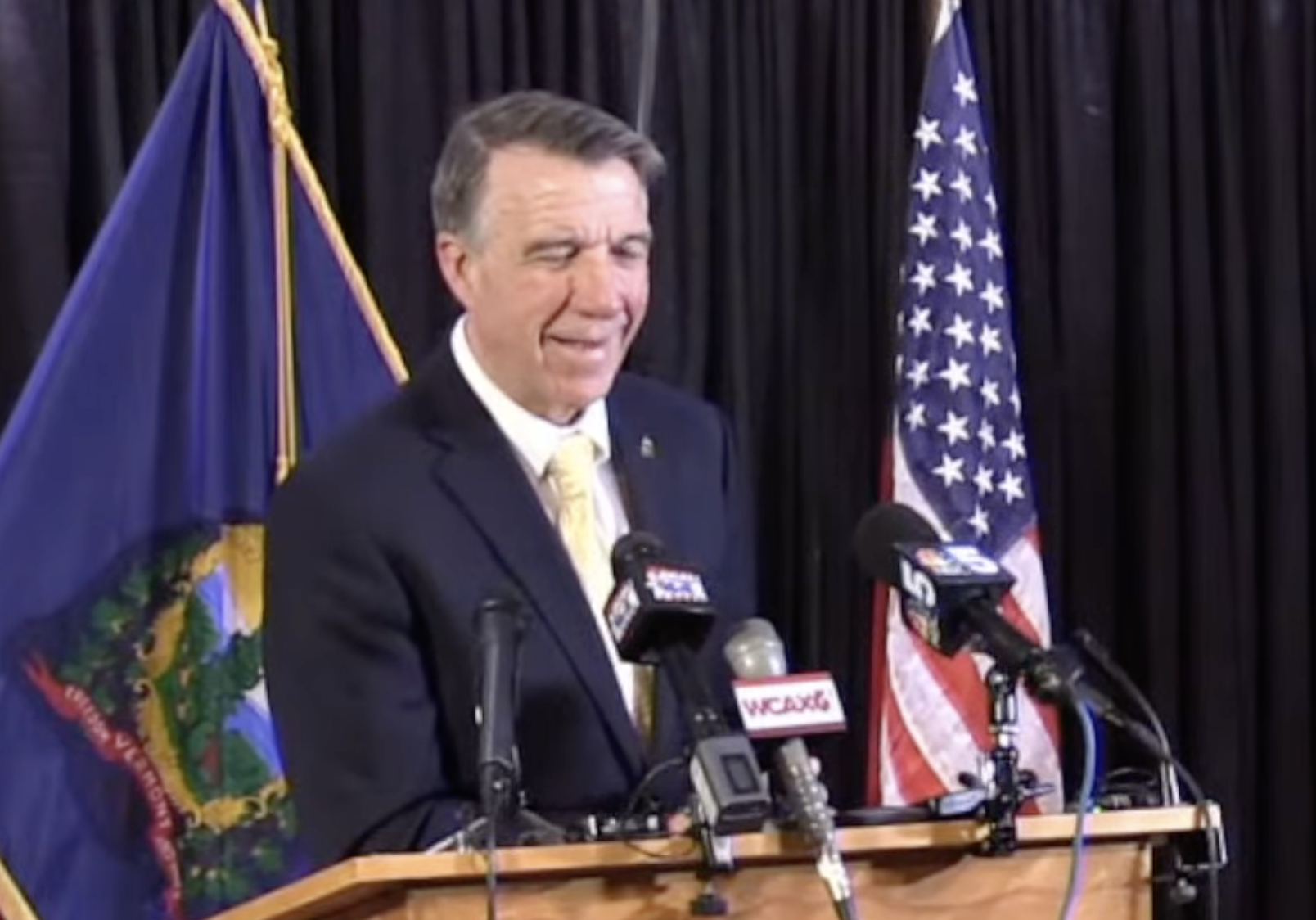
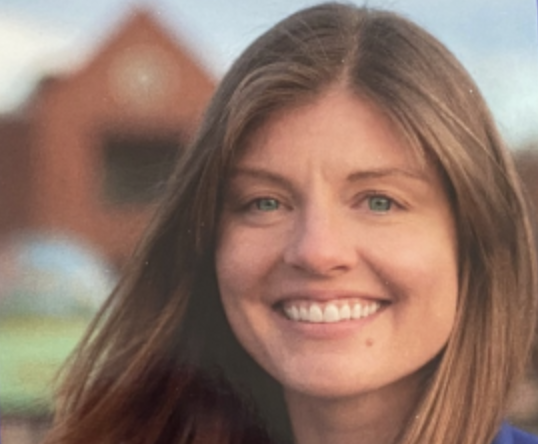
No, it was the person pictured above: Public Service Commissioner June Tierney.
Needless to say, she didn’t talk about Covid. She talked about Scott’s plan to enhance mobile phone service by spending $51 million on new cell towers.
Right off the bat, we get two big tells that the state of the pandemic is no longer the chief subject.
Then came Strike Three. WCAX’s Calvin Cutler wanted to ask about the medical monitoring bill making its way through the Legislature, so he opened by noting that his question was “off topic.”
Scott’s response? “It’s not off topic for our weekly press briefings.”
That’s a new, and I’d say deliberate, change on the governor’s part.
So, per Scott himself, we no longer have weekly Covid briefings. We have weekly administration Happy Hours broadcast live across the state. In an election year, it begins to look less like public information and more like free publicity.
Another day, another Democratic candidate for lieutenant governor. Ex-LG David Zuckerman makes four, and ex-LG Doug Racine may make it five.
Meanwhile, the Democratic field for governor is seen in the Artist’s Rendering above.
Nobody. No one. Not a soul. Zero, zilch, nada.
Dip into the Democratic rumor mill?
Crickets. No sign that anyone in Democratic circles is even considering a run.
It’s already too late for a relative unknown to mount a competitive statewide campaign. By “relative unknown,” I mean anybody who’s never held or won a major-party nomination for a statewide office. See: Christine Hallquist, 2018. After getting a late start, she didn’t have enough time to both (1) introduce herself to the electorate and (2) do the necessary fundraising.
Yup, the fix is in. Phil Scott, presumptive governor-elect. Two More Years!
People of Essex, be forewarned. The man who uses this as his social media image is Ethan Lawrence, candidate for Selectboard. In fact, Ethan Lawrence is the only name on the ballot for the office he seeks. But he’d be such a disaster that town Democratic Party chair Brian Shelden has stepped forward as a write-in candidate in hopes of derailing Lawrence’s bid for office.
Lawrence is an anti-vaxxer, anti-masker, and angry despiser of all things liberal. But he’s presenting himself as a thoughtful moderate in hopes of sneaking into office as Liz Cady did last year in her bid for Essex-Westford school board. Now, Lawrence has every right to be a candidate, but the voters deserve to be informed about his views and his character.
Until very recently, Lawrence maintained a lively, vulgar, conspiratorialist presence on social media. Now that he’s presenting as a moderate, he’s tried to hide his tracks. But hey, this is why God invented screenshots. Here’s a pretty typical example.
Ericka Redic, ultraconservative wannabe YouTube star, is running for office again. In fact, she’s running for two offices at once! That might pose a problem if she stood the slightest chance of winning either one.
Redic is on the Burlington city ballot as a Fourth Ward candidate for school board. She’s challenging board member Martine Laroque Gulick and, unless something truly weird happens, she’ll be nothing more than a speedbump for the incumbent. But Fourth Ward voters should know exactly what kind of choice they’re being offered. To judge from her general worldview, it’s safe to expect she’ll oppose mask mandates, beat the critical race theory drum and call for inquisitions of teachers and school librarians. Just what the voters of Burlington are looking for.
Meanwhile, Redic has filed campaign papers with the Federal Elections Commission as “Ericka Redic for Congress.”
The campaign committee is a model of streamlining. The treasurer of the organization is “Redic, Ericka L., Mrs.” T designated agent is “Redic, Ericka L., Mrs.” And the Custodian of Records is “Redic, Ericka L., Mrs.” As far as can be told, Ericka Redic for Congress is a one-person operation. Cozy!
This week brought the first glimpse of the money race for the Congressional seat being vacated by Senator-in-Waiting Peter Welch, as candidates were required to report fundraising and spending for the fourth quarter of 2021. The headlines predictably focused on the bottom line: “Gray Outpaces Balint in Early Fundraising,” said Seven Days. VTDigger, which threw in Welch’s total for good measure, topped its story with “Welch led 2021 fundraising in Senate race, Gray in House campaign.”
The accompanying reports were the usual surface-scratch that follows filing deadlines. Lead with the totals, list corporate contributions if any, tick off a few notable donors, and call it a day. Not blaming any reporters for this; it’s part of the job, and nobody in the political press has enough knowledge (or time) to dig deep into the numbers.
Including myself, I hasten to add. I’ve been following this game for more than a decade, and I’m still largely ignorant about the backstage world of state politics. But I can tell you what I think I think.
First, while Gray did raise substantially more than Senate President Pro Tem Becca Balint, the latter raised more than enough to be competitive. Plus, we won’t have a marker for Sen. Kesha Ram Hinsdale’s campaign until April because she didn’t launch her campaign until after the close of the fourth quarter. So the real headline, the politically meaningful headline, is that it’s too soon to tell much of anything. But that doesn’t exactly drive the ol’ SEO, does it?
Bear in mind also that fundraising is only one indicator of a healthy campaign. If Balint’s got more volunteers or a stronger staff or a deeper statewide network, then she’s the true early leader. But campaign finance is the factor that’s visible from the outside, so it becomes the standard measure of a campaign’s success.
Toto, I have a feeling we’re not in Vermont anymore
When last we considered Brock Pierce, former child actor, cryptocurrency skillionaire and newly-declared independent candidate for Pat Leahy’s seat in the Senate, we were comparing him to Rich Tarrant, another rich dude who thought he could waltz on in and grab an election all on his own.
Well, turns out there’s another parallel between the two tycoons. Like Tarrant, Pierce’s candidacy raises serious questions about legal residency.
Let us turn to the always reliable pages of the New York Post and an article about crypto fat cats who’ve adopted Puerto Rico as a tax haven. And there, right there, in front of his schmancy Caribbean pied à terre, is none other than Brock Pierce, “the de facto head of [Puerto Rico’s] crypto-championing movement.”
Why has the Isla del Encanto become a haven for newly-minted moneybags? Because of highly favorable tax laws that allow you to basically skirt American taxes without giving up your U.S. passport.