
Monthly Archives: December 2021

Jason Gibbs, Sooooper Genius

Not Exactly As Illustrated.

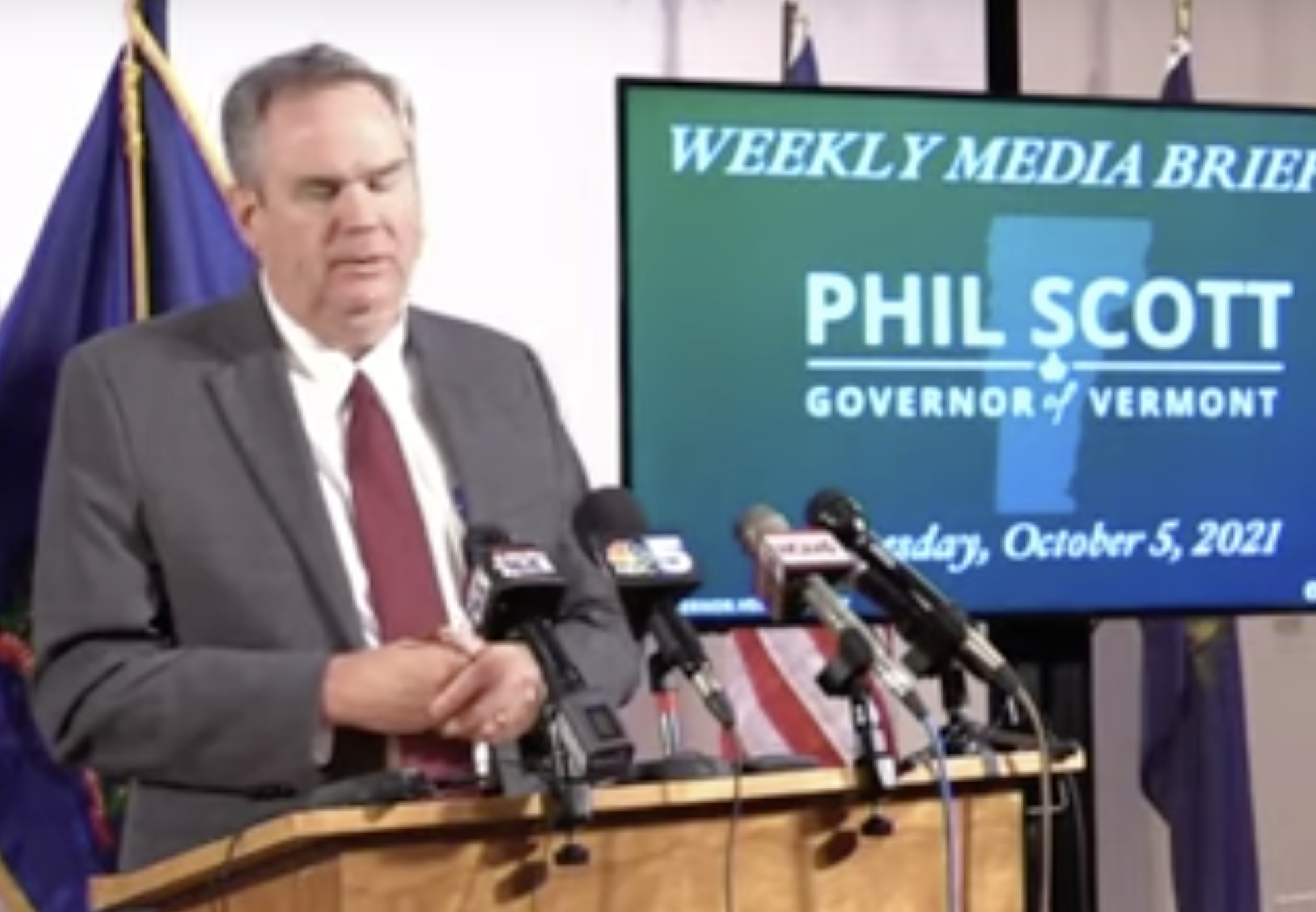
Collars must be getting tight around the Pavilion Building’s fifth floor, where Gov. Phil Scott and his inner circle have their offices. I say this because yesterday, Scott’s chief of staff Jason Gibbs delivered a series of tweets in which he claimed to know more about Covid-19 than the actual experts. Most of his attention was focused on one particular expert, Anne Sosin of Dartmouth College. He took exception to her advocacy of a mask mandate, questioned her ethics and research, and challenged her to a Science-Off on Twitter — everyone’s chosen platform for scientific discourse.

At times it approached the level of bullying. It was an unusual and unseemly performance by Phil Scott’s top guy.

Oh wait — he’s come back for Round 2 today! I’m surprised; I thought he’d get a talking-to from his boss and return to his hidey hole. Hmm. Maybe the governor wants his chief of staff out there showing his ass to the world.

Can we conclude that this is of a piece with the administration’s blinkered approach to “the science and the data” that Scott claims to rely on? When asked about dissenting experts at a recent Covid briefing, Scott professed to trust the experts in the building. His underlings, that is.

What’s gotten under their skin? It’s not the failure of their Delta variant policy or the terrible Covid case counts or hospitalizations or ICU admissions or the overstressed health care system or the slow plague of long Covid we’re setting ourselves up for. Maybe it was the Vermont chapter of the American College of Physicians publicly calling for a mask mandate and other “evidence-based measures.” Maybe it was former health commissioner Dr. Harry Chen joining the chorus. There are so many experts on that side, and so many studies showing that mask mandates are effective, that Team Scott must be feeling a bit embattled.

But, for whatever reason, Gibbs’ primary target was Sosin.

Continue reading
The Battle for Molly Gray’s Wikipage (Updated with source credit below)

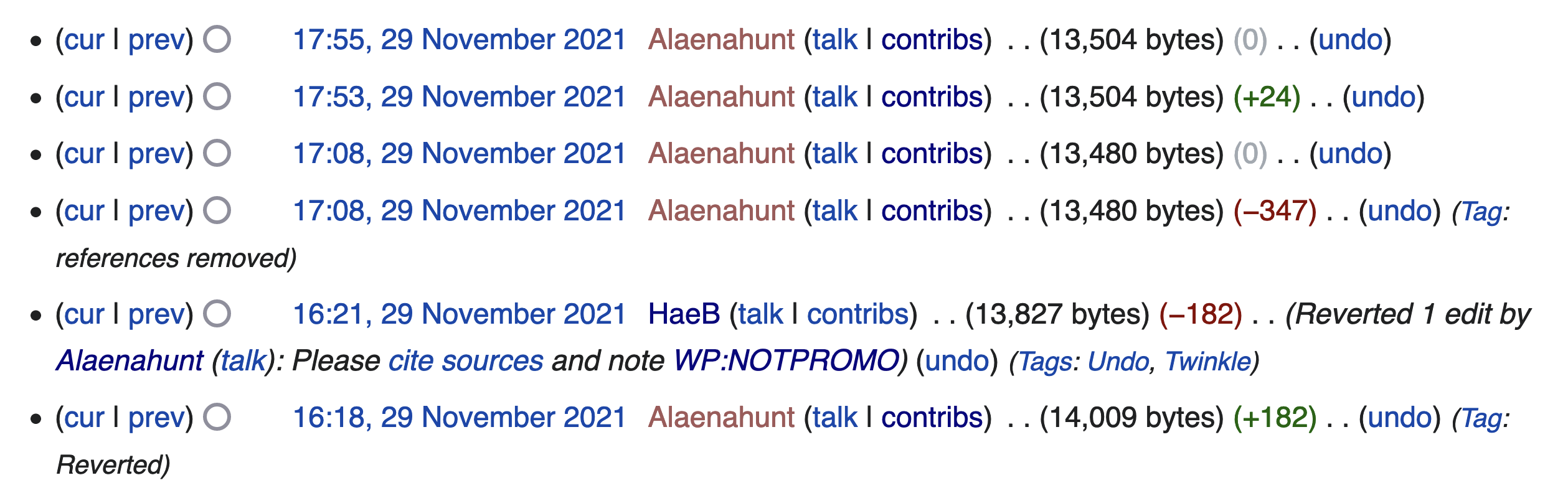
On November 29, Lt. Gov. Molly Gray’s Wikipedia page was edited 34 separate times. Most of the traffic involved minor adds or corrections, but some of it was aimed at turning the page into campaign propaganda — and counter-efforts to restore content removed or altered by the propagandists.

The lead actor in this one-day drama was “Alaenahunt.” The AH account on Wikipedia was created at 3:41 p.m. on November 29. AH made eight edits to Gray’s Wikipage between 4:12 and 7:35 p.m., and has done nothing since then. “Alaenahunt” is presumably a pseudonym; editors can post biographical information but they don’t have to, and AH didn’t. But it’s obvious that AH is either a very staunch Gray supporter or a member of her campaign team. AH’s deletions involved potentially controversial material; additions read as though they were lifted straight from Gray campaign material.

This sort of thing has happened before. In 2016, when former state Senator Peter Galbraith made a doomed run for governor, an editor named “Devotedamerican” repeatedly added positive material and deleted negative stuff from Galbraith’s Wikipage. That editor was repeatedly upbraided by other Wikifolk for obvious shilling.

On three days in May 2012, when then-attorney general Bill Sorrell faced a challenge from then-Chittenden County state’s attorney (and current AG) TJ Donovan, there was a torrent of activity on Sorrell’s Wikipage. Until then it had been a stub with very little information. Suddenly, an anonymous user started adding whole chunks of favorable material and deleting the unfavorable. It basically turned the page into a campaign ad for Sorrell.

Wikipedia has rules about such things; you’re not supposed to engage in advocacy, opinion, scandal mongering, self-promotion or advertising/PR. But it happens.

Now, let’s follow the Molly Gray Wikitrail.

Continue reading

The Definition of Insanity, Part Deux

There are many things I could write about this week’s gubernatorial Covid briefing. I could discuss the administration’s persistent cherrypicking of statistics that make it look good. I could talk about Education Secretary Dan French playing another round of three-card monte over the progress of the extremely incomplete Test to Stay program. I could dissect Gov. Phil Scott’s attestation that he’s more worried about the workforce crisis than the Covid pandemic.

I could write about how Scott and his officials insisted they are successfully handling hospital and ICU capacity issues on the same day that VTDigger published a story entitled “Calling for help: Rural hospitals struggle with overwhelmed ICUs, finding beds.”

But I’m confining myself to a single subject.

Back on November 10, in a post called “The Definition of Insanity,” I questioned the governor’s wisdom in sticking to his game plan even though the numbers kept getting worse. One month later, the numbers are even more dismaying. Nevertheless he persists.

So here’s “Definition” part two. Let’s assume that Scott will continue to emphasize vaccines and boosters and reject any tougher measures. If that’s what he wants, then he has to double down on getting the message across. Because it’s clear that he hasn’t managed to persuade enough of the vaccine-cautious to inhibit the virus’ spread.

Continue reading

Nice Little Regulatory System You’ve Got Here, It’d Be a Shame if Anything Happened To It

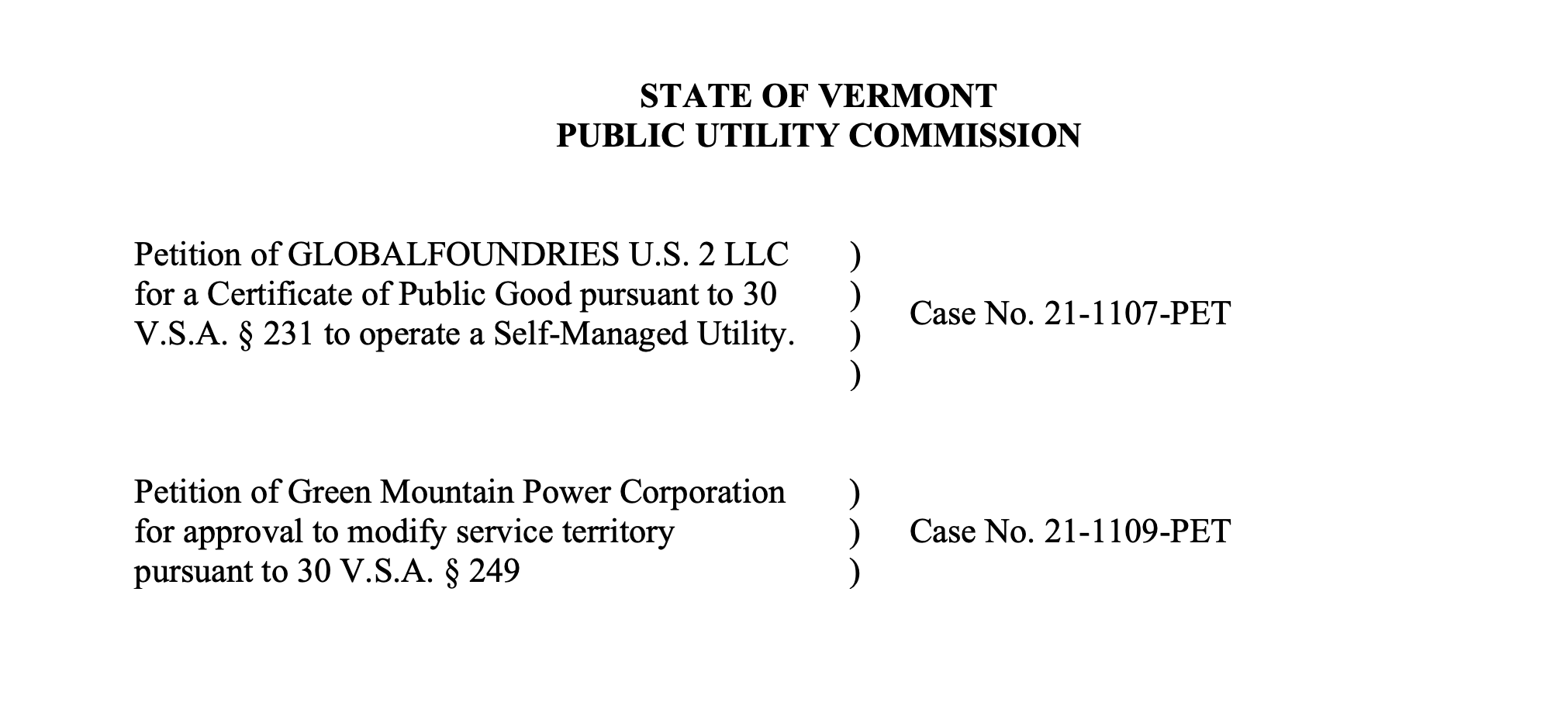
Hey, it’s time for an update on the latest bit of corporate extortion from our buddies at GlobalFoundries, the biggest private sector employer in Chittenden County. Throughout its tenure — and before it, through much of IBM’s residency at the Essex Junction facility — the companies have used their heft to get various benefits from the state government, each time hinting to pull up stakes and leave for more corporate-friendly climes if it didn’t get its way.

This time there’s a double threat. GF is seeking to set up its own private utility so it can buy power on the regional market free of various state regulations, including renewable energy and greenhouse gas standards. It’s seeking Public Utility Commission approval for the move — and threatening to go ahead with or without PUC approval.

GF makes a, shall we say, interesting argument. In essence, it argues that it doesn’t need PUC approval, but it’s applying to the PUC anyway in order to preserve Vermont’s regulatory framework. Yup, the company says it’s acting to preserve a regulatory system by seeking to essentially opt out of the system. That’s a funny way to support a system, no?

But a question has arisen over whether or not the PUC can even consider the case. The Conservation Law Foundation and AllEarth Renewables say the PUC has no jurisdiction over the request because state law doesn’t make any provision for anything like private utilities.

Last month, the parties submitted legal arguments and counter-arguments for the Commission to ponder. Wednesday 12/8 is the deadline for any additional filings on the issue; after that, presumably the PUC will schedule a hearing. All documents, public comments, schedules, etc., can be accessed on this page in the PUC website.

So where do the parties stand? I’ll give you a simplified (and hopefully reasonably accurate) version after the jump.

Continue reading

The Vague Visionary

Well, Lt. Gov. Molly Gray has come out swinging. Today she declared her candidacy for the Congressional seat now held by U.S. Senator-in-Waiting Peter Welch with a two-minute campaign video simply dripping in Vermontiness. Lots of shots of Gray working on her family farm, tramping through the countryside, walking down quaint small-town Main Streets, a heavy dose of her all-Vermont-all-the-time personal story, and…

… no specifics whatsoever on issues. No platform. No policy positions.

But as much as I poke fun at the sheer obviousness of the video, it’s a damn effective piece of work. Vermonters do love themselves some Vermont, after all; wrapping herself in the Freedom and Unity flag is a winning move. Especially since she can honestly claim all that stuff. She was born and raised on a family farm. She did go to UVM on a skiing scholarship. She did work her way through Vermont Law School. (She still owes student debt, and ain’t nothing more Vermont than that.) She did come back home after a stint with the International Red Cross.

And, with precisely the same playbook, she did come from nowhere to win election as lieutenant governor.

Only a year ago, yes. But hey, who’s counting? Her very brief political resume sure didn’t hold her back in 2020, and I don’t think 2022 will be any different.

Yeah, she’s the early favorite to win the Democratic primary and the general election (against a no-hope Republican, no doubt) and become Vermont’s first female member of Congress.

When I say “early favorite” it’s not an endorsement. It’s the political form book. It’s the Vegas line. I might not vote for her, but I wouldn’t bet against her.

Continue reading

Surrendering Before the First Shot is Fired, and Other Time-Honored Strategeries

One of the consistent themes running through recent Legislatures is Democratic majorities retreating in the face of the slightest pressure — sometimes, even before they feel any pressure at all.

The latest dispiritng entry in this Chronicle of FAIL is a House/Senate task force on public sector pensions. Despite a Democratic majority on the panel, the task force seems determined to rule out possible new revenue sources for the pension funds. If the panel has its way, employees and retirees would absorb the bulk of the pain in a pension reform plan.

As a reminder, both pension plans were massively underfunded from the early 90s to the mid 2000s. In recent years, pension managers issued overly rosy projections on investment returns. That combo platter of ineptitude has resulted in a massive shortfall in both pensions. The Task Force was created by the Legislature last spring, after a reform plan to from House leadership capsized upon launch.

That plan emphasized benefit cuts and higher payments by employees. Leadership abandoned it after furious blowback from the unions. Well, it now seems that the Task Force is bent on following the same course. Members are not even considering measures that Gov. Phil Scott might veto.

Remind me, what’s the difference between legislative Democrats and the Republican administration? Precious little in this case.

Continue reading

The Biggest Climate Obstacle in Vermont

If there was any doubt that Gov. Phil Scott would be the single biggest obstacle in the way of meaningful climate action, it was erased in the Vermont Climate Council’s 19-4 vote to adopt its 273-page “initial plan” for meeting Vermont’s climate goals. The four “no” votes came from members of Scott’s cabinet.

And that’s all you need to know.

It’s no surprise, really. The governor lobbied against the Global Warming Solutions Act, vetoed it, and watched as the Legislature overrode his veto. He argued that the Act opened the door to costly litigation and said it was an unconstitutional infringement on executive powers.

(It must be noted that Scott was so confident of his constitutional grounds that he never took the case to court. It was the prudent course; outside of the Fifth Floor, no one seemed to buy the argument — including the Legislature’s legal team and Attorney General TJ Donovan.)

The four-page statement by the Cabinet dissenters (reachable via link embedded in VTDigger’s story) is a real piece of work. While claiming to support vigorous climate action, they produced a buffet of objections worthy of Golden Corral and just as appetizing. The statement makes it clear that the Scott administration will have to be dragged kicking and screaming into climate action, and you can expect gubernatorial vetoes if the Legislature adopts measures he doesn’t like.

Continue reading

Vermont’s “Test to Stay” Program is Late, Incomplete, and Not Nearly as Effective as It Could Be

When listening to Gov. Phil Scott’s weekly Covid briefings, it’s important to read between the lines. That’s because the bad news is concealed — sometimes cleverly, sometimes incompetently — in carefully-crafted statements that seem like good news but really aren’t.

Case in point: Education Secretary Dan French’s weekly foray into rhetorical misdirection concerning Vermont’s Test to Stay program, in which students who might be at risk are tested upon arrival at school. If they’re negative, they get to stay.

That is, if your school is actually offering the program. We’re three full months into the school year now, and Test to Stay remains very much a work in progress. If French were graded on his performance, he’d get an “Incomplete” and an admonishment to apply himself if he wants to pass.

Tuesday afternoon, French ambled to the lectern, removed his mask, and told us that 43 school districts — 73% of total districts — are enrolled in Test to Stay.

Note the word “enrolled.” They’ve signed up, and that’s all we know. French offered no numbers on how many schools are actively engaged in TTS. Those enrolled districts, he said, have either started testing or are awaiting supplies. Again, no breakdown was offered.

A reminder that the Scott administration didn’t launch TTS until after the beginning of the school year. It’s been playing catch-up ever since.

Continue reading