Gov. Phil Scott’s budget address was larded with the customary straw-man punching. Irritating, predictable, grind your teeth and move on. But one of those throwaway lines implied the abandonment of a policy idea that’s appeared inevitable for quite a long time. See if you can spot it:
…for those looking for a quick and easy fix to the [Transportation Fund] short fall, I want to be crystal clear, I will not support raising the Gas tax.
Okay, first of all, NO ONE is even suggesting, let alone supporting, an increase in the “Gas tax.” I haven’t heard a single person in Vermont politics even mention such a thing. (Leave the straw man alone!)
What I have heard for years, from everyone involved in transportation policy, is that we will need to transition to a broader tax mechanism that includes electric vehicles and hybrids. Cars and trucks are more fuel-efficient than they used to be, and we are embarking on a massive shift away from gas-powered transportation. Gas tax revenues are down and will keep on declining. We’ll still be using the roads, and we’ll still need to pay for their upkeep.
Various ideas have been tossed around. Most involve a miles-driven assessment (clunky acronym MBUF, see below) where you pay based on how much you drive, not how often you get gas.
But the idea was absent from the governor’s presentation, replaced by a boilerplate rejection of an idea that nobody has proposed. Given how he frames every tax reform proposal as a tax increase (because there’s always somebody who might pay more even if the aggregate impact is a tax cut), he’s implicitly signaling his opposition to any kind of transportation tax shift. If the Legislature did approve a new tax regime that properly assessed electrics for their use of the roads and highways, I believe the governor would veto it.
Gov. Phil Scott has belatedly rediscovered some of the political courage he occasionally displayed during Donald Trump’s first term but has kept well-hidden through Trump II: The Empire Strikes Back.
And all it took was two cold-blooded killings on the streets of Minneapolis by Trump’s masked and heavily armed thugs. Well, it also took critical statements from a number of other Republicans, up to and including Texas’ archconservative Gov. Greg Abbott. Scott was far from the first to tiptoe out on that limb.
Note that Scott didn’t say a word about the first killing, that of Renee Good more than two weeks ago. A second senseless murder, that of Alex Pretti, had to happen before the governor’s moral gag reflex was triggered.
So… congratulations?
For the past year-plus, Scott has minimized any public criticism of Trump’s many excesses. And in his budget address, he sent a not-terribly-subtle message to the rest of us to Please Shut the Hell Up About Trump:
…today, even the traditional funding we’ve come to expect from Washington is uncertain. And from what I’ve seen, no amount of political posturing or strongly worded statements will change that.
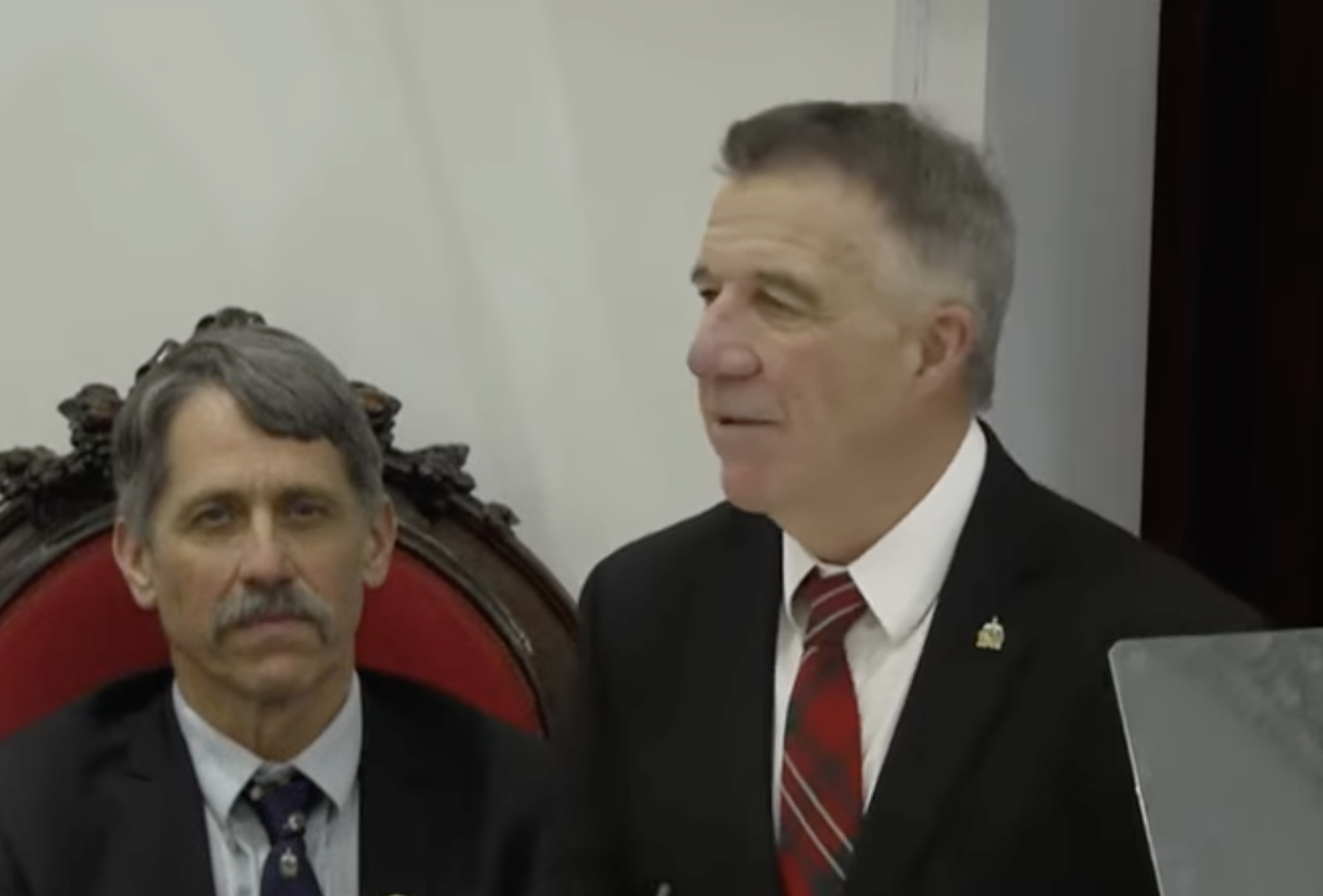
Listening to Phil Scott talk is like bathing in a vat of Malt-o-Meal: Sleep-inducing, no stimulative properties, somehow comforting and discomfiting at the same time. If you don’t believe me, just look: Scott’s buddy Lt. Gov. John Rodgers is fixin’ to nod off.
Seriously, this is the second time in a month I took notes on a gubernatorial address only to barely scratch the surface of my legal pad. (Yes, I’m old.)
Which stands to reason. He was never an orator by any means and he’s been in office for nearly a decade. If he had anything new to contribute, he would have done so long ago.
He did try to pretend there was new wine in those old, moth-eaten wineskins but it wasn’t nearly enough to persuade. Every governorship has an expiration date, and this speech was one more sign that Scott’s has come and gone. Not that he won’t win another term if he tries, since all the top-tier Democrats seem to be scared out of their minds to confront him and far too many Dems are happy to keep on voting for him because, I don’t know, he handled Covid pretty well (six years ago) and he’s not Donald Trump?
I mean, he talked about permit reform as the fix for the housing crisis. He complained about the cost of public education. He emphasized enforcement in his approach to crime, juvenile offenders, and substance use. He called for rollbacks or repeal of Democratic initiatives on climate change. Blah blah blah.
Oh, and he had the brass balls to blame Peter Shumlin for our crisis in health care costs. Shumlin, who hasn’t been in office for a decade and who abandoned his single-payer plan in The Year of Our Lord 2014. Scott cited Shumlin’s failed effort and the regulatory regime he did implement as the wellspring of our health care woes.
To which I say, well, who the hell has been governor since January 2017 and why hasn’t he done anything to counteract the alleged poison of Shumlin’s doomed reform plan?
One of Scott’s core efforts to lipstick his pig of a record was his call for reinvention of how state government does its work. As precedent, he cited reforms initiated under Dick Snelling and continued under Howard Dean, and said it was time to refresh that effort for a new era.
You know what it reminded me of? When Scott was first running for governor in 2016, he touted lean management at every opportunity. Lean management, he said, was the key to unlocking huge savings in state government:
I believe we can reduce the operational cost of every agency and department by one cent for every dollar currently spent, in my first year in office. Saving one penny on the dollar generates about $55 million in savings.
The link above is to a piece I wrote in 2020, by which time the phrase “lean management” had long been assigned to the dustbin of bankrupt political schemes. When asked about it in early 2020, Finance Commissioner Adam Greshin said “It’s not necessarily about savings, it’s about maybe spending the same amount of money and providing better value.”
Okay, fine. But that’s not what candidate Scott promised. And if he had made good on his promise, that’d be more than half a billion dollars we could have returned to taxpayers or invested in addressing some of our many challenges.
That was the unfulfilled promise of Scott, the businessman who knew how to make government work better and cheaper. And just like all the other businessmen-turned-politicians before him, he found out that the real-life work of managing government was a hell of a lot harder than he thought.
And now he’s coming back with a vaguely-described plan to reinvent state government. I’ll believe it when I see it. No, wait, I won’t believe it when I see it — I’ll believe it when it produces real, tangible savings. Not holding my breath.
I think Phil Scott has had his chance. He’s had many chances, thanks to his easy-going Real Vermonter charm and the failure of top Democrats to mount the least resistance, to put in the effort needed to rough up his Teflon coat. But it sure looks like we’re stuck with him for a while yet.
I tell you what, the next governor is going to have a massive job on their hands to clean up all the messes Scott leaves behind and all the crises he’s allowed to get worse and worse.
Gov. Phil Scott’s Education Secretary sent an opinion piece to VTDigger echoing the governor’s talking points from his State of the State Address last week. But the original bore an unfortunate headline, and the text wasn’t any great shakes either.
Headline Number One, as published by VTDigger on the evening of Monday, January 12:
“Stupid,” eh? I get the callback to James Carville’s most memorable concoction, but it bore an unpleasant whiff of condescension toward the governor’s critics. Now, Saunders’ boss has no problem with condescension toward his critics, but apparently someone thought better of the headline. Because by the next morning, “Stupid” had been excised:
It’s a shame, isn’t it, that a sharp-eyed correspondent noticed the original headline and sent me a screenshot before it could be altered?
I can’t say for certain whether the first headline came from Team Saunders or someone in Digger’s editorial room, but I suspect the former. Seems a stretch that a Digger functionary would attach a potentially offensive headline to an essay by a prominent state official.
(There’s an editor’s note at the bottom of the essay that says “Correction: Due to an editing error, an earlier version of this story contained a misleading headline.“It doesn’t identify the source of the headline. Also, “misleading’ is a funny way of saying “offensive.”)
But even without the “Stupid,” there’s something off about that headline. “It’s Not All About Taxes” carries the implication that it’s mostly about taxes, right? And I don’t think that’s the argument the Scott administration wants to deploy.
I’ll say this much for Gov. Phil Scott: He understands the assignment.
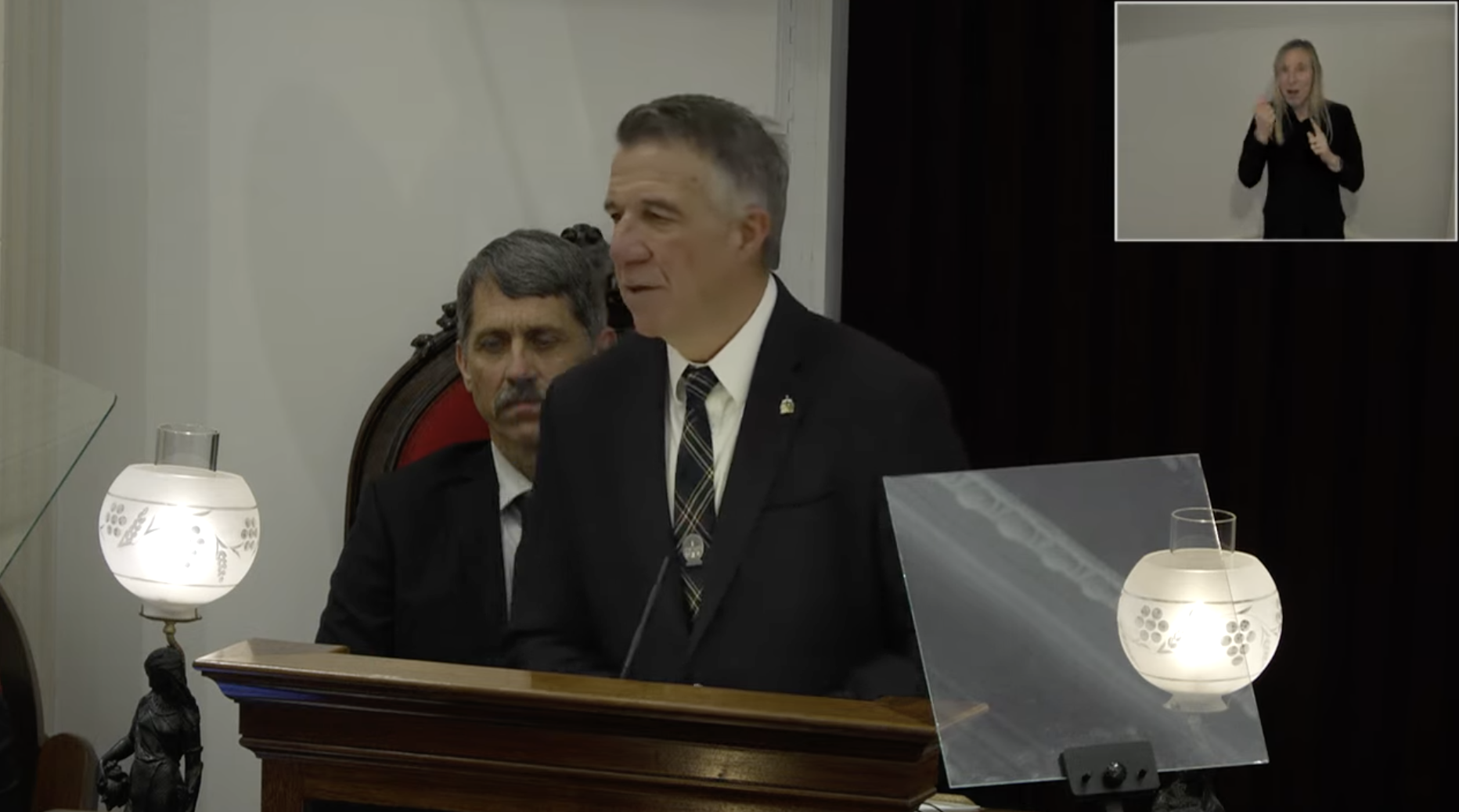
Scott delivered his State of the State address Wednesday afternoon, and virtually every one of its 40-odd minutes was devoted to a single subject: Following through on Act 73, the widely unpopular education reform law of 2025.
Speaking in purely political terms, if he wants the Legislature to keep on track with Act 73, he’s going to have to get out in front and spend heavily from his Scrooge McDuck levels of political capital trying to persuade a reluctant public that his vision is the right one. This speech indicates that he’s well aware of the assignment.
It’s only the first step, of course. If he wants to sell Act 73, he’ll have to get out there, criss-crossing the state, lobbying the Legislature, and attaching his name and image to the process. Phil Scott is the only person who can make chicken salad out of the Act 73 chicken shit.
Not that anyone gave a tinker’s cuss, but last month the Commission on the Future of Public Education issued its final report (downloadable here, scroll down to December 15). The subtly expressed message: a rebuke of Act 73 and the reform process being pursued by Gov. Phil Scott and legislative leaders.
On an alternate Planet Earth, the Commission’s report would have been widely discussed. It would have served as the basis for a wide-ranging transformation of Vermont’s public education system.
But we don’t live on that Earth. We live on the one where the Legislature, in its infinite wisdom, created the Commission one year… and then smashed a pillow over its face the following year.
Refresher: The Legislature established the Commission in 2024 and gave it a full year and a half to comprehensively review the public education system and produce a plan addressing all aspects of the situation. The Commission buried itself in the work, gathering information, holding public hearings, conducting a survey, and consulting with experts and those involved in public education. Then in 2025, legislative leaders followed the lead of the governor, who demanded an immediate, dramatic restructuring of the system in an effort to rein in costs. They passed Act 73, which dramatically diminished the Commission’s remit, created a new high-profile panel, and ordered that body to complete its work in six months’ time.
They could have had an all-encompassing plan in the identical time frame. They could have gone into the 2026 session with a blueprint that addressed educational quality, opportunity, governance and cost. Instead, their substitute task force concluded that its much narrower mandate couldn’t be accomplished in the time allotted and threw the problem right back in the Legislature’s lap. And, as Vermont Public’s Peter Hirschfeld reported this week, Act 73 faces an “uncertain future” because it “may no longer be politically viable.”
Tell me, which scenario would be better? Two guesses, and the first don’t count.
You know, if I were a distinguished Vermonter (no snickering from the back row, please) and the Legislature wanted to put me on a commission or task force or blue-ribbon la-dee-dah, I would tell them to stick their nomination where the sun don’t shine. Because more often than not, those high-profile panels give their best effort only to see it tossed onto a dusty shelf somewhere, thank you so much for your service.
After those first two rows there are 11 more. Declared Gray supporters include nine sitting state senators, 29 state representatives, plus prominent figures such as former governor Howard Dean and former lawmakers Brian Campion, Kitty Toll, and Jessica Brumsted.
It truly is an impressive haul, not only for the numbers but for the ideological spectrum. Team Gray ranges from the Progressive camp to centrist Democrats. If she’s left a lane open for another Democratic candidate, I can’t identify it. The lefty names on the list should help overcome the perception that she’s a policy squish, which helped doom her 2022 bid for Congress.
Not that endorsements are the be-all, end-all. But this is a show of force aimed at avoiding a competitive Democratic primary, and it may well succeed. Curtis-Hoff award winner Ryan McLaren, who’s been an aide to Peter Welch (as U.S. Representative and Senator) since 2015, has been considering a run for the office, but he has to know he’d be facing a very well-connected opponent with far more name recognition. This is not the softest of targets.
So how did we get here? Cue the semi-informed speculation!
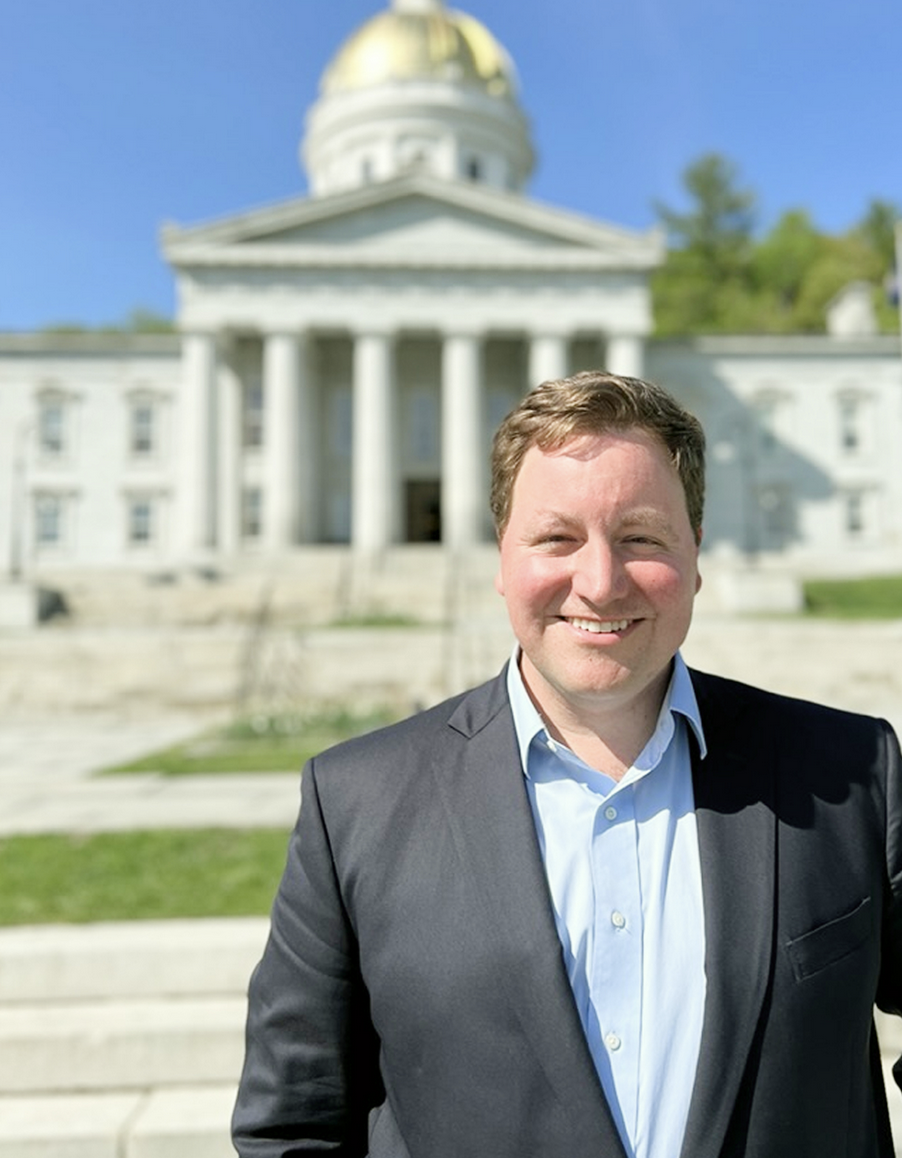
This oddly askew photo of Your Treasurer Mike Pieciak, cropped exactly as it appears above, can be found on his “End-of-Year Survey” webpage, in which Our Man feigns interest in your top priorities for the year 2026. It is, in actual fact, aimed more at building a contact list than shaping Smilin’ Mike’s political agenda.
But okay, I thought, I’ll play along. But before I relate my survey experience, I’m going to skip ahead to a little shocker that came later in the process. Because after you SUBMIT the survey, you’re redirected to a fundraising pitch that includes the following bit of news beneath yet another photo of Smilin’ Mike:
“I’m running for reelection to continue investing in housing, climate resilience, and rebuilding the middle class because every Vermonter matters.”
My first thought: Did I miss his re-election announcement? Is this his re-election announcement? Perhaps. But upon reflection, it’s probably a bit of sloppy work on the part of Team Pieciak, a failure to update the website from his 2024 campaign. (Let’s see if they fix it after they read this, which they will.)
Still, I think it’s just a matter of time before we get the disappointing news. If he was going to run for governor, we would have been hearing about it by now. He’d be charging around the state, fundraising and pressing flesh at every opportunity.
But for the moment, let’s hold onto a shred of hope that we could see a top-shelf Democrat stepping boldly into the arena in 2026 instead of hanging back in the locker room waiting for the reigning champeen to retire. There are only three people with the name recognition and connections to make a serious run: Pieciak, Attorney General Charity Clark, and Secretary of State Sarah Copeland Hanzas, who has already announced her run for re-election. It’s gonna take a lot of money, a strong message, and a unified, engaged state party to mount a credible challenge to Gov. Phil Scott.
In a previous fundraising email, Pieciak sought our help in building “a movement.” My thought was, a movement to what, exactly? Re-elect our treasurer by a lopsided margin over some novelty Republican like H. Brooke Paige? The only thing that would qualify as “a movement” in my book is making a run for governor.
State Rep. Jim Harrison, one of the most respected members of the House Republican caucus, will leave the Legislature shortly after the new year. Harrison has represented his district in rural Rutland County since 2017; before that, he’d been a Statehouse fixture for decades as head of the Vermont Retail and Grocers Association. He told The Rutland Herald that a move to Wilmot, New Hampshire is in the works simply because he and his wife have decided “it’s time to move on.”
Well, this is sudden, definitive, and puzzling. A Statehouse lifer and loyal Republican is bugging out for no particularly compelling reason. And I have a feeling that Harrison is an early canary in the coal mine. The conditions are right for a wave of resignations and retirements among Democrats and Republicans alike.
For starters, the Statehouse is a grind. The hours are long and often tedious, the demands are great and the financial rewards laughable. Honestly, it’s a wonder that anyone sticks around for very long. And then you get to the fact that this year’s session was tougher than usual, and next year’s is likely to be worse.
On Monday, Tax Commissioner Bill Shouldice issued his annual December 1 letter estimating property tax rates for the coming fiscal year. It was completely predictable bad news: Shouldice projects a roughly 12% increase in property tax bills, a figure largely attributable to Our Political Betters’ decision to kick the tax can down the road this year by using one-time money to cut a double-digit increase down to one measly percentage point. They knew, at the time, that (in the words of T Bone Burnett among many others) There Would Be Hell To Pay.
Almost as predictable as the 12% increase is the practically unanimous response from Our Betters: They plan to double down on Act 73, which (a) would have no effect whatsoever on next year’s taxes and (b) promises future cost savings that are unproven at best and chimerical at worst.
Gov. Phil Scott: ““The choice before lawmakers in 2026 is clear: show courage by working together to keep moving forward with [Act 73,] our bipartisan transformation plan.”
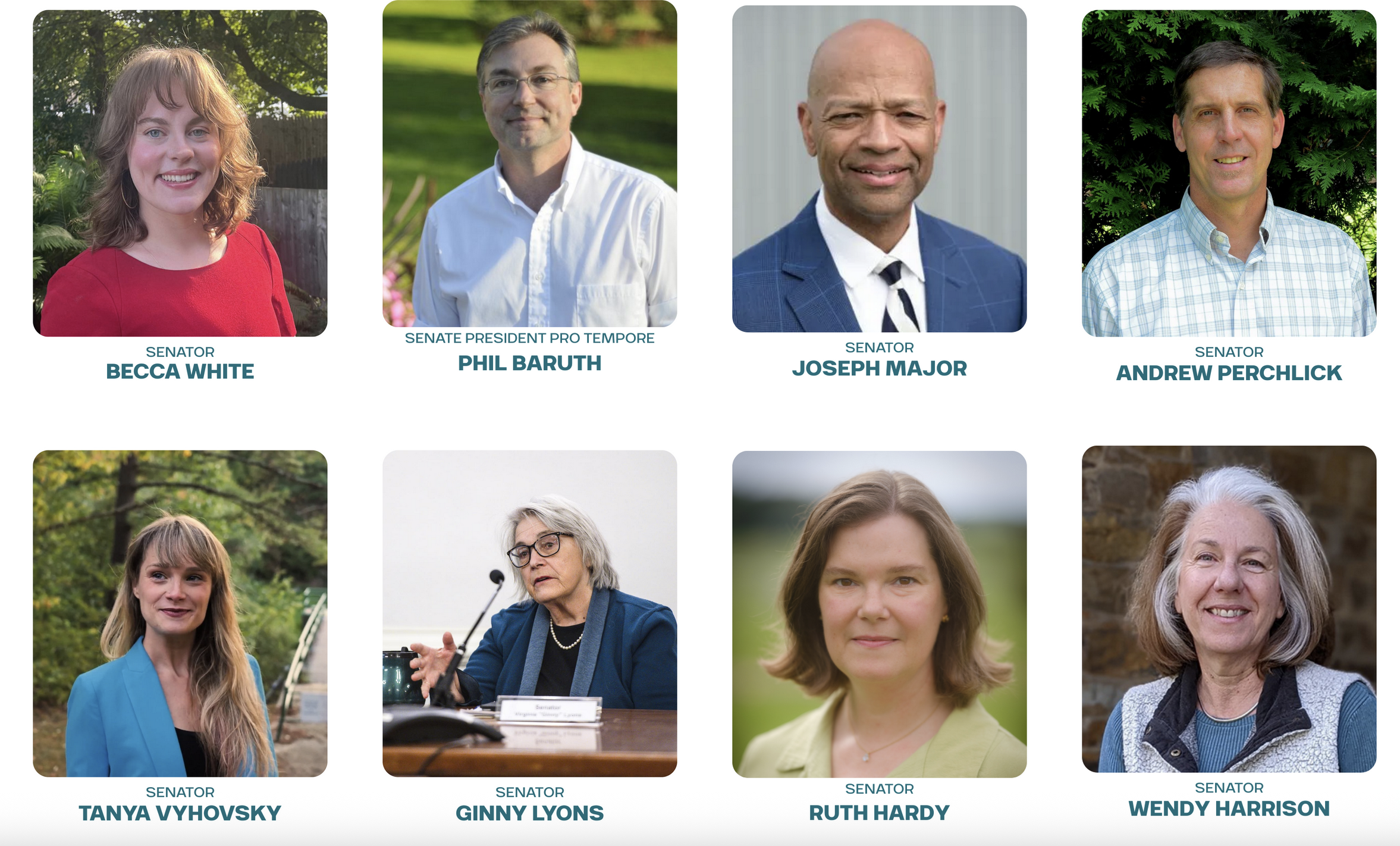
Senate President Pro Tem Phil Baruth: “Last session, the Governor and the Legislature worked together to pass a framework for transforming our education financing system. It was not easy; too many opposed any approach but the status quo… The truth is that Act 73’s success depends on even harder work being accomplished this session. I am committed to continuing this mission – in collaboration with the Governor, the House and my colleagues in the Senate…”
Oh, WHAT a brave man, heaping scorn on those who didn’t fall in line as “oppos[ing] any approach but the status quo,” when, in fact, NOBODY wanted to continue the status quo. They just happened to not like Act 73.







 The Vermont Political Observer.