Category Archives: Campaign finance

More Money Than Sense, and Other Notes from the Latest Round of Campaign Finance Reports

August 1 was another campaign finance deadline, the last before our August 13 state primary. As usual, there was plenty of interesting stuff to be found. And as usual, there was a dearth of coverage in our sadly diminished media ecosystem. VTDigger waited a few days to put together a solid campaign finance database helmed by its longtime (by Digger standards) data reporter Erin Petenko. But any effort, by anyone, to identify trends or develop insights? Haven’t seen any.

Meanwhile, those who follow me on Elon’s Hellscape know why I’m late to the party. After doing a fair bit of spadework around the deadline, I came down with Covid. It was a pretty severe case for a few days and I’m still on the mend, but I feel able to put words on the screen for the first time since last Thursday.

Anyway, got some things to say. Let’s do the toplines first and then get to the details.

  • While the vast majority of candidates have trouble scratching a few bucks together, there are a few who have more money than they know what to do with. The primary’s one week away, early voting as been going on for roughly a month, and they’re sitting on large quantities of unspent cash.
  • Many of these hopefuls have been generously funded by a cadre of Burlington-area business types, who may look at their investments post-primary and despair at the improvidence of their strategery.
  • Two candidates got a rocket strapped to their backs by those business leaders in July. John Rodgers, running for lieutenant governor, and Rep. Pat Brennan, running for state Senate. They went from near zero on July 1 to huge, nigh unspendable hauls on August 1. Congrats, I guess?
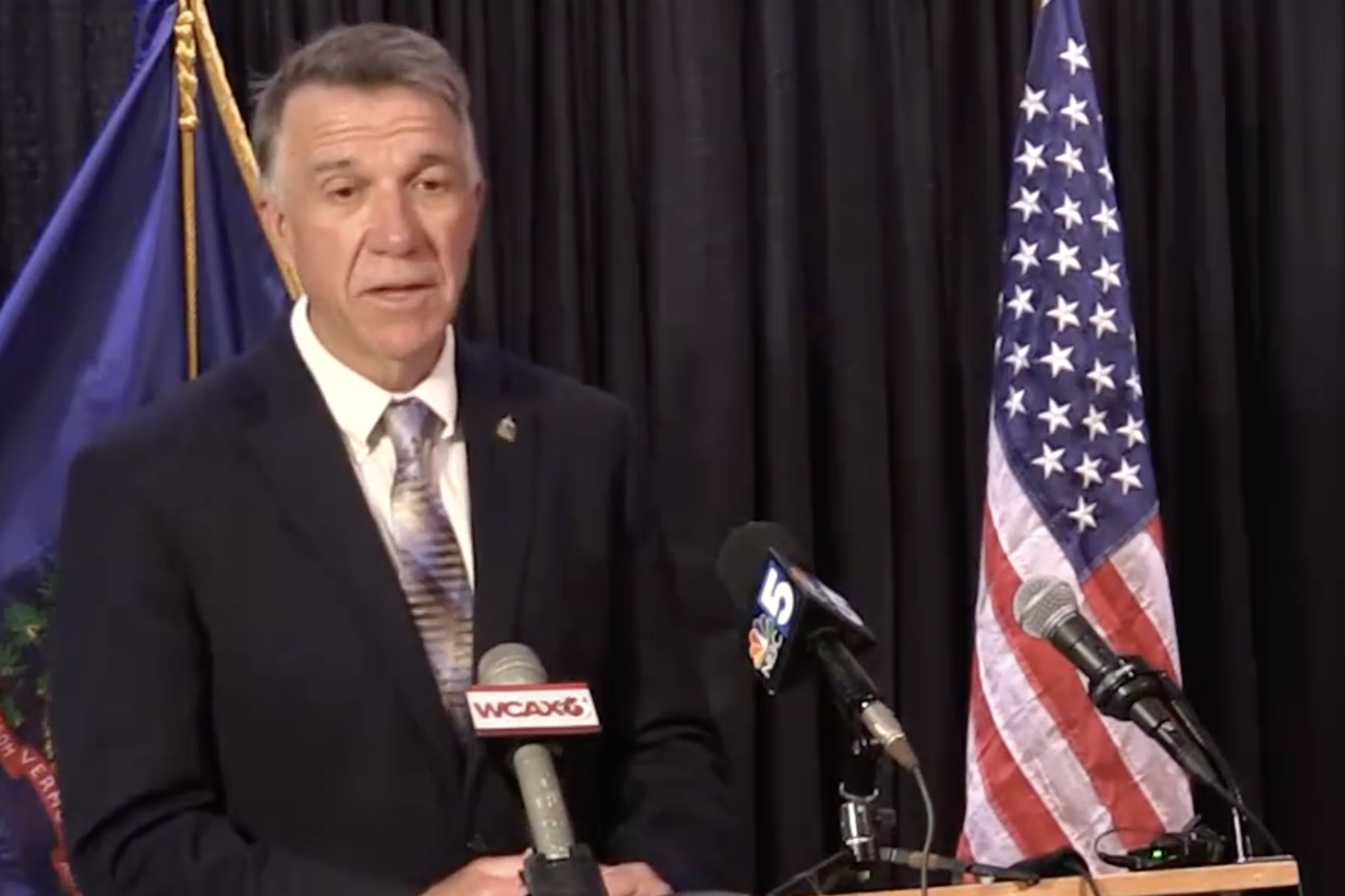
  • Gov. Phil Scott’s campaign has far outstripped Democrat Esther Charlestin. Why his people are bothering to beat the bushes, I don’t know. I remain convinced that he’d be better advised to mothball his campaign and start a PAC — or a Super PAC — and spread his influence around.
  • The oddities around Thomas Renner’s campaign for lieutenant governor continue to proliferate. His fundraising slowed to a trickle in July, but he spent very little and has a sizeable unspent reserve. I still don’t know what his campaign is about. Or who’s running it, for that matter.
Continue reading →

One Neat Trick Phil Scott Could Use to Amplify His Influence

I’ve written ad nauseam about Gov. Phil Scott’s complete withdrawal from the Vermont Republican Party and how it’s inhibited his ability to govern. Absent his influence the VTGOP has drifted far to the right, it’s so bereft of resources it hasn’t had a single paid staffer in years, its recruitment efforts are laughably poor, and its candidates largely consist of unelectable Trumpers. The result: Substantial supermajorities in the House and Senate, and a flood tide of veto overrides.

But really, I can’t say I blame him. It would be a Herculean task to clean out the VTGOP, and both party leadership and the rank-and-file would not be receptive to his approach. It would be a hell of a lot of work, and would be very likely to fail.

However. There is something the governor could do. It wouldn’t involve dirtying his hands in party affairs. Hell, he could even farm out the real work to people in his inner circle. It’s so obvious that (1) I’m surprised it didn’t occur to me sooner and (2) I’d be afraid to suggest it except that there’s no way Team Scott would ever listen to me.

It’s this: Start a political action committee focused on electing centrists and fiscally conservative but socially moderate Republicans. Let’s call it, for the sake of argument, the Phil Scott Leadership PAC. Or if he’s feeling shy, the Common Sense Leadership PAC.

Continue reading →

Who’s Spending: Another Look at Mass Media Filings

One week ago, I wrote about former senator John Rodgers’ five-figure spend for ads on WDEV radio plus other candidates’ investments in mass media. Several candidates have since reported mass media expenditures; here’s a look at the highlights.

Reminder: The next campaign finance reporting deadline is August 1, but candidates are required to promptly report mass media buys of $500 or more when they occur close to an election.

Let’s start with Rodgers. I noted that if his WDEV buy was part of a broader strategy it could pay off, but by itself it’s a questionable move. It’s a lot of money to spend on a diminished medium and an outlet that only reaches a fraction of Vermont. Well, so far it stands alone: Rodgers has not reported any more mass media spending.

The biggest mass media report from the past week comes not from a candidate, but from the Child Care Victory Fund, a political action committee affiliated with Let’s Grow Kids Vermont. The Fund is apparently trying to protect incumbent lawmakers who supported Act 76, the 2023 bill that made a “quantum leap” in child care investments, and now face primary opposition.

Continue reading →

Sooooo Many Campaign Finance Reports

Well, I didn’t really want to wade through all the campaign finance reports filed by House candidates on July 1. But there were questions I wanted to answer, so wade through them I did.

Actually, not all. I didn’t pay much attention to incumbents. I was mainly interested in new candidates. What follows is a daunting amount of detail, so let me give you some topline findings right away.

  • A lot of candidates, both new and incumbent, are having trouble complying with campaign finance law. Fortunately for them, the penalties for noncompliance are minimal to nonexistent.
  • There’s been a lot of talk about centrists running as Democrats with financial backing from rich folks and business leaders. What I found, to my mild surprise, is that there aren’t really that many of ’em. Hardly enough to qualify as a trend. But it is worth focusing attention on those trying to poach Democratic seats.
  • The Republican field of new House candidates is pretty much a financial wasteland. With a few exceptions. Emphasis on “few.”
  • One of the most successful funders of Republican House candidates is the Rutland GOPAC. But they operate on a modest scale, and aren’t likely to move the needle appreciably.

Okay, on to the details, whether you want them or not. But hey, this is a place for political sickos, so on we go.

Continue reading →

John Rodgers Has Money Now?, and Other Notes on Mass Media Filings

Well, well, well. Former Democratic state senator John Rodgers, now running for lieutenant governor as a Republican, seems to have searched for loose change in the sofa cushions and maybe the console of his (guessing here) pickup truck. Because after reporting no campaign activity whatsoever on July 1, he has now gone and spent a cool $10,400 on advertising with Radio Vermont, a.k.a. WDEV Radio.

We won’t know where the money came from until August 1, the next campaign finance deadline, but candidates are required to promptly report mass media expenditures of $500 or more when they occur close to an election. Rodgers filed his mass media report on July 11.

There are some other mass media filings of note, but let’s stick with Rodgers for the moment. I have to think — in a perverse way, I hope — he’s got some serious money behind him and that this big expenditure is part of a broader plan, because spending $10K on radio ads in central Vermont, by itself, is kind of a headscratcher. And I say that as a veteran radio guy whose brain still conjures up the radio version of the naked-in-public nightmare. (Which basically involves every possible interruption or technical problem sabotaging a live broadcast while I’m sitting at the microphone. Yep, radio in the blood.)

Continue reading →

So the VTGOP’s Big Plan Is… Try to Take Jane Kitchel’s Senate Seat? Is That It?

Previously we looked at the dire financial straits of Esther Charlestin’s candidacy for governor, where she barely cleared $12,000 in a race that calls for, by Howard Dean’s reckoning, at least 164 times that much money. Now it’s time to look at the Republican side of the ledger, where pretty much everybody can rightly cry poverty.

With one notable exception.

That would be state Rep. Scott Beck, running for the Northeast Kingdom Senate seat currently occupied by retiring Democrat Jane Kitchel. Beck has raised a rather stunning $35,565. (His likely Democratic opponent, Amanda Cochrane, has raised a respectable $7,165 and enjoys Kitchel’s active support.) Beck appears to be the only Republican candidate who has raised more than enough money to run a respectable race. Besides, of course, Gov. Phil Scott, The Exception To Every Republican Rule,

More to the point, Beck and the governor are about the only two Republicans who aren’t complete embarrassments when it comes to fundraising. Which shows you just how desperate the party’s situation is.

The VTGOP ought to be in a position for a nice little comeback in the Legislature, threatening to end the Dem/Prog supermajorities that imperil every single one of Scott’s many, many, many vetoes. And they’re not.

Instead, the wistful eyes of the donor class have largely turned to putative Democrat Stewart Ledbetter’s bid to wrest away a Senate seat from liberal Democrat Martine Gulick or Progressive firebrand Tanya Vyhovsky. Ledbetter has amassed the largest campaign kitty of any Statehouse candidate thanks primarily to Burlington-area business leaders. You know, the very people who would historically be bankrolling Republicans.

Continue reading →

VTDigger Coughs Up a Hairball, Calls it Caviar

The headline is dramatic. “Former campaign staffer sues Democratic gubernatorial candidate Brenda Siegel for unpaid wages, expenses.” Wow, sounds serious.

Well, it’s not. In fact, the story is so bereft of substance that it makes you wonder how it got published at all.

For starters, the “former campaign staffer,” Bryan Parks, worked for the Siegel campaign for less than a month. The amount of money in question is less than $600.

Six hundred dollars.

Reporter Sarah Mearhoff, who will not be submitting this shitball for any journalism prizes, gives over the first six paragraphs to Parks’ account, his disillusionment with the candidate, his insistence that it’s not about the money, and how he waited until after the election to file his suit “so as not to appear politically motivated.”

And only then, after Parks is given all that space, do we get Siegel’s response: “No, I don’t owe him any money. He is completely paid up.”

Well, there you go, right? Game, set, match, right?

Er, no.

Continue reading →

Why is the Scott Campaign Trying All of a Sudden?

Gov. Phil Scott’s re-election campaign has been sleepwalking through the 2022 campaign, barely bothering to raise money and spending very little.

Until now.

The Scott campaign’s recent financial disclosures show that, with very little time remaining, Team Scott has seriously kicked it into overdrive.

Between October 27 and November 4, the Scott campaign filed five Mass Media spending reports, totaling $63,471. That’s more than they’d spent on mass media in the entire cycle before then. The media buys break down like this: $45,086 for TV, cable and streaming ads, $1,142 for Facebook ads, and $7,513 for newspaper ads.

In the six weeks before that big splurge, the Scott campaign had spent less than $10,000 on mass media.

Why spend so much so late? In fact, almost too late? The impact will be limited because so many have already voted. Did they get a bad poll?

Continue reading →

How About That, Team Scott is Actually Trying

Well, well. Somebody in the Phil Scott campaign has turned the spigot.

After sleepwalking its way through 2022, Team Scott got serious about fundraising in the first half of October. Before that, Scott’s fundraising had totaled $151,514, which is peanuts for a gubernatorial campaign. Then, in only two weeks, Scott raised $47,544 according to his latest finance filing (due on October 15).

That’s nearly one-quarter of his campaign total in only two weeks.

Is somebody hearing footsteps?

The flurry of activity meant that for the first time in three campaign finance cycles, Scott actually outraised his challenger, Brenda Siegel. She took in $16,613 in the first half of October for a campaign total of $163,342. That’s a solid pace for only 15 days. As usual, Siegel donors far outnumbered Scott’s. She’s received donations from 875 individuals and groups compared to Scott’s 545.

Neither candidate spent much money in the period. Siegel has more than $84,000 in the bank, which should allow her to finance a significant TV ad buy. Scott has $91,519 on hand, plus a nice $272,000 kitty left over from previous campaigns, so he’s got plenty to spend if he wants to.

Now, let’s take a closer look at who suddenly opened their wallets for the governor.

Continue reading →

The Dem Statewides Are Doing Just Fine, Thanks

In a post following the September 1 campaign finance deadline, I noted that “three of the big Democratic primary winners emptied their coffers in an effort to get across the finish line.” It put them in a potentially hazardous position for the general campaign.

Well, it would have if their Republican opponents weren’t all unknown, unfunded, and largely unloved.

I speak of Charity Clark (attorney general), David Zuckerman (lieutenant governor), and Sarah Copeland Hanzas (secretary of state). Zuckerman had $16,771 in the bank on the first of September; Clark actually entered September with a $1,200 shortfall, Copeland Hanzas had about $12,000 on hand, but only because she reported loaning her campaign $14,000. So, according to her own report, she had a $12,000 deficit outside of her own pocketbook.

Well, hold on a minute. According to her campaign manager Lizzy Carroll, that $14,000 number was a mistake. The actual self-loan was $3,500, which is not insignificant but it does make her bottom line look a lot better. The deficit falls from $12,000 to about $1,500. (She carried forward a $1,160 surplus from past campaigns, which would lower her real deficit to less than $400.)

So, where are the three of them now?

Continue reading →