So March 15 was the first campaign finance deadline (in Vermont) of 2026, and the second won’t come until July 1, mere weeks before the August primary. Yesterday was a big day, in other words, and there were some clear winners in the field. And not necessarily the winners you’d want, if you were to distribute the available Democratic dollars to the top-priority contests.
Which are, to my eye: Running a credible race for governor, rebuilding the state Senate majority, and knocking Lt. Gov. John Rodgers off his perch. It will be no shock whatsoever to learn that the usual Democratic donors seem to be paying little attention to the gubernatorial, and a lot of cash is being funneled into primary contests for safe Democratic seats. The only race where priority and cash are equivalent is in the Democratic race for lieutenant governor.
One saving grace: Many of the top fundraising candidates were drawing, in part, from unique sources of support rather than draining the mainstream Democratic pool. Many of Nikhil Goyal’s many, many donors, for instance, wouldn’t have given to anyone else.
The race for biggest moneybags of March is a virtual tie between Molly Gray and Ryan McLaren, Democratic candidates for lieutenant governor. They each raised more than $150,000, which is awfully impressive. Lookin’ like a red-hot race there.
Biggest moneybags per capita: state Senate candidate Goyal, who raised the eye-popping sum of $86,193.
Much better than expected: Recently declared Democratic candidate for governor Amanda Janoo, who cleared the $80,000 mark. That’s a really strong start, but she still has a ton of work to do.
Highest burn rate: Treasurer Mike Pieciak, who somehow managed to spend close to $60,000 in the early stages of a race for re-election he’s all but certain to win. Much of that cash went to expensive out-of-state campaign operatives. It’s almost as if he’s laying the groundwork for a seemingly inevitable run for governor.
There are your toplines. For those as obsessed with campaign cash as This Observer, more details follow.
Meet Amanda Janoo, the first person to declare a Democratic candidacy for governor in 2026. She follows in the lineage of past challengers to Gov. Phil Scott in one very important — and unusual, if not unprecedented — way: No one who has been the Democratic gubernatorial nominee since Peter Shumlin’s last run in 2014, meaning no Phil Scott opponent ever, entered the race while holding elective office as a pure-D Democrat.
And that’s a massive, damning indictment of the Democratic establishment.
Let’s do the rundown.
2016: Sue Minter, former state representative and member of Shumlin’s cabinet, the only Scott challenger who had ever held any elective office as a pure-D Democrat. She’d served three terms as a state representative from Waterbury, ending in 2011.
2018: Christine Hallquist, CEO of the Vermont Electric Cooperative.
2020: Lt. Gov. David Zuckerman, who served as a Progressive/Democrat and got little to no support from the Democratic Party or its donor base.
2022; Brenda Siegel, nonprofit executive and advocate on housing and homelessness policy.
2024: Esther Charlestin, co-chair of the Vermont Commission on Women. (She had served on the nonpartisan Middlebury select board.)
And now Amanda Janoo, who’s had a very impressive career completely outside the realm of partisan politics. She has stepped forward at a time when top-tier and second-tier and bottom-of-the-chili-pot Democrats are nowhere to be seen.
Again, a damning indictment of the party and its (cough) leaders.
Got an email today from your friend and mine, Treasurer Mike Pieciak, that just made me mad. The more I thought about it, the madder I got.
Pieciak, for those just joining us, has all but foresworn a run for governor in favor of an almost certain run for re-election. He won without breaking a sweat in 2022 and 2024, and will likely face another hopeless Republican this year. He had nearly $200,000 in his campaign account as of the last reporting deadline, July 2025.
And he’s actively fundraising.
Not only that, he’s fundraising with all the artificial urgency he can muster.
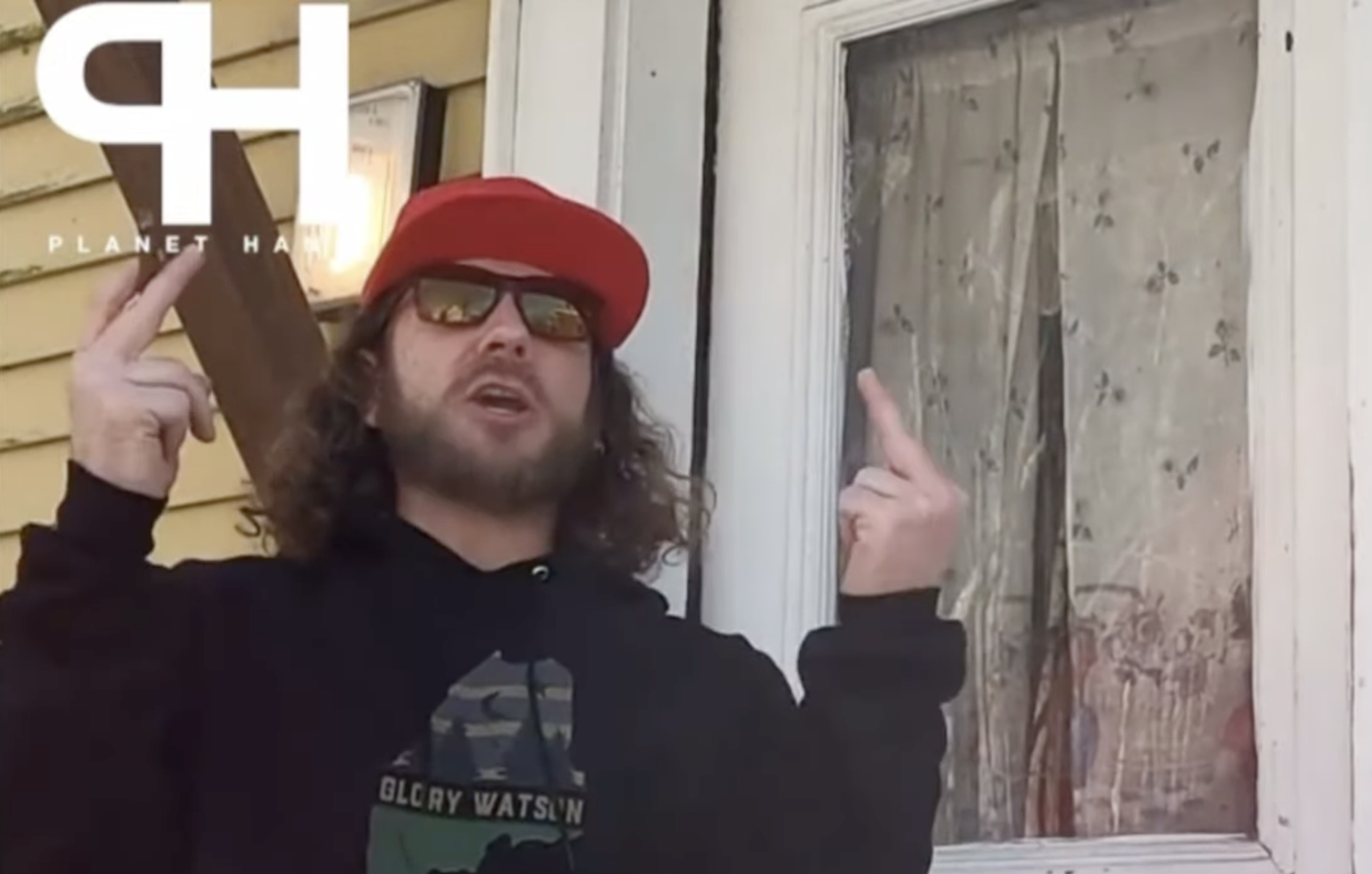
Dearie me. I seem to have triggered a bit of a firestorm in Vermont political circles with last week’s piece about Hank Poitras, the foul-mouthed videographer, podcaster, and (shamefully) chair of the Windham County Republican Committee. (I’d referred to him as chair of the Brattleboro party committee, per The Brattleboro Reformer, but apparently he’s a bigger fish than that.) Poitras is pictured here in one of his own videos, thrusting middle fingers skyward and shouting “Fuck all you liberal motherfuckers!” just like a good Phil Scott Republican. (I think that’s how the governor kicks off his weekly press conferences, but I could be mistaken.)
My post, which featured some of Poitras’ more loathsome on-the-record comments, caused consternation in VTGOP circles and prompted Vermont Public’s Peter Hirschfeld and Lola Duffort (wow, team effort) to produce a very good piece about The Artist Who Styles Himself As “Planet Hank.”
Poitras was scheduled to share a stage with VTGOP chair Paul Dame and Barre Republican Rep. Michael Boutin last Friday evening. After media inquiries, Boutin sought to remove Poitras from the program and then withdraw from the event before changing his mind following “prayer and counsel,” according to Boutin’s Facebook page, where you can watch his brief address to the smallish crowd.
It also seems to have scared Dame away from a personal appearance. He begged off at a very late stage, citing “unexpected family obligations,” and sent along a video message instead. Probably had to walk the dog or summat.
I have to tell you, this is one of the proudest moments of my decade-plus as a Vermont Political Observer.
First, a necessary caveat. Treasurer Mike Pieciak remains the betting favorite to become governor whenever Phil Scott decides to ride off into the sunset in his #14 race car. Pieciak is popular and well-connected in Democratic circles and is a proven fundraiser. He’d also be a fine choice, given his financial and managerial expertise; the next governor is going to inherit many challenges from our risk-averse incumbent. It’ll be kind of a “12 labors of Hercules” situation, and Pieciak has the necessary administrative muscle.
But you know, if we find ourselves in the year 2032 and Charity Clark or Molly Gray or Kesha Ram Hinsdale or Tanya Vyhovsky (or, if you prefer, John Rodgers or Scott Beck) is governor and Pieciak is nowhere to be seen, having pulled a TJ Donovan and abandoned politics in favor of a cushy corporate job, you might look back on today — Wednesday, February 11, 2026 — as the first step down that long sad trail.
I refer to the new issue of Seven Days, featuring Kevin McCallum’s fine writeup of the Democrats’ failure, so far, to identify even a single candidate for governor. It raises the single biggest question in Democratic politics: “Why isn’t Mike Pieciak running?” and provides some unflattering answers.
In politics, you can go from “The Next Big Thing” to “Who Dat?” in the blink of an eye. And while it’s way too early to be writing political obituaries, you’re starting to see a few brown spots on the Pieciak banana.
The most interesting race in the August primary is the Democratic contest for lieutenant governor. Three candidates have already filed: former LG Molly Gray, Democratic operative and Peter Welch staffer Ryan McLaren, and Esther Charlestin, 2024’s sacrificial la — ahem, Democratic candidate for governor. Charlestin, with all due respect, we can dismiss with gratitude for her willingness to serve. This is a race of two well-connected Dems, Gray and McLaren.
Gray was first out of the gate with a truly impressive haul of endorsements including 38 sitting lawmakers and a bunch of high-profile formers like Howard Dean and Kitty Toll.
This week, McLaren formally launched his bid at an Essex restaurant featuring what his campaign called “a packed venue” including “enthusiastic supporters, community leaders, and organizers from across Vermont.” The campaign’s press release boasted its own truly impressive endorser list: former treasurer Beth Pearce, former secretary of state Jim Condos, former LG David Zuckerman*, former House speakers Mitzi Johnson and Shap Smith, and an undisclosed “dozens of current and former members of the Vermont Legislature.” (The release also claimed endorsements from “hundreds of other community leaders,” but McLaren’s campaign website does not offer a list of endorsers.)
*Which ought to end the persistent speculation that Zuckerman will run for something in 2026. I honestly don’t think he will. He’s certainly not making another bid for Vermont’s own bucket of warm piss.
A couple of notes on the press release before I go on. One of those addressing the crowd was Kathryn Becker Van Haste, described as a “veteran Congressional aide and Senate campaign manager,” pointedly not described as a longtime aide to Independent Sen. Bernie Sanders. Seems an odd omission considering Bernie’s popularity, but maybe hee didn’t want his name brandished at a Democratic event.
Then there was this unintentional laugh line from Van Haste: “We need someone who doesn’t just want the title, but wants to do the work.” Uh, well, about that. The office of lieutenant governor, with all due respect, is pretty much all title and no work. The LG presides over the state Senate, but can only have an impact on “the work” beyond gavel-banging if allowed to do so by Senate leadership.
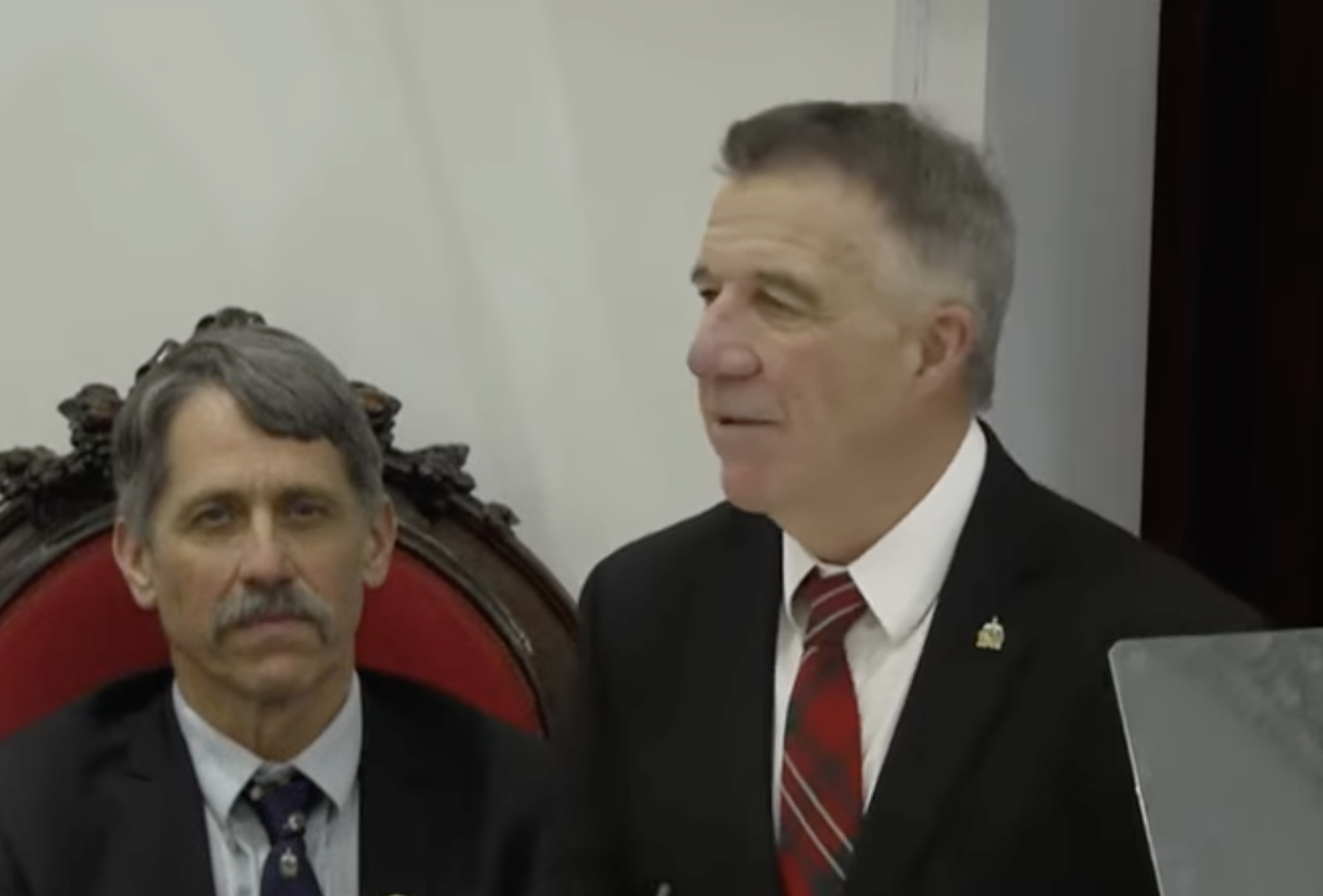
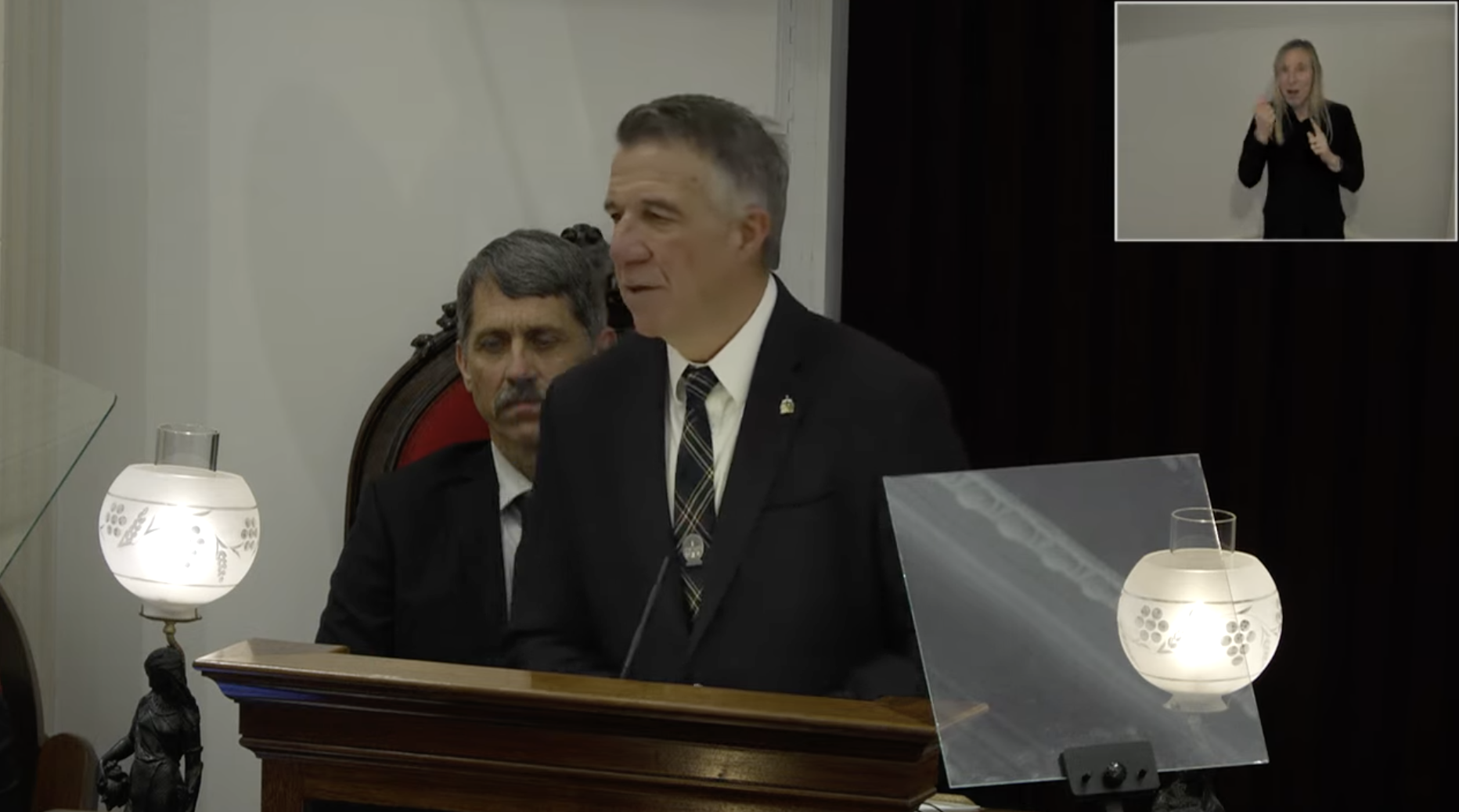
Listening to Phil Scott talk is like bathing in a vat of Malt-o-Meal: Sleep-inducing, no stimulative properties, somehow comforting and discomfiting at the same time. If you don’t believe me, just look: Scott’s buddy Lt. Gov. John Rodgers is fixin’ to nod off.
Seriously, this is the second time in a month I took notes on a gubernatorial address only to barely scratch the surface of my legal pad. (Yes, I’m old.)
Which stands to reason. He was never an orator by any means and he’s been in office for nearly a decade. If he had anything new to contribute, he would have done so long ago.
He did try to pretend there was new wine in those old, moth-eaten wineskins but it wasn’t nearly enough to persuade. Every governorship has an expiration date, and this speech was one more sign that Scott’s has come and gone. Not that he won’t win another term if he tries, since all the top-tier Democrats seem to be scared out of their minds to confront him and far too many Dems are happy to keep on voting for him because, I don’t know, he handled Covid pretty well (six years ago) and he’s not Donald Trump?
I mean, he talked about permit reform as the fix for the housing crisis. He complained about the cost of public education. He emphasized enforcement in his approach to crime, juvenile offenders, and substance use. He called for rollbacks or repeal of Democratic initiatives on climate change. Blah blah blah.
Oh, and he had the brass balls to blame Peter Shumlin for our crisis in health care costs. Shumlin, who hasn’t been in office for a decade and who abandoned his single-payer plan in The Year of Our Lord 2014. Scott cited Shumlin’s failed effort and the regulatory regime he did implement as the wellspring of our health care woes.
To which I say, well, who the hell has been governor since January 2017 and why hasn’t he done anything to counteract the alleged poison of Shumlin’s doomed reform plan?
One of Scott’s core efforts to lipstick his pig of a record was his call for reinvention of how state government does its work. As precedent, he cited reforms initiated under Dick Snelling and continued under Howard Dean, and said it was time to refresh that effort for a new era.
You know what it reminded me of? When Scott was first running for governor in 2016, he touted lean management at every opportunity. Lean management, he said, was the key to unlocking huge savings in state government:
I believe we can reduce the operational cost of every agency and department by one cent for every dollar currently spent, in my first year in office. Saving one penny on the dollar generates about $55 million in savings.
The link above is to a piece I wrote in 2020, by which time the phrase “lean management” had long been assigned to the dustbin of bankrupt political schemes. When asked about it in early 2020, Finance Commissioner Adam Greshin said “It’s not necessarily about savings, it’s about maybe spending the same amount of money and providing better value.”
Okay, fine. But that’s not what candidate Scott promised. And if he had made good on his promise, that’d be more than half a billion dollars we could have returned to taxpayers or invested in addressing some of our many challenges.
That was the unfulfilled promise of Scott, the businessman who knew how to make government work better and cheaper. And just like all the other businessmen-turned-politicians before him, he found out that the real-life work of managing government was a hell of a lot harder than he thought.
And now he’s coming back with a vaguely-described plan to reinvent state government. I’ll believe it when I see it. No, wait, I won’t believe it when I see it — I’ll believe it when it produces real, tangible savings. Not holding my breath.
I think Phil Scott has had his chance. He’s had many chances, thanks to his easy-going Real Vermonter charm and the failure of top Democrats to mount the least resistance, to put in the effort needed to rough up his Teflon coat. But it sure looks like we’re stuck with him for a while yet.
I tell you what, the next governor is going to have a massive job on their hands to clean up all the messes Scott leaves behind and all the crises he’s allowed to get worse and worse.
Were you still holding out hope that the very popular Treasurer Mike Pieciak might make a run for governor, becoming the most credible Phil Scott challenger since, I’d say, Sue Minter? (Obligatory clarification: Each Democratic nominee has been worthy, but none have had the resources or unified party support needed to mount a serious challenge to Scott.)
Well, I think you can kiss that little spark goodbye. Because his advisor slash campaign consultant Natalie Silver, one of the most accomplished Democratic operatives of recent years, has jumped off the Mikey Train. She went on some sociopath’s social media platform to announce she’s been hired as campaign manager for Maura Sullivan, a candidate for the Democratic nomination in New Hampshire’s first Congressional district. That seat is currently held by Dem Chris Pappas, who’s running for U.S. Senate.
Silver’s history in brief: She was TJ Donovan’s top aide during most of his stint as attorney general. Since then, she’s worked for then-congressman Peter Welch and managed Becca Balint’s very successful campaign to succeed Welch. In short, she knows how to pick winners or help create them. Silver continued to work for Balint until late 2024, when she started showing up on Pieciak’s campaign finance reports as a consultant.
It was a bit of a curious move. Balint had a safe seat in Congress and the inside track to move up to the Senate whenever the next opening occurred. To me there was only one explanation for switching to Pieciak, who can keep on being Treasurer as long as he wants: She expected him to run for governor and wanted to lead the charge.
Pure speculation on my part, but you can see the reasoning.
Under Silver’s stewardship, Pieciak was far more publicly and politically active than was required for a Treasurer with no discernible Republican opposition. He routinely raised a lot more money than any other Democratic statewide. Which again, seemed to signal a run for higher office.
And now Silver is gone. My take: if Pieciak were running for governor this year, she would have welcomed the challenge. If he’s gonna wait for Phil Scott to die or retire, well, Silver’s not playing that game.
So, who wants to run for governor? Anyone? Bueller? Bueller?
I’ll say this much for Gov. Phil Scott: He understands the assignment.
Scott delivered his State of the State address Wednesday afternoon, and virtually every one of its 40-odd minutes was devoted to a single subject: Following through on Act 73, the widely unpopular education reform law of 2025.
Speaking in purely political terms, if he wants the Legislature to keep on track with Act 73, he’s going to have to get out in front and spend heavily from his Scrooge McDuck levels of political capital trying to persuade a reluctant public that his vision is the right one. This speech indicates that he’s well aware of the assignment.
It’s only the first step, of course. If he wants to sell Act 73, he’ll have to get out there, criss-crossing the state, lobbying the Legislature, and attaching his name and image to the process. Phil Scott is the only person who can make chicken salad out of the Act 73 chicken shit.
After those first two rows there are 11 more. Declared Gray supporters include nine sitting state senators, 29 state representatives, plus prominent figures such as former governor Howard Dean and former lawmakers Brian Campion, Kitty Toll, and Jessica Brumsted.
It truly is an impressive haul, not only for the numbers but for the ideological spectrum. Team Gray ranges from the Progressive camp to centrist Democrats. If she’s left a lane open for another Democratic candidate, I can’t identify it. The lefty names on the list should help overcome the perception that she’s a policy squish, which helped doom her 2022 bid for Congress.
Not that endorsements are the be-all, end-all. But this is a show of force aimed at avoiding a competitive Democratic primary, and it may well succeed. Curtis-Hoff award winner Ryan McLaren, who’s been an aide to Peter Welch (as U.S. Representative and Senator) since 2015, has been considering a run for the office, but he has to know he’d be facing a very well-connected opponent with far more name recognition. This is not the softest of targets.
So how did we get here? Cue the semi-informed speculation!


 The Vermont Political Observer.