Author Archives: John S. Walters

Unknown's avatar

About John S. Walters

Writer, editor, sometime radio personality, author of "Roads Less Traveled: Visionary New England Lives."

It Wasn’t the Best Week to Roll Out Your Ebenezer Scrooge Impression

Last week, the Budget Adjustment Act sailed through the House on more or less a party-line vote, with Republicans raising whiny objections over a penny-ante increase in funding for the General Assistance Emergency Housing program. Gov. Phil Scott did his share of whining as well, and there’s been some talk of a possible BAA veto. Which, if it happens, would be utterly ridiculous.

But amidst all the Republican whining, the most ignorant, shameful, bigoted remarks actually came from a Democrat. Stay tuned for more on that.

This all happened against the backdrop of a tremendous piece of journalism that dropped the day of Scott’s comments and the day before the House’s BAA debate: a story by Vermont Public‘s Liam Elder-Connors and Seven Days Derek Brouwer exploring how many unhoused people have died in Vermont, a statistic the state has so far declined to keep. With that story on the front page, it was a bad time to bitch about an extra $1.8 million in motel vouchers.

The two reporters found that “at least 82 people in Vermont… died between 2021 and 2024 while appearing to reside in an emergency shelter or outdoors.” That’s almost certainly an undercount; no one in Vermont officialdom tracks that number, nor does anyone seem interested in doing so. Outgoing Health Commissioner Dr. Mark Levine said it would be “very challenging” to collect such data.

Not as challenging as, say, sleeping outside in the dead of winter, but sure, let’s only keep the easy statistics.

Continue reading
The Governor Cannot Possibly Be Serious About His Education Plan

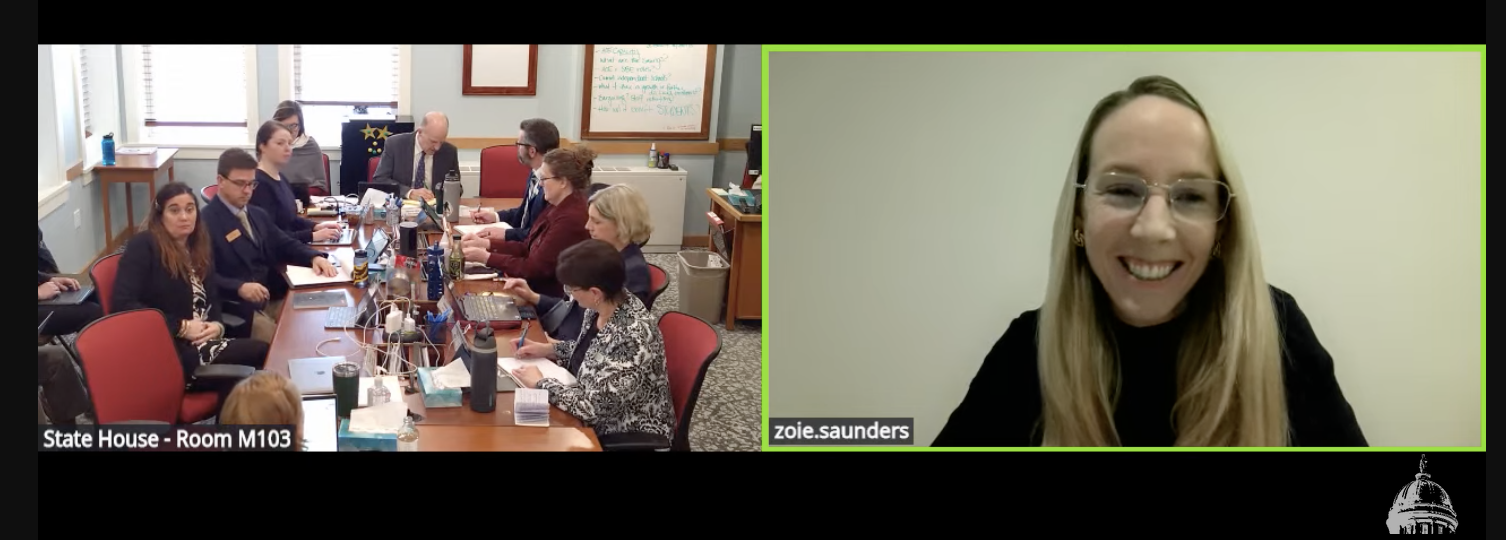
The long, slow rollout of Gov. Phil Scott’s education plan took another step yesterday, as Interim Education Secretary Zoie Saunders* testified before the House Education Committee about the governance portion of the plan. Her testimony was met with widespread befuddlement, as reflected in a series of “What the heck does this mean?” questions from majority Democrats on the committee.

*She dropped the “Interim” when she introduced herself to the committee**.

** It has been pointed out that Scott has appointed Saunders permanent secretary. Okay, but her entire appointment is still subject to a court ruling, so it remains to be seen whether she’s permanent or done.

Before we get to the sources of that befuddlement, we must mention the poison pills contained within Scott’s plan. First, it would implement statewide school choice and throw the doors open for unfettered expansion of the current “approved independent schools” system. Every public school student would have to be offered some measure of choice. That’s a nonstarter for Democrats, or it ought to be, because it poses a very real threat to the finances of actual public schools.

Second, it would centralize power over the education system to a remarkable degree. Local school boards would be gone. There would be only five large school districts. Each local school would have a “School Advisory Committee” with very little authority. Most of the state Board of Education’s powers would be assumed by the Agency of Education. And the current “boards of cooperative education services,” created and administered by school supervisory unions, would be replaced by “Education Service Agencies” controlled by the Agency of Education. According to the Scott plan, one of the purposes of this move is “to limit mixed messaging.” In other words, to stifle dissent.

One (anonymous) Democratic lawmaker suggested to me that House committees ought to just send this plan directly to the House floor and watch as Scott and Republican lawmakers — almost all of whom represent small, rural school districts at risk of disenfranchisement and school closures — try to explain themselves, or risk serious injury as they back away from the plan as quickly as possible.

To say this plan is doomed is to indulge in understatement. Besides the presence of poison pills, there are other signs that Scott doesn’t intend for this plan to be taken seriously. What he wants, I suspect, is for the Democrats to reject the plan so he can accuse them of refusing to face the issue. He has asked them to “come to the table,” but he has laid out a buffet of awfulness. It’s not an invitation; it’s a trap.

Continue reading

Bad Grammar, Typos, and Plagiarism: Welcome to John Rodgers’ Official Biography

I happened to visit Lt. Gov. John Rodgers’ official website today, and I couldn’t help but notice that his bio refers to him as “the 84rd Lt. Governor of Vermont.”

Yeah, “84rd.”

Haha, well, everybuddy makes misteaks. I added a line about it to my previous post about Rodgers’ campaign finance misadventures. It’s the little things that make this blog fun.

And then I kept reading, and it kept getting worse. Rodgers’ bio is chock full of misspellings, typos, and bad grammar.

But wait, there’s even more. I now know how that “84rd” thing got in there. Rodgers stole the first line of his official bio hook, line, and “rd” from his predecessor (and 83rd lieutenant governor) David Zuckerman’s official bio.

Now, I trust that if Rodgers has half a brain, he’ll fix his bio right quick. So let’s get the grisly details down for posterity’s sake.

Continue reading

It’s a Poor Carpenter Who Blames His Tools

Oh looky here. Turns out the campaign of Lt. Gov. John Rodgers made “major errors” in its campaign finance filings.

Well, I’m sure Rodgers accepted full responsibility like the Real ManTM he is — wait, what? He blamed the campaign finance reporting system?

Yep.

“The system sucks,” Rodgers told Seven Days in a moment of sober reflection.

Shall we assume that when he shoots at a deer and misses, he slams his gun on the ground and stomps it into little pieces?

Continue reading

Whistling Past the Elephant in the China Shop (UPDATED)

Update. Within 24 hours of this post going live, the governor announced his first (and so far only) concrete response to the Trump presidency: an interagency task force to assess the potentiial impacts of Trump tariffs on goods imported from Canada and Mexico. Must have been a complete coincidence, right?

You might think that the deliberately shambolic start of the second Trump presidency would have been a major topic at Gov. Phil Scott’s January 30 press conference. After all, in a very short period of time Trump has issued a blizzard of executive orders, many of dubious legality and/or constitutionality, that are designed to radically recast or possibly euthanize the federal government. The one most directly pertinent to governing the state of Vermont was Trump’s since-withdrawn threat to put an immediate halt to a wide range of federal payments. (The threatened imposition of tariffs on Canadian imports would have had a profound effect on Vermont, but they hadn’t been bruited as of January 30 and have since been put on hold.)

You might think the specter of Trump would have dominated Scott’s presser, but you’d be wrong. The topic of the day was, shocker, “affordability,” especially with regard to Scott’s housing plan and his extremely modest tax reduction plan. Which, at $13.5 million, would average out to a scant $20 a year for every Vermonter.

(Of course, it wouldn’t be distributed evenly. The three elements of his plan are (1) an expansion of the Democrats’ child tax credit, (2) an end to state taxation of military pensions, and (3) an end to state taxation of Social Security benefits. The latter two, aimed largely at retirees, seems an odd way to address Vermont’s demographic challenges. Our biggest demographic shortfall is in mid-career adults, who are mainly too old to benefit from a tax credit on young children and not old enough to benefit from the other two provisions.)

Neither Scott nor his officials voluntarily addressed how Trump setting fire to the federal government might impact Vermont. None of the assembled reporters asked a single question about it until the 44-minute mark in a 47-minute presser. Almost an afterthought, then. But Scott’s response was highly informative — for what he didn’t say, more than for what he did.

Continue reading

Kicking the Can All the Way to 2050

We already knew Gov. Phil Scott has called for a full-scale retreat from fighting climate change. But in his January 30 press conference, he made it clear he not only wants to eliminate any mandatory emissions reduction targets this side of 2050, avoid any potential legal challenge over the state’s failure to meet 2025 or 2030 targets, extract all the teeth from the Climate Action Council, implement a much more permissive measuring stick for emissions, and weaken the Renewable Energy Standard, but he overtly stated he wants no further action at all for another two years.

Yep. He had already tasked his officials with devising a plan to meet the 2050 emissions targets. But in his presser, he specified the delivery date for that plan.

December of 2026.

Sure, let’s put a freeze on climate policy while his administration takes its sweet damn time coming up with a 25-year plan — and finalizes it after the next election. When Scott might well be on his way out of the corner office. If this term is his last, this marvelous two-year effort is bound for the dustbin of history.

But really, the point is not to create an actionable blueprint. It’s to take himself off the hook for climate action anytime soon.

Continue reading

The Brave, the Bold, and The Bleh

Our brand new lieutenant governor has yet to learn the fine art of sitting within camera range during a big event. During Gov. Phil Scott’s budget address Tuesday, John Rodgers spent most of his time looking bored, which isn’t a great thing when he’s supposedly cheerleading for his fellow Republican,.

In fairness to Rodgers, it wasn’t the most inspiring of occasions. Scott’s much-touted budget address was kind of a tepid affair. The freshly reinforced Republican ranks in the House and Senate gave the governor some hoots and whistles as he entered and departed, but only managed a pair of half-hearted standing ovations during the speech.

I guess we shouldn’t expect anything different after eight years of this guy. But he and his minions have been talking a lot about bold action in 2025. And while there were bits of bravery peeking out here and there — like pushing his fairly radical public school reorganization plan and officially calling for a full retreat on climate action* — there was a hell of a lot more incrementalism. A whole bunch of initiatives with teeny-tiny price tags (on the scale of a $9 billion dollar budget), many more in $2-3 million range than anything truly impactful.

*”Brave” and “stupid” are not mutually exclusive.

There was also one huge omission. Scott never once mentioned the threat posed by Donald Trump to the federal funding that pays for so much of what state government does. He didn’t address any contingency planning or possible budgetary adjustments. It was a glaring omission on the very day when VTDigger reported that Team Scott “is trying to understand the potentially sweeping statewide impact” of Trump’s broad freeze on federal spending.

Maybe that’s because many of Vermont’s new Republican lawmakers are diehard Trumpers, and Scott might have gotten an unfortunate reaction from his “friends” if he said anything that even hinted at criticism of Trump’s scorched-earth approach to governance.

Continue reading

Gentlefolk, Start Your Engines

It’s been two and a half months since Election Day, which means I’m way behind the Political Observer curve in terms of looking ahead to the next election.

Or perhaps the 2028 election, depending on when Gov. Phil Scott decides to retire undefeated. Because until that happens, there won’t be a serious contest for the Democratic nomination — and when it happens, we’re going to see a political stampede the likes of which we haven’t seen since Jim Douglas’ retirement in 2010 touched off a five-way contest in the Dem primary.

If you think it’s Way Too EarlyTM for such talk, well, let me tell you, the engines have been revving for some time now. Recent examples: Former Burlington mayor Miro Weinberger’s emergence as the public face of Let’s Build Homes, a nominally bipartisan slash nonpartisan organization promoting the cause described in its name; and the obligatory tongue bath given to Lt. Gov. John Rodgers in the cover story of last week’s Seven Days, which touted the notion that this crusty, ornery Son of the SoilTM was suddenly transformed into gubernatorial timber by his extremely narrow plurality victory over David Zuckerman. Which I don’t buy, but hey, I’ve been wrong before.

In reality, the race to succeed Scott began at least two years ago and maybe four, when Mike Pieciak left his post in the, ahem, Scott administration to run for treasurer and immediately succeeded his predecessor Beth Pearce as the person most likely to get a standing ovation at party meetings. Pieciak’s been fundraising far beyond his minuscule needs ever since, and the only plausible explanation is that he’s preparing to run for governor as soon as Scott steps aside.

A more pointed signal of Pieciak’s intent could be seen in his November 19 campaign finance report: a $3,000 payment made on November 6 to Silver Strategies, LLC.

Continue reading

The Unbearable Weirdness of Being Attorney General

Over the years, I have written some unkind things about the last two Vermont Attorneys General, Bill Sorrell and TJ Donovan. I can’t say I regret anything in particular. But in light of recent events, it must be said that some of their actions have less to do with political timidity or personal fecklessness and more to do with the inherent weirdness of the office itself.

Our current Attorney General, Charity Clark, has been all over the news this week. She joined other AGs in challenging the Trump administration order ending birthright citizenship. She announced a multi-billion-dollar settlement of a lawsuit against the Sacklers and other bigwigs of Big Pharma responsible for an epidemic of substance use disorder. Strong stuff.

At the same time, her office was before the Vermont Supreme Court defending Gov. Phil Scott’s appointment of Zoie Saunders as interim education secretary. Yes, a Democratic AG was taking the side of a Republican governor in a lawsuit filed by a Democrat and a Progressive.

Because she had no choice. Clark, like Donovan and Sorrell before her, can act like a progressive firebrand outside of Vermont, but she must defend the status quo within the state. It’s literally in her job description: She is the people’s lawyer, yet she also represents the state. And when those two notions are in conflict, her duty to the state comes first.

Here’s another encapsulation of the weirdness. Clark is pursuing a suit (originally filed by Donovan) against fossil fuel producers for knowingly contributing to global warming. But Clark would represent the state in a suit filed by the Conservation Law Foundation over the state’s failure to reduce greenhouse gas emissions. She’d be arguing against climate action. Not because she’s an environmental hypocrite, but because she is legally bound to represent the state in court.

Continue reading

Scott to Drowning Man: “A Rising Tide Lifts All Boats”

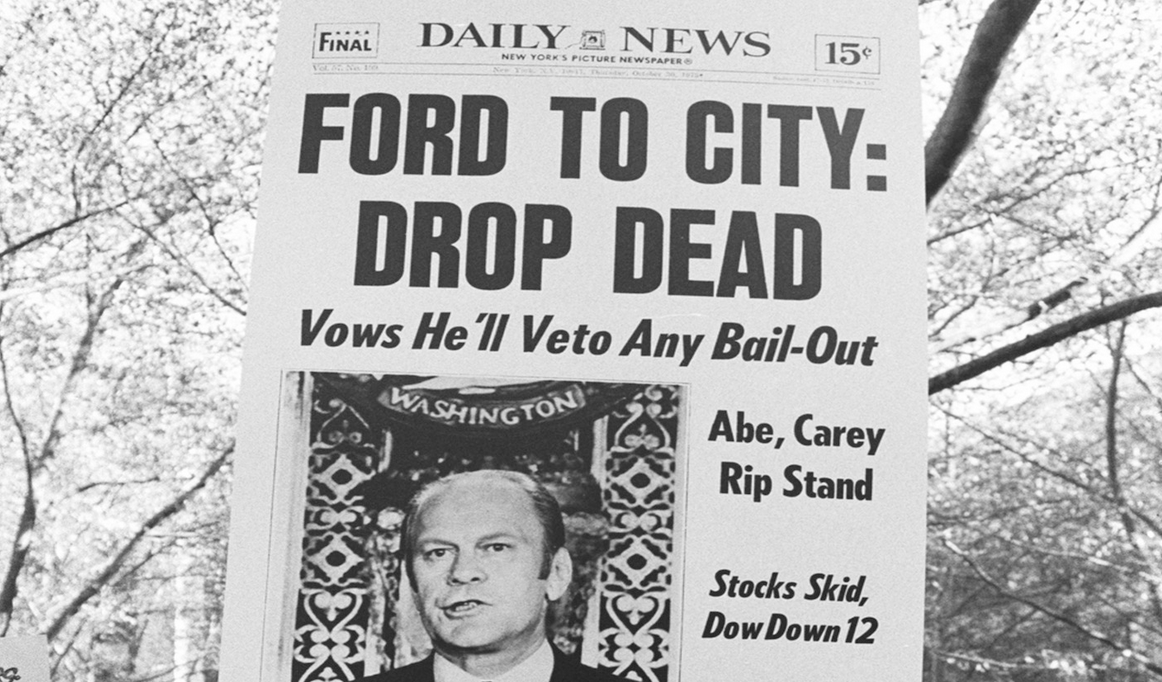
When pondering a title for this post, I was tempted to borrow one of the most famous headlines ever written: the New York Daily News’ encapsulation of then-president Gerald Ford’s refusal to consider a federal bailout for New York City, which was then at risk of bankruptcy. But this post is about Vermont’s homelessness crisis and people are literally dying for lack of shelter, so I chose a slightly less on-the-nose title than “Scott to Homeless: Drop Dead.”

The point remains. People are going without shelter, people are dying, people are suffering, and Gov. Phil Scott doesn’t care. At least he doesn’t care enough to actually do anything about it. After setting up two Potemkin village “family shelters” capable of housing 17 whole families, the Scott administration has done nothing further to increase shelter capacity or give aid to the helping agencies that are doing their absolute best to keep people from freezing.

The governor has had time to put together significant new proposals on the public education system and on housing, which is to his credit, but there has been no similar effort for the homeless.

Meanwhile, we’re in the middle of another cold snap with nighttime temperatures well below freezing and daytime temps being frigid enough to pose a danger to human life.

Continue reading