Tag Archives: Vermont Public

News You Should View (Or Listen To)

The title of this weekly feature is never entirely accurate, since I often include audio content that you really can’t “view.”. But I’m amending the title this week because we have a really great audio piece in the leadoff spot. And, for those monitoring their Trump-related consumption, you’ll find a relatively moderate number of stories about That Manbaby in the White House.

A day in the life. From Vermont Public, a tremendous 20-minute audio documentary about a rare animal in modern times: the do-it-all rural primary care doctor. Producer Anna Van Dine’s voice only appears at the beginning and the end. In between, your narrator is the documentary’s subject: Dr. Bob Primeau, the only primary care doc in the Northeast Kingdom town of Island Pond. This must have taken a ton of time and effort, but it gives you a real sense of what it’s like to be a doctor, and a patient, in rural Vermont.

Also what it’s like to be a cog in a machine. “These days, it feels like the health care system has begun to disregard the most essential part of what it means to be a doctor,” Primeau says, citing ever-more-stringent demands for data entry that takes time away from stuff like talking to your patients. I spent many years working in public radio (never in Vermont), and the opportunity to produce this kind of content is what made the job so challenging and so rewarding.

Vermont’s health care system, teetering on the brink. VTDigger and Seven Days each delivered vital stories about financial troubles in our health care system. They spotlight different aspects of an issue, which is the kind of coverage we’ve largely lost in our teeny-tiny media ecosystem. We used to get a lot more of this when there were several strong outlets competing with each other, and we rarely get it anymore. Digger’s Peter D’Auria focused on Blue Cross Blue Shield of Vermont, which (a) insures roughly one-third of all Vermonters, (b) is the only in-state health insurer, and (c) has spent most of its financial reserves to cover a surge in claims.

Seven Days’ Colin Flanders, meanwhile, took a broader but equally sobering view of our health care landscape.

Continue reading

News You Should View: Yeah, Most of It Is About Trump

More and more of our Vermont news space is taken up with the local/state ramifications of Donald Trump’s attacks on democracy, the rule of law, and the government itself. So much so that unrelated stories are sometimes getting short shrift. More on that in my next post, or at least that’s the plan. In the meantime, please enjoy the panoply of bad news that Phil Scott thinks we should stop fretting about.

Counting the Trump damage done. Going to start with not a story, but an ongoing data collection effort. Vermont Public is tracking federal funding losses in our state in an easily digestible list. This is not the “rhetoric” that our governor insists we’re wasting time on; these are actual cutbacks with tangible effects. You’ve read about most of these if you follow the news, but it’s good to have them all in one place. The most recent entry is a lost federal grant for a local history training program, which was mentioned in a recent post and will make another appearance later in this missive.

Environmental Law Center “threatened on two fronts.” From the University of Vermont’s Center for Community News, a story about concern at the Vermont Law and Graduate School about potential Trump threats to the school’s Environmental Law Center. They’re feeling the heat, between Trump’s attacks on major law firms and educational institutions and his assault on anything that smacks of climate change or other inconvenient truths.

Continue reading

“Governor Nice Guy” Is Out There Pickin’ Fights With the Legislature

Gotta start using air quotes around that appellation for our chief executive, because he seems to be going out of his way to antagonize the Legislature and prepare the fields for another bushel of his administration’s chief cash crop, gubernatorial vetoes. It’s funny, after all that talk about coming to the table and working across the aisle, he’s back in his comfort zone: confrontational mode.

You know, if Phil Scott was a politician — which he continually insists he is not — I’d say he had absorbed the lessons of the 2024 election and decided the path to victory was in demonizing his opponents. It’s smart politics. But it’s anything but nice.

Exhibit A: VTDigger reports that the Scott administration has finally, belatedly, delivered its full public education reform plan in actual legislative language.

On February 25. Almost two months into a five-month session. Three days before the Legislature adjourns for Town Meeting Week. Little more than three weeks before crossover, when any policy bill must have been passed by one chamber if it’s to have any real chance of passing the other this year. It’s just not possible for lawmakers to give due consideration to such a massive reorganization in such a short window of time.

Continue reading

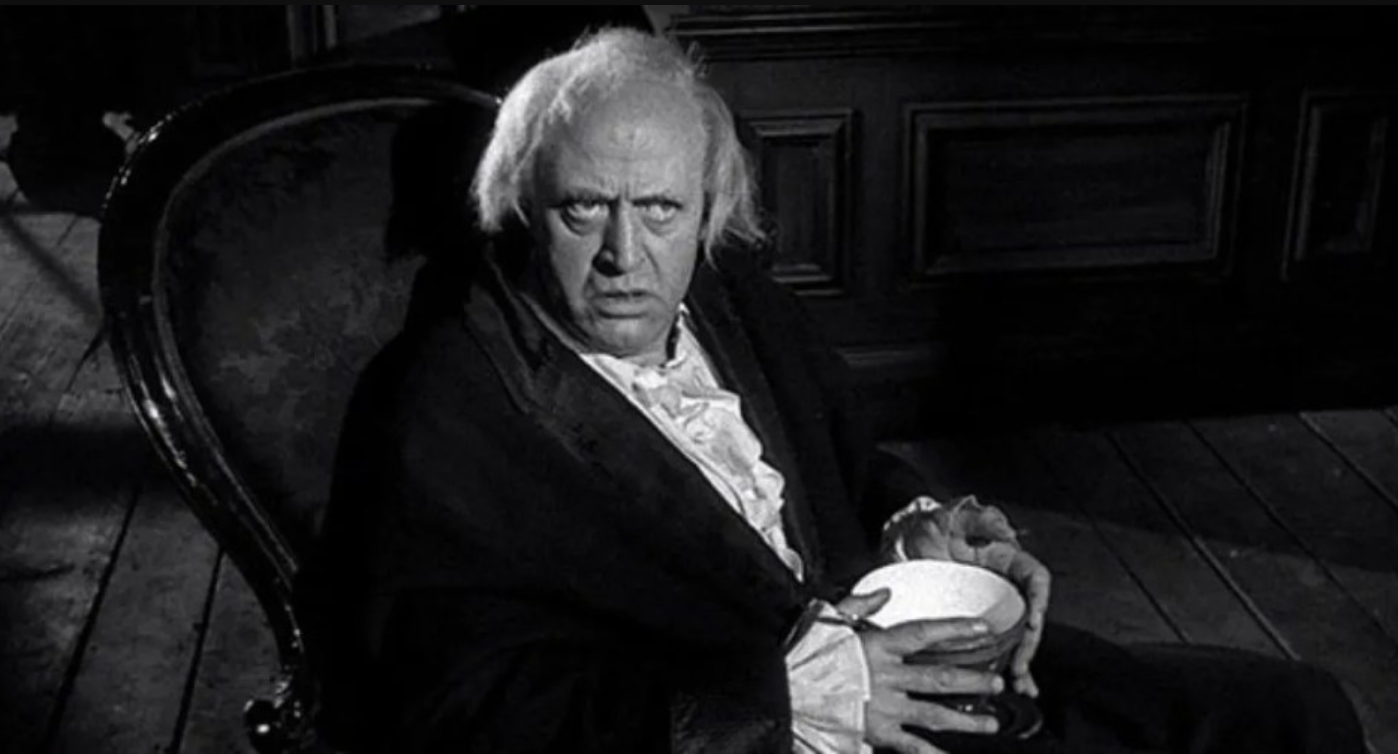
It Wasn’t the Best Week to Roll Out Your Ebenezer Scrooge Impression

Last week, the Budget Adjustment Act sailed through the House on more or less a party-line vote, with Republicans raising whiny objections over a penny-ante increase in funding for the General Assistance Emergency Housing program. Gov. Phil Scott did his share of whining as well, and there’s been some talk of a possible BAA veto. Which, if it happens, would be utterly ridiculous.

But amidst all the Republican whining, the most ignorant, shameful, bigoted remarks actually came from a Democrat. Stay tuned for more on that.

This all happened against the backdrop of a tremendous piece of journalism that dropped the day of Scott’s comments and the day before the House’s BAA debate: a story by Vermont Public‘s Liam Elder-Connors and Seven Days Derek Brouwer exploring how many unhoused people have died in Vermont, a statistic the state has so far declined to keep. With that story on the front page, it was a bad time to bitch about an extra $1.8 million in motel vouchers.

The two reporters found that “at least 82 people in Vermont… died between 2021 and 2024 while appearing to reside in an emergency shelter or outdoors.” That’s almost certainly an undercount; no one in Vermont officialdom tracks that number, nor does anyone seem interested in doing so. Outgoing Health Commissioner Dr. Mark Levine said it would be “very challenging” to collect such data.

Not as challenging as, say, sleeping outside in the dead of winter, but sure, let’s only keep the easy statistics.

Continue reading

Whistling Past the Elephant in the China Shop (UPDATED)

Update. Within 24 hours of this post going live, the governor announced his first (and so far only) concrete response to the Trump presidency: an interagency task force to assess the potentiial impacts of Trump tariffs on goods imported from Canada and Mexico. Must have been a complete coincidence, right?

You might think that the deliberately shambolic start of the second Trump presidency would have been a major topic at Gov. Phil Scott’s January 30 press conference. After all, in a very short period of time Trump has issued a blizzard of executive orders, many of dubious legality and/or constitutionality, that are designed to radically recast or possibly euthanize the federal government. The one most directly pertinent to governing the state of Vermont was Trump’s since-withdrawn threat to put an immediate halt to a wide range of federal payments. (The threatened imposition of tariffs on Canadian imports would have had a profound effect on Vermont, but they hadn’t been bruited as of January 30 and have since been put on hold.)

You might think the specter of Trump would have dominated Scott’s presser, but you’d be wrong. The topic of the day was, shocker, “affordability,” especially with regard to Scott’s housing plan and his extremely modest tax reduction plan. Which, at $13.5 million, would average out to a scant $20 a year for every Vermonter.

(Of course, it wouldn’t be distributed evenly. The three elements of his plan are (1) an expansion of the Democrats’ child tax credit, (2) an end to state taxation of military pensions, and (3) an end to state taxation of Social Security benefits. The latter two, aimed largely at retirees, seems an odd way to address Vermont’s demographic challenges. Our biggest demographic shortfall is in mid-career adults, who are mainly too old to benefit from a tax credit on young children and not old enough to benefit from the other two provisions.)

Neither Scott nor his officials voluntarily addressed how Trump setting fire to the federal government might impact Vermont. None of the assembled reporters asked a single question about it until the 44-minute mark in a 47-minute presser. Almost an afterthought, then. But Scott’s response was highly informative — for what he didn’t say, more than for what he did.

Continue reading

Kicking the Can All the Way to 2050

We already knew Gov. Phil Scott has called for a full-scale retreat from fighting climate change. But in his January 30 press conference, he made it clear he not only wants to eliminate any mandatory emissions reduction targets this side of 2050, avoid any potential legal challenge over the state’s failure to meet 2025 or 2030 targets, extract all the teeth from the Climate Action Council, implement a much more permissive measuring stick for emissions, and weaken the Renewable Energy Standard, but he overtly stated he wants no further action at all for another two years.

Yep. He had already tasked his officials with devising a plan to meet the 2050 emissions targets. But in his presser, he specified the delivery date for that plan.

December of 2026.

Sure, let’s put a freeze on climate policy while his administration takes its sweet damn time coming up with a 25-year plan — and finalizes it after the next election. When Scott might well be on his way out of the corner office. If this term is his last, this marvelous two-year effort is bound for the dustbin of history.

But really, the point is not to create an actionable blueprint. It’s to take himself off the hook for climate action anytime soon.

Continue reading

How Not to Debunk a Myth

The latest edition of “Brave Little State,” Vermont Public’s question-answerin’ podcast, addresses a widely-held belief that our homelessness problem is largely caused by people moving to Vermont to take advantage of our motel voucher program. And addresses it poorly, incompletely, and at great length.

The episode is entitled “Is Vermont’s motel program a ‘magnet’ for out-of-staters experiencing homelessness?” There is no evidence for the notion. In fact, there is a body of research showing that people in distress don’t cross state lines in any real numbers in hopes of accessing better benefits. Reporter Carly Berlin, whose work is co-published by Vermont Public and VTDigger, gets there eventually, but takes a godawful long time to do so. In the process, she manages to distort the basic issue, omit crucial aspects of the story, and get some key facts wrong.

The fundamental problem isn’t with Berlin or her many co-producers and overseers. (A total of seven Vermont Public staffers are cited in the closing credits.) The problem is that the issue was subordinated to the format. This wasn’t a story about homelessness and benefits; it was A Reporter’s Journey In Search Of Truth, filtered through the highly developed process of long-form public radio storytelling pioneered by Ira Glass’ “This American Life” and refined in this age of public media serial podcasting. The end goal of the production is more esthetic than journalistic.

This question can easily be resolved, but that’s not how you build a podcast. A long-form narrative needs a build, a measure of suspense, unexpected twists and turns, even if the actual path is pretty straightforward. Which is how you wind up with a 38-minute-long piece of audio that kind of bungles the assignment.

Continue reading

Why Is This Guy Chair of the Senate Education Committee? (With Correction)

By all appearances, the Senate’s confirmation vote on Zoie Saunders (scheduled for Tuesday) is going down to the wire. The Scott administration sure seems to think so, if chief of staff Jason Gibbs’ obsession with Krista Huling is any indication. I’ve also been told that Gov. Phil Scott is making calls to key senators on behalf of his — Only in Journalism Word alert — embattled nominee for education secretary. That’s a level of personal attention he seldom gives to any matter before the Legislature.

If the Senate does reject Saunders, it will be a seismic (another Only in Journalism word) event in our politics. It’s extremely rare for the Senate to reject a gubernatorial nominee. Certainly the administration took that step for granted. (As did Vermont Public.) Otherwise they wouldn’t have let Saunders disrupt her life and career to take the job. One has to wonder if she was fully informed about the risk involved.

If the Senate does reject Saunders due to her stunning lack of experience as (1) a public educator and (2) an administrator overseeing a sizable bureaucracy, it will be in spite of, not because of, the Senate Education Committee’s failure to carry out its responsibility to vet Saunders’ nomination.

Which leads me to the man pictured above, committee chair Sen. Brian Campion, and the rather curious composition of his committee.

Continue reading

A Few Questions for Zoie Saunders

Tuesday is the big day. Zoie Saunders, Gov. Phil Scott’s pick for education secretary, goes before the Senate Education Committee in the first step toward Senate confirmation of her selection. In advance of the occasion, here are some questions I would ask if I were, saints preserve us, a member of that committee.

In preparation for this post, I listened to Saunders’ interview last week on “Vermont Edition,” and I have some questions about that program as well. But first, let’s put Saunders in my entirely imaginary witness chair.

There are some obvious questions I wouldn’t bother to ask because others will. Questions about charter schools and school choice, for instance. Saunders is well practiced in answering those with a flurry of multisyllabic educationese. I’m assuming someone will ask her about her lack of experience in public schools and why she chose to spend her career almost entirely outside of public education.

I would ask Saunders about her unusual job search last year. She was the chief education officer for the city of Fort Lauderdale at the time. She applied for the Vermont position last fall and, at around the same time, she applied for an opening with the Broward County Public Schools. On November 15, the Vermont Board of Education forwarded three names to the governor; we now know that Saunders was one of the three. About a month later, she started work at BCPS as head of a consolidation process meant to address declining enrollment in the system.

And then, three months into a complicated, controversial process, she accepted the position in Vermont and left Florida on very short notice. (She was introduced by the governor on March 22 and started work in Vermont on April 15.) This raises a number of concerns.

Continue reading

“We Didn’t Have to Do Anything”

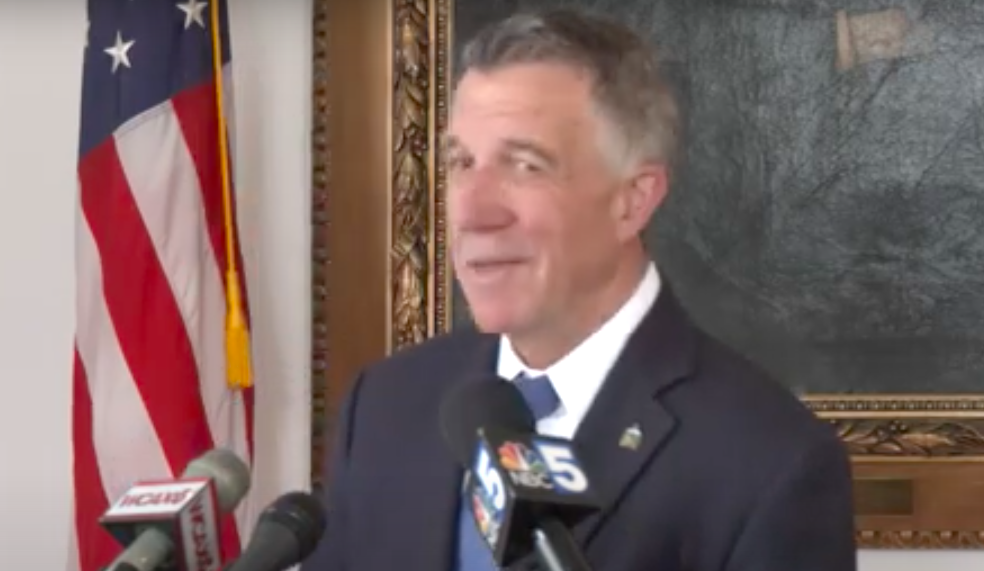
At his weekly press conference today, Gov. Phil Scott again pushed his affordability agenda and characterized the Legislature as tax-and-spendthrifts. And answered some pointed questions about his emergency shelter program, which saw a substantial uptick in business last night (although still well below projected capacity). A total of 34 people slept in the governor’s slapped-together, nighttime-only shelters.

The governor defended his program as “a success,” although he didn’t seem awfully confident. His voice got noticeably quieter when talking homelessness than when he was hammering Democrats about “affordability.” And when push came to shove and he’d reached the limit of his ability to emit thick clouds of verbiage, he twice resorted to that most desperate of defenses: “We didn’t have to do anything.”

Sounds like headstone material to me. Sure, you didn’t have to do anything. No one had a gun to your head. But sweet Jesus, what a statement. The fact that he wasn’t absolutely required to do anything is supposed to make his crappy shelters more acceptable? I don’t think so.

Are we supposed to judge his administration by that standard? There’s actually precious little he has to do. As Donald Trump’s presidency showed, the machinery of government largely keeps moving even if the captain is an ill-tempered, narcissistic boob with a short attention span. But if that’s all you aspire to, well, please don’t run for re-election. We deserve better.

Continue reading