Tag Archives: Phil Baruth

Senate Committee Votes to Unshelter 1,600 Vermonters for Obscure and Arguably Bogus Process Reasons

One of the necessary quirks of the legislative process is that almost every bill passed by a policy committee must also go through one or more “money committee” — if a bill raises revenue, it goes to House Ways & Means and Senate Finance, and if it spends a damn dime it goes through House and Senate Appropriations. If a bill both raises and spends, it must be passed by all four.

There are good reasons for this. The money committees look at the entire landscape of government spending and taxation and make sure everything fits together. They are fiscal gatekeepers, in essence.

However… these committees can also derail a good piece of legislation without serious consideration of the rationale behind it. And that’s exactly what happened yesterday afternoon in the Senate Appropriations Committee. The potential consequence is a mass unsheltering event in mid-March affecting roughly 1,600 individuals, including children, seniors, and people with disabilities.

Not that anybody noticed, because there were apparently zero reporters present. It was the latest in a series of failures by our ever-shrinking media ecosystem. But hey, let’s get on with the story.

Continue reading

Congratulations to Team Scott for Scoring a Cheap Political Point Against the Democrats

Legislative leadership has a somewhat (but only somewhat) overblown reputation for shooting themselves in the foot. They have often made Gov. Phil Scott’s job easier by giving him pain-free victories or allowing his minions to run rings around them.

The latest installment of this depressing melodrama features the complaint from House Speaker Jill Krowinski and Senate President Pro Tem Phil Baruth about the “Vermont Strong II: Electric Boogaloo” license plates first suggested [checks notes] almost two months ago by Gov. Phil Scott.

Now, I’m no fan of the plate. It’s an obvious play on Vermonters’ partially earned self-regard, and there’s something ironic about flogging vehicle license plates to help recover from a climate change-related disaster.

Also, Baruth and Krowinski have a strong argument that the governor overstepped his constitutional authority by advancing the program without Legislative approval. Team Scott argues that he is simply extending a program authorized by the Legislature in 2012, after Tropical Storm Irene.

That seems pretty thin to me, but politically speaking it doesn’t matter. There is no way that this doesn’t end up being a strong net positive for Scott. Assuming he runs for re-election, this thing would be potent fodder for the TV ads he probably won’t have to bother airing: “Legislative leaders are so petty and obstructionist, they didn’t even want me to raise disaster recovery money with a positive, feel-good message.”

Team Scott fully realizes this. And when you look at the sequence of events, it’s pretty clear that his people leaked this story and that Baruth and Krowinski didn’t intend for this to become public.

Continue reading

Man, the Agency of Human Services is Really Bad At This Emergency Housing Thing

Well, in this context, “incompetence” is the charitable interpretation. The alternative is that the responsible Scott administration officials are deliberately biffing the emergency housing effort and obfuscating slash lying to try to cover it up. Fortunately, they’re pretty bad at obfuscation, too.

Actually, there’s a third thesis, and my money’s on this one: The administration has so thoroughly starved AHS of needed resources that its staff can’t possibly handle the workload, and its leadership is tap dancing around the inconvenient truth.

Let’s go back to last week’s appalling performance before the Legislature’s Joint Fiscal Committee, where AHS leaders presented their first mandatory report on the disposition of motel voucher recipients. For those just joining us, the last-minute budget compromise reached in late June continued the voucher program for most recipients, set some stringent conditions for those receiving vouchers, and mandated that AHS report once a month on progress toward ending the program and providing alternative housing for all recipients.

The report was an embarrassment, starting with a rundown of the 174 recipients who left the program in July. Of those 174, a mere 34 had found apartments to live in. (There was no breakdown on how many were helped by AHS in finding new housing and how many managed the trick on their own.) That’s less than 20% of those no longer in motels. The vast majority — 113 in all, a staggering 65% — left the program for destinations unknown because they had failed to renew their benefits, a process that appears to be devilishly difficult.

AHS Secretary Jenney Samuelson told the committee that “we had not been able to make contact with” those 113 despite multifaceted efforts. But a very different story was told by advocates for the unhoused.

Continue reading

They Said It Couldn’t Be Done. Seriously. Over and Over. Guess It Was All Bullshit. (Updated)

I don’t know exactly what changed their minds, but after months of insisting the motel voucher program was going to end on schedule come Hell or high water, leaders of the House and Senate are working on a deal to extend the program.

My reactions are all over the place. Wow. Finally. Thank goodness. What took you so long?

And… let’s not get carried away until we see the fine print.

Here’s what we know, courtesy of VTDigger’s Lola Duffort. The extension would apply to roughly 2,000 people scheduled to be unhoused in July. It’s an indefinite stay, meant to allow people to stay in motels until state officials can identify “alternate stable setting[s].” There will be a mandate for the Scott administration to regularly update lawmakers, which is embarrassing for Team Scott but utterly necessary due to its complete failure to plan any sort of transition before now.

And it will not apply to anyone unhoused on June 1. So, not only are those people SOL, it also means there will be another mass eviction on Thursday Friday. You may recall that hundreds of June 1 evictees were offered free two-week extensions by some motel owners. Those extensions expire tomorrow Friday. No reprieves on offer for those folks.

I don’t know why leadership is so firm on excluding the June 1 and June 16 unhoused, who number approximately 800. I guess that’s an acceptable level of human suffering.

Continue reading

If the Legislature Is Becoming More Professional, How About Better Ethics Rules?

The Vermont Legislature has a well-established policy of avoidance when it comes to ethical standards. You see it in the weak-ass State Ethics Commission, which has no investigative or enforcement authority. You see it in the House and Senate ethics panels, which conduct their business behind closed doors (when they even bother to meet) and have never, ever taken action against one of their own.

And you see it in the useless financial disclosure rules they set for themselves. This has come to the fore with VTDigger’s multi-part exploration of lawmakers’ disclosures. It finds, no surprise to anyone who’s been paying attention, that the requirements are so minimal as to negate the purpose of disclosure, which is to reveal potential conflicts of interest.

Also, there’s no enforcement mechanism and no penalties for failing to disclose or failing to file at all. It’s amazing what happens when a group of people gets to set their own rules, isn’t it?

One of the excuses floated for this studied laxness is that Vermont Has A Citizen Legislature and lawmakers shouldn’t be expected to consent to fidiuciary proctoscopies in order to serve. They kinda-sorta have a point, although their citizenship doesn’t prevent abuses or change their obligation to serve the public interest.

But now the Legislature is taking a big step toward professionalism — at least when it comes to pay and benefits. Does this merit a revisit of ethics and disclosure rules? You bet it does.

Continue reading

Our Little Gift to the Catholic Church

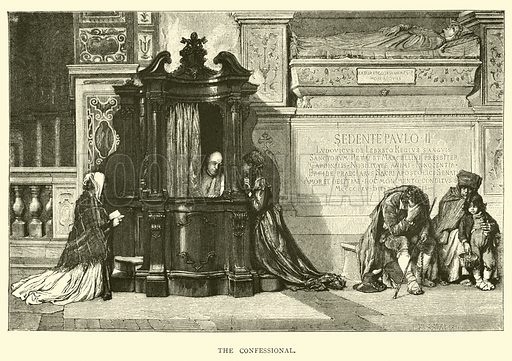
Suresh Garimella’s neutron bomb approach to the humanities notwithstanding, sometimes a professor of religion comes in very handy. Take Friday, March 3 for example. On that day, the Senate Judiciary Committee heard testimony on S.16, a bill that would require clergy to report cases of child abuse and neglect even if they learned of such crimes in confidence while acting as a spiritual advisor. Like, say, a Catholic priest hearing confession, but let’s not get ahead of ourselves.

Lined up to testify were not one, not two, but three Catholics, including Bishop Christopher Coyne of the Diocese of Burlington. You can guess what they had to say: Removing the confessional exemption would force priests to choose between state law and canon law. It would infringe on Catholics’ First Amendment right to free expression of religion.

After all of that, the committee heard from Tom Borchert, chair of the Department of Religion at the University of Vermont. And boy, did his testimony make my ears perk up.

The two big takeaways: First, the “spiritual advisor” exemption describes one and only one religious practice: Catholic confession. Second, the law as currently written creates a First Amendment issue on its own.

Continue reading

Triumph of the Shill

In a way, you’ve got to feel a little bit sorry for the Scott administration functionary who’s obliged to carry water for some sad bit of policy or other. They’re adequately compensated for putting their soul in storage, but they do run the risk of ascending to the gates of Heaven only to confront an angry-looking St. Peter demanding an explanation for their craven shillery. Today’s case in point: Shayla Livingston, policy director for the Agency of Human Services.

Per VTDigger’s indispensable “Final Reading,” Livingston was defending the administration’s desire to end the emergency housing program as quickly as possible, sending thousands of the unhoused off into the night with no plan. And she trotted out a brand-new, never-heard-before rationalization.

It’s not that the money is running out. It’s not that we can’t afford to extend the program into the warmer months, which until now had been the administration’s sotto voce position. No, they’re doing it out of a twisted sense of fairness.

Continue reading

Storm Clouds Above the Statehouse

There is much to be said about Gov. Phil Scott suddenly pulling a voluntary paid family leave program. For instance, that he has never ever pushed this issue at all unless the Legislature is actively considering a universal program. This isn’t a principled position, it’s an artifice meant to draw votes away from the Dem/Prog caucuses.

But something else, something subtler but equally discomfiting, is on my mind at the moment.

There are signs that the House-Senate tensions of past years are flaring back up again. If so, key legislation could fail because of differences between the two chambers, real or imaginary. If that happens, they’ll be disappointing the voters who elected record numbers of Dems expecting them to get stuff done.

This tension was minimized if not eliminated in the current biennium, thanks to the efforts of House Speaker Jill Krowinski and outgoing Pro Tem Becca Balint. It’d be a shame if Balint’s departure triggers a return of the bad old days.

The usual sniping between House and Senate is most often expressed in senators’ apparently innate sense of superiority. I don’t know how many times I’ve seen senators speak of state representatives as if they’re misbehaving kids on a school bus, and treat House legislation as if it’s toilet paper stuck to their shoes.

The most prominent example of the House-Senate tension has been the twin battles over paid family leave and raising the minimum wage. The House has preferred the former, the Senate the latter. The result: No paid leave program and woefully inadequate movement on minimum wage. On two occasions the Legislature has passed watered-down versions of a paid leave program and Scott has vetoed them. The inter-chamber differences have done much to frustrate progress toward enacting a strong paid leave program over Scott’s objections.

And now, here we are again with an apparent House-Senate rift on paid family leave.

Continue reading

The State Senate Approaches a Demographic Tipping Point

Seems like I’ve been waiting forever for the Vermont Senate to undergo a demographic shift. Every two years there’s been talk of a retirement wave, but it never materializes. Senators consider stepping aside, then realize they’re indispensable. (They’re not.) And the voters rarely eject an incumbent except in cases of overt criminality (Norm McAllister) or advanced senescence (Bill Doyle).

The shift has been painfully incremental until this year, when almost one-third of all senators decided to bow out. The nine incomers are younger, five of them are women, and one is a person of color: Nader Hashim joins Kesha Ram Hinsdale and Randy Brock as the three non-white members of the upper chamber.

(The tiny Republican caucus managed to get older and no less male. Its two youngest members, Corey Parent and Joshua Terenzini, will be replaced by a couple of old white men.)

Got more numbers to plow through, but here’s the bottom line. The Senate is on the verge of a historic shift, but it’s happening in slow motion. We might reach the tipping point in two years’ time. We’re not quite there yet.

There are still plenty of tenured members in positions of power. They account for most of the committee chairs. But only — “only” — eight of the 30 senators will be 70 or older. At least 13 will be under 65, which doesn’t sound like a lot but in the Senate it definitely is.

The incoming Senate President Pro Tem, Phil Baruth, straddles the age divide. He’s only — “only” — 60. But he’s entering his sixth two-year term, so he’s familiar with the Senate and the elders are comfortable enough with him to make him their leader. As a senator he’s been a strong policy advocate unafraid to ruffle feathers, but as Pro Tem he’ll know he can’t push his caucus too far too fast.

There are the preliminiaries. Now let’s dive in.

Continue reading

Chittenden Senate: Brother, Can I Spare a Dime?

One thing stands out when you look over the campaign finance filings for the three state Senate districts in Chittenden County: There are lots of candidates, and most of ’em aren’t raising much money anywhere outside of their own pockets. Seems like a potential equity issue; if you can afford a couple thousand bucks or more, or a LOT more, you don’t have to worry so much about fundraising from other people.

Maybe this is a byproduct of splitting up the formerly unified Chittenden district: No longer can candidates raise money from anywhere in the county. Now they have smaller fields to harvest. Likely a bigger factor: There are a lot of contested statewide races consuming a lot of Democratic money, perhaps away from legislative races.)

The king of the self-funders is Erhard Mahnke, affordable housing advocate and longtime Bernie Sanders associate. He dumped a cool $10,000 into his own campaign, and has only raised $666 from anyone else. That gives him a financial lead in the Chittenden Central district, because he hasn’t spent much so far.

Other notable self-funders include Brian Shelden and Irene Wrenner, Democratic candidates in Chittenden North. They’ve given nearly $7,500 to their own campaigns and raised less than that from other people. Meanwhile, the sole Republican, state Rep. Leland Morgan, has barely tried. He’s raised less than $700. Perhaps he’s looked at district demographics and decided he doesn’t really need to try. Or he’s waiting until after the primary.

Back in Chittenden Central, the top three fundraisers have done well from their own pockets and from others, too.

Continue reading