I happened to visit Lt. Gov. John Rodgers’ official website today, and I couldn’t help but notice that his bio refers to him as “the 84rd Lt. Governor of Vermont.”
Yeah, “84rd.”
Haha, well, everybuddy makes misteaks. I added a line about it to my previous post about Rodgers’ campaign finance misadventures. It’s the little things that make this blog fun.
And then I kept reading, and it kept getting worse. Rodgers’ bio is chock full of misspellings, typos, and bad grammar.
But wait, there’s even more. I now know how that “84rd” thing got in there. Rodgers stole the first line of his official bio hook, line, and “rd” from his predecessor (and 83rd lieutenant governor) David Zuckerman’s official bio.
Now, I trust that if Rodgers has half a brain, he’ll fix his bio right quick. So let’s get the grisly details down for posterity’s sake.
It’s been two and a half months since Election Day, which means I’m way behind the Political Observer curve in terms of looking ahead to the next election.
Or perhaps the 2028 election, depending on when Gov. Phil Scott decides to retire undefeated. Because until that happens, there won’t be a serious contest for the Democratic nomination — and when it happens, we’re going to see a political stampede the likes of which we haven’t seen since Jim Douglas’ retirement in 2010 touched off a five-way contest in the Dem primary.
If you think it’s Way Too EarlyTM for such talk, well, let me tell you, the engines have been revving for some time now. Recent examples: Former Burlington mayor Miro Weinberger’s emergence as the public face of Let’s Build Homes, a nominally bipartisan slash nonpartisan organization promoting the cause described in its name; and the obligatory tongue bath given to Lt. Gov. John Rodgers in the cover story of last week’s Seven Days, which touted the notion that this crusty, ornery Son of the SoilTM was suddenly transformed into gubernatorial timber by his extremely narrow plurality victory over David Zuckerman. Which I don’t buy, but hey, I’ve been wrong before.
In reality, the race to succeed Scott began at least two years ago and maybe four, when Mike Pieciak left his post in the, ahem, Scott administration to run for treasurer and immediately succeeded his predecessor Beth Pearce as the person most likely to get a standing ovation at party meetings. Pieciak’s been fundraising far beyond his minuscule needs ever since, and the only plausible explanation is that he’s preparing to run for governor as soon as Scott steps aside.
A more pointed signal of Pieciak’s intent could be seen in his November 19 campaign finance report: a $3,000 payment made on November 6 to Silver Strategies, LLC.
The last pre-election round of campaign finance reports is in, not that anyone in the media noticed. To me, the single biggest note is that the Barons of Burlington and their allies are continuing to throw big money at John Rodgers, Republican candidate for lieutenant governor and alleged rural populist. In the first half of October, Rodgers raised $20,250; in the second half, he took in an extraordinary $69,259, almost erasing the cash advantage held by incumbent Prog/Dem David Zuckerman throughout the campaign. Not quite, but almost.
Of that $69,259, a full $58,199 was in increments of $1,000 or more.
That’s more than 83% of Rodgers’ total takings between October 16 and 31.
Son of the soil, my Aunt Fanny.
Here’s another way to slice the bologna. During the period, Rodgers took in a scant $2,560 in gifts of $100 or less. That’s a mere 3.7% of his total.
Which is S.O.P. for Rodgers’ campaign as a whole. He’s raised $212,443 so far, but only $8,809 in gifts of $100 or less. That’s only 4.1% of his total.
Well, it’s not literally last call, but in practical terms it’s pretty damn late. Thanks to universally accessible mail-in voting, the longer a candidate waits to spend money, the less impactful it will be. As a result, some candidates (whose fundraising perhaps outpaced expectations) seem to be shoveling money out the door as quickly as they can.
First, a note about the calendar. In the home stretch of a campaign, the deadlines come thick and fast. Candidates are required to file on October 1, October 15, and November 1. Also, in the 45 days before an election they’re required to report any mass media expenditures of $500 or more within 24 hours. The rationale, I believe, is to provide as much clarity as possible about late-stage campaign activity. The problem is, gaining clarity would require (a) each voter diligently poring over the reports, or (b) robust media coverage of campaign spending. The former is an impossible ask, and the latter is largely a thing of the past given the tremendously reduced ranks of our political press corps.
Anyway. There’s little earthshaking in the new reports; they only cover two weeks. But there are some items worthy of note, and here they are.
So the Tunbridge Fair — err, the Tunbridge World’s Fair — happened last week. And as is its tradition, WDEV Radio broadcast live from the Fair’s gazebo and conducted debates for the top statewide offices. It’s been an early and quasi-obligatory stop on the campaign trail for many a year.
Well, WDEV was there, but many top politicians were no-shows. Gov. Phil Scott, for instance. Also U.S. Rep. Becca Balint and U.S. Senator Bernie Sanders. The only actual debate featured the two candidates for lieutenant governor, incumbent Progressive/Democrat David Zuckerman and Republican John Rodgers. (It was reportedly a spirited affair; you can listen here. The LG debate is in the second hour of the show.)
Otherwise, empty chairs abounded. Instead of debates, we got long interviews with the candidates who bothered to attend.
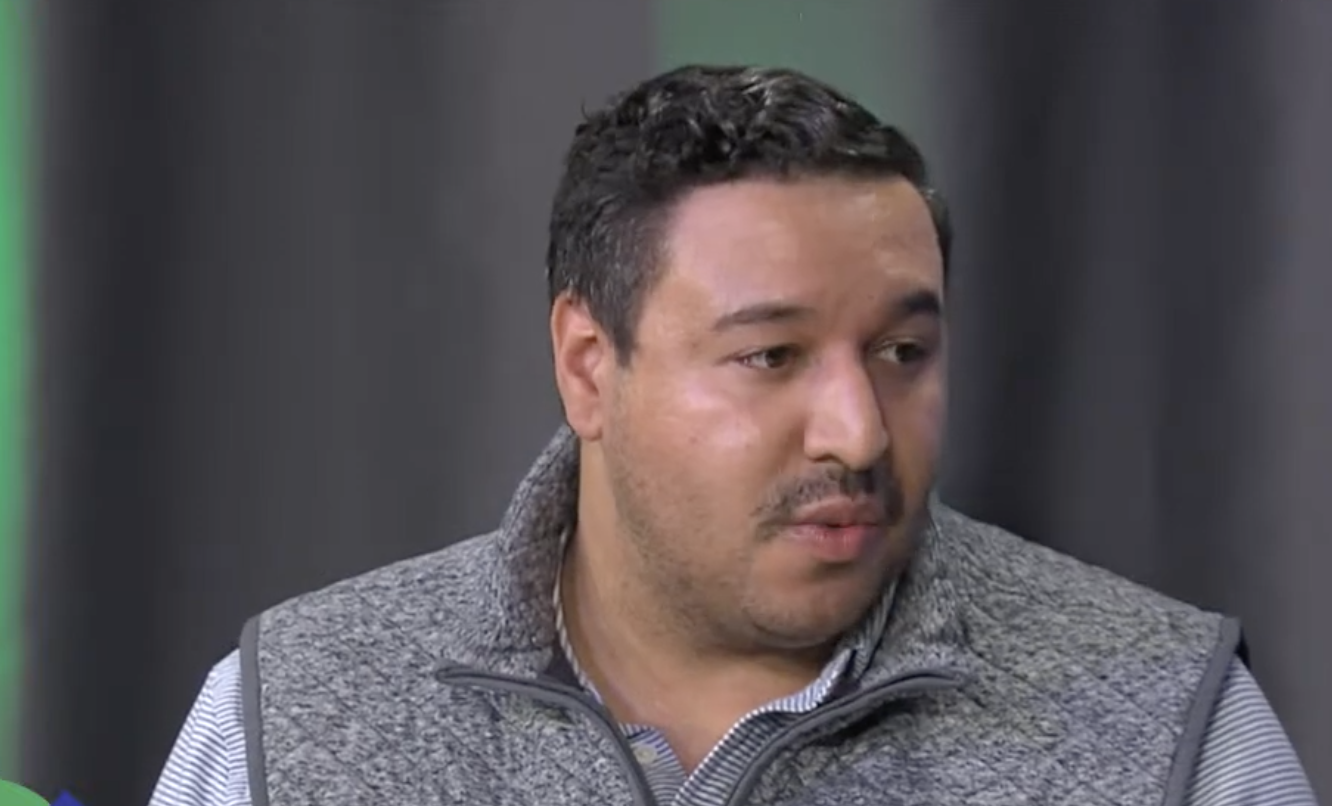
The fine fellow above, pictured with a fish he caught last year on Shadow Lake, is former state senator John Rodgers, Republican candidate for lieutenant governor. I know about the fish because it’s featured in one of a series of low-budget official campaign videos in which Rodgers is interviewed by one Rick Lafayette, a.k.a. the lead singer of Kikker, a Vermont metal cover band. Yeah, this guy:
Hey, I didn’t even wait to start digressing this time, I did it right off the top.
Anyway, Rodgers is running against Progressive/Democratic incumbent David Zuckerman. As most of you know, in Vermont we elect the governor and LG separately. And throughout Phil Scott’s seven-plus years in the corner office, a Republican has never been lieutenant governor. This doesn’t matter at all because the LG has no actual, uh, power or authority — except for one big thing, which ought to keep Scott and his allies awake at night.
The LG is in the line of succession. If something were to happen to the govrnor, then good ol’ Progressive Farmer Dave would succeed him. You’d think, then, that Scott would be going all-out to make sure Zuckerman is out of the way. You know, secure the Phil Scott political legacy.
The September 1 campaign finance reports crystallized something we already knew: This is shaping up to be an unsurprising political season because there’s such a deep divide between those on top and those trying to get a leg up. The former include Gov. Phil Scott and a whole bunch of Democrats; the latter include every other Republican minus a few who’ve been blessed by the patronage of Burlington’s business elite.
The exception to the Democratic rule: Esther Charlestin, who entered September financially underwater in her long-odds (and getting longer every day) gubernatorial campaign. Somehow, the financial gap between Scott and Charlestin managed to grow in August.
This isn’t a typo: Charlestin has raised only $21,137 and spent $22,309. On primary night, Charlestin told VTDigger she would “go hard” in the general campaign, which meant knocking on doors, seeking endorsements, and “raising a lot more money.”
But she didn’t do that. For the entire month of August, Charlestin raised $4,505, which isn’t anywhere close to “a lot more money.” I can’t say how much of this is her doing and how much is Democratic donors turning their backs; Charlestin didn’t score any donations above $250, and that came from longtime Progressive stalwart Martha Abbott. Hey, Dems: Do you like your candidate or don’t you?
Meanwhile, Scott continues to raise far more money than he needs, and spend money like he’s got an actual battle on his hands instead of an almost certain walkover.
The single most disappointing campaign finance report from the July 1 deadline had to be Esther Charlestin’s. The Democratic candidate for governor reported a measly $12,235 in donations, a total that effectlvely sank whatever long-odds hope she had for beating Gov. Phil Scott.
The second most disappointing may have been Thomas Renner’s filing in his bid for lieutenant governor. Renner did better than Charlestin, but his total of $43,194 is not nearly enough to fuel a successful challenge against Progressive/Democratic Lt. Gov. David Zuckerman, who entered the race with an $11,158 surplus and has since raised another $111,089.
That total doesn’t include one of the most charming line items in this round of campaign finance filings: Zuckerman gave an in-kind contribution of $420 to himself in “carrots for hand outs at parades.”
In today’s first gubernatorial debate of the general election campaign, David Zuckerman showed us how it can be done. He came straight at Gov. Phil Scott with a well-articulated progressive critique. He was polished, he was focused, he fought the good fight, and it probably won’t do him a damn bit of good.
Interstitial note: The debate was cosponsored by Vermont Public Radio and Public Television, but for the life of me I can’t find the video online. The link above is to the VPR audio.
It was the stoutest debate challenge Scott has faced in his three gubernatorial campaigns — and more. Zuckerman is the first experienced statewide campaigner Scott has faced in his SIX runs for governor or lieutenant governor.
Scott has usually had the benefit of facing the B-Team. Previous opponents did their best, but Cassandra Gekas, Dean Corren, Sue Minter and Christine Hallquist ain’t exactly Murderers’ Row. All four were in their first statewide campaigns, and two had never run for any office. Scott has also enjoyed the soft opposition of those willing to cast him as a well-meaning Nice Guy who’s kind of a Republican In Name Only.
There is a solid Democratic/Progressive critique of Scott; it’s just sat on the shelf for most of the past decade. Zuckerman pulled it down and discovered that there’s some power in that weapon.
Unfortunately, he drew the short straw. He’s opposing Scott at the high point of the governor’s popularity. But Zuckerman is drawing a roadmap for future campaigns against Scott, and may at least put some dents into that Teflon coat.
As for Mr. Nice Guy, he responded with some rare attacks at Zuckerman and quite a bit of passive-aggressiveness — Scott’s favorite variety of aggressiveness when he’s not behind the wheel of Big Green No 14. At this point in his tenure, all aglow with the universal praise for his handling of the pandemic, Phil Scott is unaccustomed to confrontation.
He also, at this stage of his political career, fresh out of new ideas.
With the exception of the 462-candidate pile-up that was the Chittenden County Democratic Senate primary, it was an election night bereft of drama. The big races turned out to be uncompetitive, and all were called early in the evening. Which is not to say it wasn’t interesting, at least not to political dead-enders like me. So, thoughts in no particular order:
The Laracey Effect is strong. My own invention, the Laracey Effect is named for Mel Laracey, a deputy city treasurer in Ann Arbor, Michigan many moons ago. He decided to run for State House in an extremely competitive primary. It did not go well; he finished in the back of the pack. Because everyone in and around City Hall knew him, he thought that meant everyone knew him. But in truth, the vast majority of voters had no connection to City Hall.
Tim Ashe is well known in Burlington and Montpelier. He and pretty much everyone else thought that made him well known across the state. Not true. And when the pandemic prevented him from campaigning until the end of June, his fate was sealed.
I thought Molly Gray was going to win, but I was far from certain about it. Turned out she won easily. More easily in a competitive four-way race, in fact, than David Zuckerman did in (effectively) a two-way race. Zuckerman beat Rebecca Holcombe by 10,552 votes. Gray beat Ashe by 11,679, and came within 510 votes of Zuckerman’s total.
Ingram, by the way, was an even bigger victim of the Laracey Effect, believing she had a substantial statewide profile. She finished a distant fourth, and was never a factor in the race. So was former legislative counsel Peter Griffin, who ran for the House seat being vacated by Kitty Toll and finished a poor second.
Expanded mail-in voting was a resounding success. Record turnout when neither of our Senate seats were on the ballot, and with little apparent drama in either race for governor. With universal mail voting available in November, we’re on course to set another turnout record. It’s also a strong argument for mail voting everywhere — that is, if you like maximizing participation in our democracy. At least two of our three political parties do.
There was a lot of unhappiness with the Democratic gubernatorial choices. There were 6,569 write-in votes, more than six percent of the total. (Most of them presumably cast for Gov. Phil Scott.) There were 7,739 blank ballots for governor. Think of that: Seven percent of those who bothered to cast votes couldn’t be bothered to choose a gubernatorial candidate. That’s stunning. And seems to reveal a broad dissatisfaction with the choices on offer. One more sign that Zuckerman has some serious work to do.





 The Vermont Political Observer.