Monthly Archives: November 2024

Phil Scott’s Shelter Policy Has Started Literally Killing People

Happy Thanksgiving, everybody! The Vermont State Police found two people dead inside a tent in Wolcott on Thanksgiving Eve. They were Lucas Menard of Montpelier and Tammy Menard of Berlin. Few details are available, although police do not suspect foul play.

Unless, of course, you consider this fall’s mass unsheltering “foul play.”

And yes, the Menards were among the close to 1,500 vulnerable Vermonters recently unsheltered following cuts in the GA emergency housing program. Brenda Siegel of End Homelessness Vermont says they were clients of her organization who had “complex medical needs” but were denied shelter by the state. Siegel on Facebook:

Wonderful vibrant people. And Tammy herself helped so many others. Tell me again how what we did was fine and people will manage. Is this what you mean by “manage”?

I can’t add much to that, except to remind everyone that this was the inevitable and long-predicted result of denying shelter to so many of our most vulnerable. And the cold weather is just beginning. Siegel gets the last word:

I wanted nothing more than to be wrong about the catastrophic outcomes this policy would cause. But I knew that I was not.

Are You Ready For the Climate Culture Wars?

Welp, Gov. Phil Scott has revealed himself to be all hat and no cattle when it comes to climate action. As Seven Days’ Kevin McCallum reports, our alleged climate fightin’ leader is calling for a full retreat on, you know, doing anything about reducing greenhouse gas emissions. With the exception of furrowed brows and earnest expressions of concern. Per McCallum, here is Phil Scott’s climate agenda:

  • Kill the clean heat standard
  • Kill the Global Warming Solutions Act
  • Ignore our 2025 emissions reduction targets
  • Ignore our 2030 emissions reduction targets
  • Effectively put all our eggs in the 2050 basket

That’s one hell of a platform for a guy who claims to believe that climate change is a clear and present threat to humanity’s future.

His argument here, as on every other issue, is affordability. Vermont simply can’t afford to cut emissions or transition to a clean energy future.

A couple things about that. “Affordable” compared to what, exactly? His projections about the unaffordability of energy transition appear to rely on the assumption that fossil fuel prices won’t rise. Anyone who’s played Russian Roulette with the cost of propane or heating oil could testify otherwise.

Putting all his chips on affordability also ignores the impacts of climate change. As we have seen, Vermont is far from safe in this regard. In fact, we have one of the highest totals in the nation of federally-declared disasters since 2011. We don’t have beachfronts or flatlands, but we do have a rugged topography of mountains, hills, and deep valleys. The latter is where (a) most of our people live, and (b) the runoff easily overwhelms our rivers and streams when greenhouse gas-fueled downpours occur. We have yet to experience catastrophic wildfires around here, although the risk has been worryingly high for a good chunk of this year. Just a matter of time.

But Scott’s latest statements should come as no surprise. All he’s done is pull the sheep’s clothing off his inner wolf. In truth, he has been a resulote obstructor of serious climate action since he became governor. (Back in 2021, I called him the biggest obstacle to climate action in Vermont.) Kind of fitting for a guy who’s spent his entire adult life working with fossil fuel-powered machinery.

Continue reading

A Rising Tide Lifts All the Flotsam

This month’s Republican wave deposited some worthy members who can bring a socially moderate, fiscally conservative perspective to the Statehouse with some measure of dignity and open-mindedness. Not that I agree with them politically, but they should not be dismissed as extremists or nay-sayers. (Lookin’ at you, incoming Senate Minority Leader Scott Beck.)

But others who floated in on the tide will bring some truly out-there positions to Montpelier. There have always been a few of these folks, but too few to feel comfortable about spreading their wings and exposing their views. They have limited their participation to grumbles and grimaces and often departed after a term or two because they couldn’t stand being in a tiny minority. Or because the voters got wind of their views. (Lookin’ at you, one-term state rep Samantha Lefebvre.)

In the new biennium, there might just be a critical mass that will give them license to fly their freak flags. I can give you five names of far-right figures previously featured in my posts about “stealth conservatives” who won their elections and will take office come January. There are another eight on my suspect list who campaigned on the standard-issue “affordability & common sense” Phil Scott word cloud but showed signs of dog-whistling. I haven’t had a chance to dig into their histories. Yet.

Continue reading

Two Vermonts, Again, Again

The phrase “Two Vermonts” has a long and storied history. Its roots run deeper than the origins of Vermont itself. Way back when, our B.L. Not Yet S. was the tattered rope in a tug-of-war between New Hampshire and New York. And then, for much of the Vermont Republican Party’s 100-year-plus hegemony, a governor from the eastern side of the state was inevitably succeeded by someone from the west. There was a very clear division between the two Vermonts tracing the spine of the Green Mountains.

If you do an Internet search for “Two Vermonts,” you get a staggering quantity of hits. It’s been a long time since the line was about east versus west; instead, various divisions are drawn by a writer or speaker in service of the argument they are making. The two Vermonts have been defined as, among other things: The places, rural or urban, where people are prospering versus those whose inhabitants are struggling to get by; The places where real people work hard at real jobs versus the realms of the picture-postcard; The locales struggling with drugs and crime versus the enclaves of the well-to-do and the tourists; Rural/parochial areas versus urban/cosmopolitan ones.

There are also non-geographical conceptions of Two Vermonts: A simple divide between prosperity and poverty, or between a Vermont that seriously engaged with climate change and another where harmful emissions are still on the rise.

I’ve got a new spin on this concept based on this month’s election results. If you follow I-89 from Burlington to White River Junction and I-91 from there to Brattleboro, you will have traversed one Vermont. The rest of the state, or most of it, is the other Vermont. Neat, eh?

You can see this most clearly in the incoming state Senate. There are 17 members of the Democratic/Progressive caucus, and fourteen of them hail from counties on that freeway corridor: Chittenden (6), Washington (3), Windsor (3), and Windham (2). The other three hail from Bennington (2) and Addison (1).

Continue reading

However Much We’re Taxing the Gambling Industry, It Isn’t Enough

There’s a fire raging somewhere out there, and it’s only a matter of time before it arrives on our doorstep with devastating consequences. And we are not ready for it, not at all.

As you might have gathered from the headline, this isn’t about an actual forest fire, but about America’s biggest growth industry: Online gambling. There was a fair bit of coverage in our media earlier this year after legalization took effect, as initial returns suggested that the business was a big hit in Vermont. But what finally got me to write was a recent episode of The Distraction, a studiedly goofy sports-themed podcast with occasional forays into more serious stuff.

Like the November 14 edition, featuring football writer Arif Hasan. He’s a lifelong gambler himself, but he has a clear-eyed view of gambling’s impact on individuals, the sports world, and society in general. There’s a whole bunch of scary stuff in the interview, and more in an article he recently published (which is partly behind a paywall). But here’s the thing that prompted me to write.

Continue reading

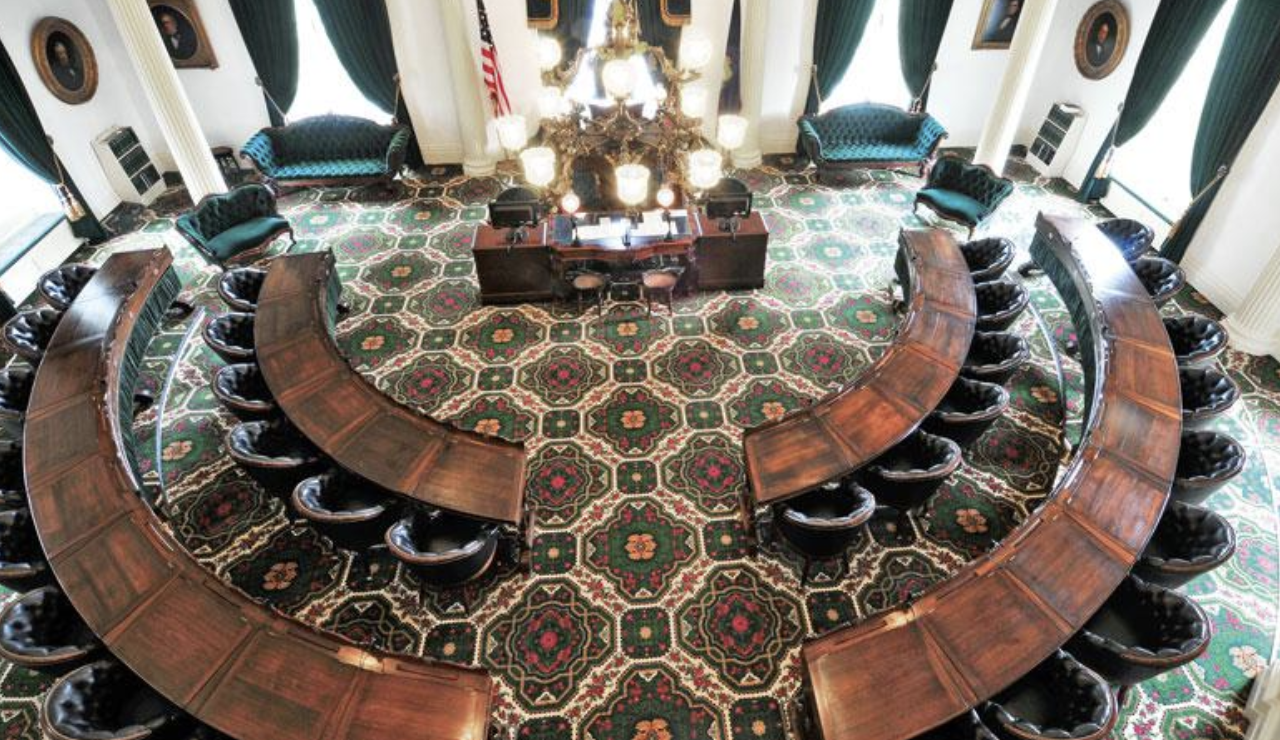
The New State Senate Will Be… Something

Last May, I wrote a piece entitled “What Will the State Senate Be in 2025?” The idea was that for the second straight election cycle, the stodgy ol’ Senate was going to see an unusual quantity of churn:

This, in a body that values age and seniority above all else, and normally consigns junior members to purely decorative status. It’s gonna be interesting.

Well, the results of this month’s election will bring even more change to the Senate. It’s kind of staggering when you put it all together. By my count, 18 of the 30 senators will be freshmen or sophomores come January. That’s an amazing number. There were 10 newbies in 2023, and nine more will be new senators in 2025. (One 2023 newcomer, Irene Wrenner, lost her bid for a second term.)

The class of 2025: Democrats Seth Bongartz, Joe Major, and Robert Plunkett; and Republicans Scott Beck, Patrick Brennan, Samuel Douglass, Larry Hart Sr., Steven Heffernan, and Chris Mattos. Class of 2023: Martine Gulick, Wendy Harrison, Nader Hashim, Robert Norris, Tanya Vyhovsky, Anne Watson, David Weeks, Becca White, and Terry Williams.

What’s more, in a body known for very long tenures, only four senators will have served continuously since 2015 (Phil Baruth, Ann Cummings, Ginny Lyons, Richard Westman). Historically, you’d need to serve at least that long before the John Bloomers of the world* would consider you to be a Real Senator.

*Kidding. There is only one John Bloomer per planet.

Continue reading

John Rodgers Has Some Work to Do

John Rodgers still looks to be our next lieutenant governor, absent some history-defying hijinx in the Statehouse. But he can’t close the books on his successful campaign — not without some serious post-election fundraising.

Because according to his latest campaign finance filing, Rodgers is nearly $53,000 in the red.

He raised a total of $214,218, very respectable considering that as of July 4 he hadn’t raised a damn dime. He attracted a veritable tsunami of four-figure donations from the Barons of Burlington and their friends.

But he also spent like a drunken sailor — $266,942 in a four-month period, a breathtaking pace for any office this side of the governorship. That leaves him with a campaign deficit of $52,724, meaning he overshot his revenue by about 25%.

Hell of a thing for a guy who ran on affordability and common sense.

Continue reading

We Are Unsheltering You For Your Own Good

I circled back to Gov. Phil Scott’s November 13 press conference because I was interested in the coverage of his comments about our burnt orange president-elect. VTDigger reported that Scott was urging people to give Donald Trump a chance:

“For the sake of our country, we need to tamp down the division and fear, and we need to at least give him the opportunity to do better and do the right thing.”

It sounded like the pundit class’ evergreen hopes that any minute now, Trump was about to start acting presidential. But when I listened to Scott’s full remarks, I got quite a different impression. Yes, he urged a wait-and-see attitude, but he was also sharply critical of Trump and rested his hopes more on “those who are coming into power with him” than on the president-elect himself. That’s a bold thing to do with a leader who has a proven capacity for vengeance. I thought it was more than a bit courageous on Scott’s part, actually.

Not so much with his comments on the newly-opened, grossly inadequate, and budget-bustin’ family shelters. On that score, he was deeply disingenuous — and the assembled reporters let him get away with it.

Continue reading

Are We Sure the Green Mountain Care Board Knows What the Hell It’s Doing?

Shots fired!

In response to revenue cuts ordered by the Green Mountain Care Board, the University of Vermont Health Network is slashing services at multiple locations. Most egregious, to me, is the closure of Central Vermont Medical Center’s inpatient psychiatric unit.

Reminder that we’ve had a chronic shortage of inpatient psychiatric space more or less continuously since 2011, when Tropical Storm Irene put the final nail in the old Waterbury state hospital’s coffin. And now we’re cutting eight beds?

A cynical observer might infer that UVMHN disagrees with the Board’s mandate, and is forcing the issue with unpopular and/or unworkable reductions. Seven Days’ Derek Brouwer wrote that the Network’s announcement “ratchets up a long-simmering tension” between the Health Network and the Board.

The Board was in a ratcheting mood itself. It issued a huffy statement Thursday afternoon expressing deep concern with the cuts and asserting that it “was not consulted on, and did not approve, these reductions.”

Well, boo frickin’ hoo.

Continue reading

Zuckerman’s End?

Barring an extremely unlikely vote in the Legislature, we may have seen the last of David Zuckerman on our political stage. Maybe not; he’s only 53 years old, a full generation younger than the guy we just elevated to the White House (and 30 years younger than our senior U.S. Senator). But if we are seeing the end of the Zuckerman experience, it’ll go down as one of the more curious public careers of our time. He is one of the most loved and hated politicians in Vermont.

Zuckerman was 25 years old when he was first elected to the Legislature in 1997. He’s been in office ever since, except for a two-year hiatus from 2021-23. He won 12 consecutive elections, a streak only broken when he took on the undefeated Phil Scott. You don’t compile a record like Zuckerman’s without smarts and talent, which he has in abundance, but there’s also a bit of tone-deafness about him. The latest indicator of this is his dalliance with Ian Diamondstone’s demand that the Legislature return him to office. He doesn’t seem to get that the longer this goes on, the sourer will be the end of his tenure.

Throughout the Phil Scott era, Zuckerman has been the most successful Democratic* politician this side of the Congressional delegation — and yet, many in the Vermont Democratic Party have ached to be rid of him. He’s the most high profile Progressive figure of his day and he has a formidable donor base, but he just got beat by a guy who didn’t even start campaigning until July. He is seen by many as a champion of progressive causes generally and women’s rights specifically, but others see him as untrustworthy if not a little bit squicky.

*Yes, I know he’s a Prog, but he was on the Democratic ticket. We’ll get to that.

Continue reading