Monthly Archives: October 2023

This Is Fear Country

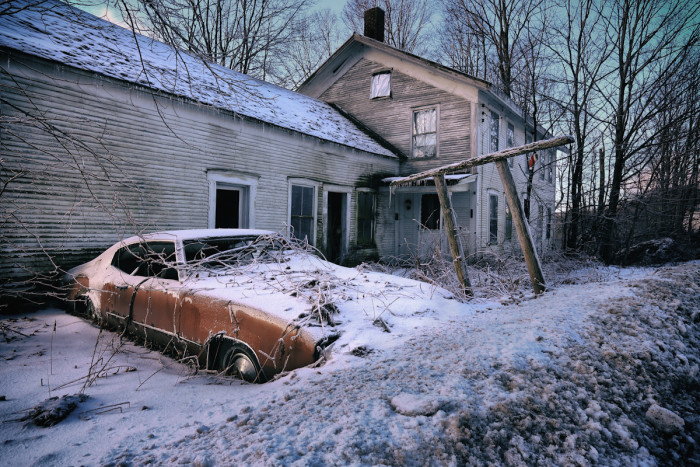
Since October 5, there have been seven eight suspicious deaths in rural Vermont. Yes, that’s a lot. But it’s not so far out of character as we’d like to believe for our oft-celebrated countryside. Which in our mind’s eye looks less like the above and more like the below:
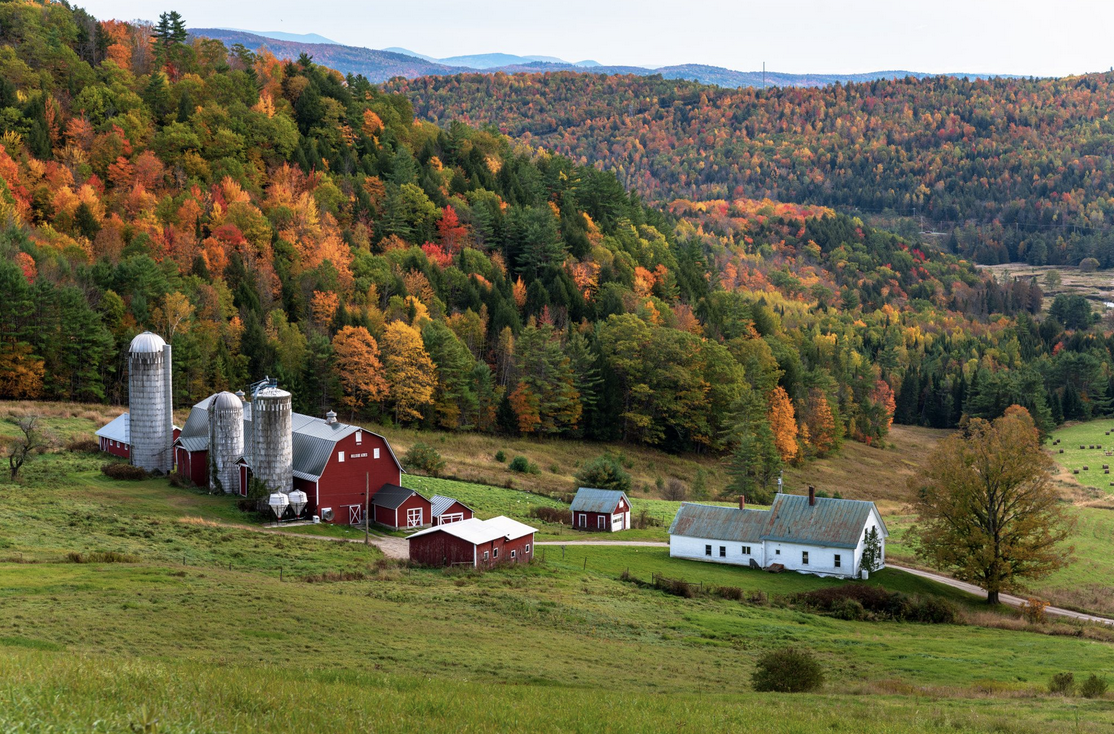
There is, in truth, plenty of both in rural Vermont. On balance, though, probably more of the former than the latter. Rural Vermont, like rural America, can be beautiful and ghastly, peaceful and dangerous, prosperous and abandoned.

It would behoove us to hold both pictures in mind. It might help break down the imaginary barriers between our suspect cities, full of drugs, crime, and recent arrivals, and our countryside, a paradise of scenic beauty and hardworking people. You know, the “real Vermonters” living in the “real Vermont.”

What bullshit.

Continue reading
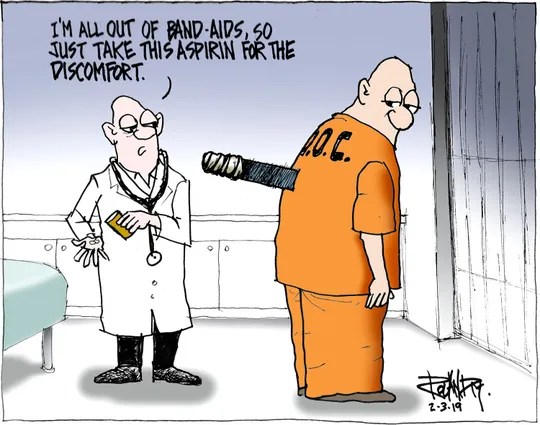
If They’re Pondering a Rebrand, I Suggest “Illpath”

Vermont’s three-year prison health care contract with troubled provider Wellpath is off to a whizbang start. Right off the bat, 15 inmates at the Northwest State Correctional Facility were given the wrong medication by Wellpath providers for their substance use disorder. And now, we have a Wellpath employee in a highly responsible position who has — well, I’d call it a “checkered past” except that all the squares seem to be the same color.

In September, Wellpath hired Robert Stevenson to be its top employee at the Southern State Correctional Facility. Turns out Stevenson lost his nursing license in three different states for “diverting or wasting opioids,” according to VTDigger.

And we only know this because one of his subordinates looked up his record, discovered his malfeasances, and reported it to Wellpath. Its response? The whistleblower was fired.

I’d call this a clown car, but that would be unfair to clowns.

Continue reading

Vermont Continues to Enable Health Care Sharing Ministry Scams

Well, we almost did it.

Back in 2019, the Vermont Legislature adopted a bill imposing penalties on those who didn’t have health insurance. But the bill included an exemption for those enrolled in so-called health care sharing ministries instead of actual health insurance. That same year, the Scott administration and the Attorney General’s Office issued a consumer warning about the perils of choosing an HCSM over insurance.

Now it’s 2023, and there are almost certainly more Vermonters in HCSMs now than there were four years ago. (HCSM participation grew dramatically during the Covid pandemic as many lost their insurance coverage due to unemployment, and were desperate for any cheaper option.) And we haven’t done much about it at all.

This issue came to my attention when I was writing up former health care reform opponent and former Trump administration appointee Darcie Johnston’s employment with the Alliance of Health Care Sharing Ministries. I didn’t include Vermont’s own sad little history because (1) I needed to do more research and (2) I do try to keep these posts from getting painfully long. But now it’s time to tell Vermont’s part of the story.

Continue reading

Bookshelf: Much More Than a Dark Chapter

Not to overstate the case, but this is one of the most important Vermont history books ever written. Vermont for the Vermonters by Mercedes de Guardiola tells a sweeping tale of eugenics in our state, and makes it clear that the story is much longer and deeper than we’d like to think. She also reveals that much of the story has yet to be told and may never be, thanks to poor record keeping and lax oversight. (The newly established Truth and Reconciliation Commission has a hell of a job on its hands.)

The back cover blurb refers to eugenics as “one of Vermont’s darkest chapters.” That’s a massive undersell of the book. We might like to think of it as a single chapter at some remove from the rest of our history, but it’s more like the dark underbelly of Vermont’s character, always lurking about and always influencing our politics and policies.

Two big takeaways from the book. One, we have always “othered” the less fortunate, portraying them as somehow alien to solid, hardworking “real Vermonters.” Two, we have a long and horrible history of failing the people we’ve chosen to institutionalize. Both points were true long before Gov. John Mead brought eugenics into the center of Vermont politics or Henry Perkins became head of the Eugenics Survey, and both still resonate in the present day. (On the former, see our reaction to homelessness and substance use. On the second, see Joe Sexton’s exposé of abuses at the laughably named and now mercifully defunct Woodside Juvenile Rehabilitation Facility.)

Continue reading

The Machine Will Eat What It Wants to Eat

Well, Burlington City Council went ahead and did something that it had no good reason to do, and had no choice but to do.

The topic of this riddle: Council’s approval of a 25-year extension of the Vermont Air National Guard’s lease at Burlington International Airport. A lease that wasn’t due to expire until The Year Of Our Lord 2048, which is so far in the future that Gov. Phil Scott doesn’t mind planning to cut greenhouse gas emissions by then.

Now that the lease will run until 2073, I guess the VTANG can go ahead and buy green bananas and renew their magazine subscriptions. (Surely they’ve got a coffee table in the break room littered with old copies of Aviation Week & Space Technology, Janes Defence Weekly, Combat Aircraft Journal, and such.)

Really, it was pointless. But Council was forced to act by the rules about federal airbase spending. See, the feds won’t invest in ANG bases with less than 25 years remaining on their leases. And airports like St. Patrick Leahy Memorial International are dependent on the infrastructure improvements that money will buy.

It all works together, and not for the good of anyone outside the military-industrial-aviatic complex.

Continue reading

How Not to Do Crisis Communications: A Case Study. Or Maybe a 12-Pack Study.

Question. Did Justin Heilenbach take a PR class taught by Craig McGaughan? Because the president of Citizen Cider has pulled off a comms faceplant the likes of which hasn’t been seen in these parts since McGaughan opened a gay bar called Mister Sister and responded to the backlash by staunchly defending his choice until it killed his business.

Citizen Cider has been taking it in the shorts for more than a month. A substantial number of employees have anonymously reported leaving the company over the marketing campaign for Hey Bub, which seemed to position the brew somewhere to the right of Bud Light, a curious choice for a Burlington-based artisanal outfit. Many ex-employees shared their experiences and views on Reddit. Then came a meaty Seven Days exposé and a slamtastic video from Burlington shit-kicker Jonny Wanzer, leading to his very successful campaign to encourage retailers and bars to stop selling Citizen Cider products.

Throughout it all, radio silence from Citizen Cider. Until last Wednesday, when Heilenbach dropped a thoroughly tone-deaf statement on social media.

In retrospect, he should have just kept quiet.

Continue reading

Desperately Seeking Scandal

Our two most prominent #vtpoli news outlets, VTDigger and Seven Days, are always eager to pounce on any sign of scandal regarding money in politics. They seem especially set on tagging a “For Sale” sign on the reputation of U.S. Rep. Becca Balint.

And now the trial of Sam Bankman-Fried has produced new documentation about his efforts to connect with the Balint campaign, so we have articles recounting the lurid details of his internal communiqués and Raising Questions about Balint’s integrity — and even the legitimacy of her resounding victory in the 2022 Democratic primary.

Well, color me unimpressed. There is no scandal. I’ve never thought so, and these latest stories don’t change my view at all.

Sure, Balint’s team dallied with SBF — who, lest we forget, was considered a financial savant at the time. No one knew he was — allegedly — a fraudster of the highest order. They met with him, they accepted donations from his associates, and they benefited from a huge contribution made to a national PAC that spent the money for ads touting Balint’s candidacy.

But there is no hint that Balint changed her positions to suit SBF and his friends. And there is abundant evidence that his largesse had no meaningful effect on the outcome of the primary campaign. If the new revelations show anything, they show that SBF is one cynical bastard.

Continue reading

Well, That Was a Lot Harder than It Needed to Be

Barre’s got problems.

At last week’s gubernatorial press conference, flood recovery czar Doug Farnham threw out a shocking statistic: Barre suffered two and a half times as much damage in the July flood than any other community in Vermont. That’s on top of its perpetually troubled Main Street and its usual struggles with drugs and crime.

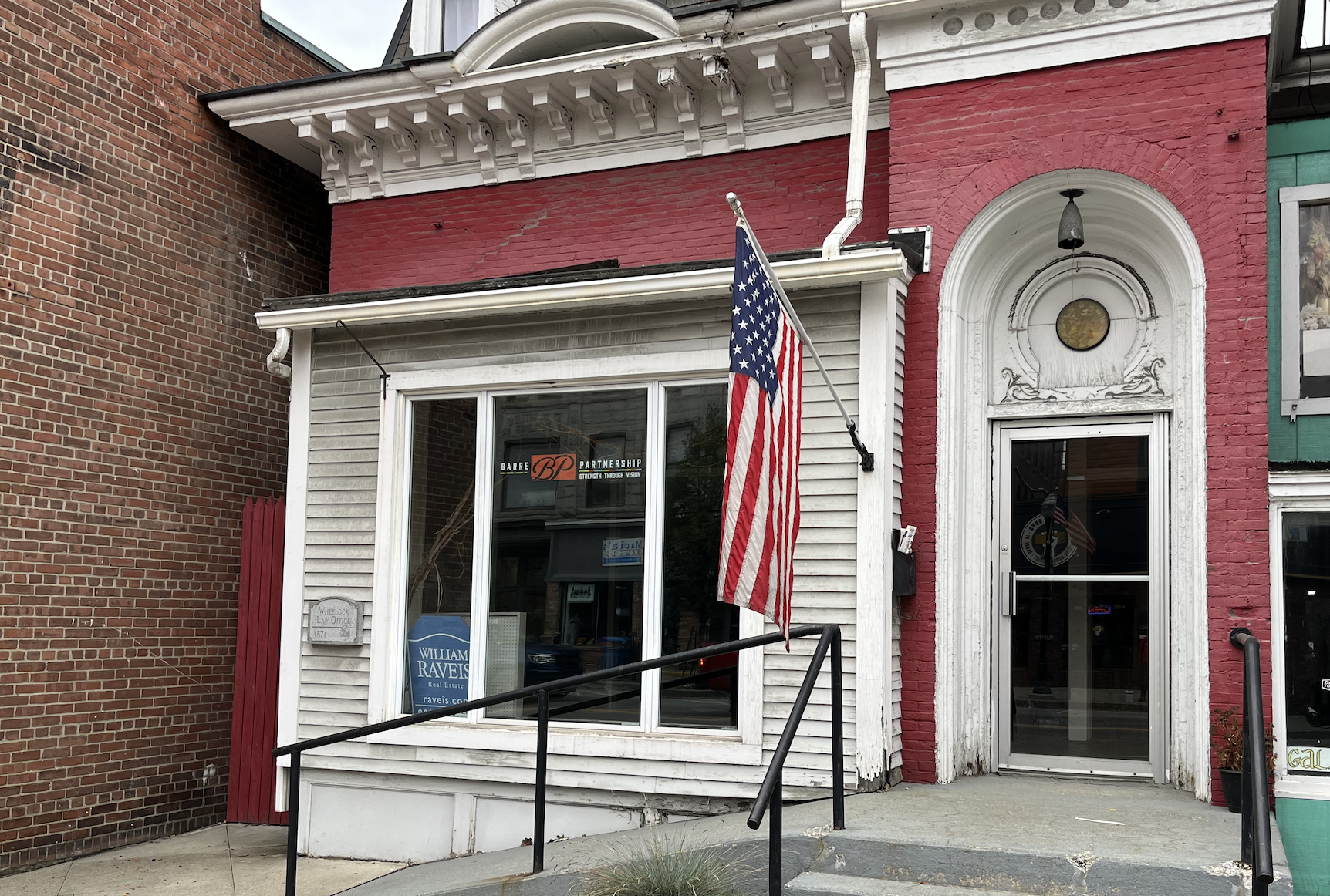
Even so, a handful of conservative troublemakers forced the city council to spend way too much time deciding the fate of the Wheelock Building, pictured above. The matter was finally settled this week, as council approved the building’s sale to the operators of East Montpelier’s Fox Market, which plans to open a second location in the building.

The Fox, for those unfamiliar, is a remarkable success story. Co-owners Doni Cain and Liv Dunton took a severely rundown building near the corner of US-2 and Route 14, where no one had managed to sustain a business for years, and turned it into a specialty food store and gathering place for the LGBTQ+ community and its allies.

And there’s the rub, I suspect. That handful of conservatives tried to hide their prejudice behind ludicrous procedural objections, but c’mon. It was obvious that they would rather have let the building go empty than risk seeing a rainbow flag on Main Street.

When, in fact, they ought to be throwing a damn parade for any entrepreneur willing to invest in Barre’s downtown.

Continue reading

Counting the Costs of Leadership Failure

In one of his novels, Vermont’s own crime novelist Archer Mayor chose the well-kept, comfortable town of Middlebury as the scene of a Hollywood-style gun battle with the goodies and baddies firing away at each other as they drove through the center of town. Many years ago I interviewed him about the book, and he confessed to a certain sly pleasure at foisting his fictional violence on that tony, tweedy community.

Well, now the good folk of Middlebury are suddenly experiencing, if not volleys of hot lead, an uncharacteristic feeling of insecurity. And we can lay this directly at the feet of state leaders, executive and legislative, who have failed to come to grips with our crises of homelessness, substance use, and mental health.

Remember last winter when housing advocates predicted dire consequences if the state were to end its emergency motel voucher program, and warned that the short-term savings from killing the program would be far outweighed by the costs of dealing with the fallout?

Welcome to Middlebury, where unhoused folk are camping on public land. There have been incidents of vandalism. People feel unsafe. Merchants are installing cameras and exterior lights and worrying about lost business. Police are overextended. Helping agencies are struggling with too many cases and too few resources.

It all came to a head at the October 10 meeting of the town selectboard, viewable on YouTube and recounted quite skillfully by John Flowers of the Addison Independent in a story entitled “Local Merchants Rail Against Uptick in Downtown Crime.” And rail they surely did.

Continue reading

Scott to Burlington: Eh

Gov. Phil Scott’s Thursday press conference was meant to deflect attention from his administration’s painfully slow approach to emissions reductions. The governor opted for his favorite diversionary tactic: Finding a straw man to punch. But the bigger takeaway from the event is his steadfast refusal to consider new policies — or even a drive up I-89 — in response to Vermont’s opioids crisis.

Let’s tackle climate first. Scott and Natural Resources Secretary Julie Moore (she of the excessively deliberate “progress” toward meeting our legally mandated 2025 emissions targets) asserted that an emissions-focused policy was wrongheaded. Instead, they said, there needs to be a balance between cutting greenhouse gases and making Vermont more resilient in the face of future climate disasters.

Scott backhanded “those who didn’t want us to focus on resiliency work” in the Legislature and claimed that “there’s been some pushback” on resiliency in the Vermont Climate Council.

I’d like some names, please.

There might be different opinions on the balance, but there is no one in the Legislature “who didn’t want us to focus on resiliency work.” As for the Climate Council, it was created by the Global Warming Solutions Act to further its statutory emissions targets. Resiliency isn’t the Council’s job. It’s like accusing FEMA of failing to enact permitting reform.

Enough of that. Now back to Burlington.

Continue reading