Following his surprise victory over David Zuckerman last November. Lt. Gov. John Rodgers was widely seen as the Great White Hope of the Vermont Republican Party, someone capable of succeeding Gov. Phil Scott. I don’t buy it myself; I think he’s more likely to be the next Scott Milne than the next Jim Douglas. someone who enjoys a brush with electoral success but can never repeat it.
And the primary reason for my belief is that John Rodgers simply does not give a fuck.
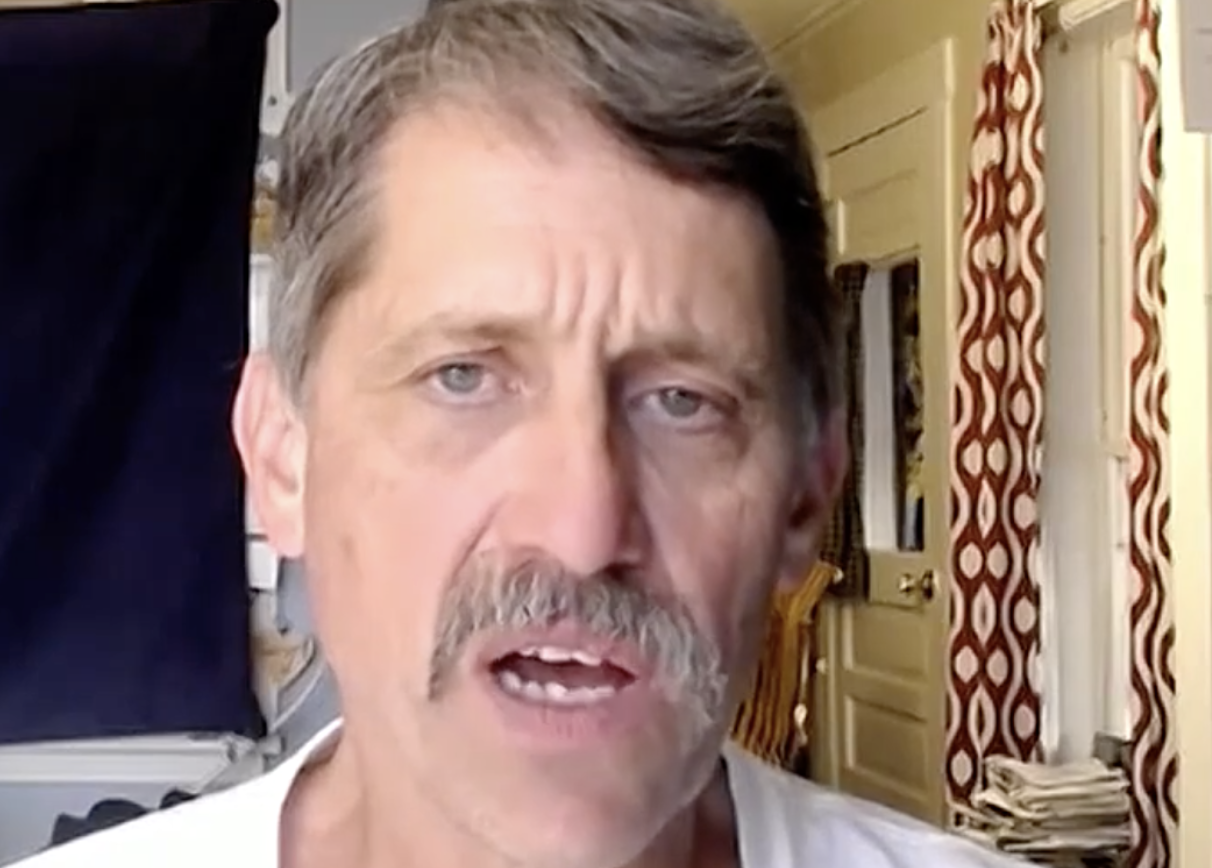
The first sign of this was his live interview on local TV the morning after Election Night, when he chose to make his initial public appearance as LG-elect looking like he’d just rolled out of bed and stationed himself in front of the camera wearing a decidedly non-gubernatorial white T-shirt.
The most recent sign is this: Back on February 4, I wrote a post entitled “Bad Grammar, Typos, and Plagiarism: Welcome to John Rodgers’ Official Biography.” In the first line of his bio, he is identified as “the 84rd Lt. Governor of Vermont.” That’s right, “84rd.” There followed a cornucopia of misspellings and offenses against the English language. It was an embarrassment, not only to Rodgers but to the state of Vermont.
You’ll never guess how he responded to this revelation.
Lt. Gov. David Zuckerman has kinda-sorta-almost conceded his race for re-election. But he did leave a side door open, just a bit, and he should cut it out.
Zuckerman got 44.5% of the vote, while Republican John Rodgers got 46.1%. When no candidate gets a majority, the Legislature technically chooses the winner — although traditionally the top vote-getter is awarded the office.
Zuckerman’s almost-concession came after Peace & Justice Party candidate Ian Diamondstone issued a self-righteous press release calling for Zuckerman to be installed. Seriously, you should read the thing. (It’s attached at the end of this post in all its sniffy, stuffy, Old Left glory. The late Peter Diamondstone would be proud.)
While Zuckerman did concede, or got about 99% of the way there at least, he gave some weight to Diamondston’e argument. The LG’s explanation was, frankly, an exercise in tortured logic, long on the former and short on the latter. Let’s see if I got this straight. According to VTDigger, Zuckerman called Rodgers to acknowledge he’d won… but he thought the Diamondstone statement raised some good points… but he wouldn’t contest the election in the Legislature… but he thought the statement “probably will keep that discussion alive.” Note the passive tense. He won’t keep the discussion alive, but he hopes it will continue without his help.
It’s understandable that a politician facing a shock defeat might try to wriggle off the hook, but the Diamondstone thing is a dead end that can only drag Zuckerman further down. Really now, how much influence do you think the Peace & Justice Party has in Montpelier?
The coverage of this year’s Vermont elections — including, often, my own — generally ignores one factor that will outweigh any of the issues or trends we explore ad nauseam. This includes (1) the much-anticipated tax revolt, which may or may not be a reality, (2) the Barons of Burlington’s plot to kill the state Senate supermajority, and (3) the Democrats’ failure to mount a serious challenge to Gov. Phil Scott. Or anything else you could name.
I refer to the national election. The race for president and the battle for Congressional majorities. This cannot be ignored in any assessment of Vermont’s elections.
There is always a substantial jump in turnout between a midterm election and the ensuing presidential. Since 1994, the smallest jump was between 1994 and 1996, with a 16.7% increase. The biggest was between 2012 and 2014, with a 38.8% increase. The average midterm:presidential increase in that period was 24.1%.
Not all cycles are created equal. 2012:2014 was an outlier on each end, with high turnout for Barack Obama’s re-election followed by 2014’s plunge due to a lackluster gubernatorial contest between mortally wounded incumbent Peter Shumlin and dismally bland challenger Scott Milne.
(Brief digression. The 2014 election was the outlier of all outliers, as Shumlin suffered a catastrophic drop in support.. He’d won 170,749 votes in 2012 — and only 89,509 in 2014. Milne, who very nearly beat Shumlin, actually drew 24,000 FEWER votes in 2014 than losing Republican Randy Brock had in 2012.)
But while not all cycles are created equal, there’s a clear and obvious pattern. A lot more Vermonters go to the polls when the presidency is at stake than when it’s not.
Welp, the other shoe has dropped. Two months after the death of NASCAR legend and central Vermont radio mogul Ken Squier, the stations of Radio Vermont have been sold. Depending on which source you trust, the new owner is failed Republican candidate (and very briefly head of the Ethan Allen Institute) Myers Mermel (Radio Vermont press release) or Mermel and failed Republican candidate and travel mogul Scott Milne (VTDigger). The press release, posted at the Vermont Daily Chronicle, lists Milne as “an investor” and “key advisor,” while Digger bills him as a full partner. Either way, the two men are deeply conservative. Milne somehow got a reputation as a moderate, but he’s a lot less moderate than Phil Scott.
The crown jewel in the Radio Vermont firmament is WDEV, a throwback of a locally-owned, community-oriented station with a mixed format of news, talk, music and sports. The station bills itself as “a forum for all voices to be heard,” although in recent years the loudest voices have come from the right. I expect that trend will only accelerate under its new Republican ownership.
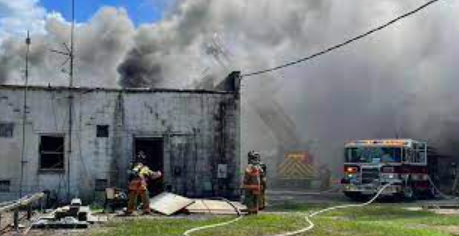
Coincidentally, the call letters “WGOP” are probably available for pocket change. The letters are currently assigned to a tiny AM station in Pocomoke City, Maryland, whose building was destroyed by fire in August 2022. It’s been off the air since then.
I’m a bit sad that the Squier family has exited the scene after owning WDEV since its founding in 1931. I’d be more dismayed by the partisan lean of the new owner/s, except that the station — and all of terrestrial radio — is a mere shadow of its former self.
Gov. Phil Scott’s re-election campaign has been sleepwalking through the 2022 campaign, barely bothering to raise money and spending very little.
Until now.
The Scott campaign’s recent financial disclosures show that, with very little time remaining, Team Scott has seriously kicked it into overdrive.
Between October 27 and November 4, the Scott campaign filed five Mass Media spending reports, totaling $63,471. That’s more than they’d spent on mass media in the entire cycle before then. The media buys break down like this: $45,086 for TV, cable and streaming ads, $1,142 for Facebook ads, and $7,513 for newspaper ads.
In the six weeks before that big splurge, the Scott campaign had spent less than $10,000 on mass media.
Why spend so much so late? In fact, almost too late? The impact will be limited because so many have already voted. Did they get a bad poll?
Election Day. Seems like it took forever to get here, but it’s still a shock that the day is finally here. And while all the attention and anxiety is focused on the national scene, this little outpost of the Internets is all about the #vtpoli. So here are my ridiculously low-stakes takes on what’s going to happen tonight in Vermont. Refunds cheerfully offered; please keep your receipt for presentation at Customer Service.
The most likely outcome is an even-more-ridiculous version of the past four years: Phil Scott and a whole lot of Democrats. Scott seems to be a lock to win a third term. Personally, I think a Dave Zuckerman win is at least a possibility, but much more well-informed folks than me believe otherwise.
Who? Well, Scott himself for one. He conducted an entire gubernatorial campaign on the absurdly tiny budget of $307,000 (as of October 30). He never bought a single television ad. This is the closest thing to a nickel-and-dime George Aiken campaign budget that the modern era will allow.
Beyond Scott, there’s the wise guys at the Republican Governors Association, who spent almost as much on polling as Scott did for his entire campaign. The RGA’s Vermont branch, Our Vermont, kept on polling right up to the closing weeks, and never saw the need to buy a single ad — in any medium.
If you’re a Republican, that’s the good news. The rest of it could be really, really bad. We’re looking at an historically high turnout, which is customarily good news for the Democrats.
Just as he and Gov. Phil Scott did in 2016, Scott Milne has taken his ballot and run and hid in the Jim Douglas Panic Room. “I’m voting for Jim Douglas,” Milne said in a Monday appearance on WDEV’s Dave Gram Show. “As of today, my plan is to vote for Jim Douglas, but I’m going to vote on Election Day.”
Nice. He resorts to the write-in, but leaves himself an escape hatch in the Panic Room.
Both Mine and the governor have repeatedly indicated their distaste for President Trump. And in 2016, both opted to write in The Beau Ideal of the VTGOP. (The Gov has yet to declare how he will vote this year.)
I suppose Milne would explain his vote as an endorsement of moderate Republicanism and a wish that more Republicans acted like Jim Douglas. By which he means working with all parties, not the other stuff — the employment of attack-dog Jim Barnett in his campaigns and his opposition to marriage equality and his often contentious relationship with the Democratic Legislature.
But even if you ignore the flaws in Douglas’ good-guy image, there’s a less flattering way to look at Milne’s presidential choice.
Seems to me that what he’s saying is he’d rather toss his ballot in the dumpster than ever, ever, ever vote for a Democrat. Even Joe Biden, who has a reputation very much like Douglas’ for getting along with everybody.
So what kind of bipartisanship is that, anyway? If you dislike Trump so much, why not cast your vote in the most effective way possible — for Joe Biden?
Because voting for a Democrat is a bridge too far for these guys, even when their own party’s leader is a racist crypto-fascist kleptocrat.
Something is happening that almost certainly has never happened before. In the general election campaign (post-primary), the candidates for lieutenant governor have outspent the candidates for governor.
This is mainly because Republican Scott Milne continues to drop large amounts of cash for TV ads. In the past week, Milne has reported mass media buys totaling roughly $140,000, with all but $1,600 going for TV spots. (The remainder was for robo-calls.)
Campaigns filing mass media reports are required to list any candidates mentioned in the material. Milne’s October ads mention himself and Democrat Molly Gray. I’ll assume they don’t paint Gray in a flattering light… and I’ll assume we have heard the last of Milne’s whining about negative campaigning, since he’s gone ham on the whole attack thing.
Since the August primary, Milne has spent a total of $102,000 on TV ads alone. He’s spent nothing on radio, and hardly anything on newspaper ads.
Gray hasn’t reported any mass media buys since 10/15, and has spent $52,000 since the August primary. Her media buys are widely distributed among TV, online and mailing, and she spends a lot more than Milne on staffing, organization and events. As I wrote earlier, Milne has adopted the Disembodied Head style of campaigning.
The race for governor, meanwhile, has been running on the cheap. Gov. Phil Scott has spent $11,000 for online advertising since 10/15, while Lt. Gov. David Zuckerman’s most recent mass media buy was on the 16th — $25,000 for TV ads. Nothing since.
Nothing in this column bears illustration, so let’s go with some clickbait.
In case you were wondering why all the commotion last night — the rowdy partying, the fireworks, the parades, the desperate closing-time hookups — well, the mid-October campaign finance reports are in.
Yippee!
There’s nothing that changes the complexion of the Vermont political season, but there are a lot of fascinating details. Let’s get started!
The Governor is in cruise control. Phil Scott’s campaign didn’t even break a sweat in the first half of October. He pulled in $41K, bringing his campaign total to a measly $376K. (For those just joining us, conventional wisdom has it that you need at least seven figures to seriously compete, and $2 million is a better starting point.) What’s really telling, though, is that he only spent $14K in the past two weeks. He did a bunch of small newspaper ad buys and no TV. He didn’t pay a dime to his big national campaign outfit, Optimus Consulting. He has over $100,000 in the bank, and shows no sign of making a serious dent in it.
Zuckerman fights the good fight. The Democratic/Progressive nominee is a spider monkey battling a gorilla: Impressively crafty, but likely to get squashed. Zuckerman raised a healthy $62K in the two weeks since October 1, for a campaign total of $629K. And there’s the problem: it’s really not enough money to fuel a statewide campaign against an entrenched incumbent.
If you look at his donor list, you see where his problem lies. He’s getting a ton of small gifts, but the Democratic power players are sitting it out.
Look at these numbers. Scott has 1,141 unique donors, and has taken in 768 “small” donations of $100 or less. Zuckerman has 5,234 donors, and has accepted 6,055 donations of $100 or less. (The latter number is higher because many of his donors have made multiple gifts.)
Even with Scott’s late entry into active campaigning because of the coronavirus, those are some telling numbers. Despite his broad popularity, Scott doesn’t have people lining up to give him money. Zuckerman has a much larger base of enthusiastic donors.
But his problem is, he isn’t getting the big money to augment the small fry. The state’s two largest public sector unions wrote big checks to Beth Pearce, Doug Hoffer, Jim Condos and TJ Donovan — but nothing, as far as I can tell, for Zuckerman.
Meanwhile, Democratic megadonor Jane Stetson donated $500 to Zuckerman’s campaign. That’s a buck in the tip jar for Stetson. If she was committed, she and her husband WIlliam would have each kicked in the maximum $4,160.
That’s only one data point, but it illustrates the disconnect between Zuckerman and the Democratic moneybags. He also, apparently, hasn’t received any money from Vermont’s Congressional delegation. (Bernie has done his bit for Zuckerman on the intangible front, but no direct contributions.)
Zuckerman has received a healthy $13,000 from the Vermont Progressive Party, which makes the absence of Democratic cash all the more glaring. And he’s given $22K to his own campaign. He’s needed every dime.
Still to come: The LG race and the PACs, including a surprise entry for most impactful PAC of the cycle.
To paraphrase the great Yogi Berra, it’s getting late early out there. Almost three weeks remain until Election Day, but we’re closing in on 100,000 ballots already cast in Vermont. That’s likely to be between one-third and one-quarter of all the votes. Which means that political spending will be less and less impactful as the ballots keep on rolling in.
So, where’s the big money? It’s absent, for the most part. The next round of campaign finance reports isn’t due until Thursday night, but we’re in the Mass Media reporting window: Within 45 days of an election, any mass media buys over $500 must be reported immediately to the Secretary of State’s office. In recent weeks, there’s little sign of big spends.
This would seem to be terrible news for Scott Milne, Republican candidate for lieutenant governor. On September 24, the Republican State Leadership Committee spent $210,000 on TV ads backing Milne. I took it as a sign that national Republicans saw Milne as a credible contender — perhaps even a future successor to Gov. Phil Scott, whenever he rides off into the sunset or Congress, depending.
But the ballots are pouring in, and the RSLC hasn’t spent a dime here in three weeks. Either they have bigger fish to fry, or they’ve decided that Milne is a lost cause.







 The Vermont Political Observer.