Tag Archives: Lake Champlain

Vermont’s New Working Landscape

Vermonters have a long, sometimes storied, sometimes notorious, history of working on our land. In the latter category we have, among others, the sheep boom of the early 19th Century that left vast forests converted to pasture; the near-clearcutting of the entire state during the lumber (and wood construction) boom of the later 19th; the complete trashing of our waters by riverbank industries; and our modern-day violations of the Clean Water Act, caused in large part by agriculture and inadequate public water treatment.

Throughout it all, Vermont has been a working landscape with a tenuous, inconsistent relationship to the environment. Fortunately, we never found exploitable resources like coal or precious metals or oil. Also fortunately, the population has remained small enough that we’ve never been able to damage the environment beyond its incredible ability to regenerate.

But whether we were engaged in massive sheep farming, clearcut lumbering, industry, dairy farming, or shopping malls and subdivisions, the one constant is that we live in a “working landscape.” We have often celebrated that fact. And indeed, long-familiar aspects of the working landscape — even if they cause environmental degradation — are cherished parts of our way of life.

Myself, I’m looking forward to the next evolution of Vermont’s working landscape: the integration of renewable energy, the creation of a closer-to-home energy supply, the diminished dependence on fossil fuels and on massive “renewable” sources elsewhere, such as Seabrook Nuclear and the destructive hydro projects in northern Quebec.

Continue reading

A strange little bubble: the proto-candidacy of Bruce Lisman

Former Wall Street panjandrum turned bland public policy crusader Bruce Lisman showed up on The Mark Johnson Show Friday morning, and came about as close to declaring his candidacy for Governor as he could without actually making a declaration.

“I’m leaning strongly toward running,” he said, and indicated he was embarking on a weeklong family vacation that would probably produce a final decision. But while he’s pretty sure he’s running, he’s a lot less sure how he will do it: as a Democrat, as a Republican or as an independent. “If I choose to run, I’m running for the people. I’ll figure out how best to do that.”

Aww. For the people, eh? Well, the people appreciate the kind gesture.

He spent the rest of the hour basically proving my contention that he doesn’t stand a snowball’s chance of ever being Governor.

His answers were awfully rambly and not terribly engaging. He frequently changed subjects in mid-answer — sometimes in mid-sentence. He rarely ended up anywhere close to where he began.
.
But that’s not the worst problem.

Continue reading

The Don Turner Guide to Fiscal Responsibility

House Minority Leader Don Turner was the last soldier at the rhetorical Alamo of opposition to the water bill. Even at the last, he was pushing for no new taxes. His idea for a funding source was to divert small amounts of money from various other places and use it to leverage a bond issue.

We’ve been over this before, but I think it’s time to point out exactly how stupid and fiscally irresponsible that idea was.

First of all, his own estimate for his own plan was about $4.2 million, about half the money in the Democrats’ plan. Since the Dems’ plan is designed to be as cheap as possible while still passing muster with the EPA, it’s hard to imagine Turner’s plan gaining its approval.

And as a reminder, if we don’t adopt an acceptable plan, the EPA will come down like a ton of bricks on the only pollution source under its jurisdiction: municipal water treatment. That would be a far more expensive, and less impactful, solution, but it’s the only tool in the EPA’s box.

Okay, beyond the questionable prospects for the Turner plan, the big problem is its dependence on bonds for ongoing expenditures. This is a huge no-no according to the financial whizzes in the state treasurer’s office. Earlier this week, Deputy Treasurer Stephen Wisloski told the House Ways and Means Committee that using bond funds for current expenses is unwise, and a good way to ruin your debt rating. As he put it, “You should make sure the useful life of the asset is at least as long as the life of the bond.”

In simple English: bonding for roads, bridges or buildings GOOD. Bonding for current expenditures BAAAAAAAD. Taking notes, Donnie boy?

And here I thought Republicans were the guardians of fiscal responsibility. In fact, the notion of bonding is a band-aid solution that harms our bond rating in the immediate term and stretches our future finances ever more thinly.

And for what? To avoid a 0.2% tax on property transfers? Yeesh.

I shudder to think how our finances would look if Don Turner or a likeminded Republican was in charge. I certainly wouldn’t look to him for responsible governance.

The budget gap: an alternative story

A simple narrative has emerged to explain Vermont’s budget gap of roughly $113 million. Oddly, tragically, it’s pretty much the same narrative whether you’re Republican or Democrat.

The Republicans’ version goes like this: The Democrats are out of control! They’re taxing and spending like drunken sailors!

Some liberals raise a fundamental objection to this — but not Gov. Shumlin. Now, he couches it differently; his version is that Vermont’s economic growth has failed to meet expectations and that state spending has overreached. But his underlying assumption — the state has spent beyond its means — is very similar to the Republicans’.

Gee, no wonder he had trouble developing a clear narrative in the 2014 campaign.

It’s true that the economy has underperformed expectations — but that’s not a phenomenon unique to Vermont. Nor is it attributable to our alleged “tax, spend and regulate” ways. By many measures we’re doing better than our northeastern neighbors. And we’re doing a hell of a lot better than states with hard-core free-market governments like Wisconsin, Michigan and Kansas.

(The states where free-market ideology is credited for booming economies enjoy unrelated economic advantages: Texas and North Dakota’s fossil fuel wealth, Arizona and Florida’s retirement havens and influx of immigrants.)

(Yes, immigrants. Most of them are hardworking people who came here in search of a better life. They add energy and ambition as well as cultural spice to our melting pot. We could use more of them here in Vermont.)

There’s an alternate story to tell about how we got into this fix. Strangely enough, it actually shows the Shumlin administration in a positive light. If only the Governor was willing to tell it.

Part of our problem is the structure of our tax system, as previously discussed in this space. ur income tax system has an extremely narrow base because of how we calculate taxable income and allow itemized deductions.  We’re losing tens of millions in potential revenue because our sales tax system has more holes than Swiss cheese. (Sen. Tim Ashe, chair of the Senate Finance Committee, estimates that we’re losing $50 million a year because of Internet sales. That’s not new tax money; it’s money we used to collect and aren’t anymore.)

The rest of the problem is that the Democrats have been responsible stewards, even if it means short-term trouble. They’ve tried to manage state finances in difficult times while maintaining state programs that have a beneficial impact on our present and future well-being.

Programs like Reach Up and expanded health care access and substance abuse treatment aren’t giveaways; they’re aimed at giving Vermonters a way out of systemic poverty. There’s also an immediate benefit: money spent in programs like food stamps and LIHEAP and the Earned Income Tax Credit go directly back into the economy, creating much more positive impact than capital gains tax cuts or corporate tax breaks.

And here’s a great big item that, sadly, I didn’t even realize until Saturday when House Speaker Shap Smith addressed the State Democratic Committee. The Democrats have spent millions to restore full funding to public sector pension plans. Smith mentioned $60 million, and called it a significant reason for our budget troubles.

Which is true. But it’s also the responsible — nay, the legally required — thing to do. The pension gap was created through years of mismanagement under previous administrations. (You know, those administrations that featured budget hawk Tom Pelham in prominent roles.) They took the easy way out of budget predicaments: putting off the day or reckoning. As Smith said, “we’re making up for the sins of the past.”

Really, it’s the Republicans who are bad managers. They are so single-mindedly focused on cutting that they fail to develop any sort of vision for governing. And they undercut the good things that government can, and should, do.

Two more overdue investments. First, the current administration has instituted health care reforms that have produced some waste and a bug-riddled website, but have also cut our uninsured population to 3.7%, compared to a national average of 12%.

And second, it’s making a long-overdue attempt to clean up Lake Champlain. That’s another legacy of the short-sighted practices of past administrations: they ignored the problem and let it get worse. And more expensive to fix.

These are noteworthy accomplishments. They are the right things to do. They are not wild or radical or thoughtless. And they are big reasons why we’re in our current budgetary difficulties.

And that’s it. It’s not a narrative of spendthrift liberals bankrupting the state. It’s a narrative of careful investment in Vermont’s future weighed down by a legacy of bad management and an outdated, creaky tax system.

This is not to say that I agree with everything the Democrats do. They’ve been too careful for my taste. But they do have a compelling story to tell.

Too bad nobody’s telling it.

So maybe James Ehlers wasn’t such a nut after all.

Not too long ago, most of Vermont’s environmental groups were lining up to give Gov. Shumlin a pat on the back for a strong Inaugural Day commitment to cleaning up Lake Champlain. The notable nonparticipant in the cheerleading was James Ehlers of Lake Champlain International, who saw the plan as inadequate and almost doomed to failure.

Vermont’s waters need more science and less politics. That is what we have taken away from the governor’s inaugural address and the subsequent media events.

… We need and want his plan to succeed. But, sadly, it won’t.

For his trouble, he was cast as the outsider unwilling to accept a pretty good plan that was probably the most that could be hoped for, given current political and fiscal realities. Well, that might have been the nicest way it was put:

To his admirers, Ehlers is a fearless crusader for water quality, willing to speak truth to power — even if that pisses off political officials and establishment environmental groups in the process.

To his detractors, Ehlers is, at best, a bombastic ideologue. Some doubt his motivations, wondering privately if he’s fueled more by ego than environmentalism.

But now, here come the “reasonable” enviros sounding an Ehlers-like alarm.

Shumlin’s [Inaugural] message was celebrated by environmentalists. But two months later, many of the same supporters say the state’s cleanup plan is insufficient to achieve state water quality standards.

“It really doesn’t do much of anything to deal with the several agricultural problems that are present in the most polluted watersheds in Lake Champlain,” said Chris Kilian, vice president and director of the Conservation Law Foundation.

Kilian and others are upset over the Agriculture Agency’s handling of farm-related water quality issues. Ag Secretary Chuck Ross has refused a petition to impose “best practices” on farms near impaired sections of Lake Champlain, and seems more concerned with concocting excuses for inaction than for pushing ahead with an aggressive enforcement plan.

Maybe that’s no surprise, considering that his agency is more of an encourager — and enabler — of the ag industry than an environmental enforcer. As Kilian says, “there is no demonstrated track record that we do share the same goal.”

It’s easy to conclude that the Shumlin administration is ambivalent about Champlain; if not for the threat of the EPA hanging over its head, we’d almost certainly still be in “speak loudly and carry a toothpick” mode. The administration’s goal seems to be devising a plan that will barely be enough to mollify the feds.

Ehlers, of course, was saying so all along. He should be forgiven if he indulges in an ironic chuckle.

The drift

The legislature is about a quarter of the way through its four-month session, and Governor Shumlin’s proposals are falling like tin ducks in a shooting gallery. Lake Champlain tax plan? Dead. Education plan? “A place to start the conversation.” Payroll tax to close the Medicaid gap? Flatlining.

Not that this is terribly surprising; the governor exited the 2014 election with significantly diminished political capital. So much so that when Shumlin unveiled his proposals last month, the question wasn’t so much whether they would pass or not, as whether he meant them seriously in the first place or knew from the start that they were doomed.

(Evidence for the latter: an education plan that did nothing to provide near-term property tax relief. That, at least, was a non-starter.)

Not sure what else he could have done after his near-defeat. He could have taken the George W. Bush approach, pressing on regardless of his mandate-free victory, but that’s not who he is. Shumlin likes to talk bold and act incrementally.

Now he’s added deference to incrementalism, and it’s up to the Legislature to generate some vision. The consensus-seeking, conflict-avoidant Legislature. I’m not holding my breath.

I do expect our lawmakers to do some good work; I just don’t expect them to produce anything truly impactful. And we face a bunch of issues that call for some strong, progressive action.

Take, for example, the House Fish, Wildlife and Water Resources Committee, chaired by one of the good people of the Statehouse, David Deen. The committee has already ditched Shumlin’s proposed tax hikes to help pay for Lake Champlain cleanup. The fertilizer fee’s down the tubes because the farmers didn’t like it; the fee for stormwater runoff from developed sites is as good as dead because it would be “difficult to implement.”

Instead, Deen’s panel is looking at a smorgasbord of tax and fee hikes — more numerous than Shumlin’s plan, and less directly tied to the sources of Champlain pollution. The governor’s plan was simpler and made more sense. The committee’s approach will open the door to Republican charges that the Dems are just raising taxes wherever they can. Deen is considering at least four separate tax or fee increases instead of Shumlin’s two.

More important than the specifics of the Champlain plan, though, is the strong signal it sends: Lawmakers — even those who are solid on policy — are loath to take risks. Or, as Deen himself put it:

“There are some very strong voices in the hall opposed to it. And we are reacting to political reality around here,” the Westminster Democrat said Friday.

This session is looking like a big fat lost opportunity given that this is an off-year, and new programs or reforms would have a year and a half to take root before lawmakers have to run for re-election. Ya think next year’s gonna be any better?

This is a typical duck-and-cover reaction, but it plays right into the Republicans’ hands. Let’s say Phil Scott runs for Governor, as everybody believes he’s going to do. He’s strongly positioned as a centrist willing to consider all ideas. And he’s a nice guy to boot.

If voters have a choice between the Democrats’ fear-based centrist incrementalism with a bias toward inaction and Phil Scott’s natural centrist incrementalism with a bias toward inaction, which one do you think they’re going to choose?

I hope I’m wrong about this. It’s still early in the session, and there’s more than enough time to come up with at least one piece of solid small-p progressivism. But I’m not holding my breath.

Senate Natural Resources: Addition by subtraction, at the very least

On Friday afternoon, the white smoke went up the chimney of the State Senate’s College of Cardinals — the three-man (yup, still no women in the club) Committee on Committees* who dole out the committee assignments.

*John Campbell, Phil Scott, Dick Mazza. 

The most closely-watched decision was over the chairmanship of the Senate Natural Resources and Energy Committee. Former chair (ahhhhhh) Bob Hartwell chose not to run for re-election last year; his chosen successor is Addison Democrat Chris Bray.

Hartwell famously cast doubt on the science of climate change last spring in an interview with Seven Days’ Paul Heintz:

“To suggest that mankind is causing the whole climate to shift, that’s a big reach,” he added. “I don’t think anybody’s ever proved that.”

When Heintz pointed out that, in fact, it had been proven by the UN’s Intergovernmental Panel on Climate Change, Hartwell cast doubt on the IPCC’s credibility, accusing it of making “some pretty extreme statements” and claiming the scientific community is divided on the question, which is complete balderdash.

Compare that hot mess to Bray’s position, as reported by VTDigger’s John Herrick:

“Climate change is the largest challenge we face, not just as legislators but as a species,” he said. “There are some pretty discouraging predictions out there about what will happen, but we can’t afford the be paralyzed by that uncertainty.”

That’s better.

The other notable addition by subtraction on Natural Resources is the departure of human popgun Peter “The Formerly Slummin’ Solon” Galbraith, whose main contributions were strident opposition to wind power, a short temper, and frequent grandstanding. Good riddance. He’s effectively been replaced by Brian Campion, Democrat from Bennington, who scored 100% on the Vermont Conservation Voters’ 2013-14 environmental scorecard. 

The other three Natural Resources members were reappointed: Diane Snelling, Mark MacDonald, and John Rodgers. Snelling’s one of the better Republicans on environmental issues, MacDonald is reliable if uninspiring, and Rodgers is one of the worst Dems on the environment; he and fellow Kingdom Democrat Bobby Starr earned a pathetic 38% from the VCV, the lowest scores of any Senate Dem. But without Hartwell and Galbraith, he’ll be a lone voice on the committee.

Bray scored 100% on the VCV scorecard for the last biennium (Hartwell got a dismal 50%); his elevation to the chairmanship is getting positive markers from the environmental community. Paul Burns of VPIRG:

Chris is a very thoughtful, methodical legislator. He considers issues carefully and is receptive to hearing from all sides of an issue. But that’s not to say he doesn’t have his own ideas or vision. He cares a great deal about the environment and he not only believes in climate change, he wants to do something about it.

Those on-the-record views were largely echoed by a Statehouse vet who requested anonymity.

Chris has a strong streak of environmentalism. He is committed to the issues [his committee] will be involved in. He is deliberate, and likes to hear from all sides.

He won’t be a renegade; he’ll be a team player. He won’t cause problems [for Senate leadership]. He’s generally good on the issues; the environmental community should be happy with his appointment.

The enviros’ big worry was that Rodgers might snag the chair, which, given the CoC’s stacking of the 2013-14 committee with some of the worst possible Senators, wasn’t an unreasonable fear. So they’re relieved to get Bray instead. In an ideal world, their favorite would have been Prog/Dem David Zuckerman, but that would’ve been too much to expect from this particular CoC.

Chris Bray’s dedication to environmental issues, and his even temperament, will be tested in the new session. His committee will have to tackle the issues highlighted in Gov. Shumlin’s inaugural — a new renewable energy program for Vermont utilities, and the Lake Champlain cleanup.

His own district is touched by multiple hot-button environmental issues: Champlain, the Vermont Gas pipeline, and the siting approval process for solar arrays. The latter, because the Champlain Valley’s relatively flat landscape makes it desirable for solar. He’ll be torn on the pipeline and solar, since some very vocal advocates are on one side of those issues, and the local business community is on the other. And if he supports Gov. Shumlin’s package of Champlain initiatives, he’s likely to feel some blowback from farmers and developers his district.

He may also be torn between his own environmental beliefs and whatever’s rattling around in John Campbell’s brain these days. We shall wait and see.

A passel o’ peevishness on Inauguration Day (Part Two)

In Part One, I mused about the overreactions and hurt fee-fees on both sides of yesterday’s Inaugural protest. Now, let’s turn our attention to the Republican reaction to Gov. Shumlin’s inaugural address.

Their main point, according to VTDigger’s Laura Krantz?

Gov. Peter Shumlin ignored the most pressing issues facing Vermont in the first speech of his third term, Republican leaders said Thursday in response to the inaugural address.

… Republicans, gathered in the Senate cloakroom, said they were disappointed Shumlin ignored property taxes and health care — two issues that topped voter concerns during the elections last fall.

The speech focused on energy and the environment, so the complaint is technically accurate. But it deliberately ignores the fact that Shumlin billed this speech as Part One of a two-part 2015 agenda. And the governor specifically said he will address the “missing” issues in next week’s budget address.

“Just because the governor has acknowledged that his plan is a failure doesn’t mean he can ignore health care. We still need to address it,” said Rep. Patti Komline, R-Dorset.

Well, he didn’t “ignore” health care. He said he’d address it next week.

Sen. Joe Benning, R-Lyndonville, said the speech focused not on saving money but on spending more.

Again, the budget address hasn’t happened yet. That’s when Shumlin promises a plan to balance the budget. And, for the fiscal conservatives among us, Shumlin’s energy/environment speech contained very little in the way of new spending. The energy part was mainly about new regulation of renewables, which doesn’t involve any state spending. The Governor did propose two fees to help fund Lake Champlain cleanup, but both are narrowly targeted on sectors that contribute heavily to Champlain’s problems — agriculture and commercial/industrial development.

Republicans said they are open to his ideas about cleaning up Lake Champlain and other waterways but those are not the big problems.

Well, actually it IS a big and urgent problem because, as they well know, the EPA is holding Vermont’s feet to the fire. If we don’t come up with a solid plan, including new funding, then the feds will come down on us hard. That makes Champlain a top priority.

Speaking of new urgency, here’s another Republican missing the point.

“It needs doing but where was he four years ago on this?” said Rep. Brian Savage, R-Swanton.

Well, he was doing the same thing Jim Douglas did before him: postponing the Day of Reckoning as long as possible. As Rep. Savage well knows, the EPA has run out of patience, so Shumlin can’t possibly put it off any longer.

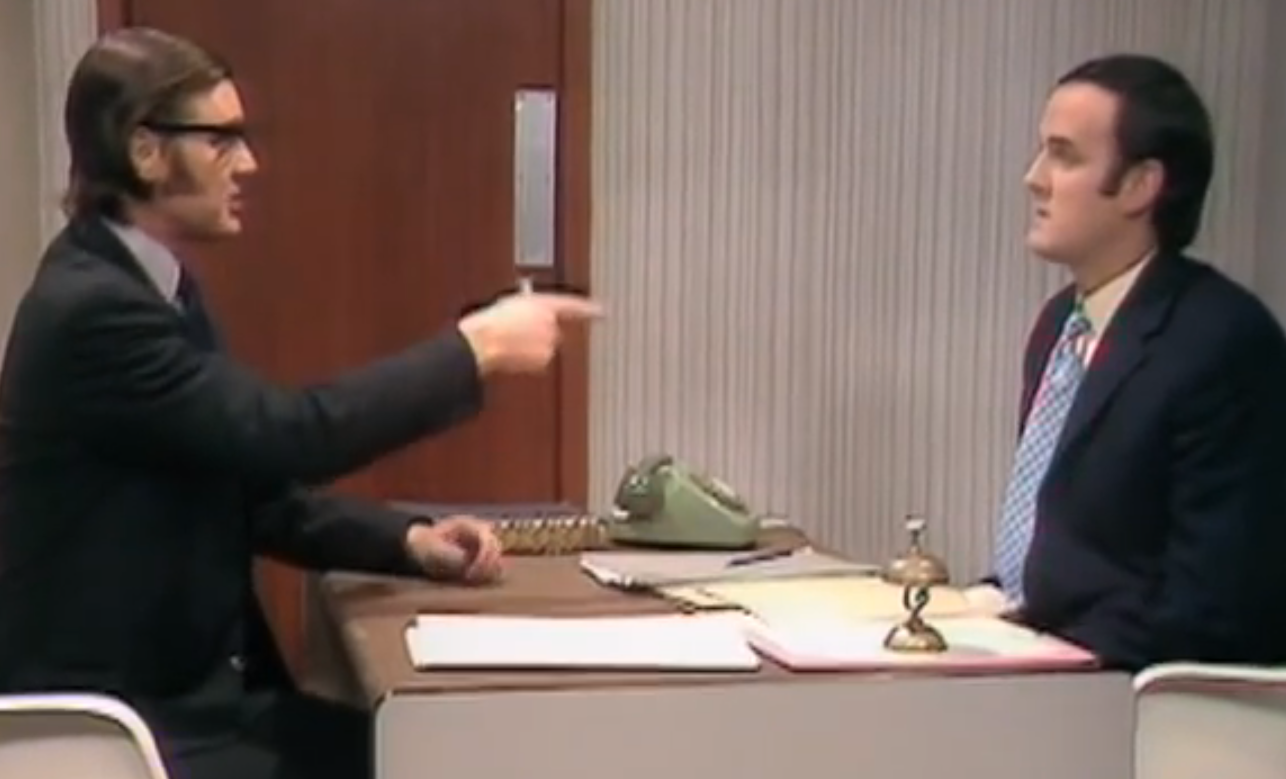
 Argument is an intellectual process. Contradiction is just the automatic gainsaying of anything the other person says.

“Argument is an intellectual process. Contradiction is just the automatic gainsaying of anything the other person says.”

House Minority Leader Don Turner was his usual obstructive self, strongly opposing any new taxes or fees, and even blasting Shumlin’s proposal to use the current use law as an enforcement mechanism for farmers and loggers. And he did so in a stunningly inarticulate fashion:

“I think that we know that current use is a very popular program, and it is a very expensive program. But if we want open land in Vermont its been one of those tools that has worked really well,” he said.

So wait. Current use is “very expensive,” and, in fact, Republicans have called for new limits on the program, but it’s “worked really well” and we can’t possibly do without it. You’d need a couple hours of pounding ’em back at the Capitol Plaza bar before that started to make sense.

The entire Republican response consisted of the automatic gainsaying of anything Shumlin said.

With one exception. Lt. Gov. Phil Scott released a statement that began thusly:

“I was encouraged to hear the Governor talk about economic growth. It was good to hear about the Governor’s support of research and development, especially after this important incentive was reduced last year. I hope that the Governor’s mention in his speech today is a precursor to a proposal included in the budget next week.”

Admittedly Scott sort of bent Shumlin’s message in his own direction, but look at what he did:

— He identified common ground instead of just saying “No.”

— He acknowledged that the inaugural address was Part One of Shumlin’s agenda.

A hint of politics, but overall gracious and inclusive. That’s the way you do it.

The Inaugural Address: A pretty good start

The speech by Governor Shumlin — which he billed as the first of two parts — included some welcome elements. It left a lot unsaid; presumably he will confront property taxes, school governance, health care, and government spending in his budget address next week.

Today’s address focused on two areas: energy, and the environment. In the latter category, his primary focus was on Lake Champlain. It was, if I recall correctly, the first time he’s drawn attention to these issues in a major January speech. To me, it’s a welcome development.

It’s also an opening for him to regain some credibility among liberals. When Peter Shumlin was running for Governor in 2010, his two big issues were single payer health care and the environment (climate change, green energy and Vermont Yankee). But while his administration has made some good incremental gains on the latter issues, they’ve never seemed to get the spotlight. Now they have.

With single payer off the table, perhaps Shumlin is returning to his other signature issue and hoping to put his stamp on Vermont’s future on energy and the environment. If he can’t be the single-payer governor, perhaps he can be the environmental governor. It’s a good strategy.

The caveat, of course: Now he’s gotta deliver.

He also opened the door to raising taxes as part of the effort to close a $100 million budget gap. In a brief preview of next week’s budget address, he said this:

We cannot simply cut our way out of our fiscal challenge year after year – taking away services that are important to so many Vermonters. Nor can we tax our way out of the problem.

Which would seem to indicate that his plan will include a mix of cuts and “revenue enhancements.” I’d urge him to take a long look at the plan that nearly passed the House a couple years ago, which would have raised taxes on the wealthy (by closing loopholes and limiting deductions) and provided some tax relief to the middle and working classes. I say “nearly passed the House” because it was stopped in its tracks by Shumlin’s stubborn opposition.

As for the details on energy and the environment:

The centerpiece on energy is a new renewables strategy, as the current (and, in some circles, controversial) SPEED program is sunsetted in 2017. The Energy Innovation Program is aimed at further boosting our investment in renewables and energy efficiency. Shumlin called the EIP “our single biggest step so far toward reaching our climate and renewable energy goals.”

Sounds good. We await the legislative process with anticipation and a bit of trepidation.

On Lake Champlain, Shumlin came up with a decent-looking package. It doesn’t go far enough, but it’s better than anything he’s offered before. He realizes, as he told the legislature, that if the state fails to meet EPA muster, we’ll face some burdensome federal regulations.

His plan includes:

— New transportation funding to curtail runoff and erosion around our roads and streets.

— New funding and technical assistance for farmers and loggers, to help them meet water-quality standards.

— More thorough efforts to enforce current water quality regulations.

— Making a change in the Current Use program, which would take away that tax break from farmers who fail to reduce pollution.

As for funding, his plan includes two new fees: One on agricultural fertilizers, and one on commercial and industrial parcels in the Champlain watershed.

The revenue would go into a newly created Vermont Clean Water Fund, a repository for state, federal and private funds. The first private money, he announced today, is a $5 million donation (over the next five years) from Keurig Green Mountain, which Shumlin called “a company that depends upon clean water.” He expressed the hope that KGM’s generosity will “inspire others.”

If he can leverage substantial donations from the private sector, his plan could accomplish quite a bit without too much stress on the state’s bottom line. Maybe enough to get the EPA off his back, at least for a while.

From this liberal’s point of view, it’s a good start. But as VPR’s Bob Kinzel said today, the Governor effectively served us dessert before dinner. Next week’s budget address will be a much less appealing dish. Plenty of mushy steamed vegetables scattered around a hunk of gray meat.

Beyond that, well, actions speak louder than words, and we’ve heard plenty of words from this Governor in the past. The political question is: Can he deliver on this agenda in a way that will repair his reputation for effective governance and bring liberals back into the fold? He can; but will he?
Our Proud Heritage of Shit-Dumping

If you happened to be hanging around Fort Cassin Point on Christmas Eve, perhaps you noticed an unusual smell. Perhaps not; but I sure hope you didn’t drink the water.

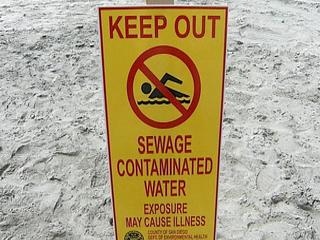
The State of Vermont legally permitted the City of Vergennes to dump 467,000 gallons of sewage and stormwater into Otter Creek and Lake Champlain on Christmas Eve. Ho ho ho.

That lovely tidbit from the Facebook page of our friends at Lake Champlain International. In case you have trouble visualizing 467,000 gallons of sewage and stormwater, LCI helpfully points out that it’s equivalent to “about 65 tractor-trailer milk tankers.”

Welcome to Vermont, kiddies!

Welcome to Vermont, kiddies!

Mmmm, good. I hope the critters at the Fort Cassin/Otter Creek Wildlife Management Area didn’t mind the state’s creative “Wildlife Management Through Sewage” technique. Or perhaps they’ve gotten used to shipments of Vergennes’ untreated crap, since state regulation of sewage and stormwater discharges is downright laughable — especially for a state with such a strong, and often unwarranted, reputation for environmental purity.

The comments on LCI’s post are often endearingly innocent: “How could this happen?” “How is this allowed?” Stuff like that.

Well, not only is it allowed, but it’s standard operating procedure in our Clean, Green state.

James Ehlers, executive director of Lake Champlain International, …says sewage spills and overflows from Vermont’s wastewater treatment systems are common occurrences.

But the public is only notified when they’re exceptionally large, as was the case in April 2005, when a Burlington sewer line ruptured, spewing millions of gallons of raw sewage in the Winooski River for days before it was repaired.

That, from a July 2013 piece by Seven Days’ Ken Picard, outlining the appalling sketchiness of state policy on releases of stormwater and sewage. By law, he writes, the state is required to post online any illegal discharge that “may pose a threat to human health or the environment” within 24 hours of learning about it — but it may take days or even weeks for the state to learn of a discharge from a municipal wastewater treatment operator.

And while the state is required to post the information online, just try to find it. I tried, and got thoroughly lost in a morass of bureaucratic jargon.

Now, if there’s a torrential downpour, just about any system will be overloaded. But many of Vermont’s municipal systems are outdated. We haven’t faced the issue because, well, we can’t afford to.

This is part of our decades of noncompliance with the Clean Water Act regarding Lake Champlain, and one reason why the EPA has had to step in and force Vermont to clean up its act.

It’s sad, if not surprising. Too often, Vermont fails to live up to its own self-image. We react with horror when new things seem to pose a threat, like ridgeline wind and the Vermont Gas pipeline. We’re much more passive about the bad things we’ve always done, like inadequate water treatment, unregulated junkyards, and the discharge of particulate matter from thousands of residential woodstoves. (The latter is largely responsible for our highest-in-the-nation rate of adult asthma. Not West Virginia or Texas; good old Vermont.)