Maybe it’s just me, but I see a veto as a failure of leadership. It’s a last resort, to be used only after all other options are exhausted. But Gov. Phil Scott seems to take pleasure in the exercise, to judge by the frequency of his vetoes. He long ago surpassed Howard Dean’s total (in far fewer years as governor), and Dean had been, by a country mile, the most enthusiastic vetoer in Vermont history.
To be fair, Scott faces the difficult task of trying to manage the state in concert with a Legislature dominated by the other party. But it’s the hand he has been dealt. It’s his responsibility to try to find ways to cooperate with the House and Senate. Hell, he talks constantly about the importance of cooperation and working across the aisle.
Except when he’s slamming the Dems or racking up another veto.
This time it’s S.18, which would have banned the sale of flavored tobacco products and e-cigarettes. And as is often the case, it kinda looks like Scott went fishing for an excuse to veto instead of doing his utmost to avoid using the bluntest instrument in the gubernatorial toolbox.
In allowing a universal school meals bill to become law without his signature, Gov. Phil Scott adopted an interesting philosophical position. Take it away, VTDigger:
He noted that the program will fund free meals for even wealthy students.
“That’s not progressive education funding policy, it’s regressive policy that hurts the very families we are trying to help,” he said.
Oh yes, heaven forbid that an undeserving child should receive a free lunch. That would be an abuse of the public purse and — follow closely here, things get a little thick — a punishment on the kids who really need a handout.
As the kids used to say, “lolwut?”
This is another case where the governor can’t say the quiet part out loud — that he doesn’t want to provide free school meals despite their proven benefits — but he still has to register his disapproval, so he comes up with transparently phony arguments like “free lunches hurt poor kids” and “a veto fight would distract me from my neverending fight for better schools.” As if we can’t walk and chew gum at the same time.
I wouldn’t mind if he were in the least bit consistent in this position. But he’s not. In fact, this is the only issue where he argues that a non-means-tested government benefit is a bad thing.
Renowned nice guy Gov. Phil Scott has made history — again — by vetoing yet another bill. According to the Vermont State Archives, Scott’s veto of the legislative pay raise bill was the 40th of his administration.
Scott is the first Vermont governor to reach 40, just as he was the first to reach 35, and 30, and 25, and 22. The previous record holder was Howard Dean, who vetoed 21 bills in his 12 years in office. Scott has nearly doubled that total in only seven legislative sessions. And he might rack up another one or two before the books close on the 2023 Legislature.
The State Archives list 184 veto messages by Vermont governors. The first one happened in 1839, when Gov. S.H. Jenison vetoed a bill to establish the Memphremagog Literary and Theological Seminary. Phil Scott is now responsible for 21.7% of all the vetoes in state history. He’s only occupied the office for 2.9% of the time that Vermont has had a governor.
The Scott apologists in the audience may be thinking “Well, of course he’s vetoed a lot of bills. He’s a Republican facing a Democratic Legislature.” Sure, but (a) he’s supposedly a moderate and (b) he’s an extreme outlier by any standard. Jim Douglas had a very contentious relationship with the Legislature, and yet he vetoed only 19 bills in his four full terms in office. He averaged less than two and a half vetoes per year. Scott is averaging almost eight.
A kerfuffle has seized the attention of #vtpoliland. It’s over the acceptance of Super PAC money, or connivance with those entities, by Democratic candidates for U.S. House.
And I’m here to tell you it’s fake news.
At a candidates’ forum last week, Lt. Gov. Molly Gray pestered Senate President Pro Tem Becca Balint over accepting donations from Super PACs. The exchange ended with Balint forswearing such funds.
This week, we got Phase 2 of the kerfuffle, as both VTDigger and Seven Days posted stories about “redboxing” on Balint’s campaign website. That’s the practice of posting content meant to signal Super PACs about preferred messaging in any independent ads the organizations run. Nudge nudge wink wink, don’tcha know.
The fact that both outlets ran the same story on the same day tells me that they were likely tipped off by the Gray campaign, which sees this issue as a way to counter the impression that Gray is the establishment candidate. Which, to me, is a sign that Team Gray is a little desperate, going negative against the apparent front-runner.
Here’s the thing. Not all Super PACs are created equal, and it’s a fallacy to say that all Super PAC money is inherently evil. There are Super PACs run by giant corporations and oligarchs; there are others run progressive organizations, by labor unions, by LGBTQ+ groups.
Bernie Sandershas accepted Super PAC money from such groups, for Pete’s sake. So Neither Pat Leahy nor Peter Welch have had any previous qualms about such money. The latter has found religion this year as he tries to advance to the U.S. Senate, but he’s never seen Super PACs as universally problematic before.
What will it take to make us stop calling Phil Scott a Nice GuyTM?
Even as the House failed, by one vote each*, to override two of Scott’s vetoes, he came out and promised yet another. This time, the victim is S.234, a bill making changes in Act 250 designed to encourage housing construction.
*Special place in political hell for Rep. Thomas Bock, a Democrat who voted for the clean heat standard bill and switched his vote on the override at the last minute without informing leadership.
For those keeping track, and I sure as hell am, that will be his 31st veto. He’s threatening another on the budget bill, and he’s vetoed plenty of budgets in the past.
Scott continues to put more and more distance between himself and the rest of the Vermont gubernatorial field like Chase Elliott in a Soap Box Derby. The past record-holder, Howard Dean, racked up a “mere” 21 vetoes. Of course, he was governor for almost twelve full years and Scott is only partway through his sixth.
Jim Douglas vetoed 19 bills, but he served four full terms to Scott’s three and a half.
There is no competition. Phil Scott is the Veto King.
Two questions:
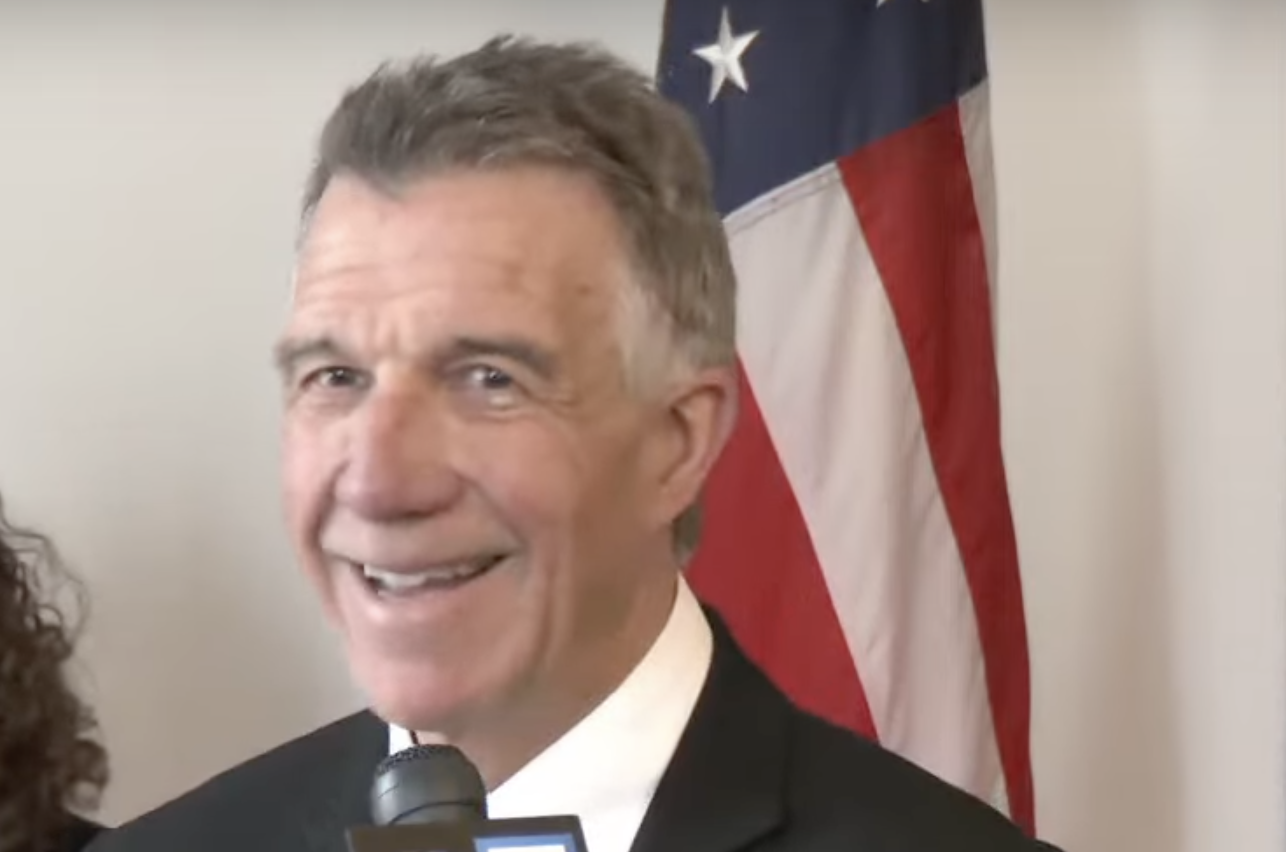
First, what exactly makes him a Nice Guy? The disarming smile? It sure isn’t policy.
Second, how can any Democrat vote for Scott and claim to support their party’s agenda? Scott has prevented the Legislature from taking stronger action not only with those 31-and-counting vetoes, but with the ever-present threat of even more. He’ll do it. You know he will.
Two answers:
First, he isn’t a nice guy, but he plays one on TV.
The inevitable has finally happened. Gov. Phil Scott has bested Howard Dean’s all-time record for gubernatorial vetoes — and he did it in less than half the time it took Dean.
On Tuesday, Scott issued his second and third vetoes of 2021, bringing his total to 22 in four-and-a-half years in office. Dean was in office for 12 years, and racked up a total of 20 vetoes. (In its story on Tuesday’s vetoes, Seven Days did not mention the record.)
Tell me again how nice a guy Scott is, and how much he values cooperation across the aisle.
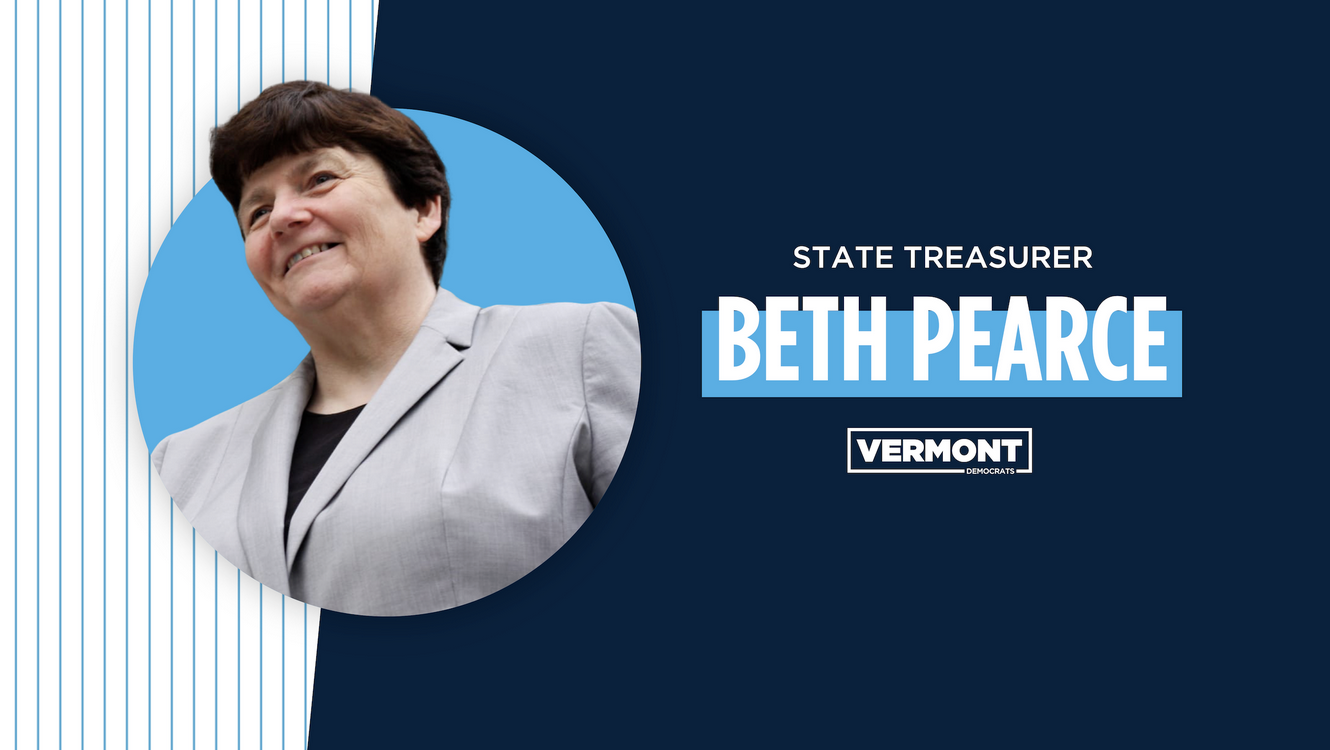
At the end of last week, we got a sizeable Friday newsdump from an unusual source: State Treasurer Beth Pearce. In a report on the state’s public pension funds, she called for new limits on pensions for state employees and teachers. It was duly reported, first by VPR and then by VTDigger, but neither story captured the significance of Pearce’s pivot.
This is, in my view, the single biggest position shift by a top Democratic officeholder since Peter Shumlin abandoned single-payer health care in 2014. That move brought Shumlin’s political career to an ignoble conclusion, since he’d staked his governorship on delivering single-payer. I doubt that Pearce will have to slink off into the darkness, but she might not get the rapturous receptions at party functions that she’s gotten used to.
The pension plans don’t have enough funds to pay promised benefits because, through most of Howard Dean’s governorship and about half of Jim Douglas’, the state consistently shorted its annual contribution. Many have called for a shift from defined-benefit to a 401K-style defined-contribution plan. The former promises definite retirement benefits; the latter only promises to contribute money to the plan. Actual benefits depend on the health of the pension fund.
Pearce had been a champion of retaining defined-benefit. She’s an expert at public finance, so her view has carried a lot of weight. Now, she has abandoned that position. She still supports defined-benefit plans… but she has effectively changed her definition of the term. That’s a big, hairy deal. It puts legislative Democrats under pressure to go along with pension cuts — and that threatens to drive a wedge between the Vermont Democratic Party and two of its biggest supporters: the Vermont State Employees Association and the Vermont National Education Association.
I can’t say I blame her, given her recitation of the facts. But this could touch off a political shitstorm.
At least they flipped the room and got decent lighting.
It seemed remarkably civilized after Donald Trump’s attempt to run roughshod over debate protocol (and the foundations of our Republic), but the second major media faceoff between Gov. Phil Scott and Lt. Gov. David Zuckerman was a lively affair that managed to provide some light in addition to heat.
As in the first debate, Zuckerman put on a clinic on how to confront Scott, while the governor often seemed overly defensive, even a bit surly. And as in round 1, it’s unlikely to make any difference in the election outcome.
I’ve noticed an increasing tendency in Scott to bristle in the face of close questioning. He frequently interrupted Zuckerman and misrepresented the Lite-Gov’s record. Has he gotten soft after months of nearly universal praise? Or is he starting to harbor a sense of entitlement after three years in office?
Whatever, it was a rare slip of the mask for Mr. Nice Guy.
Y’know, if Vermont was half as progressive as its Bernie-fueled image, Zuckerman would have a decent chance at becoming the next governor. Unfortunately for him, the electorate leans more center-left than left. Sanders’ coattails are much shorter than you’d think. And Vermont voters like to think of themselves as balanced, and our political system as exceptionally civil. That’s why we quickly embrace people like Scott and Jim Douglas who put a pleasant face on traditional Republicanism. (And it’s why Scott Milne is eagerly grasping for the same electable image.)
If Vermont’s “progressive” electorate was serious about progressive policies, they’d reject a guy who is nearing the all-time record for vetoes. In three years, Scott has racked up 19 — and counting; during the debate he hinted at a veto on the cannabis tax-and-regulate bill.
The record holder is Howard Dean with 20. And it took Dean eight years to rack up 20 vetoes; it’s taken Scott less than three years to equal Dean’s total. Also, most of Dean’s vetoes were on relatively small-bore legislation — a bill to legalize the sale of sparklers, a change in members of the Fire Service Training Council, a measure aimed at quicker removal of abandoned motor vehicles.
Scott, on the other hand, aims his fire at the biggest targets. He has vetoed three separate budget bills, which is unprecedented in Vermont history. He has vetoed many of the Legislature’s top priorities; this year’s vetoes included minimum wage, paid family leave and the Global Warming Solutions Act. And might yet include cannabis. His veto record is quantum orders beyond Dean’s or Douglas’. Or any other governor in state history.
In short, Phil Scott is a huge obstacle to the Democratic/Progressive agenda. Yet the voters seem intent on giving him a third term, even as they return lopsided Dem/Prog majorities to the House and Senate. If you think voters decide based on the issues, think again.
Vermont already has an oversupply of cautious Democrats.
Let’s pick it up from there. Now, I could be talking about legislative leadership, which has developed a habit of scoring own goals in its “battles” with Gov. Phil Scott. But in this case, I’m talking about campaigns for governor, in which the Democrats have not exactly covered themselves in glory.
Over the past 20 years, the Vermont Democratic Party has nominated a top-shelf candidate for governor a mere five times — incumbent Howard Dean in 2000, Doug Racine in 2002 and Peter Shumlin in 2010, ’12 and ’14.
(I’m calling the 2014 Shumlin “top shelf” only because he was the incumbent. Otherwise he was a deeply flawed candidate who came within an eyelash of losing to Scott Milne, objectively the worst major-party gubernatorial candidate in living memory.)
Otherwise it’s been a parade of worthies with good intentions but few resources and no real hope. Whenever a popular Republican occupies the corner office, the Democrats’ A-Team scurries away like cockroaches when the light goes on.
This week’s certification of the state election results brought a popular headline: Bernie Sanders drew more than 18,000 write-in votes for president.
On the one hand, impressive. On the other, that and a buck-fifty will buy you a cup of coffee. It provided some warm fee-fees to Bernie loyalists, and in Vermont it was a no-risk move since there was no way Hillary Clinton was going to lose Vermont. (As for those who voted for Bernie or Jill Stein or Vermin Supreme in the states that were close, well, thanks for helping elect President Trump.)
But there is one significant implication of Bernie’s write-in total, and it has to do with the gubernatorial candidacy of Sue Minter.
In the immediate aftermath of the election, I theorized that the long, expensive campaign had had little impact — that Phil Scott entered as the favorite and exited the same.





 The Vermont Political Observer.