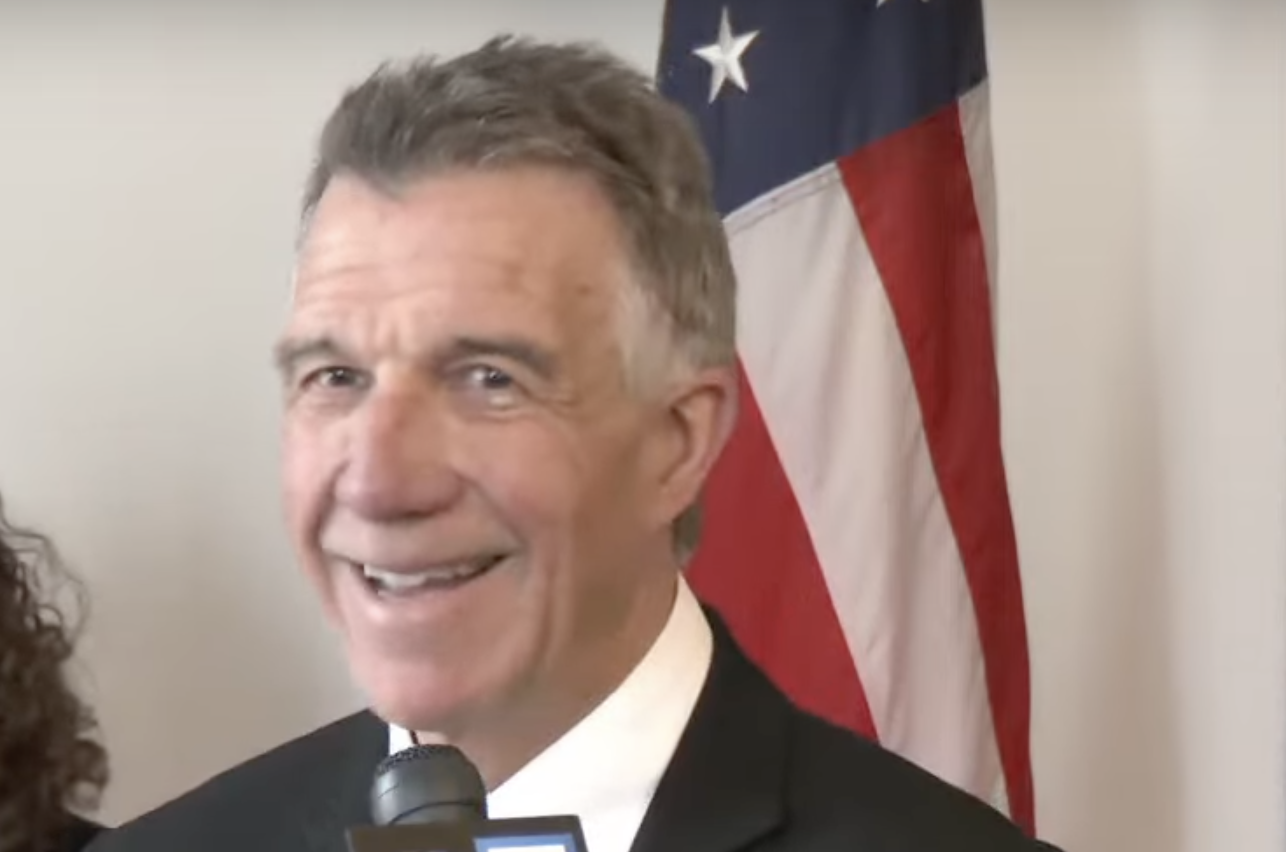
Maybe it’s just me, but I see a veto as a failure of leadership. It’s a last resort, to be used only after all other options are exhausted. But Gov. Phil Scott seems to take pleasure in the exercise, to judge by the frequency of his vetoes. He long ago surpassed Howard Dean’s total (in far fewer years as governor), and Dean had been, by a country mile, the most enthusiastic vetoer in Vermont history.
To be fair, Scott faces the difficult task of trying to manage the state in concert with a Legislature dominated by the other party. But it’s the hand he has been dealt. It’s his responsibility to try to find ways to cooperate with the House and Senate. Hell, he talks constantly about the importance of cooperation and working across the aisle.
Except when he’s slamming the Dems or racking up another veto.
This time it’s S.18, which would have banned the sale of flavored tobacco products and e-cigarettes. And as is often the case, it kinda looks like Scott went fishing for an excuse to veto instead of doing his utmost to avoid using the bluntest instrument in the gubernatorial toolbox.
Funny thing, when the bill was making its way through the Legislature, Scott raised concerns about lost tax revenue and lost sales for Vermont retailers. None of that appeared in his veto message. Instead, we get something that looks cobbled together and doesn’t make a lot of sense, to be honest.
Scott pitches the idea that banning flavored cigs et al. would be “inconsistent” at a time when we’ve legalized cannabis edibles and there’s a growing array of flavored alcohols on the market. He frets that such inconsistencies could make people “lose faith in government.”
To which I reply, “Since when are our laws internally consistent?” (Not to mention “Do people have faith in government now?”)
State law is a patchwork of old and new, strong and shopworn. It contains its share of duplications, overlaps, and glaring omissions. It is always a work in progress. (And don’t get me started on the vagaries of enforcement.) If your only argument against S.18 is that it’s inconsistent with other laws, then your problem is with those other laws, not S.18.
Besides, it’s a false equivalence. Flavored tobacco and vapes are far more widely used than cannabis edibles, they are far more often used by those who partake, and their addictive properties and long-term health risks are well established while those of cannabis are largely speculative.
Also, S.18 is a response to a growing threat to public health. From Seven Days’ story on the veto:
The percentage of smokers in Vermont who use flavored tobacco and vaping products has risen sharply since 2016, to 53 percent of smokers and 89 percent of people who vape, according to data from the state Department of Health.
According to the Health Department, roughly 73,000 Vermonters smoke. So about 39,000 Vermonters use flavored tobacco, a figure that “has risen sharply since 2016.” Seems like a good time for an intervention, no?
The number who use e-cigs is about 22,000 per the Health Department, so 89% of that is a little less than 20,000 who use flavored vapes.
The latest Health Department figure for cannabis consumption is 20% of adult Vermonters. That’s defined as using cannabis — flavored or not, edible or smoke or whatever — once in the preceding 30 days. I defy you to find a tobacco smoker who lights up a ciggie only once a month.
I think we’ve established that there is no comparison between the potential health impacts of cannabis edibles and tobacco use/vaping. The latter far outweighs the former. Perhaps that’s why the Legislature pursued a ban on flavored tobacco and vapes — because they are a clear and growing threat to public health. The cannabis market, meanwhile, is practically brand new. I’m sure it will require adjustment as things develop.
The governor’s stated grounds for his 45th* veto were tossed together at the last minute. You can tell not only because he never mentioned this line of reasoning before, but also because it’s so threadbare. It falls apart upon close inspection.
*There are 44 previous Scott vetoes on the Vermont State Archives’ list of gubernatorial vetoes.
I don’t know why Governor Nice Guy gets such a kick out of exercising his veto. It’s not a “nice” thing to do. I’ve heard many a Democratic lawmaker bemoan the lack of engagement from the governor and his team on a wide array of issues. They wish he would make his feelings clear and take part in the process. They wouldn’t always listen, but they would at least some of the time because overriding vetoes is a difficult process. They’d love to avoid it when possible.
Instead, they say Scott’s team holds back until the legislative process concludes, and then comes up with theories they’ve never heard before to explain his vetoes. Some of this, maybe most of it, is the result of divided government. But some of it, maybe most, is because of how the governor conducts his relationship with the Legislature. Or, to be more precise, avoids having a real relationship at all.


“He frets that such inconsistencies could make people “lose faith in government.”
It’s sad because it’s really about the tax revenue and, of course, the upcoming election. I hope that the legislature tries to override this veto and can do it.
“But booze is flavored too, sometimes” is perhaps the most utterly moronic reason behind a veto yet. Honestly. And that’s saying a lot.