Tag Archives: Donald Trump

Whistling Past the Elephant in the China Shop (UPDATED)

Update. Within 24 hours of this post going live, the governor announced his first (and so far only) concrete response to the Trump presidency: an interagency task force to assess the potentiial impacts of Trump tariffs on goods imported from Canada and Mexico. Must have been a complete coincidence, right?

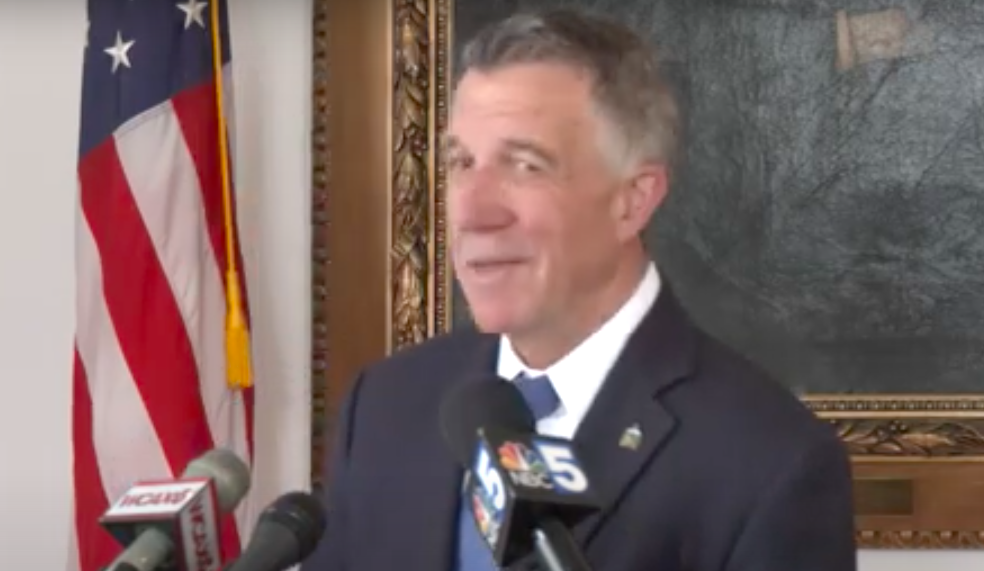
You might think that the deliberately shambolic start of the second Trump presidency would have been a major topic at Gov. Phil Scott’s January 30 press conference. After all, in a very short period of time Trump has issued a blizzard of executive orders, many of dubious legality and/or constitutionality, that are designed to radically recast or possibly euthanize the federal government. The one most directly pertinent to governing the state of Vermont was Trump’s since-withdrawn threat to put an immediate halt to a wide range of federal payments. (The threatened imposition of tariffs on Canadian imports would have had a profound effect on Vermont, but they hadn’t been bruited as of January 30 and have since been put on hold.)

You might think the specter of Trump would have dominated Scott’s presser, but you’d be wrong. The topic of the day was, shocker, “affordability,” especially with regard to Scott’s housing plan and his extremely modest tax reduction plan. Which, at $13.5 million, would average out to a scant $20 a year for every Vermonter.

(Of course, it wouldn’t be distributed evenly. The three elements of his plan are (1) an expansion of the Democrats’ child tax credit, (2) an end to state taxation of military pensions, and (3) an end to state taxation of Social Security benefits. The latter two, aimed largely at retirees, seems an odd way to address Vermont’s demographic challenges. Our biggest demographic shortfall is in mid-career adults, who are mainly too old to benefit from a tax credit on young children and not old enough to benefit from the other two provisions.)

Neither Scott nor his officials voluntarily addressed how Trump setting fire to the federal government might impact Vermont. None of the assembled reporters asked a single question about it until the 44-minute mark in a 47-minute presser. Almost an afterthought, then. But Scott’s response was highly informative — for what he didn’t say, more than for what he did.

Continue reading

The Brave, the Bold, and The Bleh

Our brand new lieutenant governor has yet to learn the fine art of sitting within camera range during a big event. During Gov. Phil Scott’s budget address Tuesday, John Rodgers spent most of his time looking bored, which isn’t a great thing when he’s supposedly cheerleading for his fellow Republican,.

In fairness to Rodgers, it wasn’t the most inspiring of occasions. Scott’s much-touted budget address was kind of a tepid affair. The freshly reinforced Republican ranks in the House and Senate gave the governor some hoots and whistles as he entered and departed, but only managed a pair of half-hearted standing ovations during the speech.

I guess we shouldn’t expect anything different after eight years of this guy. But he and his minions have been talking a lot about bold action in 2025. And while there were bits of bravery peeking out here and there — like pushing his fairly radical public school reorganization plan and officially calling for a full retreat on climate action* — there was a hell of a lot more incrementalism. A whole bunch of initiatives with teeny-tiny price tags (on the scale of a $9 billion dollar budget), many more in $2-3 million range than anything truly impactful.

*”Brave” and “stupid” are not mutually exclusive.

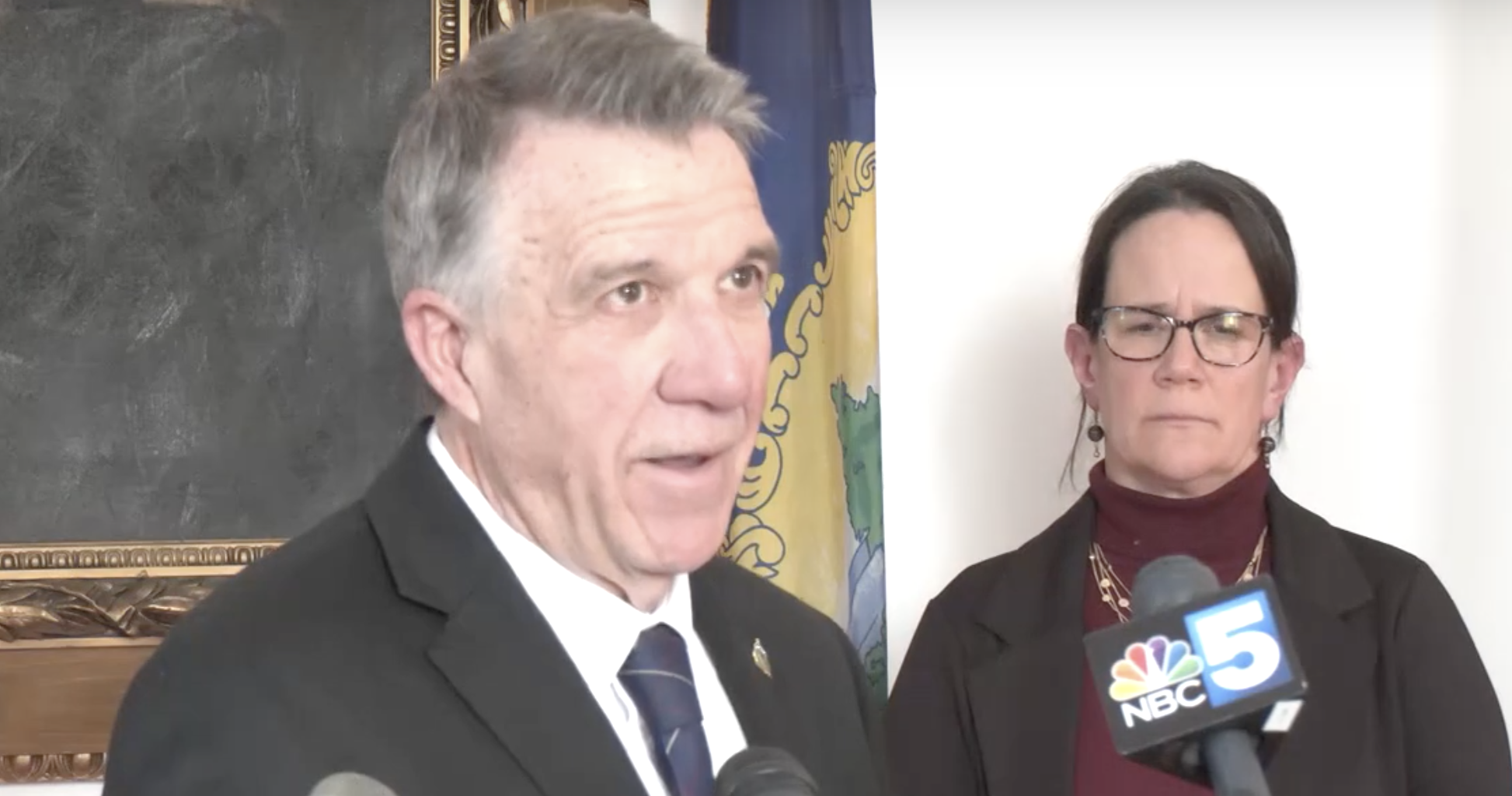
There was also one huge omission. Scott never once mentioned the threat posed by Donald Trump to the federal funding that pays for so much of what state government does. He didn’t address any contingency planning or possible budgetary adjustments. It was a glaring omission on the very day when VTDigger reported that Team Scott “is trying to understand the potentially sweeping statewide impact” of Trump’s broad freeze on federal spending.

Maybe that’s because many of Vermont’s new Republican lawmakers are diehard Trumpers, and Scott might have gotten an unfortunate reaction from his “friends” if he said anything that even hinted at criticism of Trump’s scorched-earth approach to governance.

Continue reading

Maybe I’ll Get Over This, But Right Now I Don’t Feel It

I haven’t watched or read any news (or should I say consumed any content) about the national election since Tuesday night. Not sure when I’ll get back to it, if ever. I’ve often felt relief and gratitude that I chose Vermont politics as my bailiwick, and that feeling is stronger than ever right now. I will get back to my regular beat, but right now I need to get some things off my chest, if only to prevent emotional pneumonia.

Oh, America.

Scene: Doctor’s office. “I’m afraid it’s cancer,” says the doctor. “We caught it early enough to treat, but it’ll be long and difficult.”

And the patient says, “Actually, doc, I’ll go with the cancer.” And he gets up and leaves.

We just voted for cancer.

Continue reading

The Donkey in the Room

The coverage of this year’s Vermont elections — including, often, my own — generally ignores one factor that will outweigh any of the issues or trends we explore ad nauseam. This includes (1) the much-anticipated tax revolt, which may or may not be a reality, (2) the Barons of Burlington’s plot to kill the state Senate supermajority, and (3) the Democrats’ failure to mount a serious challenge to Gov. Phil Scott. Or anything else you could name.

I refer to the national election. The race for president and the battle for Congressional majorities. This cannot be ignored in any assessment of Vermont’s elections.

There is always a substantial jump in turnout between a midterm election and the ensuing presidential. Since 1994, the smallest jump was between 1994 and 1996, with a 16.7% increase. The biggest was between 2012 and 2014, with a 38.8% increase. The average midterm:presidential increase in that period was 24.1%.

Not all cycles are created equal. 2012:2014 was an outlier on each end, with high turnout for Barack Obama’s re-election followed by 2014’s plunge due to a lackluster gubernatorial contest between mortally wounded incumbent Peter Shumlin and dismally bland challenger Scott Milne.

(Brief digression. The 2014 election was the outlier of all outliers, as Shumlin suffered a catastrophic drop in support.. He’d won 170,749 votes in 2012 — and only 89,509 in 2014. Milne, who very nearly beat Shumlin, actually drew 24,000 FEWER votes in 2014 than losing Republican Randy Brock had in 2012.)

But while not all cycles are created equal, there’s a clear and obvious pattern. A lot more Vermonters go to the polls when the presidency is at stake than when it’s not.

Continue reading

The Harris Phenomenon

Pardon my departure from the usual provinces of Vermont politics, but there’s something that must be said and I haven’t heard it anywhere else.

Kamala Harris is on one hell of a run.

I can’t think of a political figure in my lifetime who’s accomplished anything close to what she’s done in the brief period of time since President Biden ended his bid for a second term. I really don’t think I’m exaggerating about this. Compared to the normal, glacial pace of presidential campaigns, the Harris effort is an eyeblink.

Most recently, there was the debate. I believe MSNBC’s Lawrence O’Donnell called it the strongest performance in presidential debate history, full stop. If it wasn’t, it was damn close. Harris got her talking points across, she subtly needled Donald Trump into unhinged rants (transgender surgery on immigrants in prison?????), and she handled his obnoxious behavior with good humor. It was like Bugs Bunny facing Yosemite Sam. She made it look effortless. Or like a woman who’s spent her career having to deal with powerful men.

It’s just the latest chapter in a campaign that formally began only a month and a half ago when Biden dropped out on July 21. This won’t mean much to anyone besides me, but I tested positive for Covid in early August and was sick for a month. My illness lasted almost as long as the entire Harris campaign to date. That’s simply remarkable.

Continue reading

So You’re Saying There’s a Chance

I’ve previously discussed the Republicans’ chances of ending the Dem/Prog supermajority in the House, which are essentially zero. Now it’s time for the Senate, where the Republicans do have an actual chance at ending the supermajority — but the odds are stacked against them.

Scene setting: During the current biennium, the D/P contingent totaled 23 while the R’s had only seven. Twenty votes constitute the narrowest of supermajorities, so the Dems have had a nice little margin for error.

The Republicans need to post a net gain of at least four seats in November to end the supermajority, but every seat they pick up makes it harder to override.

Quick assessment: If absolutely everything broke their way, the Republicans could pick up a maximum of five more seats — which would leave the D/P majority with 18, two short of a supermajority. But the chances of that are slim at best. The Republicans are more likely to win a seat or two, which would preserve the supermajority but make overrides harder to achieve. If you spin the scenario the other way, the Dems could hold serve and pick off one Republican seat.

Continue reading

The Vermont Republicans Are Exactly Who We Thought They Were, Part Eleventy-Billion

This is a cropped version of a photo from 2022, but it’s useful in remaking a point I’ve made before: Phil Scott notwithstanding, the Vermont Republican Party is a creature of the far right. Trumpers and conspiracy believers dominate the VTGOP from county committees to state committees to top party officials and, shocker I know, the party’s 2024 ticket. Pictured above: Party vice chair and practicing extremist Samantha Lefebvre, who won a single term in the Legislature by fooling the voters into thinking she was a “common sense Republican” (and lost her bid for re-election because she’d revealed her true colors), current party chair Paul Dame, former governor Jim Douglas and his familiar dead-eyed smile, and Samuel “Two-S” Douglass, currently making his second bid for state Senate. (He ran against Bobby Starr in 2022 and got 42% of the vote. He’s now running to succeed the retiring Starr against deep-pocketed Democratic Rep. Katherine Sims.)

Two-S is a fellow who thinks that Fox News isn’t conservative enough, the acquittal of multiple murderer Kyle Rittenhouse constituted “justice,” and our three biggest environmental challenges include “industrial wind turbines” but not climate change.

He’s also the chair of the Vermont Young Republicans. Yep, another fringe character who’s gained a top position in party circles. Great.

Continue reading

Bernie Does the Business

I tell you, Bernie Sanders may not be running as a Democrat, but at the DNC this week he played the loyal party soldier to the hilt. In his Tuesday speech, he devoted about half his 12 minutes to praising the Biden-Harris administration, quickly ran through his Greatest Hits (to a lukewarm reaction from the crowd, more on that later), and called for an immediate cease-fire in the Middle East without mentioning Israel, Gaza, or Netanyahu, or uttering a single word of criticism for American policy.

But the biggest tell of all: After his customary slams at “the billionaire class,” his calls to “get big money out of our political process” and his bemoaning of “billionaires in both parties” being “able to buy elections, including primary elections,” Bernie was followed to the stage by Illinois Gov. J.B. Pritzker, who is not only a billionaire, but looks like what a 6-year-old thinks a billionaire looks like. I mean, just add a top hat, vest, and gold pocket watch, and he’d look right at home in a Thomas Nast cartoon. Take away the hair and you’ve literally got the Marvel supervillain Kingpin.

And for what must have been the first time ever at a Democratic convention, Pritzker got applause by boasting of being “an actual billionaire.” You want to talk big money buying elections, Bernie? Pritzker bought himself the top job in Illinois by pouring $323 million into his two campaigns for governor.

The speakers list at major party conventions is a carefully curated thing, calculated to send messages and evoke feelings and impressions in the audience. They knew exactly what they were doing when they put Pritzker after Sanders. Hell, Bernie knew exactly what he was doing when he slammed billionaires buying elections — and Pritzker knew what he was doing when he implicitly dismissed Bernie’s rhetoric.

Continue reading

For VTGOP Chair, Abstention Was the Better Part of Valor

The Vermont Republican Party executive committee tried to keep the lowest possible profile in deciding to waive its rule against nominating convicted felons*. Understandable; even the most diehard Trumpers possess some capacity for embarrassment. Their meeting last Wednesday was a closed-door affair. If it was recorded, which I doubt, the audio or video have not been made public. The party did not disclose the vote total; its press release said only that the Trump exemption passed by “a narrow margin.” And don’t expect any details from the written record of the proceedings, which party chair Paul Dame characterized as “some kind of minutes” that “don’t capture the nature of the discussion necessarily.”

*As I predicted it would. Went way out on a limb there.

Yeah, well, sure.

But as it happens, I have received a breakdown of the vote from a highly reliable source (who is not a member of the committee, and that’s all I’ll say about them). And wouldn’t you know it, Dame could have blocked the exemption — but he chose not to cast a vote at all.

Brave man.

Continue reading

Well, This Is Embarrassing.

The above is a screenshot from the Vermont Republican Party’s Rules.

Oopsie.

Unfortunate to have put that down on paper and formally adopted it, when the VTGOP is on the verge of nominating a presidential candidate recently found guilty of 34 felonies.

This might trigger an emergency state committee meeting to rewrite the rules or erase this particular one, but the party does have a couple work-arounds available, both of which would involve the sort of embarrassment that parties customarily do their level best to avoid. Of course, the Republican Party of the Trump era is a completely different beast, apparently immune (through repeated exposure) to political embarrassment.

Continue reading