Well, it’s looking like the Legislature’s plan for extending the emergency housing program is in danger of falling apart for reasons that were pretty obvious from jump. As I put it at the time, “I’ll be pleasantly surprised if this thing actually works.”
As Carly Berlin, Designated Homelessness Correspondent for both Vermont Public and VTDigger, reports, motel owners are balking at a proposed $75 or $80 per night cap on GA housing vouchers. The former figure is in the House plan; the latter is in the version passed last week by the Senate.
As a reminder, the current average nightly voucher is $132 per night. And that figure was achieved after months and months of bargaining by the state, which was directed by the Legislature to negotiate lower rates for vouchers.
And hey, extra bonus fail points: The new cap would take effect on March 1 — a mere 15 days from now.
That bit hadn’t been reported before. Top marks to Ms. Berlin for catching it.
I must return to Mark Johnson’s epic interview slash psychodrama with convicted EB-5 fraudster Bill Stenger, seen here standing next to a gent whose name I cannot quite recall. This time, let’s take a look at how Stenger explains himself as a naive, trusting soul whose biggest sin was that he wanted so desperately for the projects to work that he ignored some very obvious signs of trouble.
Johnson did his level best to hold Stenger’s feet to the fire, and Stenger repeatedly responded by steering down what John Ehrlichman called the “modified limited hangout route.” Stenger admitted complicity but not criminality, depicting himself simultaneously as perpetrator and victim. Neat trick, that.
The problem is, even if you believe Stenger’s account — which would be a dangerous thing to do — he seems to be guilty of gross negligence instead of overt criminality. That’s not a great consolation prize. Neither does it make me feel sorry for him that he had to serve a short sentence in a relatively comfortable federal facility.
Which he describes, as often as not, in the second person, a subtle way of deflecting the fact that this happened to his own self. “You” reported for prison. “You” were welcomed by fellow inmates. “You” got time off for attending courses. And so on.
But that’s a minor point. Time for a deeper dive on how he describes his role in the EB-5 scandal and his timeline, which serves to make his own story less believable.
Update below: Auditor Doug Hoffer is working on a thorough exploration of the EB-5 mess.
Mark Johnson posted a pretty incredible two-part podcast last week. In the latest installment of his “802 News” (discoverable here or Wherever You Download Your Podcasts), Johnson spent more than two hours grilling Bill Stenger, the Northeast Kingdom developer who served prison time in the EB-5 fraud case. There’s a lot to unpack about Stenger himself, but the thing that caught my attention was what he had to say about the role of the Shumlin administration. His comments tore the metaphorical scab off the unhealed wound that is EB-5, specifically the state’s role in enabling a massive fraud.
Let’s pause for a moment and posit that no one, absolutely no one, in Vermont officialdom seems the least bit interested in uncovering the whole truth about this. With each passing day, it seems less and less likely that there will ever be a full accounting for Peter Shumlin and his top officials, many of whom (coughMikePieciakcough) continue to hold positions of influence in and around state government.
To get to the key moment: By early 2015, there was plenty of smoke if not open fire around the EB-5 projects. At that point, the state had to reauthorize two of the projects, including AnC Bio Vermont, the big flashy biotech facility that was supposed to be built in The Hole, pictured above.
In Stenger’s telling, state officials knew at the time that lead investor Ariel Quiros was committing fraud, and yet they gave the green light to continue the projects. If this is true, then (as Stenger implies but doesn’t state outright), some very prominent people should have joined Stenger and Quiros in being fitted for bright orange jumpsuits.
(Those with short memories should go back and read some of VTDigger’s reporting on the scandal, spearheaded by Digger founder Anne Galloway. This story and this one for starters.)
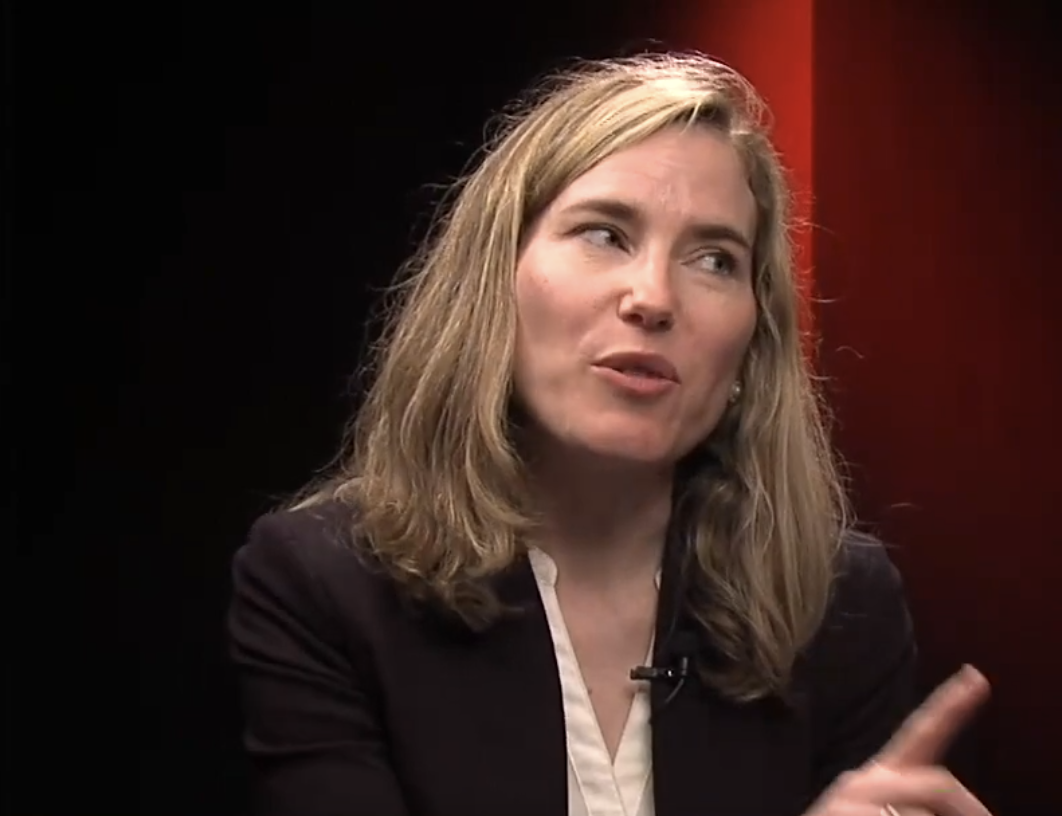
You don’t need to know the details of what’s going on in the House and Senate to realize how different the two chambers are when it comes to providing for the homeless and creating a better social safety net. All you have to know is that last week, when the House was addressing how to fix the system, they called on expert advocates Anne Sosin (seen above) and Brenda Siegel. And when the Senate Appropriations Committee was trying to fine-tune the current program, it called on two Scott administration officials directly involved in the policy failures of the last several years.
Siegel had submitted written testimony (downloadable here) to Senate Appropriations and was present in person at the Friday hearing, and yet the committee didn’t invite her to speak. They depended instead on the architects of doom: Miranda Gray, deputy commissioner of the Department of Children and Families’ Economic Services Division, and Shayla Livingston, policy director for the Agency of Human Services.
Appropriations wrapped up its disgracefulweek with a brief hearing on Friday morning, in which it quickly finalized the details of a half-assed emergency housing plan and sent it on to the full Senate, which rubber-stamped it within a half hour.
The short version of the House/Senate divide: The House is trying to build a robust bridge to a comprehensive system to help the unhoused. The Senate is patching and filling the current system with an eye more on the bottom line than the human need.
The Senate Appropriations Committee is a distillation of everything I don’t like about the Senate as a whole. It’s heavily weighted toward seniority. The senior solons get near-total deference from any junior colleague who manages to wedge their way onto the committee. Those veteran members are a knowledgeable lot — but they think they’re smarter, wiser and more knowledgeable than they actually are, and they sometimes reflect antediluvian opinions on current political issues. And they frequently express disdain, if not contempt, for the work of the House.
But the worst of the lot is Sen. Bobby Starr. He’s really been on one this week, as Appropriations considers whether to extend emergency housing programs for the well over 2,000 Vermonters who face unsheltering within the next two months. When it comes to homelessness, he crosses the line from “roguish bumpkin” to “hateful bigot.” Repeatedly.
Starr is allegedly a Democrat, and he does cast some useful votes. But the things that come out of his mouth are a stain on the Senate and on the Vermont Democratic Party, and both institutions would be better off without him. Even if his Northeast Kingdom district were to choose a conservative Republican to replace him, I’d prefer that. At least it’d be honest, and at least we wouldn’t have to deal with a Democrat displaying rank ignorance and prejudice in high office.
So what has he been up to this week? Well, let me tell you.
One of the necessary quirks of the legislative process is that almost every bill passed by a policy committee must also go through one or more “money committee” — if a bill raises revenue, it goes to House Ways & Means and Senate Finance, and if it spends a damn dime it goes through House and Senate Appropriations. If a bill both raises and spends, it must be passed by all four.
There are good reasons for this. The money committees look at the entire landscape of government spending and taxation and make sure everything fits together. They are fiscal gatekeepers, in essence.
However… these committees can also derail a good piece of legislation without serious consideration of the rationale behind it. And that’s exactly what happened yesterday afternoon in the Senate Appropriations Committee. The potential consequence is a mass unsheltering event in mid-March affecting roughly 1,600 individuals, including children, seniors, and people with disabilities.
Not that anybody noticed, because there were apparently zero reporters present. It was the latest in a series of failures by our ever-shrinking media ecosystem. But hey, let’s get on with the story.
The Vermont Republican Party has a long record of losing statewide races except when the name “Phil Scott” is on the ballot. Scott is still undefeated for the entirety of his political career going all the way back to 2000, when he rode the anti-civil union wave* into the state Senate. Otherwise, it’s been solid goose eggs for the VTGOP in statewide contests since the Jim Douglas era, if memory serves.
*Seems unbelievable now, but the Republicans nearly swept Washington County’s three Senate seats that year. The late Bill Doyle** finished first, Scott second, and Republican J. Paul Giuliani almost ousted two-term incumbent Democrat Ann Cummings. But we were all much older then, we’re younger than that now.
**Correction: “The late Bill Doyle” is still with us at age 97. My apologies.
Otherwise, the top of the Republican ticket has featured tons of fringey no-hopers with a sprinkling of old-fashioned conservatives. Lately it’s been more of the former, as the far right has seized control of the VTGOP apparatus. And it’s looking like 2024 will be no exception. Not only do we have the soundly defeated Gerald Malloy making another bid for the U.S. Senate, but the even more soundly defeated Gregory Thayer has staked his claim to another bid for lieutenant governor. (The Vegas wise guys have set the over/under on joint campaign appearances featuring Thayer and Scott at… zero.)
It’s been kind of a rough year for the Agency of Education, which would have likely warranted the Only In Journalism term “embattled” by now if there was a healthy Vermont political media ecosystem, which there is decidedly not. The Agency occasionally pops up in the press, and the news is always bad, puzzling, or both. But I have yet to see anything like an answer to the question posed in my headline.
It should have, by now. And here’s why.
The search process for a new education secretary has been going on for close to a full year. It was mid-March 2023 when Dan French, dubbed by Yours Truly “the Inspector Clouseau of the Scott Cabinet,” abruptly skedaddled. Gee, I hope it wasn’t something I said.
Specifically, it was March 17, 2023 (you needn’t ask, but yes, it was a Friday newsdump) “state officials” announced that he would, per VTDigger, “take an unspecified ‘senior leadership role’ at the Council of Chief State School Officers, an organization of state education officials.” His first day at the new gig was April 10, a little more than three weeks after the announcement of his departure from AOE. That’s an awfully quick turnaround for someone in the spheres of upper management. (The “unspecified role” turned out to be Chief Operating Officer, which sounds impressive enough. Doubtless working for a D.C.-based nonprofit is a more tee-time-friendly gig than running a short-staffed agency operating in a political minefield.)
Since then, things have meandered in a way reminiscent of a roadside DUI test. It almost makes you pine for the days when French’s hand was on the tiller.
The House General & Housing Committee got an earful this morning from the mild-mannered Paul Dragon, Executive Director of the Champlain Valley Office of Economic Opportunity which, although its name sounds like some kind of neo-centrist business-promoting outfit, is in fact one of the biggest providers of shelter and services to unhoused Vermonters.
He was speaking in support of H.132, the Homeless Bill of Rights, a piece of legislation that’s been kicking around House General for several years now. Despite the sponsorship and support of committee chair Rep. Tom Stevens, the HBOR has never managed to even make it out of committee. But he’s trying again, and bully for him.
Dragon brought prepared testimony about what he called the “unprecedented levels of homelessness in Vermont,” which I’m going to append to this post because it’s just absolutely brilliant on the current crisis, misconceptions about the homeless, and all the ways we’re failing to meet this moment. (You can watch his testimony here, starting at the three-minute mark.) But first, let’s establish his bona fides.
For those who see Franz Kafka as a creator of nonfiction, a public meeting held Tuesday evening in Barre provided plenty of evidence. The title of the event was pure nectar for bureaucracy devotees: “Substantial Damage Informational Meeting.”
City officials held the event, attended by dozens of homeowners, to clear up abundant confusion around the rebuilding process after the July flood. Because Barre was so hard hit, the response has been slow, glitchy, confusing, and full of obstacles for property owners. The meeting featured a parade of people struggling to negotiate federal, state and local regulations, insurance coverage, property tax abatements, and the possibility that a flood-prone section of the city might be completely redeveloped in a few years’ time even if the houses therein are repaired. The situation puts the city’s finances in a perilous, uncertain condition — as reflected in City Council’s recent decision to postpone municipal elections from early March to early May.
The woman pictured above who, like most of the commenters, didn’t give her name, said that it would be impossibly costly to elevate her house as required for flood-proofing.. She closed with the quote that became this post’s headline, stood up, and walked away.
She was far from the only person who was at sea over how to rebuild or whether to even try. “The cost today to repair stuff is astronomical,” said a man named Gordon. “You’d be puttin’ into them houses two times what it could even sell for. And who’d want to buy ‘em now after this last flood?”
City Manager Nicholas Storellicastro said that 40 properties had already applied for buyouts, meaning the owners have no intention of rebuilding. “To be candid,” Storellicastro said, “the city can’t afford to buy out 40 homes both from a financial standpoint because we have to front all the money and then get it reimbursed, but also from a tax base standpoint, that would just be debilitating to the city.”
From the tenor of this meeting, I’d say it’s almost certain that more people will seek buyouts or simply walk away.