This Map Is A Lie

I’ve been following the state of Vermont’s travel maps for months now, and watching the grim progression of the “red zone” closer and closer to our borders. Through it all, I’ve gotten a bit of visual comfort from Vermont’s apparent exemption from the great red tide.

But, as others have noted this week, that comfort was entirely without foundation. The blue lagoon shouldn’t be blue at all; it should be a mix of red, yellow and green. You don’t get that if you just glance at the map. But if you check the fine print, you see that the three shades of blue correspond to red, yellow and green. By the standards of this map, my county (Washington) is in the red zone, the no-travel zone.

The shades of blue for Vermont are a deliberate choice by the creator of the map — the Department of Financial Regulation. And it’s deeply misleading. It feeds into our innate sense that Vermont is different, better, and at least somewhat immune from the problems that beset all the other states. Like we have an invisible, ineffable moat around our borders.

In truth, if the same color scheme was used throughout, Vermont’s counties would be roughly equally red, yellow and green. And in fact, the situation has already worsened; we learned at the Scott administration’s Friday Covid briefing that roughly one-half of Vermont counties would be colored red if the out-of-state standards were applied.

If I were to ask why Vermont’s counties were colored in blue, the response would probably be, “Well, this is a travel map, and we want to showcase the areas where it’s safe to travel from. Vermont isn’t part of that equation.”

Okay, well, maybe. But at the very least, they should use a different set of much flashier colors instead of three subtly differing shades of the same hue. Maybe orange, purple and blue?

This is the state’s travel map. But it’s also the state’s primary (perhaps only) visual representation of the spread of the coronavirus. The map should be recrafted to accurately impart that message as well.
He Never Saw the Armistice

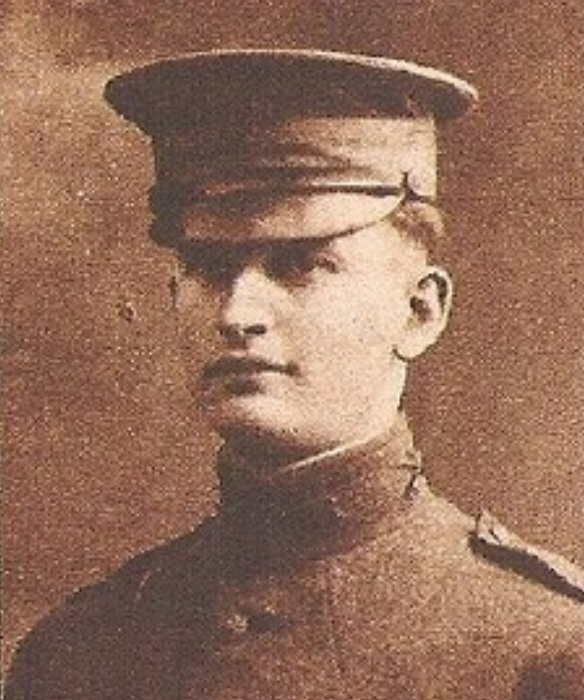
The strapping young man pictured above is my grandfather-in-law. He died fighting on the Western Front in World War I. Several years ago, I did a research project about him, and what I learned was astounding. What follows is an abbreviated account, but it’ll take a while.

William was an Ohioan, born in Paulding, grew up in Chillicothe, graduated from Wooster College, taught for a couple of years and then became a junior executive in the educational division of the Goodyear Tire & Rubber Company. He was considered a rising star in its ranks.

While still in his teens, he joined the Ohio National Guard, and rose to the rank of lieutenant. He served in the brief US-Mexican border war in late 1916-early 1917. In April 1917, the US entered World War I on the side of the Allies, but its armed forces were small in number and inexperienced. The government sought to quickly build some semblance of an army by conscripting state National Guard units. William, then 27, answered the call in July; the Ohio Guard became the 166th Infantry within the 42nd Division, dubbed the Rainbow Division because it consisted of Guardsmen from several states. In August William began training, and in October he shipped out to France, never to return.

In May of that year, he had married Florence, an elementary school teacher. Sometime that summer, she became pregnant with the son who would become my father-in-law. William never met his son.

The voyage to Europe, in a hastily refitted banana boat, took 11 days. It was dangerous and unpleasant. The men were kept below decks except for brief exercise breaks every day. “The men were packed as tight as sardines,” wrote R.L. Cheseldine, the official historian of the 166th in World War I. “Cleanliness was striven for, but not attained to any great degree after the first day.” There was constant fear of attack by German U-boats.

A few days after landing in northern France, the 166th embarked on a three-day rail trip to eastern France. They traveled in the notorious 40-and-8s, unheated wooden boxcars that were old, rickety and uncomfortable. They were the object of many a complaint at the time; but after all the hardships of trench warfare on the Western Front, the soldiers looked back in fondness on their time in the 40-and-8s.

Continue reading

#Election 2020: #vtpoli Winners and Losers

We call this “foreshadowing”

As promised, my lukewarm takes on the Vermont election results in the customary slash lazy columnist “Winners and Losers” style.

Winner Winner Chicken Dinner: Gov. Phil Scott. Highest vote total in history for any gubernatorial candidate. Rode his adequate handling of the pandemic to a lopsided victory over a game but under-resourced Lt. Gov. David Zuckerman. More than half of the Joe Biden voters crossed party lines to elect Scott.

Just to pin that down, Scott unofficially has 248,248 votes while Zuckerman failed to crack six figures. Biden finished with 242,680. Or compare Scott to his Republican ticketmates: Donald Trump took 112,507 votes, Miriam Berry (sacrificial lamb to Peter Welch) 95,763. The voters returned lopsided (and only marginally diminished) Dem/Prog majorities to the Legislature.

Scott also saw the Dems’ chances of overriding his frequent vetoes take a hit, with the loss of a few House seats. Every single seat matters when you’re trying to get to 100. Plus, the Dems and Progs will have to identify new House leadership. A new Speaker needs at least a year to learn the ropes.

If there’s a formula for defeating Phil Scott, the Democrats have yet to identify it. Hell, this year they kinda stopped trying. Which will come back to bite them if Scott makes a run for the next U.S. Senate opening. Successor to Bernie Sanders? There’s some bitter irony for you. (He’d have to relinquish the governorship in 2021 to take on Pat Leahy or [insert Democrat here] in 2022. I don’t see him doing that.)

Losers: Capital-P Progressives and their infrastructure. The good news for the Progs is that they managed to add a seat in the House. Otherwise, 2020 has been a disaster. Tim Ashe bombed out in the LG primary, Zuckerman cratered last night, they lost their two House caucus leaders, Robin Chesnut-Tangerman and Diana Gonzalez*, and Sen. Chris Pearson continues to be the least popular member of the Chittenden delegation.

*Note: After she announced she was stepping away from the Legislature, Gonzalez was replaced by Selene Colburn in the deputy leader role. So it’s incorrect to say that the Progs lost both leaders in the election, although they did lose both during the course of the year.

Until proven otherwise, Bernie Sanders has no coattails. There is no evidence that he can push a Progressive or progressive to victory in Vermont. If he’s building a legacy or a movement that will survive his personal appeal, he ain’t doing it here.

I also have to ask: What exactly does Rights & Democracy accomplish? They spend a lot of money, much of it from Sts. Ben and Jerry, to no visible effect. I see little sign that they’re building a movement that can influence Vermont politics. Or New Hampshire politics, for that matter, since R&D is a twin-state organization. The NH Dems held serve in Congress, but failed to take down Gov. Chris Sununu and are on track for minority status in the NH House and Senate.

I’m sure the progressive Twitterverse will be all over me for this, but look, I’d love to live in a world where we’ve just elected Bernie or (my choice) Elizabeth Warren and we won 55 U.S. Senate seats and we were poised to create the Green Economy and enact universal health care and some serious regulation of the financial sector and court reforms and voting rights protections. But we don’t. And I see no objective evidence to support the notion that there’s an invisible army of progressive voters just waiting for the right “messaging” to get them stampeding to the polls.

After the jump: Room on the Democratic ladder, limited gains for the VTGOP, and more.

Continue reading

America’s Walk of Shame

A long string of #vtpoli takes will follow later today. But first I’m invoking Blogger’s Privilege to turn my attention to the national results.

As of this writing, it looks like Joe Biden will eke out a narrow victory, unless Brett Kavanaugh and Amy Coney Barrett help Trump steal the thing. But even if Trump loses and vacates the White House, this has to be seen as a victory for Trumpism and a big blow to those hoping for a decisive win for Democrats.

I mean, look: The guy botched a pandemic. That alone should have killed his chances for another term. But the base stayed loyal, and gave Republican politicians no grounds for abandoning Trumpism even if they wanted to. The conservative media ecosystem will continue to crank out the toxicity. There are plenty of Trump true believers in high office. The Republicans seem on track to hold the Senate. Its leadership has engaged in 10 years of hard-core obstructionism, and they’ll limit Biden’s ability to do anything positive. (Forget about court reform or voting rights, just for starters.)

In fact, progress in a Biden Administration will be limited to restoring the institutional damage done to the executive branch under Trump, and doing whatever he can by executive order. And if any liberal Supreme Court justices were pondering retirement (lookin’ at you, Breyer), they’d best do it quick. As Senate Judiciary chair Lindsey Graham said after declaring victory last night, “Here’s the message I got: People like what I’m doing, and I’m going to keep doing it.” If a seat opens up anytime after the summer of 2022, the Senate’s gonna play a long game of keep-away and hope for a Republican victory in 2024. Hell, they’ve already proven they’re shameless.

After the jump: our long sad history.

Continue reading

Gazing at the Ol’ Crystal Ball

Election Day. Seems like it took forever to get here, but it’s still a shock that the day is finally here. And while all the attention and anxiety is focused on the national scene, this little outpost of the Internets is all about the #vtpoli. So here are my ridiculously low-stakes takes on what’s going to happen tonight in Vermont. Refunds cheerfully offered; please keep your receipt for presentation at Customer Service.

The most likely outcome is an even-more-ridiculous version of the past four years: Phil Scott and a whole lot of Democrats. Scott seems to be a lock to win a third term. Personally, I think a Dave Zuckerman win is at least a possibility, but much more well-informed folks than me believe otherwise.

Who? Well, Scott himself for one. He conducted an entire gubernatorial campaign on the absurdly tiny budget of $307,000 (as of October 30). He never bought a single television ad. This is the closest thing to a nickel-and-dime George Aiken campaign budget that the modern era will allow.

Beyond Scott, there’s the wise guys at the Republican Governors Association, who spent almost as much on polling as Scott did for his entire campaign. The RGA’s Vermont branch, Our Vermont, kept on polling right up to the closing weeks, and never saw the need to buy a single ad — in any medium.

If you’re a Republican, that’s the good news. The rest of it could be really, really bad. We’re looking at an historically high turnout, which is customarily good news for the Democrats.

How bad could it be for the Grand Old Party?

Continue reading

The Slate Ridge Befuddlement

Bubbas gonna bubba.

The official response to the Slate Ridge “training facility” in West Pawlet has been… well, take your pick. Pitiful? Sure. Laughably inadequate? Yep. Chickenshit? Call it like you see it.

State officials have been “monitoring” the situation for over a year, but didn’t actually say anything in public until VTDigger published its report last week. And now they’re stumbling all over themselves, offering justifications for a year-plus of inaction.

Meanwhile, the people of West Pawlet live in fear. As I wrote on Twitter, now they know how Kiah Morris feels.

Here’s the gist of it, as far as I’m concerned. The system has failed the people of West Pawlet just as it failed Morris. In saying so, I’m assuming that the purpose of having laws and enforcement agencies is to keep people safe, allowing them to live their lives in peace and security.

On the other side of the coin, constitutional rights do not extend to instilling fear in your neighbors. A community is a collection of free individuals — but there must be a sense of polity, of common purpose, of some level of respect for the well-being of your neighbors as well as yourself. The denizens of Slate Ridge are violating the social contract that binds us all together.

And if there’s no law that can be applied to this case, then maybe we need some new laws.

Continue reading

The Climate Inaction Administration

There are many reasons why a liberal voter might decide to support Gov. Phil Scott for re-election. You might be impressed with his handling of the coronavirus. You might appreciate him as a counterbalance to an overwhelmingly Democratic Legislature. You might prefer a calm, careful executive to a new-ideas chief more likely to blunder.

But there’s one thing you can’t do. If you believe that climate change is the issue of our times, you have no business voting for the incumbent.

Let me put that another way. If you vote for Phil Scott, you are not serious about climate change.

There might be a certain level of unwarranted satisfaction these days, given the passage of the Global Warming Solutions Act over Scott’s veto. Some might talk themselves into believing that we can make significant progress on the climate crisis no matter who’s the governor, as long as the Dems/Progs hold substantial majorities in the House and Senate.

There are two fundamental problems with this. First, while GWSA is a notable advance, it doesn’t actually do anything. It sets climate targets and establishes consequences if we fail to meet those targets, but that’s about all. GWSA was, if you will, the first and easiest step in addressing the crisis.

Second, while the governor’s words are full of concern about climate change, his actions have been minimal at best, counterproductive at worst. His administration is a formidable roadblock to climate progress, and will remain that way as long as he is in office.

I think this is why Scott objected so strenuously to a GWSA provision that leaves the state open to lawsuits if it falls short of greenhouse gas reduction goals. He knows that his policies are inadequate to meeting those targets, and that makes lawsuits almost inevitable.

Continue reading

The Jim Douglas Memorial Panic Room

Flash them pearlies, Jimbo!

Just as he and Gov. Phil Scott did in 2016, Scott Milne has taken his ballot and run and hid in the Jim Douglas Panic Room. “I’m voting for Jim Douglas,” Milne said in a Monday appearance on WDEV’s Dave Gram Show. “As of today, my plan is to vote for Jim Douglas, but I’m going to vote on Election Day.”

Nice. He resorts to the write-in, but leaves himself an escape hatch in the Panic Room.

Both Mine and the governor have repeatedly indicated their distaste for President Trump. And in 2016, both opted to write in The Beau Ideal of the VTGOP. (The Gov has yet to declare how he will vote this year.)

I suppose Milne would explain his vote as an endorsement of moderate Republicanism and a wish that more Republicans acted like Jim Douglas. By which he means working with all parties, not the other stuff — the employment of attack-dog Jim Barnett in his campaigns and his opposition to marriage equality and his often contentious relationship with the Democratic Legislature.

But even if you ignore the flaws in Douglas’ good-guy image, there’s a less flattering way to look at Milne’s presidential choice.

Seems to me that what he’s saying is he’d rather toss his ballot in the dumpster than ever, ever, ever vote for a Democrat. Even Joe Biden, who has a reputation very much like Douglas’ for getting along with everybody.

So what kind of bipartisanship is that, anyway? If you dislike Trump so much, why not cast your vote in the most effective way possible — for Joe Biden?

Because voting for a Democrat is a bridge too far for these guys, even when their own party’s leader is a racist crypto-fascist kleptocrat.

That’s quite a statement.

A Curiously Expensive Bucket of Warm Piss

Something is happening that almost certainly has never happened before. In the general election campaign (post-primary), the candidates for lieutenant governor have outspent the candidates for governor.

This is mainly because Republican Scott Milne continues to drop large amounts of cash for TV ads. In the past week, Milne has reported mass media buys totaling roughly $140,000, with all but $1,600 going for TV spots. (The remainder was for robo-calls.)

Campaigns filing mass media reports are required to list any candidates mentioned in the material. Milne’s October ads mention himself and Democrat Molly Gray. I’ll assume they don’t paint Gray in a flattering light… and I’ll assume we have heard the last of Milne’s whining about negative campaigning, since he’s gone ham on the whole attack thing.

Since the August primary, Milne has spent a total of $102,000 on TV ads alone. He’s spent nothing on radio, and hardly anything on newspaper ads.

Gray hasn’t reported any mass media buys since 10/15, and has spent $52,000 since the August primary. Her media buys are widely distributed among TV, online and mailing, and she spends a lot more than Milne on staffing, organization and events. As I wrote earlier, Milne has adopted the Disembodied Head style of campaigning.

The race for governor, meanwhile, has been running on the cheap. Gov. Phil Scott has spent $11,000 for online advertising since 10/15, while Lt. Gov. David Zuckerman’s most recent mass media buy was on the 16th — $25,000 for TV ads. Nothing since.

Continue reading

Mad Dog in the Kennel of Nice

Baby face… You’ve got the cutest little baby face…

It made for an amusing read. VTDigger’s piece about Jim Barnett’s role in the Scott Milne campaign featured several Republicans doing verbal acrobatics as they tried to explain why the self-described moderate required the services of a political operator described as “a nasty guy,” a “hitman,” and “Mad Dog.” (The latter was bestowed on Barnett by the late Peter Freyne, grand master of the unflattering nickname.) And a guy who claims political assassins Lee Atwater and Karl Rove as professional inspirations.

So, how does he fit into a campaign that claimed, from the getgo, to be all about the issues?

“He knows how to win a campaign and there’s not a lot of people in the Republican world in Vermont that know how to win,” state Sen. Richard Westman told VTDigger.

OK, so it’s transactional. Fine. Them’s politics. But — and I know I’ve written this before — you can’t go negative and simultaneously claim to be Above It All. And you have absolutely no grounds to complain if your opponent follows you into the gutter.

In that vein, I hereby offer a script for a campaign ad that’s not negative, as Barnett and his colleagues put it, but is based on carefully selected facts designed to make Scott Milne look like a bum, and Molly Gray look like a saint.

Continue reading