Category Archives: Peter Shumlin

The limits of introspection

It sounds like Governor Shumlin has reached the end of his post-election navelgazing after ten entire days, and he has found that the reasons for his shocking near-defeat are largely external. Yes, he accepts responsibility for failing to listen to Vermonters and he promises to do better on that score. But as for the widely-held notion that there was a personal message in the election results? Not so much.

You talkin' to me?

You talkin’ to me?

Shumlin appeared on WDEV’s Mark Johnson Show this morning (podcast should be up shortly), and Mark opened the hour with a pretty solid grilling of the Governor about the whys and wherefores of the gubernatorial election.

When asked what messages he took from the returns, Shumlin named two:

— On policy, “there’s a feeling that folks are frustrated” on pocketbook issues, school spending, and continuing wage stagnation for middle- and working-class people. Which is not just a Vermont problem, he was quick to point out, but a national trend, for which he can bear no special responsibility.

— A vaguely-defined brace of regional and local issues. The Vermont Gas pipeline may have cost him votes in Addison County, and his support for ridgeline wind was a problem in the Kingdom. Aside from those two examples, no specifics.

I can accept that Shumlin was confronted by local concerns as he campaigned around the state, but I haven’t seen any evidence for a localized rejection of him. When I looked at four state senate districts, in different parts of the state, I saw a very clear trend: the Governor polled consistently behind Democratic senate candidates, by a similar margin in each of the four counties.

The general message, he said, was “You’ve got to listen more… Don’t get too far out in front of the troops.”

And then Mark tried to explore the personal dimension. Was the election about policies, or about Shumlin personally?

Safe to say he didn’t want to touch that with a ten-foot pole. “I’ll leave that to the pundits,” he said.

Mark followed up with a direct reference to the Jeremy Dodge land deal, which seemed to resonate with a lot of voters. And not in a good way. Shumlin pivoted immediately to generalities: “I’ve got to do my job better going forward.”

Mark: Was this all about policy, then?

Shumlin: I’ll  leave that to the pundits.

Earlier in the interview, Shumlin had said he fully expected a close election because of what he heard on the campaign trail, and his own campaign’s internal research (which he wouldn’t give any details about). At this point, Mark returned to that idea: Didn’t you hear anything from Vermonters about your own style, your personality? Why not talk about it?

Shumlin: “I have talked about it.” Back to generalities: “There were lots of messages in this election.” And then it was eyes forward to the “tough decisions” that lie ahead. “I’ve got to roll up my sleeves and get back to work.”

A bit later, Mark noted that while Vermont Gas might have cost him votes in Addison County, that didn’t explain Shumlin’s troubles in the Burlington suburbs, where he polled poorly and the Dems lost multiple House seats. His only response was another reference to general “economic frustration.”

All in all, he made it pretty clear that he’s closed the book on the past and is ready to “roll up his sleeves and get back to work.” Nothing more to see here folks, move it along.

I can’t say I’m surprised by the lack of personal introspection, but I am disappointed.

If this election was about policy not personality, then I’m left wondering why one individual so badly underperformed the rest of the Democratic ticket. Why the Governor was almost thrown out of office, while his party retained a strong grip on the legislature?

He did admit that he’d gotten a bit distant, that he was listening to the same small group of people too much. And he committed himself to getting around the state more, and holding open public events (of an unspecified kind) that would get him in touch with a broader variety of viewpoints. And that’s a good thing, as far as it goes (and if it really happens).

But clearly, there are dysfunctional elements in his administration and his own conduct, and it sounds like he’s unwilling to go there. Which, in my view, is a huge opportunity missed.

Is this the time for business as usual?

It’s an annual rite at this time of year: a changeover in the upper levels of the administration. It usually involves some key departures, a shuffling of the deck, and the elevation of those who have served in a lesser capacity.

The latter began on Wednesday for the Shumlin Administration, with promotions for press liaison Sue Allen, campaign manager Scott Coriell, and education adviser Aly Richards. Loyal servants, rewarded for their work.

But should they be?

I have nothing against these folks. As far as I know, they deserve their promotions. But a broader question is on my mind:

Praise and promotions were freely distributed when Shumlin was riding high. Should the same be true after a poor administrative year and a disastrous campaign?

Further: Are these promotions a sign that Shumlin, at some fundamental level, doesn’t get it? That it’s business as usual on the fifth floor?

The Governor has made the right noises. But the current situation calls for a lot more than that. You can say “The buck stops here” all you want, but if the buck stops and gets tossed in a drawer, it’s a meaningless statement.

After the election, I saw a gleam of hope: Shumlin does his best work in crisis, as we saw after Tropical Storm Irene. This election was the closest thing to a personal Irene for Shumlin. My hope was that he would seize the opportunity, thoroughly evaluate everything he and his people do, and boldly set a new course.

So far, given his frequent deferrals to legislative leadership and his dispensation of Jobs For The Boys (And Girls), I’m having my doubts.

In addition to a personal reckoning by Shumiln, there ought to be a personnel reckoning. During the campaign, I wrote that the continued problems of Vermont Health Connect called for some clear direction and, probably, the rolling of some heads.

In addition to Doug Racine’s, that is. Racine may have had his failings at Human Services, but it wasn’t like he got a lot of help from Shumlin. Plus, he had little to do with Vermont Health Connect. He was expendable, not because he was the biggest problem, but because he wasn’t really part of the team. Mark Larson, who was far more responsible for VHC but was clearly one of the boys, was shunted to the side but kept his title and is still drawing a salary for duties and responsibilities unknown.

Is Governor Shumlin capable of evaluating his staffers and functionaries with the cold eye of reason, and demoting or defenestrating those who’ve contributed to his administration’s malaise?

We’ll see. He promises more personnel changes to come. But I have to say I’m not optimistic. If the changes have more to do with the desires and ambitions of his staff than with a sorely-needed overhaul of the Shumlin Machine, then his third term is off to an inauspicious start.


Lower your expectations, good people

It didn’t sink in until after I’d written my previous post about Governor Shumlin’s news conference, but there was a clear theme running through it all.

Don’t expect much.

Especially you liberals out there.

It seems the Governor was determined to extinguish whatever hopes might still have existed for a small-p progressive administration. Some have argued, like Yours Truly and nanuqFC at Green Mountain Daily, that the real message of last week’s election is that Shumlin lost his liberal base. If he’d simply polled as well as Senate Democratic candidates, he would have sailed to re-election.

But nope. His takeaway was that we need more triangulation, more compromise, and no big new initatives.

On health care, clear signs of a retreat from single-payer. On the budget, admission that a perpetually sluggish economy will force draconian changes. On school finance, crafting a cheaper system will be job one. He gave a preliminary thumbs-down to environmental groups’ expected call for a carbon tax. And, although he personally favors legalizing marijuana, he’s going to defer to legislative leadership on the issue.

Overall, a constant refrain of cooperation, consultation, consensus, listening and learning. (No mention of “leadership.” Or “liberal.”) And do you think the ever-cautious Democratic legislative majority will be in any way emboldened by the loss of ten colleagues? I think that’s a big fat no.

I can’t say this is a surprise. Shumlin’s own instincts and his financial base, if not his electoral one, lead him in a centrist direction. And as a purely practical matter, he emerges from the election in a significantly weakened position vis-a-vis the legislature; he is in a bad position to make demands when he did so much more poorly than they did.

But if anybody was holding out hope that Shumlin would respond to crisis with a new burst of energy and a determination to cement his legacy? There’s no sign of that so far. This could drive a wedge into the already fractious relationship between Shumlin and the liberal base.

2016 might be a good year to be a Progressive candidate.

Shumlin: “We have a structural deficit” and other happy tidings

The Governor addresses the multitudes. (The bearded man begging for change is Dave Gram of the Associated Press.)

The Governor addresses the multitudes. (The bearded man begging for change is Dave Gram of the Associated Press.)

An uncharacteristically subdued Governor Shumlin held an agenda-free news conference this morning. I emphasize “agenda-free” because his past practice has been to piggy-back news conferences onto photo opportunities or policy announcements, leaving much less time for general questions.

Today there were a lot of questions and a lot of substance. In no particular order…

The Vermont Health Connect website will go back online this Saturday, which happens to be the first day of open enrollment. So the relaunch will come on the last possible day. Gee, hope things go right; there’s no margin for error.

Shumlin pronounced himself “optimistic,” saying “I’m encouraged by what I’m hearing.” But given how often he, and we, have been burned in the past, he was reluctant to make any predictions. “I’m always hoping it will work.”

— He dismissed Republican calls to shut down VHC and go with the federal exchange, and he had several good arguments. First of all, it’s far too late to make the change this year, so we’d be limping along with VHC for another year in any case. And there are signs it’s finally getting on track. “We’re turning a corner,” he said. “Why not give it a chance?”

There’s also the fact that the federal exchange’s premium subsidies aren’t as generous as Vermont’s. Switching to the federal system would mean higher premiums for thousands of Vermonters who earn between 100-300% of the poverty line.

And, as he pointed out, the US Supreme Court may well strike down federal subsidies, in which case only states with their own exchanges will be able to offer subsidies.

— Get ready for a slam-bang legislative session. Shumlin is still talking about the next step in health care reform (see below), the legislature is hell-bent on property tax and/or school funding reform, Shumlin is talking about significant changes to energy policy, and perhaps worst of all, the quote atop this post: “We have a structural deficit at this point.” Meaning huge challenges in fashioning a budget. That’s a hell of a lot of big, contentious issues to tackle.

Temba, his arms wide.

Temba, his arms wide.

— Speaking of the budget, Shumlin acknowledged that Vermont and many other states “thought the recovery would be more robust,” and its weakness has caused revenue shortfalls. He’s talking about a second round of rescissions in this year’s budget, although he said nothing is final just yet. And he’s talking about major changes in next year’s budget in order to put an end to annual budget crises.

He wants to put the state on a more sustainable path. Which must be making a few Republicans chuckle, since they’ve been preaching this for years. On the other hand, Shumlin has a valid point: the recovery has been weak. If we’d had a normal recovery with decent wage gains, our tax revenue would be stronger and we wouldn’t be facing this dilemma. The big news on this front is that the Governor now believes we’re facing years of sluggishness, and we need to ratchet down the budget to make it sustainable.

When asked whether this might mean tax increases, he didn’t rule them out, but he made it clear that his first choice is to rein in spending.

— On the push for single-payer health care, he repeated his longstanding support for the idea, but acknowledged that in the wake of the election, everything is on the table. He is aiming for a system that combines affordability with universal access to health care. His preference remains single-payer, but it’s looking like we might settle for less than that.

— He made it clear that yes, he won the election, and he has no doubt that he will serve a third term. He pointed to Vermont’s long tradition of electing the top vote-getter when no one wins a majority: ‘The person who gets the most votes, wins.” He cited the 2002 election for Lieutenant Governor, in which he and Progressive Anthony Pollina combined for a liberal majority but Republican Brian Dubie won the most votes; he and Pollina urged lawmakers to elect Dubie, which they did.

— On school funding and organization, he declared “We have a spending problem,” with high per-pupil costs and administrative structures. In some cases, he said, small class sizes can be harmful to achievement rather than helpful. He’s not in favor of mandatory school consolidation, but it’s clear he will push for consolidation by trying to convince local districts that it’s in their best interest.

He did mention the idea of “prioritizing funding to schools that voluntarily consolidate.” That kind of legislative payola may be effective, but it kinda stretches the definition of “voluntary.”

— In a less wide-ranging news conference, his comments on energy policy might have made headlines. They’re likely to get lost in today’s news. He noted the pending sunset of the SPEED program, which has helped spur the renewables industry in Vermont but has also created controversy because it allows the sale of “green” energy credits in other markets. He and the legislature are working on “ideas to replace SPEED.”

He was asked about the prospects for a carbon tax with offsetting cuts in other taxes — a plan likely to be announced tomorrow by a coalition of environmental groups. He was cool to the idea, saying “It’s tough for a small rural state to do it alone,” and pointing particularly to its impact on gas stations near our state borders. He prefers a regional carbon tax instead; but he said he’s had no conversations with other northeastern governors about the idea. Methinks the enviros will have a hard time gaining traction, when you combine Shumlin’s reluctance with an extremely busy legislative session.

— Finally, he was asked about marijuana legalization. He said he wants to wait until the release of a report on the idea in January before proceeding, but noted that “I support legalization. The question is “when.”

Signs of hubris in the VTGOP

Vermont Republicans gained significant ground in last week’s election. But when you get right down to it, they’ve still got a long, long way to go. They didn’t field serious candidates for most of the statewide offices; they made nice gains in the legislature, but remain on the short end of big Dem/Prog majorities. They made progress on the back-office stuff, but they remain heavily out-organized and out-fundraised by the Dems.

And whatever made Scott Milne a serious contender in spite of a deeply flawed campaign with virtually no resources, well, can you bottle it and spray it on the next guy? Nope. I don’t think anyone really knows why Milne made such a strong showing, and I doubt it’s replicable.

My point is, the Republicans still have serious work to do. The VTGOP is not yet a serious contender — not statewide, not in the legislature. And already, there are signs that this whiff of success is going to their heads.

The most obvious sign is their eager acceptance of Milne’s reasoning for continuing the campaign into the legislature. Or should I say “Milne’s reasonings,” since he has a number of them on offer.

There’s the “ideological majority” notion, that lumps all of Dan Feliciano’s votes in with Milne’s, plus (I guess) most of Emily Peyton’s and Cris Ericson’s and Peter Diamondstone’s to, somehow, get Milne to 50% plus 1.

There’s the “incumbent rejection” idea: since most voters rejected the incumbent, that means the second-place finisher really won. In spite of the fact that more voters rejected Milne than rejected Governor Shumlin.

Then there’s the “legislative district” argument, which says that Milne won more districts than Shumlin and therefore demonstrated broader support. Which is obvious nonsense because many of Milne’s wins came in districts heavy on real estate and light on population.

And finally, we have the “there really isn’t a precedent” argument, in which Milne cites the handful of counter-precedents he can find — all of them emitting a fishy odor. The problem is, there really is a precedent, a very solid one; and when it hasn’t been honored, things have gone haywire.

In football, they say if you have two quarterbacks, you really have none. Well, Scott Milne has four arguments, but really has none. He’s throwing a whole bunch of stuff against the wall and hoping something sticks.

Among the people seeing through this are the two most popular Republicans in Vermont: Lt. Gov. Phil Scott and former Gov. Jim Douglas. Both have said that if it comes to the legislature, the top vote-getter should be elected. Here’s Douglas on VPR:

“It would seem to me unlikely that that would be a useful strategy and perhaps he should consider what Doug Racine and others have done historically which is to acknowledge the result and come back and fight another day,” said Douglas.

In 2002, Racine lost to Douglas by about 5,800 votes but since neither candidate won a majority, the vote went to the Legislature. Racine told lawmakers to vote for Douglas because he was the top vote getter.

… “It would seem to me that the good will that he’s accrued during the last several days ought to be preserved,” said Douglas.

I can kinda understand why Milne is sowing seeds of doubt; he came incredibly close to winning, which, in a way, must be harder to accept than losing decisively. (Gollum!) What’s harder to accept is that top Republicans like Don Turner and Joe Benning are grabbing at this logical apparition. Do they not, in Jim Douglas’ words, risk losing “the good will that [has been] accrued”? I think they do.

As they also do with their immediate call for repeal of Vermont Health Connect in favor of the federal exchange. They offer this as a serious proposal, but as VTDigger’s Morgan True reports, they haven’t worked out any of the details. Like how we’d make good all the premium assistance the working poor and middle class receive thanks to Vermont having its own exchange. Turner’s got a kinda-sorta plan for that, but he clearly hasn’t thought it through.

So why pull a half-baked cake out of the oven? The obvious answer is, to try to capitalize on the election results. And because the hubris is strong in the VTGOP right now.

Turner goes so far as to insist that VHC might need repeal even if it’s up and running when the legislature reconvenes.

Hmm, yeah, kill something that’s finally working after all the investment of money, time, and toil? Don’t think so.

The Republicans would do well to consider the letter and the spirit of Jim Douglas’ advice. Don’t get over your skis. Don’t, in the words of Gov. Shumlin, get too far out in front of the troops.

In renewing the war against health care reform, and in promoting the idea that the legislature should elect the second-place candidate, the Republicans show early signs of turning into the balls-to-the-wall ideologues we all love to hate in the national GOP. By now they should know that’s a recipe for disaster in Vermont. And it’s the opposite of Phil Scott’s alleged vision for a broader, more inclusive party.

A little diplomacy, a little statesmanship, might seem like a step backward right now. But it’s the best thing for the longer-term prosperity of the Vermont Republican Party.

A phony “crisis of conscience”

So I stopped at my mailbox this morning and picked up my copy of the Times Argus.

And there, splashed across the front page, was a writeup of the latest twists and turns of the trumped-up “controversy” over a potential Legislative vote for Governor. 

The article is entitled “A Crisis of Conscience?”

Well, at least it was framed as a question, not as a statement of fact.

Because the answer to the question is a clear, unambigious “No.” There is no crisis, and this is not a matter of conscience. Or, shall we say, deciding whether to ratify the election of Peter Shumlin is not a matter of conscience.

What is a matter of conscience is whether Republican lawmakers are going to jump on board this Bandwagon of Convenience devised by second-place finisher Scott Milne and abrogate 150+ years of precedent to cast their votes for Milne.

And here I thought the Republicans considered themselves the true guardians of the Vermont Way.

Atop the Times Argus’ front page spread were photos of Milne and Shumlin. The caption next to the Milne shot says “Republican Scott Milne won the most districts in the state with 62.”

I've got just the idea for you! Low mileage, runs good, new battery & tires. Don't mind the rust.

I’ve got just the idea for you! Low mileage, runs good, new battery & tires. Don’t mind the rust.

This statement is at the core of Milne’s argument. He won more legislative districts, or more counties if you prefer, than Shumlin, and this shows his broader appeal.

Well, fiddlesticks. As is the case every election, the Democrat rolled up big majorities in the more populated areas of the state, while the Republican won in most rural areas. If you look at the Secretary of State’s election map, you’ll see that there is more red than blue. Of course, some of those districts that went for Milne contain more moose than people, but it looks impressive on the map.

And unfortunately for Milne’s argument, we do have this principle of “one person, one vote.” Vermont’s old system of electing one Representative from each community (one for Burlington, one for Glastenbury) was ruled unconstitutional in 1964. Milne’s argument is cut from the same unconstitutional cloth.

The article itself lists the 43 Democratic lawmakers who face this alleged “crisis of conscience.” Their districts cast more votes for Milne than Shumlin, so (the article asks) should they stick with their man, or support the wishes of their constituents without regard to the wider picture?

Based on Vermont history, this is a phony dilemma. Virtually every time this question has arisen, it’s been answered the same way: the person with the most votes wins. And on those few times when the legislature failed to honor this precedent, there was something shady going on, or there were profound repercussions after the fact. Or both.

The 1976 Lieutenant Governor’s race, Milne’s favorite, had some of both. Plurality winner John Alden was known by many to be under criminal investigation when the legislature voted for the second-place finisher, T. Garry Buckley. Also, there was controversy at the time over the fact that Buckley had actively lobbied for lawmakers’ votes. That controversy was one big reason why his own Republican Party turned against him in 1978 and opted for Peter Smith for Lieutenant Governor.

Scott MIlne can go ahead with his little game, because freedom of speech. And opportunistic Republican leaders can go on supporting his quest even though they know they’re in the wrong, and they know that MIlne will lose in the legislature. They’re just trying to sow a little mayhem and create a fake political argument that Governor Shumlin’s next term is somehow illegitimate.

Just as, I suppose, Jim Douglas’ first term was illegitimate because he failed to win even 45% of the popular vote. And, by extension, his entire eight years in office were illegitimate because if he hadn’t won that first election, it’s doubtful that he would ever have been elected Governor.

The only conscience involved here is the conscience of the Republican Party. They know that precedent is on Governor Shumlin’s side. Many of them voted Shumlin’s way in 2010, when he failed to win 50% of the popular vote. But they are grasping at a straw of opportunity instead of hewing to the Vermont Way.

It’s understandable. But it’s also crass, opportunistic, and unconscionable.

There are only two questions in play, neither of which constitute a “crisis” because they are easily answered.

1. Did Peter Shumlin get the most votes?

We are 99% sure the answer is “Yes.” We’ll be 99.9% sure after the results are certified Wednesday morning. We’d be 100% sure if a recount confirms the official result.

2. Does Vermont have a clear and consistent precedent for dealing with this situation?

That answer is an obvious “Yes,” Republican gamesmanship notwithstanding.

Case closed.

Shumlin may have lost the center, but the worst damage was on his left

Much of the post-election analysis has concluded that Governor Shumlin’s extremely narrow apparent victory is a repudiation of his more progressive policies (esp. health care) and that, in response, he’ll have to move toward the center.

There’s some truth in that. On health care, for instance, I really believe he’s got to get Vermont Health Connect up and running before he can expect anybody to support any kind of single-payer plan.

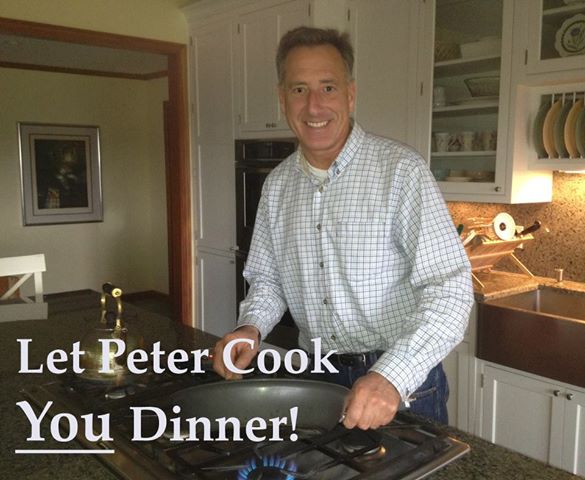
It'll take more than  free food to win back the base.

It’ll take more than free food to win back the base.

However, there’s ample evidence in the unofficial election returns for a very different analysis: the Governor would have sailed to an easy re-election if he hadn’t lost the left wing. There were sizable numbers of liberal voters who (1) stayed home or (2) cast protest votes for Scott Milne, Dan Feliciano, or a write-in. (They felt safe doing so because Milne was such a weak candidate, ha ha, that nobody felt the need to cast a defensive vote for Shumlin.)

As for #1, turnout hit an all-time record low. ‘Nuff said. Conservative voters were motivated, liberal voters were uninspired. The rest of this post will explore #2.

Previously, I cited the vast difference between Shumlin’s vote total and Congressman Peter Welch’s. In the final unofficial results (posted Saturday on the Secretary of State’s website), Welch received a total of 123,349 votes.

Shumlin got 89,509.

That’s a difference of nearly 34,000 votes. To put it another way, more than one-quarter of all Welch voters did not vote for Peter Shumlin.

That’s a stunning figure. But wait, there’s more.

I checked Shumlin’s totals in four Democrat-friendly state Senate districts: Bennington, Windham, Orange, and Washington.

In the Bennington district, Gov. Shumlin got 6,522 votes. He badly trailed Dem incumbent Dick Sears, who got 7,965 votes. That’s over 1400 Sears supporters who did not vote for the Governor.

In the solid blue Windham Senate district, the Governor’s home turf, he was outpolled by Sen. Jeanette White, the top vote-getter for two Senate seats, by a margin of 7777 to 6758.

More than a thousand votes lost, in the county he’s lived almost his entire life.

In Orange County’s Senate district, Shumlin trailed incumbent Democrat Mark MacDonald by 561 votes — MacDonald’s 3797 to Shumlin’s 3236. Which was virtually identical to MacDonald’s margin of victory over his Republican opponent, Bob Frenier.

In fact, if Frenier had equalled Scott Milne’s total and MacDonald had equalled Shumlin’s, the Senate seat would have flipped to the Republicans. So a sizeable number of Orange County voters split their tickets, opting for the Milne/MacDonald combo platter.

In the three-seat Washington County district, Shumlin drew 9,173 votes. That’s almost 2,000 behind top Democrat Ann Cummings (11,167) and 1300 behind Prog/Dem Anthony Pollina (10,474).

Reminder: The Prog/Dem Pollina was, by far, the most liberal of the Senatorial candidates in Washington County. He was believed to be vulnerable to a strong challenge from Republican Pat McDonald. In the end, Pollina was re-elected by a substantial margin.

Governor Shumlin trailed Anthony Pollina, ardent supporter of single-payer health care and higher taxes on the wealthy, by 1300 votes. Those numbers undercut the dominant narrative, that this election’s message was to go slow and move to the center. Pollina ain’t moving to nobody’s center.

Add those four districts, and Governor Shumlin lost more than 5,000 votes compared to the top Democratic Senate candidates.

In short, if the Governor had simply held onto his base, nobody would be talking about a Scott Milne squeaker.

In addition to all these numbers, I can tell you that every liberal I’ve heard from since Tuesday has told me stories about diehard Democratic voters who simply could not bring themselves to vote for Shumlin. That’s anecdotal evidence, but there’s a lot of it around.

I’m sure the Governor lost plenty of votes in the center. But he shouldn’t take this election as a mandate to shy away from progressive policies, and Republicans should be cautious about claiming 2014 as a mandate for them. This election was less about ideology than it was about disappointment in and distrust of Governor Shumlin.

The left wing of the Democratic Party has had its doubts about Shumlin from day one. He was seen as more of an opportunist, a triangulator, than other Democratic contenders in 2010. He placated the left by touting his opposition to Vermont Yankee and promising an all-out push for single-payer health care. During his two terms in office, he has done little to earn the respect of the left, and done much to forfeit their trust. His 2013 push to cut the Earned Income Tax Credit was seen as a betrayal on the left, as was his continual opposition to any sort of tax hikes on top earners. The awful performance of Vermont Health Connect is a mortal threat to single-payer.

If he wants to make a comeback, establish a legacy for his governorship, and perhaps try to run for a Congressional seat one day, he would be well advised to make peace with Vermont liberals instead of turning himself into Phil Scott Lite.

p.s. Yeah, I know, there are lots of liberals who already see him as Phil Scott Lite. Particularly “lite” on the perceived honesty and integrity of our Lieutenant Governor. 

We have our answer: Don Turner is a hypocritical opportunist

Or “opportunistic hypocrite,” take your choice.

To reset the stage, House Minority Leader Don Turner yesterday said he would vote for Scott Milne for Governor if the race goes to the legislature, in spite of a century and a half of precedent that lawmakers ought to opt for the top vote-getter instead of, as the Burlington Free Press charitably put it, being “free to vote their consciences.”

"Let me tell you about my unique personal definition of 'conscience.'"

“Let me tell you about my unique personal definition of ‘conscience.'”

To which I can only say, if their consciences lead them to any other conclusion than Peter Shumlin, then either they’re not listening closely enough to that still small voice, or their consciences are on the fritz.

Anyway, I speculated on how Mr. Turner had voted the last time this very question was before the legislature. Well, the answer comes to us courtesy of Terri Hallenbeck, soon to be late of the Burlington Free Press.

Turner acknowledged that’s a different stance than after the 2010 election, when the Legislature ratified Shumlin’s election over Republican Brian Dubie after Shumlin had a plurality but less than 50 percent of the public vote. That year, lawmakers also ratified the results of Republican Phil Scott, who received the most votes but less than 50 percent of the total for lieutenant governor.

Which means that virtually every lawmaker (including Don Turner) presumably voted against his/her political interests, and in favor of established precedent, at least once. Republicans ratified a Democrat, and Democrats ratified a Republican. It’s worked both ways over time. But now, Turner is pulling a brand-new rationalization out of his butt because it suits him politically.

Gee, I thought Republicans were the guardians of traditional Vermont values.

Or, as somebody who was on the short end of this Vermont tradition put it:

Doug Racine, a Democrat who lost the 2002 governor’s race to Republican Jim Douglas in a campaign that was also decided by the Legislature, said Democratic legislators told him at the time they felt compelled to vote for Douglas, who received the most votes in the election. “For a lot of legislators and for Vermonters it became about fair play,” Racine said.

Perhaps “fair play” is out the window for Republicans who suddenly see an unexpected opportunity to grab the biggest prize. In other words, they’re a whole bunch of Gollums.

p.s. We’re starting to get a glimpse at the future of a clickbait-oriented, post-Remsen-and-Hallenbeck Freeploid. Its coverage of Friday’s important developments consisted of two short articles from the Associated Press. Plus, those stories were pretty much buried on the Freeploid’s website, while more pressing matters — the LL Bean grand opening, a ladybug-infested house, a moose shooting — were given due prominence.

And the crudification of the Burlington Free Press is only just beginning.

Maybe Vermont Republicans have forgotten how to handle success?

Confusing little presser the Republicans held at the Statehouse Friday. Confusing in a couple of fundamental ways. They’re already well on their way to a fatal overdose of hubris; they’re toying with an ill-considered attempt to grab the governorship, or at least undercut Peter Shumlin; and they still don’t know what the hell to do with Scott Milne.

I wasn’t there, but I’ve been told that Milne was actually in attendance, but wasn’t invited to speak.* Indeed, even as they slapped each others’ backs over a relative handful of legislative victories, they “didn’t mention Milne until prompted by reporters,” according to VTDigger’s Laura Krantz.

*Note: Per the Comments below, multiple attendees say that Milne was not present. I’ll accept their word for it.

They “didn’t mention Milne,” the man who might still become their leader, not to mention the state’s.

What… the… hell.

Also, even as they were ignoring the Miracle Man, they were boldly announcing their plans for legislation to dump Vermont Health Connect.

(Let me just pause and note what a Boehnerian idea that is: promising a bill to kill a Democratic reform, a bill they know will never pass, just for the sake of some political posturing.)

Uh, fellows, d’ya think maybe it’d be a good idea if you’d, oh, consult Scott Milne before you make your big plans? Especially since some of you, at least, are going to do what you can to overthrow historical precedent and install him as our next governor?

Presumably, if legislative Republicans get their way, it ought to be Scott Milne setting the agenda, not them. But what do I know.

In fact, according to Seven Days’ Mark Davis, there’s been virtually no communication between Milne and top Republicans since Tuesday. Or before Tuesday, either, since they gave him damn little help during the campaign, believing (like everybody else) that he was a radioactive loser.

As for overthrowing historical precedent, take a bow, top House Republican Don Turner and top Senate Republican Joe Benning. Both of them indicated that they would vote for Milne if the race goes to the legislature, in spite of 161 years of precedent that says the legislature always installs the top vote-getter, whether it’s a Republican (Jim Douglas, 2002) or a Democrat (Peter Shumlin, 2010).

And as I wrote earlier, the last time the #2 vote-getter was installed as governor, it was the result of a dirty backroom political deal between the #2 and #3 parties to take down #1. Kinda like if the Democrats and Progressives united to block a Republican who’d won a plurality. So I don’t think the stolen election of 1853 is the kind of precedent anyone should want to emulate.

While we’re on the subject, Mr. Turner: when the governorship was decided by the legislature in 2010, did you vote for Peter Shumlin? If so, you are a hypocrite and an opportunist.

On the other hand, there was the current top Republican officeholder in the state, Phil Scott, saying that he’d obey precedent and vote for Shumlin if he had to choose. Leadership, boys.

Milne and Turner and Benning have devised a new interpretation of the legislature’s role, by saying that each lawmaker should follow the electoral results in his or her district. Which is a brand-new idea that happens to coincide with their own short-term interests. Statesmanship, boys.

Tuesday was the first taste of victory the Republicans have enjoyed in quite a long time. It’s been more than a decade since they gained seats in the legislature, and six since they won the governorship. This sudden burst of success must be terribly disorienting. It’s obviously gone to their heads, and not in a good way.

Hopefully they can regain their balance and learn to use their hard-won scraps of political power in a positive way.

Scott Milne takes it to the limit

Before the election, when Scott Milne was sure he was going to lose, he was fully prepared to resume his humble life as a travel mogul and disgruntled developer. Indeed, his official schedule, as posted by his campaign last weekend, had him in travel industry-related meetings yesterday and today.

My precious…

My precious…

But now that he came sooooo close, he’s starting to act like Gollum chasing after the Ring. He’s digging for any possible justification to not only avoid conceding, but to grab the governorship in spite of historical precedent.

I’m not saying he should give up. Not yet. He is well within his rights to delay conceding for now. We can wait until next Wednesday, when the vote will be certified. After that, if the margin remains under two percentage points, he should call for a recount if he wants.

After that, he needs to stop. He should concede gracefully and get on with his life, content in the knowledge that he followed his own path and far exceeded anyone’s expectations. He has no business twisting logic and Vermont history to justify an attempt to usurp the process.

Since he still hasn’t publicly addressed the voters he claims to care so deeply about, all we have is a statement from his campaign:

“It’s clear that 54% of Vermonters want a new Governor, and a new path forward” according to Scott Milne, after reviewing preliminary numbers in what appears to be the closest race in Vermont history.

Yeah, well, as I’m not the first to point out, 55% of Vermonters didn’t want Scott Milne to be their Governor, so that dog won’t hunt. What else ya got?

“We are gathering information for the requirements of a recount and weighing whether that is in the best interest of the people of Vermont, and we are looking closely at the legislative districts across the state on a district by district basis to determine which candidate won the most counties and legislative districts” said Milne.

Oh, so now you’re makin’ shit up.

There’s nothing in the state constitution that tells lawmakers how to elect a governo, when that task befalls them. But more than a century and a half of precedent says the individual with the most votes is chosen governor.

To illustrate how much precedent there is, the last time it was flouted, the Whig Party was involved. And our Statehouse had yet to be built.

Not to mention that it was a pure case of political chicanery, in which two lesser parties struck a deal to screw the first-place finisher (the Whig, as it happens). So I don’t think Milne wants to invoke that as a precedent.

No, he has the 1976 contest for Lieutenant Governor in mind.

Lawmakers last bucked a plurality vote in 1976 – in the Lt. Governor’s race – like now, the plurality winner- John Alden- faced confirmation by a House and Senate controlled by his own party.

“If we move forward, I expect Peter Shumlin has a good likelihood of facing the same fate as John Alden, and I will be Vermont’s next Governor” according to Milne.

What Milne conveniently omits is that Alden was facing legal trouble at the time. Shortly after his non-election, he was indicted on fraud charges and later convicted. It’s believed that enough people in the Legislature knew about it, that the vote went against him to avoid a huge embarrassment. (And I do hope that when Milne says he expects Shumlin to face “the same fate as John Alden,” he doesn’t mean criminal conviction.)

So that’s not a convincing rationale either. Not to mention, there’s a hell of a big difference between electing a Lieutenant Governor and electing a Governor, with all due respect to buckets of warm spit.

There’s also the inconvenient fact that before the election, Milne said that “he would concede the race if Shumlin won a plurality, and hoped Shumlin would do the same if the situation were reversed.”

Now, he says that wasn’t a statement of his position, it was a “challenge” to Shumlin to follow the will of the voters. And since Shumlin didn’t embrace his “challenge,” then Milne gets to take it back.

To be fair to Milne, he’s just kinda spitballing at this point, which is consistent with his behavior during the campaign. He hasn’t actually taken any of the actions he’s threatening to take. Indeed, his bottom line is that he will wait until the election is certified next Wednesday and then decide on his next move.

At that point, if he’s still in second place, he should do the right thing and concede. As his running mate, Phil Scott, said today: