Category Archives: Agriculture

Welp, the mouse died.

Earlier this week, I wrote a post about the marijuana debate entitled “They labored mightily and brought forth a mouse.”

Turned out I was overly optimistic, because the mouse didn’t make it.

No legalization. No grow-your-own. And as for the House’s idea of a study commission (thx to Seven Days’ Terri Hallenbeck, who never would’ve gotten this into the Free Press):

“Fuck the commission,” a frustrated Senate Judiciary Committee chair Dick Sears (D-Bennington) said after his effort to create a public advisory vote failed. “The commission was unnecessary.”

Agreed. Especially since the commission would have apparently been funded with money diverted from opioid treatment. Sheesh.

The only good thing about this: the House’s brilliant idea of a new saliva test for buzzed driving also failed. That’s the test with no clear scientific basis, according to a state-sponsored study.

Continue reading

They labored mightily and brought forth a mouse

Rarely have I felt so ambivalent about being right.

Last Friday, in my inaugural appearance on Vermont PBS’ “Vermont This Week,” host Mark Johnson asked the panel to predict the outcome of the marijuana debate in the House — a big change, a little change, or nothing at all.

The three of us all agreed on “little,” but I put my answer in two-word form: “Study commission.”

Take it away, distinguished lawmakers…

In the end, the chamber barely agreed to create a commission to study legalization. With the legislative session expected to end this week, marijuana legalization supporters conceded they’ve run out of time to try for more.

Hip, hip, hooray. Let’s hear it for representative democracy. The study commission: the Legislature’s favorite decision-avoidance technique.

Continue reading

Pot’s last stand

Monday’s the big day for marijuana legalization. The House is set to hold votes on two very different versions — so different, it’d be fair to say they are diametrically opposed. And therein lies the problem: the momentum toward legalization has splintered. Governor Shumlin and House Speaker Shap Smith, who both favor legalization, could pull a rabbit out of a hat — and that’s what it would take: a last-minute snatching of victory from the jaws of defeat.

Ironically, one possible outcome of the legalization drive is not any loosening of the law, but instead a crackdown on buzzed driving.

Unlikely, but possible. The most probable scenario is some sort of incremental, unsatisfying move that will provide a fig leaf of political cover for those (starting with Shumlin) who invested heavily in this fight. What might that be? Perhaps a nonbinding statewide referendum. Perhaps, as WCAX’s Kyle Midura said on “Vermont This Week,” some loosening of the state’s medical marijuana law. Perhaps something that’s not even on the table at the moment. Monday could be a long day on the House floor.

There are two major obstacles. First, not enough pro-legalization movement in the House, which was always the most likely killing ground for the idea. Second, the Senate and House took such different approaches that there’s no room for compromise.

The Senate took a top-down approach, establishing a regulated market for marijuana. It specifically rejected a grow-your-own exemption, arguing that it would weaken the broader effort to control the consumption of marijuana.

The House bill that will be considered on the floor Monday is centered on grow-your-own. It would create a licensing process for people who wanted to grow small amounts for personal consumption. Precisely what the Senate didn’t want.

Rarely do I find myself saying this, but I agree with the Senate.

Continue reading

Interview with the Mormon

Hey, remember David Hall? The Mormon millionaire who’s been buying property in the Tunbridge/Royalton area, with an eye toward building a planned community based on ideas from Mormon church founder Joseph Smith?

Yeah, that guy.

All it takes is one massive fraud scandal to wipe everything else off the news agenda, doesn’t it?

Well, I have some unfinished business with said Mormon, David Hall by name. On Thursday, April 7, I was guest host on “Open Mike,” WDEV Radio’s local talk show. In the first hour, I interviewed Mr. Hall about his plans. We had a lively and thoughtful discussion that shed substantial light on his plan. (The interview is archived here.)

You may recall that I wrote about his plan shortly after it became public knowledge — a nice little ready-fire-aim masterpiece entitled “The Mormons are Coming! The Mormons are Coming!”

In light of our interview, I feel compelled to give a fuller account of his plan and my views. So here we go.

Continue reading

More obstructionism from anti-renewable lawmakers

The Northeast Kingdom has become a hotbed of anti-renewable sentiment. They think they’re overburdened by the renewable buildout in their neck of the woods — although they seem to be just fine with Bill Stenger’s ambitious development plans, which would include a dramatic expansion of the Jay Peak resort with the concomitant loss of open space and wildlife habitat.

The Kingdom’s nominally Democratic Senators, Bobby Starr and John Rodgers, have proposed a bill that would effectively hamstring development of solar energy projects. They have a cover story, as they always do; this isn’t about energy, it’s about farming!

… the bill would apply Act 250 standards to renewable energy developments proposed for high-quality farmland.

Starr told finance committee members that he wants to balance the need for renewable energy with the need to conserve farmland, and he said the proposal could encourage solar development on more appropriate locations, such as rooftops.

Right. Rooftops. Vermont has so many of those.

There are a few problems with this bill. In no particular order:

Continue reading

Lake Champlain: Later than you think

Sunday’s Burlington Free Press included one of the most impactful pieces I’ve read in our Incredibly Shrinking Biggest Newspaper.

It wasn’t written by any of their staff reporters or editors. Nope, it was cribbed (with permission) from the Lake Champlain Committee, and was buried deep inside the paper. It was entitled “Lake Champlain: Growing Old Fast.” I will link to the Committee’s original version, which unlike the Freeploid, is not paywalled.

Maybe I haven’t been paying attention, but I learned a lot of stuff from this essay that I hadn’t known before, and all of it was bad news.

The topline: “cleaning up” Lake Champlain will accomplish nothing more than preventing additional damage. Over 200-plus years of human activity, the bulk of it in good ol’ green ol’ Vermont, we have caused significant and lasting harm to our crown jewel. That damage has been done and, like the greenhouse gas effect, its impact will continue long after the last nutrient has been dumped into the lake.

Which makes it doubly crucial that we get our act together and institute a tough cleanup plan with some real teeth. The longer we wait, the worse it gets; and a lot of the damage is irreversible.

Continue reading

The fish in the coal mine

Truly disturbing news in today’s VTDigger feed. (Oh, Digger, why must you spoil my Monday mornings?…)

A significant majority of Missisquoi River’s male smallmouth bass bear eggs, a characteristic known as “intersex.”

… A report published this fall, the most comprehensive of its kind, found 60 percent to 75 percent of male smallmouth bass in the Missisquoi River carry eggs.

Yikes!

Sixty to 75 percent???

That’s overwhelming evidence of an ecosystem ravaged by outside forces.

Okay, that’s the scientifically disturbing fact of the day. Now for the politically disturbing fact.

Continue reading

Vermont’s New Working Landscape

Vermonters have a long, sometimes storied, sometimes notorious, history of working on our land. In the latter category we have, among others, the sheep boom of the early 19th Century that left vast forests converted to pasture; the near-clearcutting of the entire state during the lumber (and wood construction) boom of the later 19th; the complete trashing of our waters by riverbank industries; and our modern-day violations of the Clean Water Act, caused in large part by agriculture and inadequate public water treatment.

Throughout it all, Vermont has been a working landscape with a tenuous, inconsistent relationship to the environment. Fortunately, we never found exploitable resources like coal or precious metals or oil. Also fortunately, the population has remained small enough that we’ve never been able to damage the environment beyond its incredible ability to regenerate.

But whether we were engaged in massive sheep farming, clearcut lumbering, industry, dairy farming, or shopping malls and subdivisions, the one constant is that we live in a “working landscape.” We have often celebrated that fact. And indeed, long-familiar aspects of the working landscape — even if they cause environmental degradation — are cherished parts of our way of life.

Myself, I’m looking forward to the next evolution of Vermont’s working landscape: the integration of renewable energy, the creation of a closer-to-home energy supply, the diminished dependence on fossil fuels and on massive “renewable” sources elsewhere, such as Seabrook Nuclear and the destructive hydro projects in northern Quebec.

Continue reading

A passel o’ peevishness on Inauguration Day (Part Two)

In Part One, I mused about the overreactions and hurt fee-fees on both sides of yesterday’s Inaugural protest. Now, let’s turn our attention to the Republican reaction to Gov. Shumlin’s inaugural address.

Their main point, according to VTDigger’s Laura Krantz?

Gov. Peter Shumlin ignored the most pressing issues facing Vermont in the first speech of his third term, Republican leaders said Thursday in response to the inaugural address.

… Republicans, gathered in the Senate cloakroom, said they were disappointed Shumlin ignored property taxes and health care — two issues that topped voter concerns during the elections last fall.

The speech focused on energy and the environment, so the complaint is technically accurate. But it deliberately ignores the fact that Shumlin billed this speech as Part One of a two-part 2015 agenda. And the governor specifically said he will address the “missing” issues in next week’s budget address.

“Just because the governor has acknowledged that his plan is a failure doesn’t mean he can ignore health care. We still need to address it,” said Rep. Patti Komline, R-Dorset.

Well, he didn’t “ignore” health care. He said he’d address it next week.

Sen. Joe Benning, R-Lyndonville, said the speech focused not on saving money but on spending more.

Again, the budget address hasn’t happened yet. That’s when Shumlin promises a plan to balance the budget. And, for the fiscal conservatives among us, Shumlin’s energy/environment speech contained very little in the way of new spending. The energy part was mainly about new regulation of renewables, which doesn’t involve any state spending. The Governor did propose two fees to help fund Lake Champlain cleanup, but both are narrowly targeted on sectors that contribute heavily to Champlain’s problems — agriculture and commercial/industrial development.

Republicans said they are open to his ideas about cleaning up Lake Champlain and other waterways but those are not the big problems.

Well, actually it IS a big and urgent problem because, as they well know, the EPA is holding Vermont’s feet to the fire. If we don’t come up with a solid plan, including new funding, then the feds will come down on us hard. That makes Champlain a top priority.

Speaking of new urgency, here’s another Republican missing the point.

“It needs doing but where was he four years ago on this?” said Rep. Brian Savage, R-Swanton.

Well, he was doing the same thing Jim Douglas did before him: postponing the Day of Reckoning as long as possible. As Rep. Savage well knows, the EPA has run out of patience, so Shumlin can’t possibly put it off any longer.

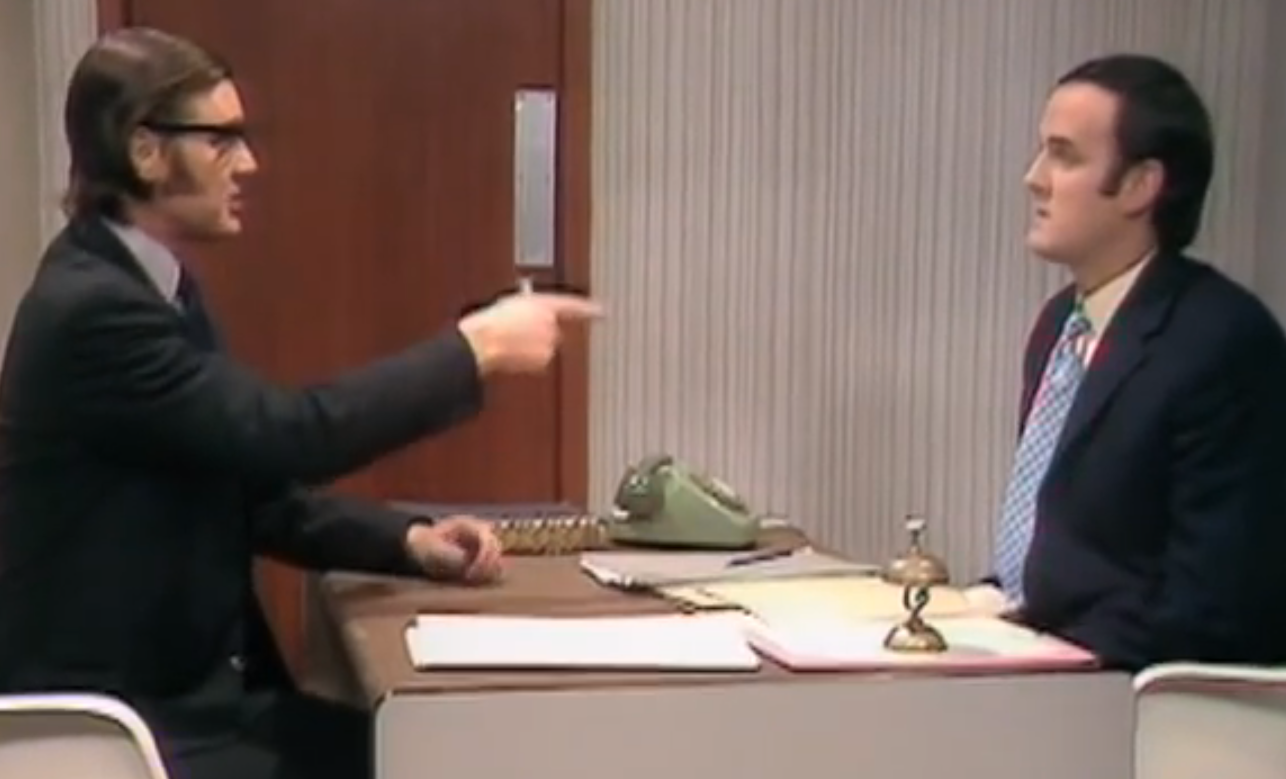
 Argument is an intellectual process. Contradiction is just the automatic gainsaying of anything the other person says.

“Argument is an intellectual process. Contradiction is just the automatic gainsaying of anything the other person says.”

House Minority Leader Don Turner was his usual obstructive self, strongly opposing any new taxes or fees, and even blasting Shumlin’s proposal to use the current use law as an enforcement mechanism for farmers and loggers. And he did so in a stunningly inarticulate fashion:

“I think that we know that current use is a very popular program, and it is a very expensive program. But if we want open land in Vermont its been one of those tools that has worked really well,” he said.

So wait. Current use is “very expensive,” and, in fact, Republicans have called for new limits on the program, but it’s “worked really well” and we can’t possibly do without it. You’d need a couple hours of pounding ’em back at the Capitol Plaza bar before that started to make sense.

The entire Republican response consisted of the automatic gainsaying of anything Shumlin said.

With one exception. Lt. Gov. Phil Scott released a statement that began thusly:

“I was encouraged to hear the Governor talk about economic growth. It was good to hear about the Governor’s support of research and development, especially after this important incentive was reduced last year. I hope that the Governor’s mention in his speech today is a precursor to a proposal included in the budget next week.”

Admittedly Scott sort of bent Shumlin’s message in his own direction, but look at what he did:

— He identified common ground instead of just saying “No.”

— He acknowledged that the inaugural address was Part One of Shumlin’s agenda.

A hint of politics, but overall gracious and inclusive. That’s the way you do it.

Dan Feliciano, man of ideas. Well, three ideas.

Saturday’s gubernatorial debate was a big moment for Dan Feliciano, Libertarian candidate for Governor and presumptive usurper of Scott Milne’s mantle as the real conservative challenger to Governor Shumlin.

Dan the Libertarian Man. Photo by VTDigger.

Dan the Libertarian Man. Photo by VTDigger.

So, how’d Dan the Libertarian Man do? About as well as he could have done. Which is, as you might imagine, a two-edged sword.

Feliciano presented himself as the conservative candidate with ideas. And yes, he has ideas. But to judge from his debate performance, he has precisely three of them: Cut taxes and spending, cut regulation, and institute school choice.

That’s it.

He repeated them over and over during the debate because, well, that’s about all he has to say. It was a good performance but, at the same time, it defined his limit as a gubernatorial candidate. His ideas are simply out of the mainstream.

And, worse still, lacking on specifics.

Let’s take, first, his call for lower spending. What’s his big idea on how to cut the cost of state government?

Challenges for Change.

Stop laughing. I’m serious.

Dan Feliciano wants to reintroduce Challenges for Change, the discredited Douglas Administration plan. This… is our Libertarian’s call to arms? A years-old, formerly bipartisan initiative that was abandoned in 2010 because both parties agreed it just wasn’t working?

Until now, I thought that Tom Pelham was the only True Believer left. But no: it’s him and Dan Feliciano. Sheesh.

I suspect that this is one of Feliciano’s attempts to make himself look less scary to mainstream voters. Don’t start with Libertarian ideas for privatizing schools, prisons, police, fire, and snowplowing; start with a mainstream reform plan. A failed plan, but a mainstream one.

On health care reform, he’s dead against single-payer. His “idea,” though, is weak: cut health insurance regulation to foster competition. We’ve already seen how that works: the competition turns into a race to the bottom, with affordable insurance available only to the healthiest, all kinds of exclusions to minimize claims, and a maze of complicated legalese designed to frustrate consumers.

And Feliciano tried to have it both ways when it comes to community rating, Vermont’s rule that prevents price discrimination against the elderly, the sick, and others with high risk factors.  He claimed to support community rating, but he also called for Vermont to scrap its own exchange and adopt the federal one, as New Hampshire has done. Well, Dan, New Hampshire and other states operating in the federal system don’t have community rating. Which is it?

On schools, he wants spending cuts but doesn’t provide any examples. His Big Idea is school choice, which is going to reduce costs in a way he doesn’t explain. I wonder why. Could it be because the savings are based entirely on free-market dogma? Could it be that, in a system already short of students, spreading them around to more institutions will make the situation worse, not better?

When asked about problems in the Agency for Human Services, he said “We need a wholistic approach to families and children.” Without explaining what in the world he means by that. And when asked about supporting agriculture, his one idea was — you guessed it — cutting EPA regulations.

In spite of rampant pollution in Lake Champlain, to which agriculture is the single biggest contributor.

This is Feliciano’s unique position, and his glass ceiling. He is a man of ideas, certainly. But it’s a small handful of endlessly repeated dogmatic ideas that don’t work in the real world. Much as he tries to water it down, he is stuck with Libertarian dogma. It gives him a clear outline, unlike the endlessly foggy Mahatma Milne. But it also consigns him to fringe status in any race with a credible Republican candidate.

If Milne keeps on soiling the sheets, Dan Feliciano might get into the double digits on November 4. But he’ll never be anything more than that. And whenever the Republicans run a viable candidate, he’ll be back down to Emily Peyton territory.