Category Archives: 2024 election

Turnover at the Top of the Vermont Democratic Party, Again

Last week, VTDigger reported that Jim Dandeneau will resign next month as executive director of the Vermont Democratic Party, the top paid staff position. Well, now I can report that David Glidden is also resigning next month as chair of the VDP, its top unpaid position.

Glidden told me his resignation will take effect on February 22, when the party’s state committee will meet to elect his successor. “With Jim exiting, it made sense for the party to have a transition and give the new team a long runway [to 2026],” Glidden said.

The departures were probably inevitable following the Democrats’ historic losses in the legislative elections, although Glidden downplayed any link. “There were bigger issues outside of the party structure that impacted the election,” Glidden said. “The core party functions were decently successful. It was just a really tough environment.”

You can’t really blame Glidden or Dandeneau for the Democratic Legislature’s failure to communicate its successes or find a way to message the property tax situation, Gov. Phil Scott’s effective anti-tax campaigning, or the VDP’s failure to field slash support a competitive gubernatorial candidate, which meant there was no one on a platform prominent enough to counter the governor’s attacks. But there were signs of trouble in the VDP’s finances, and party leaders are responsible for that.

Continue reading
The Barons of Burlington Discover That #vtpoli Is a Cheap Date

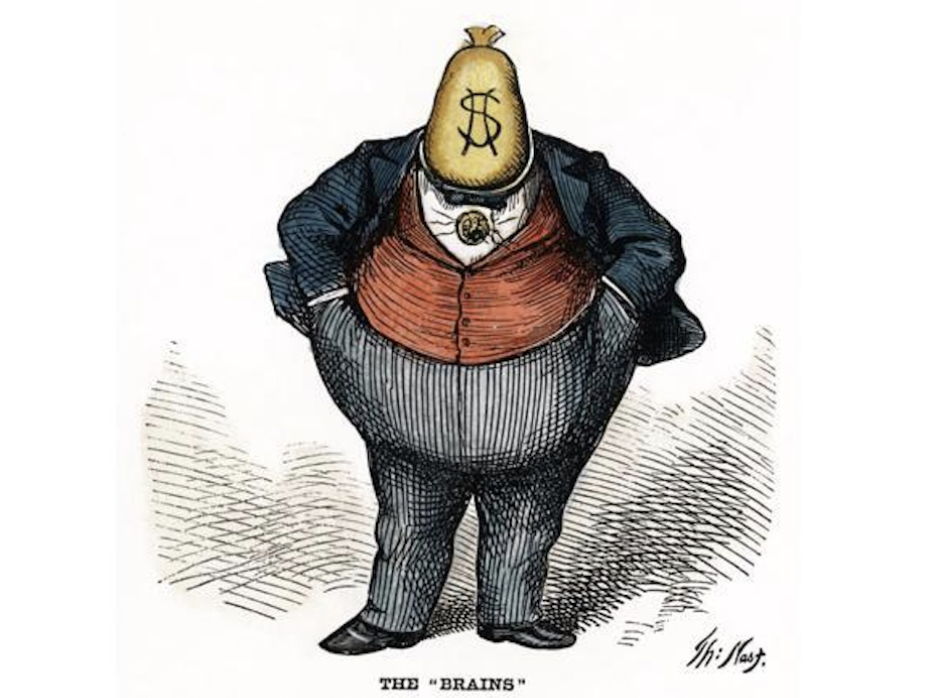
Secretary of State Sarah Copeland Hanzas’ brand spanking new campaign finance portal is up and running, and boy howdy, is it an improvement on the old system. Much more information readily available, searchable, downloadable. Too bad nobody in the media, with the occasional exception of VTDigger, pays any attention to campaign finance anymore because (a) the entire idea behind campaign finance law is that sunshine disinfects, but that doesn’t work if the cleanup crews are off the clock, and (b) the new system makes the task much easier.

One huge improvement is the ability to track individual donors. Previously, donor records were extremely difficult to work with. Frequent benefactors would have numerous records, each one bearing a slightly different spelling or punctuation of their name or contact information. If I wanted to track, say, ultraconservative megadonor Lenore Broughton, I’d have to open and review literally dozens of files.

Now all I have to do is click on the “Contributions” button and type Broughton’s name into the “Contributor Name” field, and I can see all her donations to Vermont candidates and organizations in one list. So I can report that so far in 2024, Broughton has shoveled a total of $28,420 into Vermont’s political ecosystem. (This doesn’t include her federal activity; she’s given a whopping $82,700 to federal candidates and organizations in 2024. Including such worthies as Speaker Mike Johnson, Sen. Josh Hawley, unsuccessful Senate hopefuls Eric Hovde of Wisconsin and Kari Lake of Arizona, and an org called Black Americans Political Action Committee, which bears a strong smell of astroturf. She also gave $2,000 to Scary Eagle Man Gerald Malloy. Because he was a federal candidate, that donation was reported to the Federal Elections Commission, not the Vermont Secretary of State.)

The system isn’t perfect. I came across one instance where a donor I think of as an adjutant Baron, Robert Lair, had his name misspelled as “Liar,” so one of his donations didn’t appear with the others. Oh well.

But hey, let’s get to the point, shall we? This being the fifth paragraph already.

Continue reading

Democrats Be Democrattin’

VTDigger’s post-Mearhoff political “team” has done itself proud in the early days of the new year, publishing not one, but two, articles outlining a fresh outbreak of an old familiar malady of the left — Democrats in Disarray.

Yeah, I’ve seen this movie before, over and over again. The Dems react to an electoral defeat by watering down their agenda and shifting (if not stampeding) to the center. When, in fact, the lesson to be learned from election victories on both sides is that voters reward authenticity — and are unconvinced by carefully titrated policy positions that have been focus-grouped to death. And by “authenticity” I mean everything from Jimmy Carter’s humble populism to Donald Trump’s extravagant disregard for political norms. (Trump may be a phony and a huckster but he’s consistent about it. He is, as he has told us repeatedly, that snake.)

Digger’s Emma Cotton brings us word of a panicky retreat from the Dems’ climate agenda, while the (at least for the moment) sole occupant of the political beat, Shaun Robinson, reports that quite a few House Democrats are prepared to defenestrate Speaker Jill Krowinski in favor of independent Rep. Laura Sibilia. Enough are against Krowinski or undecided that next week’s election for Speaker may be a close affair.

Both are clear and obvious overreactions to the results of the November elections, which saw many a Democrat go down to defeat — but which left the Democrats with a majority in the Senate and nearly a two-thirds majority in the House. To say that they “lost” the election is to avoid the fact that they still rule the Statehouse roost, and would be fully justified in pursuing an ambitious agenda in the new biennium. Even so, many Dems seem to be running scared. Some of their more influential member are, dare I say, sounding a lot like Phil Scott Republicans. And no, that’s not a compliment.

Continue reading

John Rodgers Has Even More Work to Do

When last we looked at Lieutenant-Governor-Elect John Rodgers’ campaign finances, we saw that he was nearly $53,000 in the red as of the November 19 filing deadline.

Well, now the final numbers are in — and Rodgers’ deficit has grown even larger.

His December 15 filing, which is the last one for the campaign cycle and is officially attested to as his FINAL REPORT all caps, shows total fundraising of $216,468 and total expenditures of $284,588.01.

That’s a shortfall of $68,120.01.

In percentage terms, Rodgers overspent his income by 31.5%.

It’s a curious situation for a common-sense fiscal conservative “balancin’ the books around the kitchen table” kind of guy.

Continue reading

You Got to Know When to Hold ‘Em

The House and Senate Democratic caucuses took six of the best in this year’s election, losing their supermajorities and being reduced to, well, plain ol’ majorities. (As old Statehouse hands have noted, their “defeat” reduced them to the kind of solid partisan edge that used to be normal.) Most of the losses came in rural precincts, and the remaining rural Dems are in their feelings about it. As Rep. John O’Brien of Tunbridge put it, “we had nothing to run on.”

Given the situation, caucus leadership had two choices: Rein in their ambitious agenda or stay the course and try to craft better messaging. Recent votes for leadership positions show the majority supports option number two. Rather than try to accommodate rural discontent, House and Senate caucuses each decided to make their leadership teams more strongly Chittenden-centric. (Hat tip to Rising Young Blogger Matthew Vigneau for calling the House changes a couple weeks in advance.)

House leadership also seems determined to ignore independent Rep. Laura Sibilia’s bid for Speaker, as they went ahead with renominating Speaker Jill Krowinski while voting to prohibit non-Democrats from seeking the caucus nomination. The issue will be settled in the full House come January.

Clearly, the hatches are being battened. While it might seem as though the Dems are ignoring the lessons to be learned from their November beatdown, their actions make a lot of sense in two ways: The True Believer and the Machiavellian.

Continue reading

The Barons Didn’t Buy the Senate, But They Dramatically Increased the Price of Admission

Throughout the campaign season I wrote about the Barons of Burlington, a bunch of well-heeled men — well, almost entirely men — and their obviously coordinated effort to buy a bunch of state Senate seats. They wrote fistfuls of four-figure checks to six Republican candidates for Senate plus their choice for lieutenant governor, Democrat-turned-Republican John Rodgers.

So, now that the dust has settled and the campaign finance reports are nearly complete*, it’s time to answer the musical question: Did the Barons buy the election?

*Final reports are due December 19, but the bulk of the money has been accounted for by now.

The obvious straight-line answer is yes. Their seven chosen candidates swept the field, reducing the Democratic/Progressive majority from 23 seats to 17 with the tie-breaking LG vote going to the Republicans.

The less obvious answer is, well, not really. There is abundant evidence that their money didn’t swing the election — that the Republican gains would have happened anyway.

Continue reading

A Rising Tide Lifts All the Flotsam

This month’s Republican wave deposited some worthy members who can bring a socially moderate, fiscally conservative perspective to the Statehouse with some measure of dignity and open-mindedness. Not that I agree with them politically, but they should not be dismissed as extremists or nay-sayers. (Lookin’ at you, incoming Senate Minority Leader Scott Beck.)

But others who floated in on the tide will bring some truly out-there positions to Montpelier. There have always been a few of these folks, but too few to feel comfortable about spreading their wings and exposing their views. They have limited their participation to grumbles and grimaces and often departed after a term or two because they couldn’t stand being in a tiny minority. Or because the voters got wind of their views. (Lookin’ at you, one-term state rep Samantha Lefebvre.)

In the new biennium, there might just be a critical mass that will give them license to fly their freak flags. I can give you five names of far-right figures previously featured in my posts about “stealth conservatives” who won their elections and will take office come January. There are another eight on my suspect list who campaigned on the standard-issue “affordability & common sense” Phil Scott word cloud but showed signs of dog-whistling. I haven’t had a chance to dig into their histories. Yet.

Continue reading

Two Vermonts, Again, Again

The phrase “Two Vermonts” has a long and storied history. Its roots run deeper than the origins of Vermont itself. Way back when, our B.L. Not Yet S. was the tattered rope in a tug-of-war between New Hampshire and New York. And then, for much of the Vermont Republican Party’s 100-year-plus hegemony, a governor from the eastern side of the state was inevitably succeeded by someone from the west. There was a very clear division between the two Vermonts tracing the spine of the Green Mountains.

If you do an Internet search for “Two Vermonts,” you get a staggering quantity of hits. It’s been a long time since the line was about east versus west; instead, various divisions are drawn by a writer or speaker in service of the argument they are making. The two Vermonts have been defined as, among other things: The places, rural or urban, where people are prospering versus those whose inhabitants are struggling to get by; The places where real people work hard at real jobs versus the realms of the picture-postcard; The locales struggling with drugs and crime versus the enclaves of the well-to-do and the tourists; Rural/parochial areas versus urban/cosmopolitan ones.

There are also non-geographical conceptions of Two Vermonts: A simple divide between prosperity and poverty, or between a Vermont that seriously engaged with climate change and another where harmful emissions are still on the rise.

I’ve got a new spin on this concept based on this month’s election results. If you follow I-89 from Burlington to White River Junction and I-91 from there to Brattleboro, you will have traversed one Vermont. The rest of the state, or most of it, is the other Vermont. Neat, eh?

You can see this most clearly in the incoming state Senate. There are 17 members of the Democratic/Progressive caucus, and fourteen of them hail from counties on that freeway corridor: Chittenden (6), Washington (3), Windsor (3), and Windham (2). The other three hail from Bennington (2) and Addison (1).

Continue reading

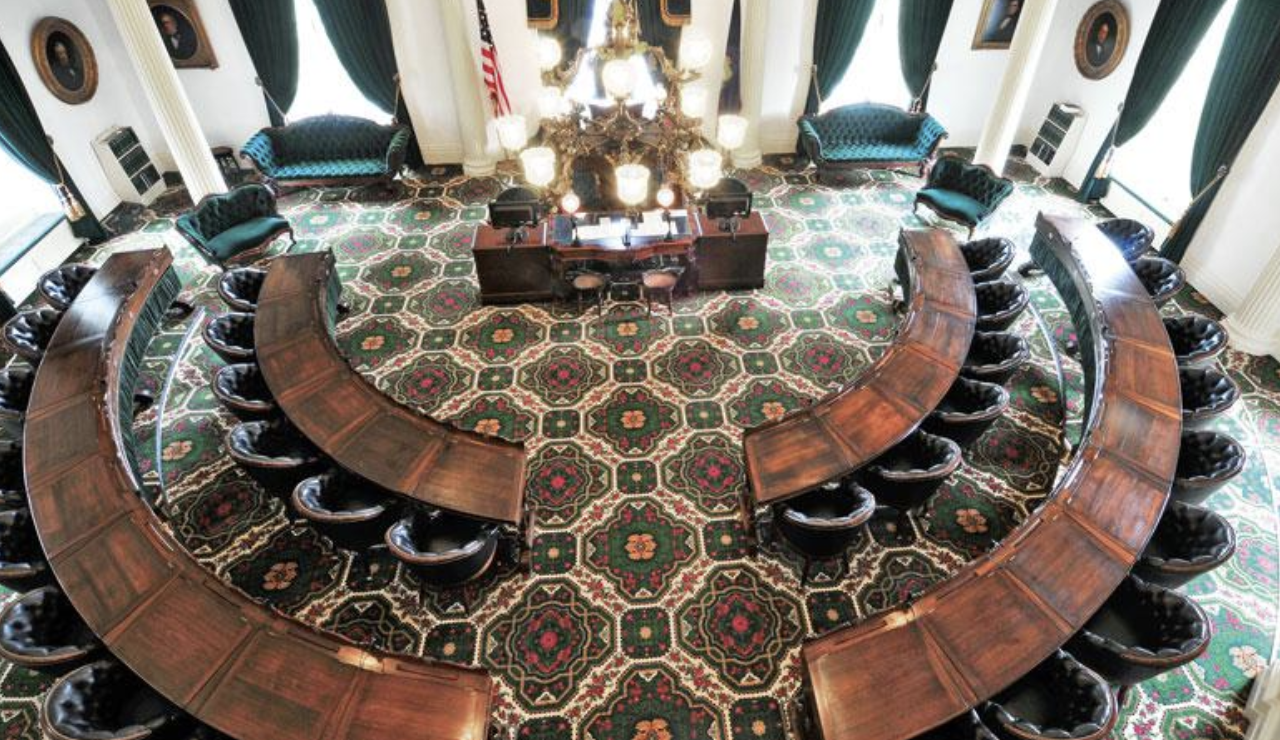
The New State Senate Will Be… Something

Last May, I wrote a piece entitled “What Will the State Senate Be in 2025?” The idea was that for the second straight election cycle, the stodgy ol’ Senate was going to see an unusual quantity of churn:

This, in a body that values age and seniority above all else, and normally consigns junior members to purely decorative status. It’s gonna be interesting.

Well, the results of this month’s election will bring even more change to the Senate. It’s kind of staggering when you put it all together. By my count, 18 of the 30 senators will be freshmen or sophomores come January. That’s an amazing number. There were 10 newbies in 2023, and nine more will be new senators in 2025. (One 2023 newcomer, Irene Wrenner, lost her bid for a second term.)

The class of 2025: Democrats Seth Bongartz, Joe Major, and Robert Plunkett; and Republicans Scott Beck, Patrick Brennan, Samuel Douglass, Larry Hart Sr., Steven Heffernan, and Chris Mattos. Class of 2023: Martine Gulick, Wendy Harrison, Nader Hashim, Robert Norris, Tanya Vyhovsky, Anne Watson, David Weeks, Becca White, and Terry Williams.

What’s more, in a body known for very long tenures, only four senators will have served continuously since 2015 (Phil Baruth, Ann Cummings, Ginny Lyons, Richard Westman). Historically, you’d need to serve at least that long before the John Bloomers of the world* would consider you to be a Real Senator.

*Kidding. There is only one John Bloomer per planet.

Continue reading

John Rodgers Has Some Work to Do

John Rodgers still looks to be our next lieutenant governor, absent some history-defying hijinx in the Statehouse. But he can’t close the books on his successful campaign — not without some serious post-election fundraising.

Because according to his latest campaign finance filing, Rodgers is nearly $53,000 in the red.

He raised a total of $214,218, very respectable considering that as of July 4 he hadn’t raised a damn dime. He attracted a veritable tsunami of four-figure donations from the Barons of Burlington and their friends.

But he also spent like a drunken sailor — $266,942 in a four-month period, a breathtaking pace for any office this side of the governorship. That leaves him with a campaign deficit of $52,724, meaning he overshot his revenue by about 25%.

Hell of a thing for a guy who ran on affordability and common sense.

Continue reading