

Monthly Archives: March 2023

The Honorable Member From Lyndon Would Like Some Cheese to Go with That Whine

First-term state Rep. Charles Wilson (R-Lyndon), seen here doing his level best to stay awake during a budget hearing, has established himself as one of the most complainy of the House Republicans’ infinitesimal freshman class. He’s right up there with Barre Town’s Gina Galfetti for writing op-eds about how badly House Republicans are mistreated by the majority caucuses.

WIlson has characterized global warming as “a hoax and the majority Dems and Progs as “tyrannical.” Which only means that he has never experienced real tyranny, but let’s keep moving. He also sees organic farms as “failing” enterprises that are a waste of farm aid programs, and the state budget as an “obnoxious and unsustainable” document that “tempts unconscionable spending on policies set by unelected consultants and boards of California Dreamers.”

His latest commentary complains that Vermont has a “one-party system.” Which, ahem, Phil Scott. But yeah, the Dems and Progs have built up historic majorities in the Legislature — thanks to the VTGOP’s descent into incompetence and extremism.

One of WIlson’s complaints is that “many Republican bills are never even put forth for discussion — only Democrat and Progressive bills.” Well, sure, that’s what legislative majorities do. But let’s be fair and take a closer look at these “Republican bills” that are languishing in the circular file. I’m sure they’re top-flight examples of deep thought and creativity, right?

Continue reading
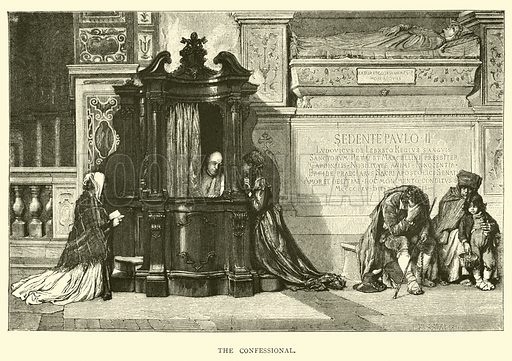

Our Little Gift to the Catholic Church

Suresh Garimella’s neutron bomb approach to the humanities notwithstanding, sometimes a professor of religion comes in very handy. Take Friday, March 3 for example. On that day, the Senate Judiciary Committee heard testimony on S.16, a bill that would require clergy to report cases of child abuse and neglect even if they learned of such crimes in confidence while acting as a spiritual advisor. Like, say, a Catholic priest hearing confession, but let’s not get ahead of ourselves.

Lined up to testify were not one, not two, but three Catholics, including Bishop Christopher Coyne of the Diocese of Burlington. You can guess what they had to say: Removing the confessional exemption would force priests to choose between state law and canon law. It would infringe on Catholics’ First Amendment right to free expression of religion.

After all of that, the committee heard from Tom Borchert, chair of the Department of Religion at the University of Vermont. And boy, did his testimony make my ears perk up.

The two big takeaways: First, the “spiritual advisor” exemption describes one and only one religious practice: Catholic confession. Second, the law as currently written creates a First Amendment issue on its own.

Continue reading

Housing the Homeless as Economic Development Strategy

We could view homelessness as a moral failure… or a failure of capitalism… or a failure of individuals to live productive lives… or a problem in need of resources we can’t afford to commit…

Or… just spitballin’ here… a waste of potential and precious human capital.

For this discussion, we’re leaving out the moral and ethical dimensions of the issue. We’re not declaring an obligation to protect our most vulnerable. We’re putting on our green eyeshades and considering homelessness from a purely bottom-line point of view.

To hear the Scott administration tell it, extending the emergency motel voucher program is kind of like taking a pile of money and setting it on fire. It produces a bit of transient warmth, but it’s otherwise a waste of resources. Legislative Democrats and even some housing advocates often fall for this: They tacitly accept the premise instead of making the economic case for (a) giving everyone a roof to sleep under in the short term and (b) ending homelessness in the longer term.

When you look at it that way, you find that we can’t afford not to end homelessness. There is abundant evidence that addressing homelessness is an economic winner — not just in the long term, but almost immediately. So let’s stop talking about whether we can afford $72 million for another year of motel vouchers or $31 million for a stripped-down version of the program or a few hundred million to provide enough housing for all. Instead, let’s talk about the economic positives of a humane policy choice.

(I don’t pretend that any of this is my idea, but it ought to be more of a factor in our policy debates.)

Continue reading

They’re Just Going to Beat This Crypto Bro Thing Into the Ground, Aren’t They?

I don’t know what U.S. Rep. Becca Balint did to so mightily offend the journalistic nabobs at VTDigger and Seven Days, but our two most prominent political media outlets seem bound and determined to lash her tightly to disgraced crypto king (and long-lost Fourth Stooge) Sam Bankman-Fried. Hell, they’ve probably started pre-writing her obituary with the headline “Balint, Beneficiary of Fraudulent Crypto Bro Wealth and Vermont’s First Woman in Congress, Dies at [insert age here].”

Digger’s been at this for a while now. Every time there’s a fresh development in the downfall of Bankman-Fried, Digger’s political team cranks out a story that reports said development and fills out the space by recapping all the old stuff about his million-dollar donation to a political action committee that then spent it in support of Balint, and hinting at a deeper relationship between the two.

It’s a nice way to fill the news hole, but c’mon.

Digger’s latest breathless retelling of the same old story refers to Bankman-Fried as “Balint’s $1 Million Benefactor,” which is about the most sinister possible way to characterize the situation. “Benefactor” implies two very untrue things: That the two had some sort of undisclosed relationship, and that he straight-up gave her a big bag of cash.

In truth, Bankman-Fried gave a bunch of money to the Victory Fund, a political action committee that supports LGBTQ+ candidates. The Victory Fund then spent it, almost certainly at SBF’s behest, on a last-minute ad blitz supporting Balint’s bid for Congress.

And no matter how long our political media keep chewing on that dry old bone, they can’t prove that Balint knew about any of this, that she’d made a deal of some kind with SBF, or that the money made any significant difference in Balint’s primary win over then-lieutenant governor Molly Gray. They continue to hint at it whenever they can, but that’s as far as they can get.

Continue reading

Supermajority Disappoints on Housing Crisis

Yesterday will go down as a case study in how legislative realpolitik works — or how Democratic supermajorities shoot themselves in the foot. Choose your own adventure.

In two separate venues yesterday, majority Democrats negotiated against themselves instead of flexing their political muscle. And the real losers were the thousands of Vermonters experiencing or facing homelessness.

In the early afternoon, the House Human Services Committee approved a memo to House Appropriations spelling out its underwhelming version of a plan to try to avoid an explosion in homelessness. A few hours later, a House-Senate conference committee approved the 2023 Budget Adjustment Act, with House members agreeing with the Senate version that cut $3 million from the emergency motel voucher program. The program would continue through the end of June, but with reduced eligibility after the end of May. More than 750 households would lose their eligibility a month early.

The conference committee move was a master class in keeping away from prying eyes. The House named its three members last week; the Senate followed suit on Monday. The very next day, the committee met with effectively no advance notice and quickly approved a “compromise” that favored the Senate on every area of disagreement. The meeting was over in less than 25 minutes. And only afterward was there any public disclosure of what the committee had approved.

This is all according to procedure, mind you. Conference committees don’t have to give advance warning of meetings. They often fit in their business when the opportunity arises. But usually their meetings include at least some debate. In this case, there was little to none. The deal was done behind closed doors.

This may be within the rules, but the lack of transparency is galling. As was the committee’s acceptance of the Scott administration’s assertion that cutting eligibility is actually the charitable thing to do. The argument goes that there isn’t enough capacity in the program so we should focus the available space on those in the direst straits. Some would say there’s a difference between sticking to the state’s roster of motel units and making a real effort to expand the pool, but I quibble.

House Human Services shared an unfortunate process with the conference committee. As far as I can tell, the proposed memo to Appropriations wasn’t posted online before it was approved by Human Services — and still hasn’t been, as of this writing.

Continue reading