Because I usually finish what I start, the “Drafts” section of this site’s back office is mercifully brief. It contains exactly one unfinished blogpost. That one is more than four years old, and I long ago despaired of ever pulling it off.
Its title is “We Have No Idea How Well State Government Performs.” I honestly believe that statement is true, but I’ve never finished it because it would be an absolute bear to research — to try to catalogue examples of state government failing to work as it should, when I suspect that most examples remain safely concealed in a bureaucratic mountain that gets little meaningful independent oversight.
But three recent news items provide solid evidence in support of the working theory that our state government is not nearly as efficient or effective as it could be.
Gov. Phil Scott’s Education Secretary sent an opinion piece to VTDigger echoing the governor’s talking points from his State of the State Address last week. But the original bore an unfortunate headline, and the text wasn’t any great shakes either.
Headline Number One, as published by VTDigger on the evening of Monday, January 12:
“Stupid,” eh? I get the callback to James Carville’s most memorable concoction, but it bore an unpleasant whiff of condescension toward the governor’s critics. Now, Saunders’ boss has no problem with condescension toward his critics, but apparently someone thought better of the headline. Because by the next morning, “Stupid” had been excised:
It’s a shame, isn’t it, that a sharp-eyed correspondent noticed the original headline and sent me a screenshot before it could be altered?
I can’t say for certain whether the first headline came from Team Saunders or someone in Digger’s editorial room, but I suspect the former. Seems a stretch that a Digger functionary would attach a potentially offensive headline to an essay by a prominent state official.
(There’s an editor’s note at the bottom of the essay that says “Correction: Due to an editing error, an earlier version of this story contained a misleading headline.“It doesn’t identify the source of the headline. Also, “misleading’ is a funny way of saying “offensive.”)
But even without the “Stupid,” there’s something off about that headline. “It’s Not All About Taxes” carries the implication that it’s mostly about taxes, right? And I don’t think that’s the argument the Scott administration wants to deploy.
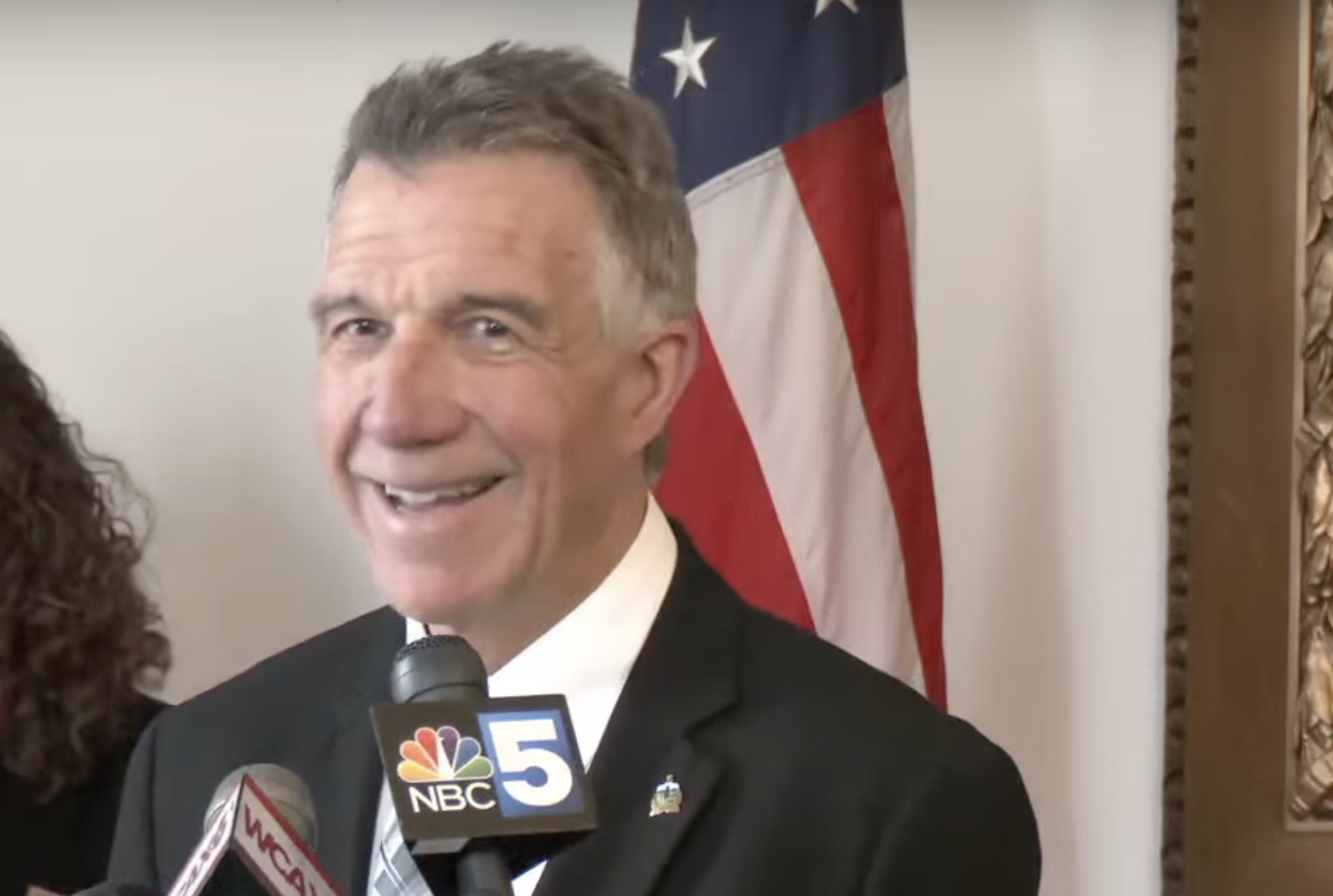
Our Beloved GovernorTM seems intent on torpedoing his own reputation as a “Nice Guy,” or maybe he’s giving it a thorough stress test to prove that it’s completely unsinkable. He has issued a statement in response to Education Secretary Zoie Saunders’ latest misadventure that simply oozes smugness and the kind of bland reassurance that could only come from a man in an unassailable position of privilege.
In a few short paragraphs, Scott casts himself as The Wisest Man in Vermont, remaining calm when all about him are unreasonably aflutter over Donald Trump’s assault on democracy and the federal government. And he paints Saunders as the victim of “some activists” who fomented “fear and anxiety throughout our education system.”
Yeah, that’s right, it’s not Saunders, who caused this whole ruckus by ordering all superintendents to attest that their policies and curricula were compliant with Trump administration orders — on Friday night, the worst possible time to distribute guidance on a touchy issue — and then barfed all over her shoes trying to walk it back. No, it wasn’t her fault, it was those damn activists. Whose number includes, among others, the associations representing Vermont school boards, principals, and superintendents, plus the teacher’s union.
Well, either the entire professional educational community is included in Scott’s shitlist of “activists,” or they are all easily duped flibbertigibbets who can be whipped into a lather for no reason by unnamed “activists.”
Welp, Education Secretary Zoie Saunders has gone and stepped into it. Big time.
When news broke of her directive that all Vermont’s public school districts would have to officially attest to their compliance with Trump administration orders against diversity, equity and inclusion policies and curricula, my own Outrage-O-Meter didn’t quite hit the red zone. Saunders’ message was more nuanced than it seemed at first blush; it sought simple attestation rather than any actual changes to policy, program or curriculum. It was kind of a “cover your ass” situation. These days, many a larger and more respected institution than the Vermont Agency of Education has been engaged in similar ass-covering maneuvers.
But man, did it kick up a shitstorm, and Saunders found herself walking the whole thing back, not once but twice, within a few days and with the help of Attorney General Charity Clark. This, after some districts indicated they would not comply and the public education community as a whole reacted with confusion and anger.
And I get it. Saunders’ original missive wasn’t clearly written, it asked superintendents to sign their names to attestations that might or might not satisfy the federal government. Plus the Trump administration’s own “guidance” is a poorly-executed study in opacity.
The real problem is that Saunders’ unforced error played into the perception, warranted or otherwise, that Saunders was imported from Trumpland for the purpose of Floridafying our school system. It reinforced educators’ fears about her true intentions and those of the Scott administration. And that may have repercussions for her ability to lead the public education system in the future.
Many, many, many words were spoken in Tuesday’s confirmation hearing for Education Secretary Zoie Saunders before the Senate Education Committee, most of them by Saunders herself. And then, after nearly two hours of jibber-jabber, her nomination was approved on a 5-1 vote, with Senate Majority Leader Kesha Ram Hinsdale on the short end of the ledger.
The full Senate will have the final say (its vote is scheduled for Thursday), but we all know where this is going. Saunders will be confirmed less than a year after the 2024 Senate rejected her on a lopsided 19-9 margin. Immediately following that vote, Gov. Phil Scott effectively overrode the Senate’s power to advise and consent by installing Saunders as interim secretary. And once the Legislature was safely adjourned for the year, Scott named her permanent secretary. That move was challenged, fruitlessly, in the courts, so she continued to serve. And she will continue into the indefinite future.
I can’t really blame the Education Committee for voting yes. It was a profoundly weird situation, having to confirm a nominee who’s already been in office for almost a full year without major missteps or scandals, at least none that we know about. It’s too long a time to suddenly decide she should be here at all, and too short a time for a true accounting of her tenure. (Nor was there any chance to hear from other witnesses who might have offered alternative views of Saunders’ effectiveness.) In a lengthy opening statement larded with the arcane language of bureaucracy, Saunders ticked off a laundry list of initiatives, every one of which was a work in progress with few if any measurables on offer.
Neither is there any evidence, in this very limited hearing, to kick her out. Ram Hinsdale’s vote was more a token protest than anything; it was clear from the opening stages of the hearing that a majority of the committee would approve Saunders. The only other possible holdout, Sen. Nader Hashim, made it clear in his first statement that he would be voting yes “unless something totally bonkers happens in the next 45 minutes.” Committee chair Sen. Seth Bongartz, the third Democrat on the six-member panel, said almost nothing until the very end of the proceedings, and then he opined that “The governor has the right to appoint the people he wants… unless something egregious emerges.” The fix was in, and had been from the moment the Senate’s Committee on Committees created an Education Committee evenly split between Democrats and Republicans, and brushed aside last session’s vice chair, Sen. Martine Laroque Gulick, in favor of the obviously pliant Bongartz.
The House Education Committee has set aside a fair bit of time this week for discussion of H.454, which sets out Gov. Phil Scott’s education reform plan in a brisk 194 pages. It is to be hoped that the committee’s deliberations will be centered first and foremost on what’s best for Vermont’s public school system. Because nobody else seems to be doing so.
Take the governor, for instance. (Please, says Henny.) He pays lip service to improving education, but his focus is clearly on cost containment. Radically centralizing the system is no guarantee of better quality. (It’s no guarantee of savings, either; the move to statewide negotiation of health insurance for public school personnel hasn’t prevented its cost from skyrocketing.) Doing away with local school districts in favor of five massive regional districts is clearly aimed at cutting administrative costs. And don’t get me started on the provision of H.454 setting minimum class sizes at 15 for grades K-4 and 25 for grades 5-12.
Those are minimums, mind you. What would the average class sizes be? 20 in the lower grades, or 25? 30 in the upper? 35? Cautious administrators will want a margin of error above the state-mandated minimums. And what happens when a school dips below the minimum? Does it close down? Put some crash test dummies in desks and hope no one notices?
Frankly, I wonder why any Republican who represents a rural district — which is the vast majority of Republican lawmakers — could support this plan as written. The class size provision alone would trigger a massive wave of consolidation that would hit rural Vermont especially hard. (Maybe that’s why H.454 has a mere five sponsors while H.16, the Republican bill to repeal the Affordable Heat Act, has 55 and H.62, to repeal the Global Warming Solutions Act, has 29. There hasn’t exactly been a stampede among legislative Republicans to sign on to the governor’s plan.)
As the Scott administration’s school governance plan vanishes slowly into the Great Lost Swamp of ill-begotten ideas*, it’s time for a history lesson.
*You might think this premature, but Senate President Pro Tem Phil Baruth and the House Democratic caucus have said that universal school choice, a core feature of the Scott plan, is a non-starter.
Confession first: I didn’t remember this event. A reader reminded me of it.
Way back in 2019, then-education secretary Dan French let loose a trial balloon that sank quickly and without a trace. But in every important aspect, it was a precursor to this year’s plan — albeit an even more dramatic rethinking of how the public school system is organized and funded. What it tells me is that the Scott administration has been thinking along these lines for years. And now, likely emboldened by Republican gains in November, the admin is publicly promoting a modified version of the French plan.
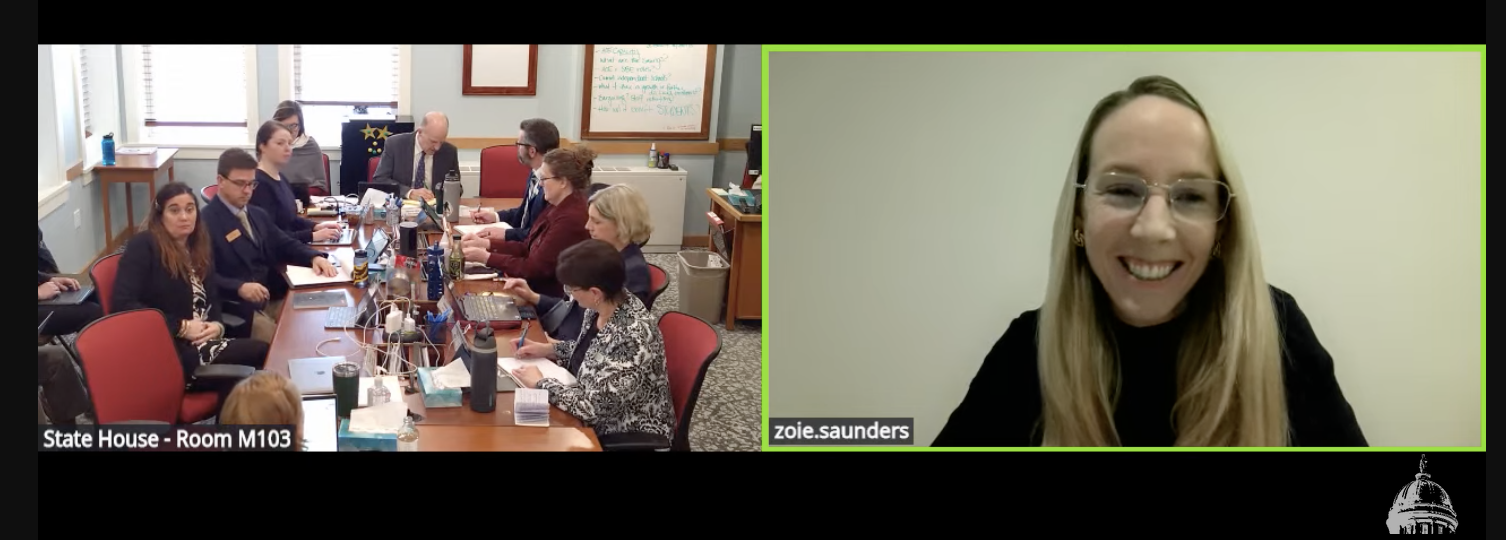
The long, slow rollout of Gov. Phil Scott’s education plan took another step yesterday, as Interim Education Secretary Zoie Saunders* testified before the House Education Committee about the governance portion of the plan. Her testimony was met with widespread befuddlement, as reflected in a series of “What the heck does this mean?” questions from majority Democrats on the committee.
*She dropped the “Interim” when she introduced herself to the committee**.
** It has been pointed out that Scott has appointed Saunders permanent secretary. Okay, but her entire appointment is still subject to a court ruling, so it remains to be seen whether she’s permanent or done.
Before we get to the sources of that befuddlement, we must mention the poison pills contained within Scott’s plan. First, it would implement statewide school choice and throw the doors open for unfettered expansion of the current “approved independent schools” system. Every public school student would have to be offered some measure of choice. That’s a nonstarter for Democrats, or it ought to be, because it poses a very real threat to the finances of actual public schools.
Second, it would centralize power over the education system to a remarkable degree. Local school boards would be gone. There would be only five large school districts. Each local school would have a “School Advisory Committee” with very little authority. Most of the state Board of Education’s powers would be assumed by the Agency of Education. And the current “boards of cooperative education services,” created and administered by school supervisory unions, would be replaced by “Education Service Agencies” controlled by the Agency of Education. According to the Scott plan, one of the purposes of this move is “to limit mixed messaging.” In other words, to stifle dissent.
One (anonymous) Democratic lawmaker suggested to me that House committees ought to just send this plan directly to the House floor and watch as Scott and Republican lawmakers — almost all of whom represent small, rural school districts at risk of disenfranchisement and school closures — try to explain themselves, or risk serious injury as they back away from the plan as quickly as possible.
To say this plan is doomed is to indulge in understatement. Besides the presence of poison pills, there are other signs that Scott doesn’t intend for this plan to be taken seriously. What he wants, I suspect, is for the Democrats to reject the plan so he can accuse them of refusing to face the issue. He has asked them to “come to the table,” but he has laid out a buffet of awfulness. It’s not an invitation; it’s a trap.
Over the years, I have written some unkind things about the last two Vermont Attorneys General, Bill Sorrell and TJ Donovan. I can’t say I regret anything in particular. But in light of recent events, it must be said that some of their actions have less to do with political timidity or personal fecklessness and more to do with the inherent weirdness of the office itself.
Our current Attorney General, Charity Clark, has been all over the news this week. She joined other AGs in challenging the Trump administration order ending birthright citizenship. She announced a multi-billion-dollar settlement of a lawsuit against the Sacklers and other bigwigs of Big Pharma responsible for an epidemic of substance use disorder. Strong stuff.
At the same time, her office was before the Vermont Supreme Court defending Gov. Phil Scott’s appointment of Zoie Saunders as interim education secretary. Yes, a Democratic AG was taking the side of a Republican governor in a lawsuit filed by a Democrat and a Progressive.
Because she had no choice. Clark, like Donovan and Sorrell before her, can act like a progressive firebrand outside of Vermont, but she must defend the status quo within the state. It’s literally in her job description: She is the people’s lawyer, yet she also represents the state. And when those two notions are in conflict, her duty to the state comes first.
Here’s another encapsulation of the weirdness. Clark is pursuing a suit (originally filed by Donovan) against fossil fuel producers for knowingly contributing to global warming. But Clark would represent the state in a suit filed by the Conservation Law Foundation over the state’s failure to reduce greenhouse gas emissions. She’d be arguing against climate action. Not because she’s an environmental hypocrite, but because she is legally bound to represent the state in court.
I haven’t written about the Legislature’s newly reconstituted committees because there’s been a lot of other stuff going on. But there’s one committee that really caught my eye, and that’s the Senate Education Committee. Since education funding and structure are likely to be the dominant (and most contentious) issues in the new session, this panel will play a key role.
The Senate’s Committee on Committees chose to split the panel right down the middle — three Democrats and three Republicans. It’s pretty unusual. for the majority party to voluntarily relinquish its customary right to occupy most of the seats. Senate President Pro Tem Phil Baruth said the intention was to create a committee that would “put out bipartisan bills.”
Sounds noble. It also puts the Republicans on the spot. They can’t just sit back and vote “No” on Democratic proposals. If they don’t come to the table and negotiate, then nothing will get done.
Still, the Democrats are ceding power when they didn’t have to. Usually, a policy committee would craft bills favoring the majority’s agenda and then see the bills get watered down as they meander through the legislative process. In this case, the compromising will begin immediately. But that’s not what’s bothering me the most about the education panel.










 The Vermont Political Observer.