Tag Archives: Phil Scott

Hoffer Debunks Another Bag of Magic Beans

The city of Burlington is in a spot of bother over “numerous errors’ in its Waterfront Tax Increment Financing (TIF) district. According to Auditor Doug Hoffer, the city owes the TIF district $1.2 million and owes the state Education Fund nearly $200,000, because it couldn’t keep proper accounts for its Waterfront TIF. He also found that the city spent $173,000 on bike path improvements that were, uhh, outside the TIF district. Since the total scope of waterfront improvements was $16 million, those mistakes add up to almost 10% of the whole ball of wax. Not inspiring, that.

But Hoffer doesn’t blame Burlington so much as the complex structure of the program itself. In a way, this shouldn’t be surprising; after all, it’s comically difficult to even explain the TIF concept in lay terms, let alone successfully manage one of the damn things.

But heck, let’s give it a shot. A tax increment financing district allows a municipality to incur debt for infrastructure improvements needed for development in the district and pay the debt out of future higher tax revenue. If it works, everybody wins. But the devil’s in the details, and there are hordes of pesky details in Vermont’s TIF program.

Whew. I think that’s in the ballpark at least, but don’t cite me as gospel. The point is, TIFs are complicated as all getout, and Hoffer’s audit indicates that it’s too much for our cities and towns to handle. In his words, ““Managing the complexities of this TIF district proved challenging for even the largest municipality in Vermont.” Says here if we can’t build a program amenable to proper management, maybe we should ashcan the whole thing.

Continue reading
Phil Scott’s Charmless Offensive

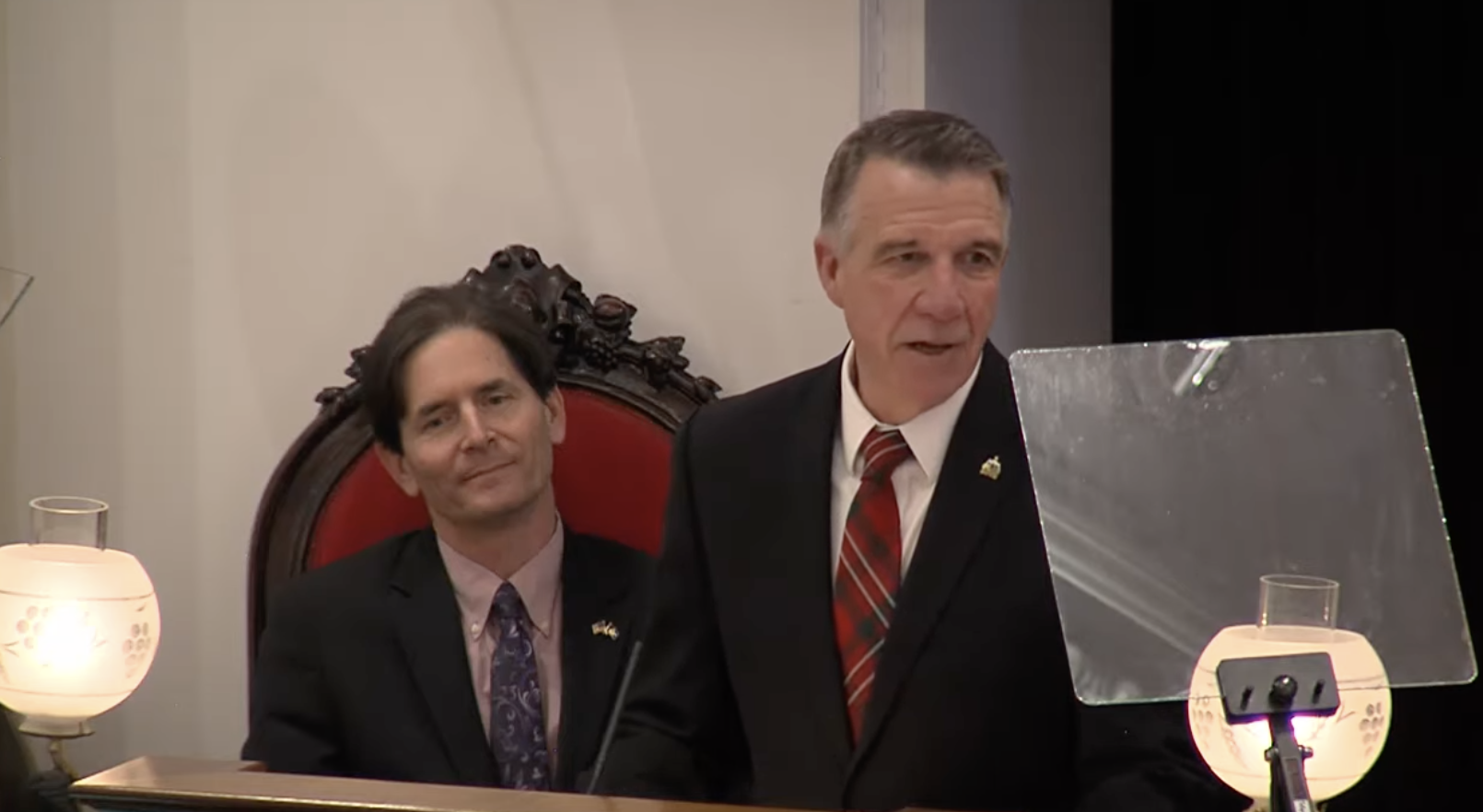
Since the beginning of his fourth term, Gov. Phil Scott has been busily drawing lines in the sand and daring the Legislature to cross them. It’s a strategy that seems to borrow much more from his years at Thunder Road than from his allegedly collaborative approach to governing.

But he’s not stopping with public defiance of the Democratic majority. He’s also putting out a series of aggressive policy stances that threaten to further inflame relations with majority Democrats. First there was the proposal to shift state retirees’ health insurance from Medicare to Medicare Advantage, the Potemkin Village of senior coverage. That proposal was cheekily unveiled during campaign season, when you might think he’d at least pretend to be friendly to the state employees’ union. Second, his proposal to spend $900,000 to study an issue that’s already being studied by the state’s Climate Council.

And third, the Department of Public Safety’s transparently political plan to publish a politically motivated (and dismally stupid) crime “heat map” that won’t help the public understand crime trends but will give the administration another cudgel for its attacks on criminal justice reform.

Continue reading

An Investment is an Investment Except When It’s Not

Gov. Phil Scott delivered a budget address full of “investments’ in Vermont’s future. It’s a great concept, but he fails to apply it consistently. Public sector expenditures he favors are “investments,” but other stuff is just wasteful spending.

The most recent example of this came with the release of a new report on the costs of improving Vermont’s wretched “system” of child care. (As with health care, it’s not so much a “system” as an abstract sculpture made of chicken wire and spit.) The RAND Corporation figures the price tag is between $179 million and $279 million, depending on how generous the package is.

Scott spox Jason Maulucci offered the usual bromide: Scott really, really cares about child care, just not enough to raise any revenue for the purpose. It’s the governor’s customary Susan Collins kind of caring.

The assertion underlying Scott’s position is this: Raising revenue for child care is pretty much exactly like putting tax dollars in a big pile and setting it on fire. Trouble is, there’s all kinds of evidence that improved child care would more than pay for itself — both in short-term economic growth and longer-term outcomes for kids.

You might even say it’s a bargain. Well, I’d say so.

Continue reading

In Which Let’s Grow Kids Suddenly Discovers That Phil Scott’s Child Care Advocacy is Mostly Lip Service

Let’s Grow Kids” has been around the block a few times. It is, according to VTDigger’s Final Reading, “the state’s leading child care advocacy group.” There’s no way they don’t know the score.

How to explain, then, that LGK endorsed Gov. Phil Scott for re-election and did not endorse his Democratic challenger Brenda Siegel?

If you come up with an explanation for that, then riddle me this: How is it that LGK is shocked and disappointed that the governor still holds to his consistent position — that he wants to do something to improve child care but he won’t sign on to tax hikes or LGK’s benchmarks for progress? In the words of VTDigger’s Final Reading:

Scott has long called for additional investments in child care, but never on the scale that advocates argue will be necessary to make a real dent in the problem. Crucially, he’s remained consistent in his belief that the state does not need to levy new broad-based taxes to expand access.

Key words: “remained consistent.” His stance cannot possibly be a surprise to LGK leadership or anyone else who’s been paying attention. It couldn’t have been a surprise when LGK was deciding on its endorsements last year. It’s not only his approach to child care; it’s his default on any social issue. He acknowledges the need, but refuses to commit actual resources to the task. Or actual effort, for that matter.

Continue reading

I Do Believe Somebody’s Finally Listening to Doug Hoffer

Sometimes I wonder how Doug Hoffer keeps going. He issues report after report, audit after audit, only to see them routinely dismissed by state officials and ignored by the Legislature. This is especially bad when it comes to state business incentive programs, which appear unkillable in spite of a complete lack of evidence that they accomplish anything. And, as Hoffer points out, the programs don’t even require evidence. Decisions are often unreviewable by anyone else, and crucial information is kept private as a statutory deference to business interests.

But now, as a new biennium dawns, there are signs that Hoffer is finally having an impact.

First, there’s H.10, a bill that would require much more transparency in the Vermont Economic Growth Incentive program, which may or may not produce any actual, you know, economic growth. A similar bill got nowhere in the last biennium, but this time its sponsor, Rep. Emilie Kornheiser, is the newly-minted chair of the House Ways & Means Committee. Which is to say, she’s got some freshly acquired heft. And H.10 is co-sponsored by Rep. Michael Marcotte, the Republican chair of the House Committee on Commerce and Economic Development, which is where the bill will be heading.

Bipartisanship, it’s a beautiful thing. But if you listen closely, you can hear Gov. Phil Scott’s legal counsel Jaye Pershing Johnson furiously leafing through the books, searching for a constitutional pretext to oppose the bill. If H.10 does get through the House and Senate, a gubernatorial veto seems likely. After all, the governor is a devoted friend to the business community and he absolutely looooooves him some business incentive programs.

If H.10 gets through the House, it will land in the Senate Economic Development Committee. Former chair Michael Sirotkin was a staunch believer in incentive programs, and it’s easy to imagine him dropping the bill into the circular file. It should be a different story under his successor, Sen. Kesha Ram Hinsdale.

Second, there’s H.24, which would give the auditor’s office greater access to information about entities that get state contracts. The bill is meant to counteract a Vermont Supreme Court decision that denied Hoffer access to payroll information at OneCare Vermont.

Continue reading

The Best Part of It Was This Guy

After almost an hour of pomp and circumstance (as befits the Green Mountain Boys’ home turf, actually no), Gov. Phil Scott was sworn into office on Thursday and delivered his fourth inaugural address.

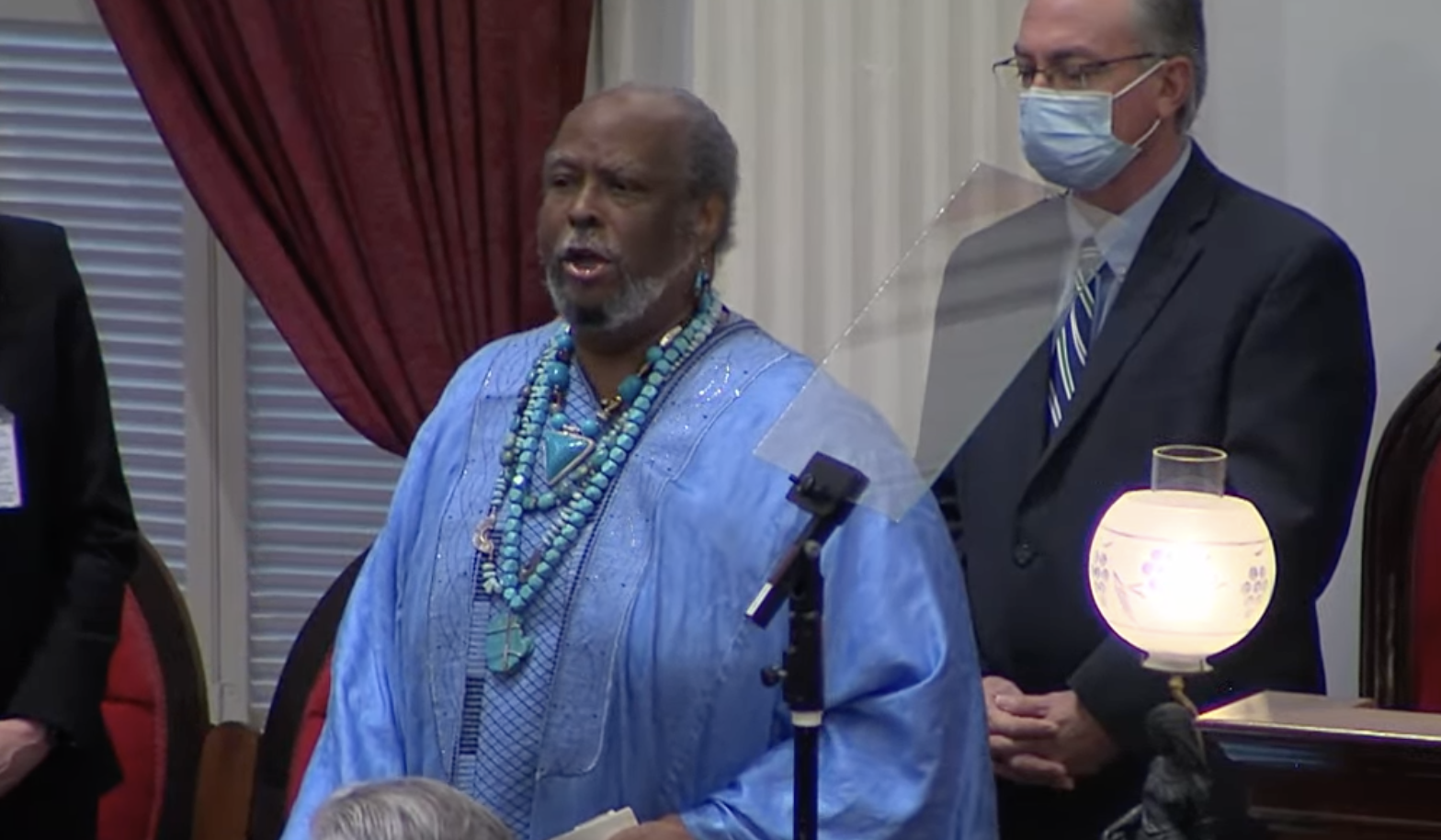
We’ll get to all that, but first let’s deal with the highlight of the day: François Clemmons, actor, singer, writer, teacher, the friendly cop in Mr. Rogers’ Neighborhood, and Vermont treasure, singing the national anthem with joy, spirit, and power. Good stuff.

(Skip to the 28th minute and enjoy.)

As for the inaugural… on the Phil Scott “Meh” Scale, it was… slightly better than “meh.” He laid out a series of issues that went beyond the usual stuff about workforce and demographics. Oh, those things were in there too, but so were climate change, housing, the opioid epidemic, mental health, and “accountability” in law enforcement. (Trigger warning: His vision of that issue comes straight out of the law ‘n order playbook.)

There was a blessed lack of snide remarks about those who disagree with him, but his customary implication that “working together” means abandoning your ideas in favor of his.

The unifying message of the speech was that we must do more to help rural Vermont catch up with the bigger communities in quality of life and economic opportunity. As I listened to him, I started to realize something: This is a false dichotomy.

Continue reading

The Inaugural Address You Won’t Be Hearing

Gov. Phil Scott will deliver his fourth inaugural address Thursday afternoon. It’s likely to be another boilerplate session full of the same ol’, same ol’. Here’s the speech he ought to give, but won’t.

My fellow Vermonters, here we are again. My thanks to the voters who gave me their overwhelming support. I am humbled by their trust in my leadership.

These same voters gave the Democratic Party unprecedented majorities in the Legislature. This result may seem baffling from the outside, but I believe the voters were sending a strong and clear message: Get together, figure it out, and act with the interests of Vermonters above all other considerations.

I can claim a mandate. So can legislative Democrats. We should not argue about whose mandate is more meaningful; we should accept the obvious decision of the voters that we must work together to make Vermont a more livable, prosperous, and dynamic place. A better place to live, work, and raise a family. A place doing its best to battle the effects of climate change and environmental degradation. A place where every Vermonter, regardless of circumstances, can live secure, productive lives.

Right now, working together is more important than ever. We face many challenges that present both peril and opportunity. We can’t waste time and energy sniping at each other. Working together means fighting for principle but always listening to the other side, and being open to the idea that your idea might be better than mine.

At times, I have fallen short of that standard. As you all know, I own the all-time record for gubernatorial vetoes. Sometimes a veto is necessary, but every single veto represents a failure to work together and be open to ideas that are not my own.

From this day forward, I commit myself to a new era of cooperation across party lines. An era where we won’t just talk about bipartisanship, we will live it every single day.

Continue reading

Broke. Destitute. Insolvent. Beggared. Strapped. Bust. Pauperized. Skint. Embarrassed. Down at Heel.

The Vermont Republican Party doesn’t have much money to spend right now, but here’s a suggestion: Invest in a metal detector. You might improve your fortunes by finding some spare change and, who knows, maybe a pirate doubloon or two.

This isn’t exactly new for the perpetually impecunious VTGOP. But if anything, it’s gotten worse — especially when compared to the Vermont Democratic Party, which had a gangbusters 2022 by comparison.

The latest Federal Elections Commission filings covered the month of November. It’ll be a few days before we get the year-end reports. But I doubt the situation will change all that much, and the situation merits exploration right now.

(Reminder: Although the VDP and VTGOP are state parties, the vast majority of their financial activity is under federal jurisdiction. The figures that follow are all from FEC filings.)

The VTGOP ended November with a paltry $2,204 in cash on hand. The Dems: $207,060, nearly 100 times as much. And that was after generous Democratic expenditures in the run-up to Election Day. The VDP’s goal was to enter the off-cycle period with enough resources to avoid post-campaign staff cuts. They’ll have to maintain a solid fundraising pace to accomplish that, but so far things are looking good.

Meanwhile, the VTGOP just suffered its worst legislative defeat ever and couldn’t sniff a statewide victory for any candidate not named “Phil Scott.” They need some serious rebuilding, and they have no resources to even begin the work. The numbers tell the tale.

Continue reading

And By “Those Populations” I Mean, You Know, People

Huzzah, huzzah, the great amorphous bipartisan centrist policy apparatus has burped out another moral failure. I’m talking about Gov. Phil Scott’s plan to wind down rental assistance and emergency housing, which belies his perpetual commitment to protecting the most vulnerable.

Well, yesterday, the Legislature’s Joint Fiscal Committee, including its Democratic majority, signed off on the plan.

Does this help explain why so many Democrats were happy to vote for the Republican governor, or why so many were uneasy at the prospect of fierce housing advocate Brenda Siegel becoming governor and putting everybody’s feet to the fire?

Yep.

To be fair to the distinguished panel, they didn’t have much choice. The Legislature isn’t in session, and the JFC (unfortunate acronym alert) doesn’t have the authority or time to craft a replacement policy. But it would have been nice to hear a little more kicking and screaming.

We did get some pushback from Rep. Emilie Kornheiser, vice chair of House Ways & Means. “I am having trouble seeing my way towards March, April, when a lot of people will be handed tents.”

Tents. And we like to call ourselves the greatest country in the World.

Continue reading

All of a Sudden, Phil Scott Cares About Family Leave Again

There’s only one circumstance that makes Gov. Phil Scott care about paid family leave: When it looks like the Legislature is going to pass a universal paid leave plan. That’s when he whips out his grossly inadequate substitute voluntary idea in hopes of peeling a few votes from the Dem/Prog supermajorities.

Scott first floated his voluntary concept four and a half years ago as an alternative to a universal program. A little less than four years ago, he and New Hampshire Gov. Chris Sununu announced a two-state approach meant to give the program a sounder financial footing. That idea never went anywhere because Vermont lawmakers didn’t buy it and the (then-Republican dominated) New Hampshire Legislature wasn’t interested.

At the time, Scott insisted he could make a go of it in Vermont alone. But he made no apparent efforts to do so.

In 2020, Scott was again offering the voluntary idea but offering no specifics. That situation stayed the same… until now, when his party has taken a shellacking at the polls and he faces veto-proof majorities in the House and Senate. Now he’s got a plan.

Continue reading