Tag Archives: Global Warming Solutions Act

The Brave, the Bold, and The Bleh

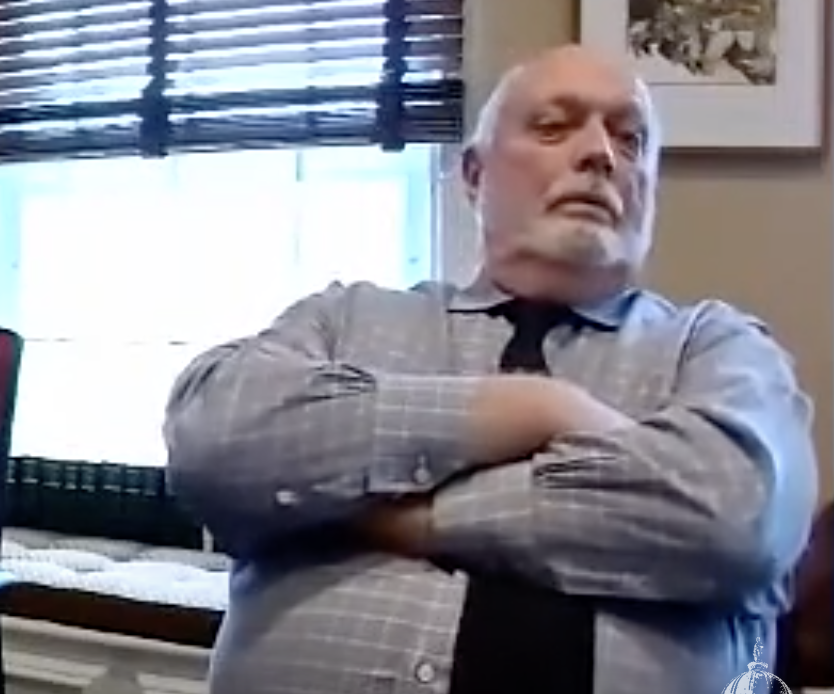
Our brand new lieutenant governor has yet to learn the fine art of sitting within camera range during a big event. During Gov. Phil Scott’s budget address Tuesday, John Rodgers spent most of his time looking bored, which isn’t a great thing when he’s supposedly cheerleading for his fellow Republican,.

In fairness to Rodgers, it wasn’t the most inspiring of occasions. Scott’s much-touted budget address was kind of a tepid affair. The freshly reinforced Republican ranks in the House and Senate gave the governor some hoots and whistles as he entered and departed, but only managed a pair of half-hearted standing ovations during the speech.

I guess we shouldn’t expect anything different after eight years of this guy. But he and his minions have been talking a lot about bold action in 2025. And while there were bits of bravery peeking out here and there — like pushing his fairly radical public school reorganization plan and officially calling for a full retreat on climate action* — there was a hell of a lot more incrementalism. A whole bunch of initiatives with teeny-tiny price tags (on the scale of a $9 billion dollar budget), many more in $2-3 million range than anything truly impactful.

*”Brave” and “stupid” are not mutually exclusive.

There was also one huge omission. Scott never once mentioned the threat posed by Donald Trump to the federal funding that pays for so much of what state government does. He didn’t address any contingency planning or possible budgetary adjustments. It was a glaring omission on the very day when VTDigger reported that Team Scott “is trying to understand the potentially sweeping statewide impact” of Trump’s broad freeze on federal spending.

Maybe that’s because many of Vermont’s new Republican lawmakers are diehard Trumpers, and Scott might have gotten an unfortunate reaction from his “friends” if he said anything that even hinted at criticism of Trump’s scorched-earth approach to governance.

Continue reading

Democrats Be Democrattin’

VTDigger’s post-Mearhoff political “team” has done itself proud in the early days of the new year, publishing not one, but two, articles outlining a fresh outbreak of an old familiar malady of the left — Democrats in Disarray.

Yeah, I’ve seen this movie before, over and over again. The Dems react to an electoral defeat by watering down their agenda and shifting (if not stampeding) to the center. When, in fact, the lesson to be learned from election victories on both sides is that voters reward authenticity — and are unconvinced by carefully titrated policy positions that have been focus-grouped to death. And by “authenticity” I mean everything from Jimmy Carter’s humble populism to Donald Trump’s extravagant disregard for political norms. (Trump may be a phony and a huckster but he’s consistent about it. He is, as he has told us repeatedly, that snake.)

Digger’s Emma Cotton brings us word of a panicky retreat from the Dems’ climate agenda, while the (at least for the moment) sole occupant of the political beat, Shaun Robinson, reports that quite a few House Democrats are prepared to defenestrate Speaker Jill Krowinski in favor of independent Rep. Laura Sibilia. Enough are against Krowinski or undecided that next week’s election for Speaker may be a close affair.

Both are clear and obvious overreactions to the results of the November elections, which saw many a Democrat go down to defeat — but which left the Democrats with a majority in the Senate and nearly a two-thirds majority in the House. To say that they “lost” the election is to avoid the fact that they still rule the Statehouse roost, and would be fully justified in pursuing an ambitious agenda in the new biennium. Even so, many Dems seem to be running scared. Some of their more influential member are, dare I say, sounding a lot like Phil Scott Republicans. And no, that’s not a compliment.

Continue reading

Are You Ready For the Climate Culture Wars?

Welp, Gov. Phil Scott has revealed himself to be all hat and no cattle when it comes to climate action. As Seven Days’ Kevin McCallum reports, our alleged climate fightin’ leader is calling for a full retreat on, you know, doing anything about reducing greenhouse gas emissions. With the exception of furrowed brows and earnest expressions of concern. Per McCallum, here is Phil Scott’s climate agenda:

  • Kill the clean heat standard
  • Kill the Global Warming Solutions Act
  • Ignore our 2025 emissions reduction targets
  • Ignore our 2030 emissions reduction targets
  • Effectively put all our eggs in the 2050 basket

That’s one hell of a platform for a guy who claims to believe that climate change is a clear and present threat to humanity’s future.

His argument here, as on every other issue, is affordability. Vermont simply can’t afford to cut emissions or transition to a clean energy future.

A couple things about that. “Affordable” compared to what, exactly? His projections about the unaffordability of energy transition appear to rely on the assumption that fossil fuel prices won’t rise. Anyone who’s played Russian Roulette with the cost of propane or heating oil could testify otherwise.

Putting all his chips on affordability also ignores the impacts of climate change. As we have seen, Vermont is far from safe in this regard. In fact, we have one of the highest totals in the nation of federally-declared disasters since 2011. We don’t have beachfronts or flatlands, but we do have a rugged topography of mountains, hills, and deep valleys. The latter is where (a) most of our people live, and (b) the runoff easily overwhelms our rivers and streams when greenhouse gas-fueled downpours occur. We have yet to experience catastrophic wildfires around here, although the risk has been worryingly high for a good chunk of this year. Just a matter of time.

But Scott’s latest statements should come as no surprise. All he’s done is pull the sheep’s clothing off his inner wolf. In truth, he has been a resulote obstructor of serious climate action since he became governor. (Back in 2021, I called him the biggest obstacle to climate action in Vermont.) Kind of fitting for a guy who’s spent his entire adult life working with fossil fuel-powered machinery.

Continue reading

Scott to Burlington: Eh

Gov. Phil Scott’s Thursday press conference was meant to deflect attention from his administration’s painfully slow approach to emissions reductions. The governor opted for his favorite diversionary tactic: Finding a straw man to punch. But the bigger takeaway from the event is his steadfast refusal to consider new policies — or even a drive up I-89 — in response to Vermont’s opioids crisis.

Let’s tackle climate first. Scott and Natural Resources Secretary Julie Moore (she of the excessively deliberate “progress” toward meeting our legally mandated 2025 emissions targets) asserted that an emissions-focused policy was wrongheaded. Instead, they said, there needs to be a balance between cutting greenhouse gases and making Vermont more resilient in the face of future climate disasters.

Scott backhanded “those who didn’t want us to focus on resiliency work” in the Legislature and claimed that “there’s been some pushback” on resiliency in the Vermont Climate Council.

I’d like some names, please.

There might be different opinions on the balance, but there is no one in the Legislature “who didn’t want us to focus on resiliency work.” As for the Climate Council, it was created by the Global Warming Solutions Act to further its statutory emissions targets. Resiliency isn’t the Council’s job. It’s like accusing FEMA of failing to enact permitting reform.

Enough of that. Now back to Burlington.

Continue reading

Shocker: The Scott Administration Is In No Hurry on Climate Action

There was a brief exchange during the September 25 meeting of the Vermont Climate Council that went unnoticed at the time. But it seemed a clear signal that the Scott administration isn’t all that concerned about meeting the emission reduction targets for the year 2025 as established in state law by the Global Warming Solutions Act.

“Established in state law” as in “legally mandated.” But hey, what’s the rush?

The upshot, since it’ll take me a while to get there: The administration is, at best, slow-waking the process even though time is running painfully short to achieve our 2025 targets. If you check your calendar, I think you’ll find that 2025 is coming our way right quick.

Of course, Gov. Phil Scott and Natural Resources Secretary Julie Moore have previously opined that the 2025 and 2030 targets are no big deal, so maybe this shouldn’t be a surprise. But still, we’re talking about an eyes-wide-open flouting of state law. And that’s kind of a big deal.

Continue reading

Time for the Governor to Get Serious About Climate Change

The Vermont Climate Council is meeting on Monday. That’s the entity tasked under the Global Warming Solutions Act to make a plan to meet the Act’s mandatory emissions reduction targets. And from what I hear, Council members who represent environmental interests will be arriving with pointed questions for the Scott administration.

The issue: Is the administration ready to lead the rulemaking process necessary for attaining our target for the year 2025, which [checks calendar] is only about 15 months away? By law, the rules are supposed to be in place by next July 1. That might seem like a lot of time, but rulemaking is by nature a deliberate process, so we’d best be getting on with it.

You’d think our Year of Climate Disruption would inject a dose of urgency to the process. A mild winter, smoky skies from Canadian wildfires, the floods of July 10, and a very wet summer have brought the reality of climate change to our doorstep. One could imagine a Vermont governor seizing the moment to pivot from flood relief to a focus on aggressive climate policies.

But Phil Scott has shown no signs of being that kind of governor.

Continue reading

Vermont’s Renewable Energy Sector Has Taken a Dive Since 2016. Gee, What Happened at the End of That Year?

The good folks at Renewable Energy Vermont have issued a new report called “No Good Reason” which chronicles the extreme slowdown in solar energy projects since 2016. As seen in the above graph, Vermont’s rollout has slowed at the same time that solar is on the rise across America.

Two words missing from the report: “Phil Scott.”

Yep. the report shows that since 2016, state regulators have done their level best to delay and defeat solar energy development in Vermont. But while it assigns blame to the Public Utility Commission, the Department of Public Service and the Agency of Natural Resources, it skirts around naming the man responsible for appointing those officials and setting the policy course they all follow. Also unmentioned: political appointees like DPS Commissioner June Tierney, ANR Secretary Julie Moore, PUC Chair Anthony Roisman, and PUC Commissioner Margaret Cheney, a.k.a. the wife of U.S. Sen. Peter Welch.

Maybe REV is trying to be diplomatic. Myself, I think they’re cowards.

Still, it’s a great report that quantifies what’s been obvious for years: the Scott administration is happy to obstruct solar in Vermont and meet our renewable energy needs with power from Hydro Quebec.

The result: Vermont ranks 48th in the nation in meeting its electricity needs within its borders. Only Massachusetts and Delaware, small states that consume a lot more energy than Vermont, rank lower.

Continue reading

Phil Scott Wants to Have His Cake and Veto It Too

Gov. Phil Scott’s veto of the Affordable Heat Act followed a familiar pattern for the most veto-happy governor in Vermont history. Rather than taking a conservative stance on policy, he focused on a flimsy process-oriented argument. It’s a tactic that allows him to claim the mantle of moderation even as he makes himself an obstacle to progressive ideas.

Just ask him, he’ll tell you he’s all for fighting climate change — but not this way.

The problem is, if we restricted ourselves to climate policies with the Phil Scott Seal of Approval, we’d miss our legally mandated targets for emissions reduc —

— oh wait, we are missing our legally mandated targets for emissions reductions!

Less than a week ago, Scott’s own Agency of Natural Resources issued its latest report and forecast on greenhouse gas emissions, which “predicts that Vermont will get halfway to its 2025 requirements and slightly less than halfway to its 2030 requirements.”

But that’s no big deal for an administration that thinks it’d be just fine to miss the 2025 and 2030 requirements as long as we hit the big one in 2050. ANR Secretary Julie Moore has said so herself. And the governor has expressed the same sentiment.

Continue reading

The Honorable Member From Lyndon Would Like Some Cheese to Go with That Whine

First-term state Rep. Charles Wilson (R-Lyndon), seen here doing his level best to stay awake during a budget hearing, has established himself as one of the most complainy of the House Republicans’ infinitesimal freshman class. He’s right up there with Barre Town’s Gina Galfetti for writing op-eds about how badly House Republicans are mistreated by the majority caucuses.

WIlson has characterized global warming as “a hoax and the majority Dems and Progs as “tyrannical.” Which only means that he has never experienced real tyranny, but let’s keep moving. He also sees organic farms as “failing” enterprises that are a waste of farm aid programs, and the state budget as an “obnoxious and unsustainable” document that “tempts unconscionable spending on policies set by unelected consultants and boards of California Dreamers.”

His latest commentary complains that Vermont has a “one-party system.” Which, ahem, Phil Scott. But yeah, the Dems and Progs have built up historic majorities in the Legislature — thanks to the VTGOP’s descent into incompetence and extremism.

One of WIlson’s complaints is that “many Republican bills are never even put forth for discussion — only Democrat and Progressive bills.” Well, sure, that’s what legislative majorities do. But let’s be fair and take a closer look at these “Republican bills” that are languishing in the circular file. I’m sure they’re top-flight examples of deep thought and creativity, right?

Continue reading

The State Senate Approaches a Demographic Tipping Point

Seems like I’ve been waiting forever for the Vermont Senate to undergo a demographic shift. Every two years there’s been talk of a retirement wave, but it never materializes. Senators consider stepping aside, then realize they’re indispensable. (They’re not.) And the voters rarely eject an incumbent except in cases of overt criminality (Norm McAllister) or advanced senescence (Bill Doyle).

The shift has been painfully incremental until this year, when almost one-third of all senators decided to bow out. The nine incomers are younger, five of them are women, and one is a person of color: Nader Hashim joins Kesha Ram Hinsdale and Randy Brock as the three non-white members of the upper chamber.

(The tiny Republican caucus managed to get older and no less male. Its two youngest members, Corey Parent and Joshua Terenzini, will be replaced by a couple of old white men.)

Got more numbers to plow through, but here’s the bottom line. The Senate is on the verge of a historic shift, but it’s happening in slow motion. We might reach the tipping point in two years’ time. We’re not quite there yet.

There are still plenty of tenured members in positions of power. They account for most of the committee chairs. But only — “only” — eight of the 30 senators will be 70 or older. At least 13 will be under 65, which doesn’t sound like a lot but in the Senate it definitely is.

The incoming Senate President Pro Tem, Phil Baruth, straddles the age divide. He’s only — “only” — 60. But he’s entering his sixth two-year term, so he’s familiar with the Senate and the elders are comfortable enough with him to make him their leader. As a senator he’s been a strong policy advocate unafraid to ruffle feathers, but as Pro Tem he’ll know he can’t push his caucus too far too fast.

There are the preliminiaries. Now let’s dive in.

Continue reading