Category Archives: Vermont State Senate

Senate Reapportionment, a.k.a. The Incumbency Protection Act of 2022

Random Unrelated Illustration

If there was ever any doubt that the state Senate is a club unto itself, well, a close look at the chamber’s likely reapportionment map will make things perfectly clear.

First, the circumstances: After weeks and weeks of vaguely-defined “discussion,” the committee burped out its map in a 26-minute-long hearing on Thursday. Seriously, before Thursday, the agenda for each of its previous 13 meetings merely said “Committee Discussion.” At least they were open hearings, I guess.

According to VTDigger, the hearing was not warned in advance as required by law, and the map wasn’t made public until after the hearing. A procedural fail to be sure, and a worrying one by a committee chaired by Sen. Jeanette White, who chairs the Senate Government Operations Committee. You know — the one that deals with open meetings and public records laws?

Aside from process flaws, the map itself is problematic in many ways. At virtually every turn, it bows the knee to incumbency — even when doing so is a setback for the Democratic Party. You know, the party that allegedly controls the process?

If this map is enacted, it will be harder for the Democrats to keep their Senate supermajority. It will help Republicans pick up some ground, but maybe not right away; and the new Chittenden County map is the best thing to happen to the Progressive Party since David Zuckerman became lieutenant governor. (It also gives the Republicans a real shot at a Chittenden seat for the first time since Diane Snelling left the chamber.)

The newly created, three-seat Chittenden Central district includes Winooski and part of Burlington. It seems custom-made to give the Progs a real shot at winning all three seats.

Looking at the committee lineup, this may have been a case of Prog/Dem Sen. Chris Pearson pulling one over on sleepy Democrats’ eyes. He was the only member from Chittenden County, which is weird in itself. There were four Dems on the committee: the barely-there Jeanette White, the almost-a-Republican Bobby Starr, everybody’s friend Alison Clarkson, and quiet second-termer Andrew Perchlik. The two Republicans were part-time Vermonter Brian Collamore and the politically savvy Randy Brock. In sheer political terms, Pearson and Brock could run rings around the other five.

And it sure looks like they did just that.

Continue reading
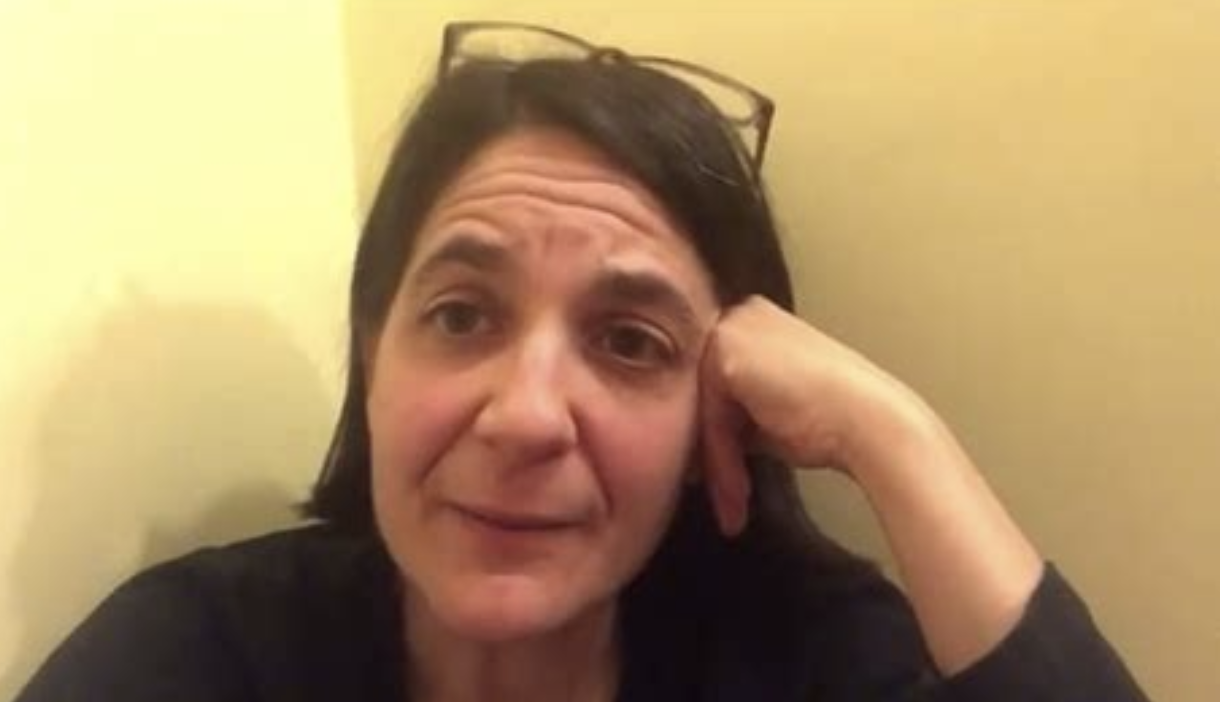
Après Balint, La Sécheresse

The Vermont Senate’s seniority-heavy lineup is about to become a serious problem. That’s because current Senate President Pro Tem Becca Balint, seen above possibly contemplating the task of herding the caucus cats, is leaving the Senate to pursue a bid for Congress. And win or lose, she won’t be in the Senate beyond this term.

Which means the Senate will have to replace her no later than next January. And I’m here to tell you exactly how shallow the talent pool is. And that’s because so many senators have overstayed their sell-by dates.

Out of the 30 senators, a full 16 are basically too old to step into the top spot*. They’re not necessarily too old to be effective lawmakers, but they’re clearly on the downslope and I doubt that any of them would even want the job.

*For the record: Brock, Clarkson, Collamore, Cummings, Kitchel, Lyons, MacDonald, Mazza, McCormack, Nitka, Pollina, Sears, Sirotkin, Starr, White.

Before I get accused of ageism, let me expand on that cold assessment. Most of the senior senators are comfortable in their roles. They are not looking to take on a new level of responsibility. Heading the Senate caucus is a big, troublesome job. You’re always putting out fires or facing the press or twisting a fellow senator’s arm. It’s also something you tend to take on when you’re set on climbing the political ladder, not when you’re fat and happy.

Look at the last several Pro Tems. John Campbell was 47 years old when he assumed the office. Peter Shumlin and Peter Welch were in their primes, and clearly had their eyes on higher positions. There were a couple of short-time Republicans in the mid-90s; John H. Bloomer served from 1993-95; Stephen Webster succeeded him for a single term. Bloomer was 63 when he became Pro Tem; he had had a successful political career and would certainly had continued if he hadn’t been killed in a car crash in January 1995. Webster was 52 when he succeeded Bloomer; he would continue his political career well beyond his time as Pro Tem.

Before them, and four years of Peter Welch, there was Doug Racine, a relative youngster when he became Pro Tem. Tim Ashe was in his early 40s, and Balint was 53. All these folks, save Webster, were far younger than today’s cohort when they led the chamber. It’s no job for old men. It is a job for the ambitious. Of the past seven Pro Tems who survived their tenures, only two (Webster, Campbell) did not seek higher office. And Campbell got the job largely because of his lack of ambition; senior Senators had a very free hand under his, cough, “leadership.”

Continue reading

Why I’m Not Doing the Thing I’m Not Doing

I’ve been doing something different this year. Or should I say not doing something. For the first time since probably 2016, I’ve paid very little attention to the modern version of the building pictured above.

The Statehouse.

The center of all things political, right?

Well, no, not really.

I began the 2022 session pursuing my old habits: Checking the weekly committee schedule to see which hearings I might want to audit. I made a list each week.

And then I ignored the list. After the first few weeks, I stopped bothering.

And I have to tell you, I think it’s improved my work as a political analyst. It’s given me a broader view, a much better perspective on the Vermont political scene.

Continue reading

More of This, Please

This piece of news made me much happier than it should have. I mean, it’s only one guy running for one seat in the State Senate.

But in his single term in the House, Nader Hashim distinguished himself in a pretty damn strong freshman class. He stepped aside in 2020 but now he’s ready to return, and I’ve gotta say I’m rooting for him.

It’s not a full-throated endorsement because we don’t yet know who else is running for Windham County’s two Senate seats, at least one of which will be vacant (Becca Balint running for Congress, Jeanette White undeclared on a re-election bid). But I’m certain that Hashim would be a valuable addition to the staid, stuffy, senior-laden Senate.

Our Most Barnacle-Encrusted Deliberative Body is so tenure-heavy that an entire generation of promising politicians have seen their way blocked by this or that immovable object. It’s a very talented generation, too. I’ll name some names in a moment.

Seniority has its advantages, and I’m not ignoring them. We need lawmakers who’ve been around the block a few times and know how the process works. But you need new blood as well, and the Senate is far too heavy on the older side of the ledger.

The average age of our 30 Senators is 64. There are three under 40, one of whom (Kesha Ram Hinsdale) is leaving to run for Congress. We’ve got two more in their 40s, and one of those (Chris Pearson) is about to turn 50. There are five Senators in their 50s, and two in their early 60s.

Everybody else — eighteen of the 30 — is at or over 65.

When you look at the chairs of the 12 policy committees, it’s even more extreme. Average age: 73. There is one chair — count ’em, one — under age 65.

The Senate would be stronger, more creative, and more representative of Vermont if a bunch of those people would just go ahead and retire, already. They seem to think they’re irreplaceable. Trust me, they’re not.

Continue reading

Wet Arse, No Fish

It’s not exactly a surprise that legislative leaders have given up on passing a mask mandate bill, but the timing is curious indeed. Last Friday, we appeared to be one single grumpy senator away from committee approval. Now, less than a week later, the white flag is waving.

On Friday (per VTDigger’s excellent Final Reading), Ginny Lyons, chair of the Senate Welfare Committee, asked her members if they were ready to vote on the bill. Sen. Ann Cummings replied that she wasn’t. Which is pretty odd, considering that a mask mandate has been a hot issue in #vtpoli for months now. Had she given it no thought until that moment?

Lyons asked if the committee could vote on Monday, usually an off day. The not-terribly-energetic Cummings responded, “What’s the matter with Tuesday?”

The bill was on the committee’s agenda first thing Tuesday morning. But at that point, Lyons announced an indefinite delay. “Leadership continues to discuss the path forward for that bill,” she said. “It was scheduled for this morning, but we’re going to postpone our work and hopefully it’ll only be until tomorrow morning.”

“Hopefully.”

But the state Senate is where hope goes to die.

Continue reading

The New Census Is Here! The New Census Is Here!

Hey, it’s time for hardcore #vtpoli folks to get their nerd on. After an unprecedented delay (caused by Trump administration incompetence/attempted sabotage), we’ve finally got the U.S. Census numbers for 2020!

This means that the most nerdly of all political processes, redistricting, can finally get serious. (The best place to geek out is the state’s Center for Geographic Information, which has already whacked out a whole bunch of Census breakdowns.) And now I return to my playground of barely-informed speculation on what the Census means for Vermont legislative districts.

The state’s total population of 643,000 was something of a surprise. That’s a 2.8% increase from 2010, and belies our reputation as a place that people are fleeing from. (Our growth rate is a far cry from the U.S. overall, which grew by 7.4%, but still, we’re growing.)

The population gains were concentrated in the northwest. The only counties that gained residents were Chittenden, Franklin, Grand Isle, Lamoille and Orleans. The driver of Vermont population growth is Burlington; as its housing situation gets tighter and tighter, people are buying homes farther and farther away from the Queen City.

The two counties that saw the biggest declines: Windham (down 6.98%) and Rutland (down 6,83%).

Chittenden County now has enough people to warrant eight Senate seats, up two from its current allotment. That’s bad news for the VTGOP. If Chittenden does, as it should, gain two seats, they will almost certainly come at the expense of Republican areas like the Northeast Kingdom and Rutland County. And the Republican presence in Chittenden is vanishingly small. The county’s current allotment of 36 state representatives includes 33 Dems (or Dem/Progs or Prog/Dems), and only three Republicans. All six senators are either Dems, Dem/Progs or Prog/Dems, and the GOP is simply uncompetitive. You can assume that any new seats will be filled by Dems or Progs.

And by the way, Chittenden County deserves two more House seats because of its growth.

Also by the way, since many towns in Franklin, Grand Isle and Lamoille are becoming bedroom communities for Burlington, those counties will almost certainly trend blue. Windham and Franklin aside, Vermont’s population declines are in Republican-leaning areas, while the growth is in Democratic counties.

Continue reading

Wanted: A Few New State Senators. Or a Lot.

Well, I guess there’s at least one group with a worse seniority problem.

The Vermont Senate, as has been noted in this space, is a temple of tenure. It’s almost impossible to defeat a sitting senator; the only time we get a new one is when someone voluntarily retires. That rarely happens and, as a result, the Senate just keeps getting older and older.

How old? Average age of the 30 senators is 63.4 years. There are only five senators under age 50; there are 14 over 70, and 11 who are 75 and older. There are two others in their late 60s, which means we have a Senate majority past retirement age.

And the oldest wield the most power. The average age of the 11 policy committee chairs is 72.1. Brian Campion is the only policy chair under 64. Yep, that chamber loves it some seniority.

This has some unfortunate effects. First, there’s often an airless quality to the Senate’s work. It is an entity apart from the real world — or even those rambunctious young’uns in the House. (Senators often treat the House with open contempt.) Second, senators are often out of touch when discussing issues of concern to young people like digital technology, child care, substance use, rental housing, and workforce development. Third, well, it’s really hard to get the Senate to take a fresh look at anything or contemplate a change in How We’ve Always Done It.

Sure, tenure has its benefits. They know their way around the building, and that’s nothing to sneeze at. Some, including Dick Sears, Bobby Starr, and Jane Kitchel, bring decades of experience and deep knowledge of their policy beats.

But in any organization, you want a mix of young and old, new and tenured. The Senate is terribly skewed toward age and seniority. It’s long past time for some serious turnover. Will 2022 be the year we get it? I sure hope so.

After the jump: Naming some names.

Continue reading

Will the Vetoes Be Overridden? (to the tune of “Will the Circle Be Unbroken”)

The stage is set. The players are in the wings. On Wednesday morning, the Legislature will return — virtually — for a brief veto override session. All three of Gov. Phil Scott’s 2021 vetoes are on the agenda. The action, for those of us who believe a YouTube screen full of tiny politicians’ faces constitutes “action,” gets underway in the House and Senate simultaneously, at 10:00 a.m.

The House will be first to take up Scott’s vetoes of H. 177 and H.227, the charter changes for Montpelier and Winooski respectively to allow noncitizen residents to vote in local elections only. Meanwhile, the Senate will take up S.107, which would raise the minimum age for public release of information about the arrest and charge of an offender.

This all seems perfectly normal. But in reality, it’s not.

While the Republican governor has set a new record for vetoes with 23, the Democratic Legislature has been loath to even attempt overrides. Scott has vetoed 20 bills from 2017 through 2020; only two of them have been overridden. In the vast majority of Scott’s other 18 vetoes, the Legislature didn’t even try.

So, attempting overrides on three vetoes in a single year is unprecedented during the Scott administration, and I’m guessing unprecedented in Vermont history.

Continue reading

Yes, the Legislature Will Challenge Scott’s Vetoes

Sen. Joe Benning addressing the media

It was a little like Old Home Week. Eleven of the 30 state Senators, none wearing a mask, gathered on the steps of the Statehouse Wednesday morning for a… live, in person PRESS CONFERENCE. Wowee.

Everyone was happy to be back together, and even happy to see a gaggle of reporters hoping to glean some actual news out of the occasion.

The cause for the gathering was a mutual wankfest recap of the Senate’s legislative record in the past session. Hearty congratulations all around, and seldom was heard a discouraging word. I’m sure the assembled solons would love for me to recap their lengthy list of accomplishments, but, well, not my job.

They did manage to make some news amidst all the mutual back-slapping. “We’ll be back for a veto session,” said Senate President Pro Tem Becca Balint, ending all doubt on that score. She said the House and Senate are likely to try to override all three (and counting) of Gov. Phil Scott’s vetoes. Also, if time allows, the Legislature may try to pass a few bills that came just short of the finish line before adjournment. Balint didn’t offer any particulars; she was due to meet with House Speaker Jill Krowinski Wednesday afternoon to plan the session, which would probably happen later this month.

I’m glad to see that the Kumbaya stuff has its limits. Legislative leadership made a point of trying to maintain a good relationship with Gov. Phil Scott during the session, and that’s fine. It’s even better that they know there’s a time for the Kumbaya to end. And Scott struck the first blow with his three questionable vetoes. Good to see leadership respond appropriately. If they can actually override all three, they’ll be sending a strong message to the fifth floor.

Other news came courtesy of Senate Institutions Committee chair Sen. Joe Benning. He talked of preparations for reopening the Statehouse for the 2022 session.

Continue reading

I Know Vermont Is the Land of Summer Camp, But All This “Kumbaya” Is Getting Ridiculous

This obligatory session-ender by VTDigger’s Xander Landen was so sticky-sweet that it should have had a warning label for diabetics. Everybody’s just getting along so well. Kind words all around, regardless of party.

Gov. Phil Scott, who has so far issued only one veto — an historic low for him — praised House Speaker Jill Krowinski and Senate President Pro Tem Becca Balint: “It’s been a good dialogue, good discussion, very open, and they adhere to their word and everything’s been working fine.”

Balint said that she and Krowinski made progress on “establishing healthier patterns” in working with Scott, and she’s feeling “optimistic” about carrying the Kumbaya over to a 2022 session that will involve some touchy issues. Sen. Phil Baruth noted “historic” levels of tripartisan cooperation.

(There’s also a love-in involving Scott, Sen. Patrick Leahy and U.S. Rep. Peter Welch. At his Tuesday presser, Scott all but endorsed Leahy for re-election in 2022, and Welch recently credited Scott with doing an “absolutely tremendous job” on Covid-19.)

Scott, Balint and Krowinski are right to feel satisfied. They avoided the intra- and inter-party battles of the past, and dealt with a number of issues successfully. And they had to do it remotely, which was tough on everyone.

But they also ducked some tough issues. Balint and Krowinski made a conscious effort to avoid sending Scott bills he was likely to veto. That might be a good short-term strategy for the pandemic session, but it’s the kind of thing that has made the Democratic majorities seem toothless throughout Scott’s governorship.

So, a good collegial session in 2021 probably won’t carry over to next year unless legislative leadership is willing to set aside a whole bunch of issues. And for strictly political reasons, that will be harder to do in an election year than in this extraordinary session.

Continue reading