Category Archives: Uncategorized

Phil Scott’s Big Fat Housing FAIL

Hey, remember last fall, when the Scott administration delivered a grim assessment of Vermont’s housing crisis? Top officials outlined a dire situation with shortages in all sectors of the housing market, from shelters and subsidized rentals to single-family homes to top-end residences. In response, the administration convened an informal task force to confront Vermont’s housing crisis. A multiagency group was going to gather once a week throughout the fall to come up with big, comprehensive solutions.

Well, whatever has become of that?

Two things, and only two things, both of which completely fail to meet the moment. First, we have a joke of a temporary shelter expansion that might net a couple hundred beds for a few months. Second, we have a push for regulatory reform.

And… that’s it. No significant public investment in housing. Phil Scott is failing to address the crisis. He is failing to lead on the issue that he himself spotlighted as the state’s biggest challenge.

This has been obvious for a while, but it was hammered home during a brief legislative hearing on Friday afternoon that wasn’t even on the schedule.

Continue reading

Shameless Mendacity Seems to Have Earned a Page in the Phil Scott Playbook

I don’t know exactly when it happened, but the administration of Governor Nice Guy has developed a habit of lying. I know, I know, some of you are saying “So, what’s new, John?” But this isn’t just run-of-the-mill fudging the truth. It’s more like easily checkable whoppers emerging from the fifth floor and associated precincts with disturbing frequency.

We first take you back to mid-December, on the eve of a session in which the Legislature was set to consider a bill banning neonicotinoid pesticides. The Agency of Agriculture issued a report boasting that the number of honeybee colonies in Vermont had risen by 43% between 2016 and 2023.

Great news, right? Colony collapse might not be a problem anymore. Maybe we don’t need the ban after all.

Except that Vermont beekeepers completely disagreed. They say the report lumped together stationary and migratory hives. The latter are imported from elsewhere for the warm months. That 43% increase is due to a dramatic rise in migratory hives. Vermont’s own bees are still in trouble.

Continue reading

The Tragedy of Stenger, Prince of Newport, As Related By Himself

I must return to Mark Johnson’s epic interview slash psychodrama with convicted EB-5 fraudster Bill Stenger, seen here standing next to a gent whose name I cannot quite recall. This time, let’s take a look at how Stenger explains himself as a naive, trusting soul whose biggest sin was that he wanted so desperately for the projects to work that he ignored some very obvious signs of trouble.

Johnson did his level best to hold Stenger’s feet to the fire, and Stenger repeatedly responded by steering down what John Ehrlichman called the “modified limited hangout route.” Stenger admitted complicity but not criminality, depicting himself simultaneously as perpetrator and victim. Neat trick, that.

The problem is, even if you believe Stenger’s account — which would be a dangerous thing to do — he seems to be guilty of gross negligence instead of overt criminality. That’s not a great consolation prize. Neither does it make me feel sorry for him that he had to serve a short sentence in a relatively comfortable federal facility.

Which he describes, as often as not, in the second person, a subtle way of deflecting the fact that this happened to his own self. “You” reported for prison. “You” were welcomed by fellow inmates. “You” got time off for attending courses. And so on.

But that’s a minor point. Time for a deeper dive on how he describes his role in the EB-5 scandal and his timeline, which serves to make his own story less believable.

Continue reading

The Great Unanswered Question About EB-5: What Did the Shumlin Administration Know and When Did They Know It? (UPDATED)

Update below: Auditor Doug Hoffer is working on a thorough exploration of the EB-5 mess.

Mark Johnson posted a pretty incredible two-part podcast last week. In the latest installment of his “802 News” (discoverable here or Wherever You Download Your Podcasts), Johnson spent more than two hours grilling Bill Stenger, the Northeast Kingdom developer who served prison time in the EB-5 fraud case. There’s a lot to unpack about Stenger himself, but the thing that caught my attention was what he had to say about the role of the Shumlin administration. His comments tore the metaphorical scab off the unhealed wound that is EB-5, specifically the state’s role in enabling a massive fraud.

Let’s pause for a moment and posit that no one, absolutely no one, in Vermont officialdom seems the least bit interested in uncovering the whole truth about this. With each passing day, it seems less and less likely that there will ever be a full accounting for Peter Shumlin and his top officials, many of whom (coughMikePieciakcough) continue to hold positions of influence in and around state government.

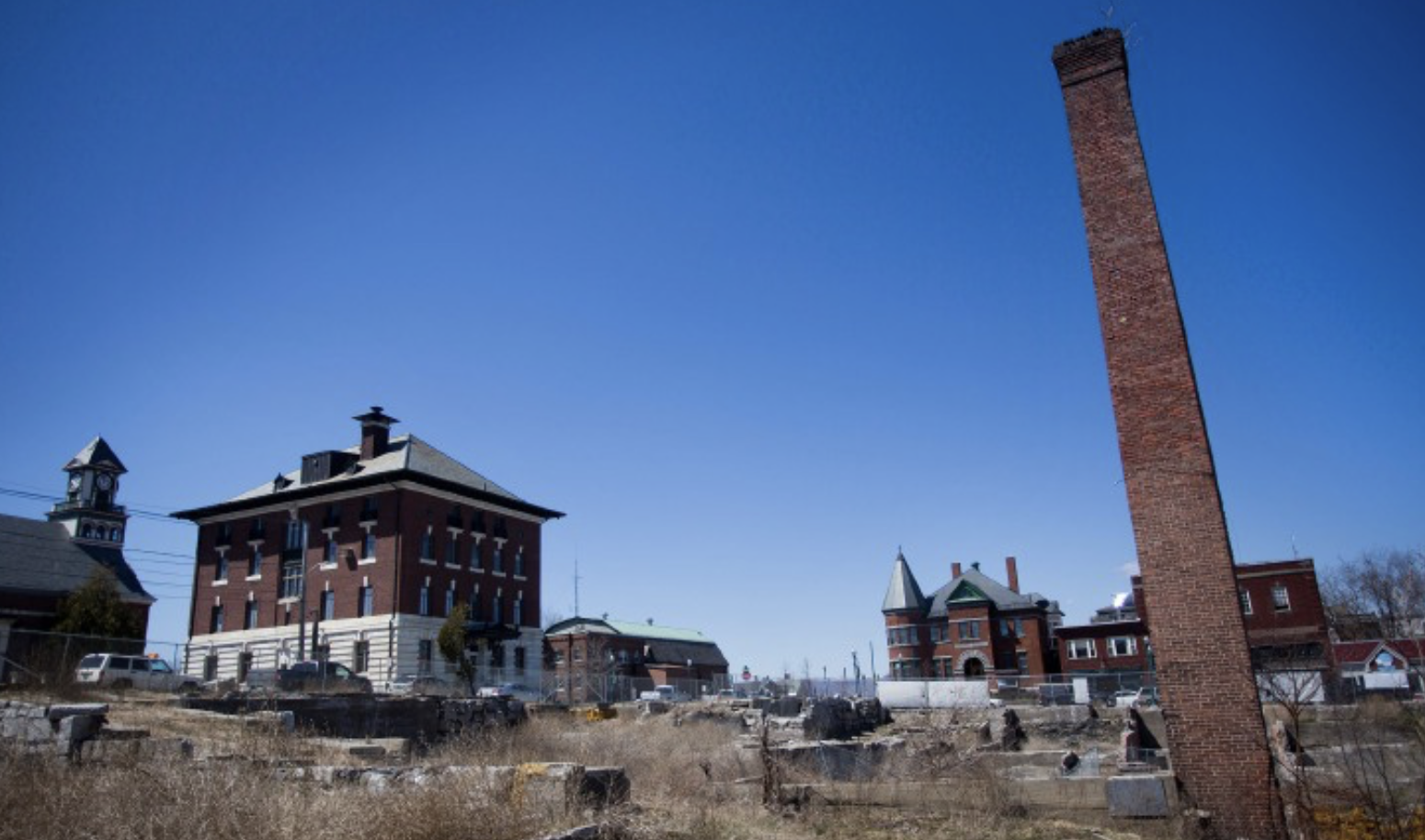
To get to the key moment: By early 2015, there was plenty of smoke if not open fire around the EB-5 projects. At that point, the state had to reauthorize two of the projects, including AnC Bio Vermont, the big flashy biotech facility that was supposed to be built in The Hole, pictured above.

In Stenger’s telling, state officials knew at the time that lead investor Ariel Quiros was committing fraud, and yet they gave the green light to continue the projects. If this is true, then (as Stenger implies but doesn’t state outright), some very prominent people should have joined Stenger and Quiros in being fitted for bright orange jumpsuits.

(Those with short memories should go back and read some of VTDigger’s reporting on the scandal, spearheaded by Digger founder Anne Galloway. This story and this one for starters.)

Continue reading

The Striking House/Senate Divide on Homelessness Policy

You don’t need to know the details of what’s going on in the House and Senate to realize how different the two chambers are when it comes to providing for the homeless and creating a better social safety net. All you have to know is that last week, when the House was addressing how to fix the system, they called on expert advocates Anne Sosin (seen above) and Brenda Siegel. And when the Senate Appropriations Committee was trying to fine-tune the current program, it called on two Scott administration officials directly involved in the policy failures of the last several years.

Siegel had submitted written testimony (downloadable here) to Senate Appropriations and was present in person at the Friday hearing, and yet the committee didn’t invite her to speak. They depended instead on the architects of doom: Miranda Gray, deputy commissioner of the Department of Children and Families’ Economic Services Division, and Shayla Livingston, policy director for the Agency of Human Services.

Appropriations wrapped up its disgraceful week with a brief hearing on Friday morning, in which it quickly finalized the details of a half-assed emergency housing plan and sent it on to the full Senate, which rubber-stamped it within a half hour.

The short version of the House/Senate divide: The House is trying to build a robust bridge to a comprehensive system to help the unhoused. The Senate is patching and filling the current system with an eye more on the bottom line than the human need.

Continue reading

“I guess it’s time to bulldoze it and head south.”

For those who see Franz Kafka as a creator of nonfiction, a public meeting held Tuesday evening in Barre provided plenty of evidence. The title of the event was pure nectar for bureaucracy devotees: “Substantial Damage Informational Meeting.”

City officials held the event, attended by dozens of homeowners, to clear up abundant confusion around the rebuilding process after the July flood. Because Barre was so hard hit, the response has been slow, glitchy, confusing, and full of obstacles for property owners. The meeting featured a parade of people struggling to negotiate federal, state and local regulations, insurance coverage, property tax abatements, and the possibility that a flood-prone section of the city might be completely redeveloped in a few years’ time even if the houses therein are repaired. The situation puts the city’s finances in a perilous, uncertain condition — as reflected in City Council’s recent decision to postpone municipal elections from early March to early May.

The woman pictured above who, like most of the commenters, didn’t give her name, said that it would be impossibly costly to elevate her house as required for flood-proofing.. She closed with the quote that became this post’s headline, stood up, and walked away.

She was far from the only person who was at sea over how to rebuild or whether to even try. “The cost today to repair stuff is astronomical,” said a man named Gordon. “You’d be puttin’ into them houses two times what it could even sell for. And who’d want to buy ‘em now after this last flood?”

City Manager Nicholas Storellicastro said that 40 properties had already applied for buyouts, meaning the owners have no intention of rebuilding. “To be candid,” Storellicastro said, “the city can’t afford to buy out 40 homes both from a financial standpoint because we have to front all the money and then get it reimbursed, but also from a tax base standpoint, that would just be debilitating to the city.”

From the tenor of this meeting, I’d say it’s almost certain that more people will seek buyouts or simply walk away.

Continue reading

Further Adventures in Performative Budgeting

Following his boffo turn unveiling the Scott administration’s short-term plan for dealing with homelessness, Commissioner Chris Winters was back before the House Human Services Committee today to go over the FY2025 budget for his Department of Children and Families. The biggest area of concern: the administration’s plan for dealing with Vermont’s homelessness crisis.

Which, as usual, was a sad exercise in prioritizing cost over humanity. And after Winters was done, committee chair Theresa Wood let him have it. “I’m trying to figure out how to be polite,” she began. “We recognize that money is not unlimited, but we think it’s not responsible for us to consider implementing what you proposed. I think that’s exactly what you expected to hear form us.”

Wow. By budget hearing standards, that’s a big ol’ slap in the puss. And I’m pretty much certain that Winters was, indeed, expecting to get exactly that sort of response. By extension it seems likely that Winters himself doesn’t think much of this budget, but he’s a member of the Scott administration and he has to act within its parameters. “I know you receive instructions from the fifth floor,” Wood told Winters, using the customary shorthand for Scott’s office on the top floor of the Pavilion Building.

Continue reading

Representation or Tokenism? We Shall Soon Find Out

Today is, for those who celebrate, Homelessness Awareness Day at the Statehouse. Among the scheduled festivities: A joint hearing of the House General/Housing and House Human Services Committees, with a roster of witnesses that included not one, not two, but three people with what the agenda terms the “lived experience” of being unhoused. (One of the three, Bryan Plant, is seen above after he testified before a legislative hearing last fall.)

With these kinds of events, the proof is in the pudding. It’s what happens after The Special Day that counts. If this is an opportunity to get lawmakers in their feelings by briefly opening the door to Real People, then it’s worthless. If they actually listen to the testimony and do something about it, then it’s all good.

And we’re gonna find out in a hurry, as House Human Services is about to issue its memo to House Appropriations about what to do with emergency housing in the rest of the fiscal year. Human Services was supposed to release its memo last week. It did not. On Tuesday, it approved a memo that excluded emergency housing from its consideration of the Agency of Human Services’ budget request for the remainder of FY24. As of this moment, we’re still waiting to see what the committee will do about housing.

They seem intent on extending the motel voucher program through June instead of approving the Scott administration’s shambolic request for $4 million to provide shelter for a fraction of those currently getting vouchers. But given the repeated delays, I’m guessing they’re having trouble putting together a solid plan and providing the necessary funding. If they fall short, today’s testimony will unfortunately fall into the “tokenism” category.

Continue reading

I Understand the Call Letters “WGOP” Might Be Available

Welp, the other shoe has dropped. Two months after the death of NASCAR legend and central Vermont radio mogul Ken Squier, the stations of Radio Vermont have been sold. Depending on which source you trust, the new owner is failed Republican candidate (and very briefly head of the Ethan Allen Institute) Myers Mermel (Radio Vermont press release) or Mermel and failed Republican candidate and travel mogul Scott Milne (VTDigger). The press release, posted at the Vermont Daily Chronicle, lists Milne as “an investor” and “key advisor,” while Digger bills him as a full partner. Either way, the two men are deeply conservative. Milne somehow got a reputation as a moderate, but he’s a lot less moderate than Phil Scott.

The crown jewel in the Radio Vermont firmament is WDEV, a throwback of a locally-owned, community-oriented station with a mixed format of news, talk, music and sports. The station bills itself as “a forum for all voices to be heard,” although in recent years the loudest voices have come from the right. I expect that trend will only accelerate under its new Republican ownership.

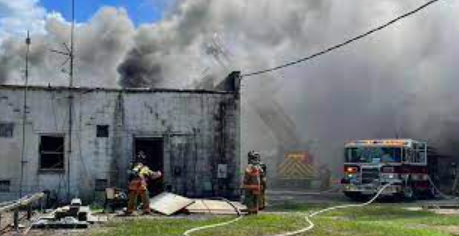
Coincidentally, the call letters “WGOP” are probably available for pocket change. The letters are currently assigned to a tiny AM station in Pocomoke City, Maryland, whose building was destroyed by fire in August 2022. It’s been off the air since then.

I’m a bit sad that the Squier family has exited the scene after owning WDEV since its founding in 1931. I’d be more dismayed by the partisan lean of the new owner/s, except that the station — and all of terrestrial radio — is a mere shadow of its former self.

Continue reading

Kumbaya for We, But Not for Thee

Gov. Phil Scott held a momentous press conference today/Wednesday, in which he and a whole bunch of lawmakers unveiled major legislation aimed at tackling Vermont’s housing crisis. (Nobody used the fabled term “omnibus,” but it would have been appropriate.)

It was inspiring, it really was. Scott shared the stage with Democrats and Progressives as well as Republicans, to launch an initiative that’s the end product of what had to be really hard and earnest tripartisan negotiations. It’s the kind of thing that Scott has managed to pull off on occasion when truly engaged. It’s the kind of thing that has earned him his (overblown) reputation for being less interested in politics than in Getting Stuff Done, a reputation that flies in the face of his all-time record for gubernatorial vetoes. Still, this time he rose above partisanship to put this bill together.

And given the truly “all hands on deck” nature of the unveiling, I expect they’re going to pull it off. Which would be remarkable, and a real accomplishment.

(Before I continue, I must explain the illustration at the top of the page. The event featured a whole lot of people sharing the stage with the governor. After the big reveal, Scott asked reporters to stick to the subject at first and hold other questions for later. After the housing questions were exhausted, Scott allowed the assembled guests to depart. Apparently some technician back at the office mistook the ensuing hubbub for the end of the presser, because the feed was cut off at that point. The rest of the Q&A was unavailable on either ORCA Media or WCAX. Oopsie!)

So here’s the place where I point out the turd in the punchbowl.

The event was in stark contrast to the situation with emergency housing for Vermont’s homeless, where the administration is sticking to an inhumane approach that will leave more than a thousand Vermonters, many of them disabled, elderly, or children, without shelter come April 1.

Continue reading