Category Archives: Uncategorized

Where Did You Sleep Last Night?

Yesterday evening I did what no member of the press corps has seemingly bothered to do: I visited the the Agency of Natural Resources Annex, d/b/a Winters Hall, one of the Scott administration’s four hastily-assembled temporary shelters.

And this is what’s inside all that steel and concrete: 20 cots, each with its own flimsy plastic-wrapped blanket.

And… well, that’s about all. (There used to be more cots, but some have been removed due to lack of usage.)

Oh, there are three porta-potties just outside the entrance. Because, I was told, the indoor facilities aren’t working. The building was flooded last July, and apparently the facilities have been offline since.

Credit to the Vermont National Guard for doing their best to prepare the space. The shelter was clean and orderly, though it remains disquietingly industrial. There was no sign of flood damage or mold, at least not in the section of the building being used as shelter. The Guard were helpful and polite during my visit. They were carrying out the mission: Responding to situations to the best of their ability with the resources they are given.

But c’mon, this is a disgrace. Don’t blame the Guard; blame the Scott administration. This was their idea.

Continue reading

Well, They Found Their Fourth Shelter, and Oh My God

A little late night catch-up. You may recall that the Scott administration was having a little trouble finding a site for its fourth temporary shelter. They had been looking in Bennington but then, at the last minute, they switched their focus to Brattleboro.

Or, to be more precise, the greater Brattleboro area. Because the site they identified, late yesterday, according to the Brattleboro Reformer, is a building formerly used by Entergy Nuclear when it operated the Vermont Yankee nuclear power plant.

Which closed, it says here, ten years ago.

Oh boy.

Just to be clear. They’re taking an office space that’s apparently been out of use for a decade, and they had one single day to set it up as a congregate shelter.

Tell me, is the Scott administration deliberately trying to make these shelters as dire as possible, or is it more of an Inspector Clouseau situation?

Continue reading

The Press Coverage of the Shelter Situation Has Been Terrible. We All Need to Take Some Responsibility for That.

The media coverage of this week’s Scott administration temporary shelter ClusterfuckTM has been dispiritingly spotty and incomplete. This has helped the admin play a little game of “Hey, look! A Squirrel!” with the press. Gov. Phil Scott came out swinging in his Wednesday press conference, bashing the Legislature for allegedly failing to address Act 250 reform when, in fact, the legislative process is a lengthy one and it’s way too early to declare victory or defeat. Since the environmental and development lobbies seem to be unified behind the effort, there is every reason to believe that significant reform will be enacted and Scott’s panic will prove unwarranted.

But all the whining and finger-pointing diverted press attention from the simultaneous rollout of the shelter plan, which involves kicking 500 vulnerable Vermonters out of state-paid motel rooms and into hastily-constructed temporary shelters that will (a) only be open at night and (b) will only be in operation for one week. Or less.

Starting tonight.

The press took a while to get in gear on the shelter issue. It’s a complicated situation, and most of the stories failed to get a full grasp of it. Some weren’t much better than water carriers for administration policy.

I was prepared to write a scathing critique of our press corps, and I will, but then I listened to a really good podcast this morning about the fallen state of journalism today. It made me realize that every one of us plays a part in the health of our media ecosystem, and that I should do something about it as well as complain about it.

Continue reading

The Shelter Clusterfuck, Continued: Now With More Ridiculousness

This is a follow-up to my previous post on the Scott administration’s plan to exit 500 homeless Vermonters from state-paid motel rooms on Friday and into temporary congregate night-only shelters.

Which seems slightly less devious but even more absurd with the news that the governor signed the Budget Adjustment Act on Wednesday afternoon. My proposition that he’d delayed signing so he’d have a pretext for exiting all those people was inaccurate.

But the signing raises new questions. The biggest of which is, why in Hell did he wait so long? The bill passed the Legislature on March 1. I’m sure it took a few days to reach his desk, but the language had been agreed to. There was no need to sit on the bill. And since he did, his officials were left without firm direction on how to extend, or not, voucher accommodation for those being housed under the Adverse Weather Condition program. It meant, according to Commissioner Chris Winters of the Department of Children and Families, that state officials had little to no contact with AWC clients until Wednesday.

The only previous communication had been a letter warning clients that they might have to exit their motels on March 15. That’s all.

Continue reading

…Or Maybe Everybody Just Hates Joan: A Deeper Dive into the Mayoral Numbers

My recent post about the Burlington mayoral election drew a fair bit of intelligent response. Even on Twitter, which used to happen all the time but never in the post-Elon hellscape of X. Much of the discussion came from Democrats with fact-based arguments against the idea that Burlington is a Progressive town. Some good information, which makes me think that Burlington is less a Progressive town and more a swing town that can go either way depending on circumstances and candidate quality. And inspires me to write a follow-up taking a closer look at some telling statistics.

Let’s start with defeated Democratic hopeful Joan Shannon, seen above commiserating with campaign manager and soon-to-be-ex-councilor Hannah King. The failure of Shannon’s campaign was partially masked in the overall vote totals. She did draw 500-plus more votes than Miro Weinberger in 2021, but she badly underperformed Democratic council candidates in wards where there was a Democrat on the ballot. Shockingly so, in fact.

One more thing to emphasize up top: It wasn’t the student vote. Democrats can stop complaining about that. The numbers say quite the opposite; Progressive winner Emma Mulvaney-Stanak performed strongly in non-student areas of the city.

Continue reading

I Saved the Worst for Last: The Meanest, Absurdest, Most Ridiculous Thing Anyone Said at That Joint Fiscal Hearing

The gent pictured above, bowtie rakishly askew, is Todd Daloz, Deputy Secretary of the Agency of Human Services. In a Tuesday hearing of the Legislature’s Joint Fiscal Committee, he staunchly defended Scott administration policy on emergency housing. I covered some of his remarks in my previous post, but there was one passage so incredible, so morally bankrupt, so blithely dismissive of basic calendrical logic, that it deserved a piece all to itself.

As you may recall, the single worst idea in the Legislature’s latest iteration of an emergency housing extension was the imposition of a motel voucher rate cap — to take effect on March 1 — of either $75 (House version) or $80 (Senate). That’s a drop of more than $50 from the current average rate. May I remind you that March 1 is a mere two days away.

It’s ridiculous. It’s absurd. It’s heartless. And extra bonus points, it’s just plain impossible in terms of governmental process. This is a provision in the FY2024 Budget Adjustment Act that still has to pass the House and Senate and gain Gov. Phil Scott’s signature, which is far from a sure thing.

I don’t see how all that can happen by March 1, much less all the necessary steps to implement the idea.

And yet, on Tuesday Mr. Daloz made a point of insisting that the March 1 rate cap must stand.

Continue reading

Pointed Questions and Jazz Hands

The Legislature’s Joint Fiscal Committee tried something different today. It didn’t really go that well.

The committee called a hearing that was kinda meant to embarrass the Scott administration over its utterly inadequate response to our crises of homelessness and affordable. Well, it was cast as part of the JFC’s responsibility to track the progress being made (or not) under Act 81, the Legislature’s last-minute extension of the General Assistance housing program approved in June 2023. But the intent was to put administration officials under a bright light and watch them squirm.

Problem was, said officials (including Miranda Gray of the Department of Children and Families and Agency of Human Services Deputy Secretary Todd Daloz, pictured above) came prepared with reams and reams of jargon. They filibustered the hearing. It wasn’t 100% successful, but it limited the committee’s capacity to ask questions. It also had the truly unfortunate effect of almost completely sidelining input from providers of shelter and services to the unhoused. On the agenda, the administration was allotted 45 minutes of the 90-minute hearing and three provider witnesses got a combined 30 minutes. In actual fact, the administration occupied an hour and fifteen minutes, while provider testimony was crammed into the final 10 minutes of the affair.

There were still some embarrassing moments for the administration and some good information from the providers. The hearing wasn’t a bust, but it was far less effective than it could have been.

Continue reading

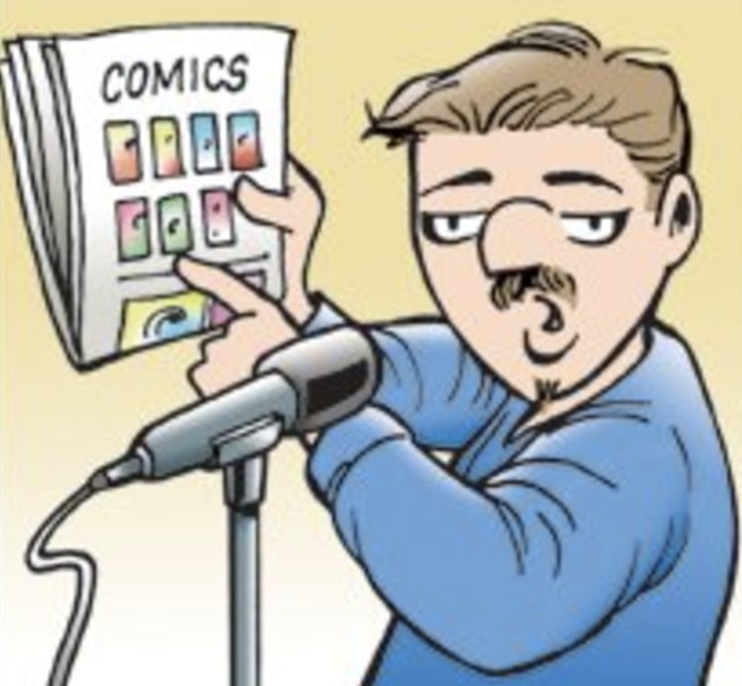
The Free Press Did Not Censor Doonesbury. The Truth is Much Sadder.

A couple Sundays ago, the Doonesbury comic strip took us to an imaginary Florida high school classroom where a teacher was sharing some uncomfortable truths about the Civil War as some of her students pondered reporting her apostasy to the authorities.

The strip did not appear in Gannett newspapers across the country, including the Burlington Free Press. Which raised a kerfuffle about censorship: Did our biggest national newspaper chain remove the strip out of concern for the tender sensibilities of southern readers? Were Free Press editors on board with the decision or were they forced to go along with a corporate kill order?

Well, no. The truth is a lot less scandalous, and a lot more depressing about the fallen state of print journalism in general and the comics in particular.

Truth is, Gannett canceled a whole bunch of comics including Doonesbury six months ago, almost certainly for budgetary reasons. The Free Press hadn’t run Doonesbury since last September. Nobody noticed. And that’s just sad.

Continue reading

Trying to Remove One Hand from Our Health Care Pocket

If you’re unfamiliar with the term, you might think “pharmacy benefit manager” is a job title for some anonymous mid-level health insurance executive. Like, say, the guy pictured above. But no, a pharmacy benefit manager is a corporation that sticks its big fat nose into the middle of America’s misbegotten prescription drug system and snorts up all the loose cash it can.

That’s my definition anyway. If you’re a high-priced lobbyist for the national PBM trade association, things look a little different. “Pharmacy benefit managers exist for one purpose: to drive down cost of prescription drugs,” said Sam Hallemeier of the Pharmaceutical Care Management Association (PCMA). PBMs, he continued, “reduce costs for insurers and consumers, reduce waste, and improve patient care.”

Wow, I hadn’t realized that PBMs are charitable enterprises that simply want to make the world a better place.

Oh wait, they’re not. The PBM marketplace is dominated by three large firms that are owned by three of America’s largest for-profit health care firms: Caremark, operated by drugstore chain CVS; Express Scripts, operated by insurance giant Cigna; and OptumRx, brought to you by insurance giant (and sworn foe of spaces between words) UnitedHealth. These mega-corporations are in business to make profits. If their PBMs are holding down costs, you can bet your life they’re doing it for their own benefit, not yours or mine.

You may wonder when I’m going to get to the Vermont political point of this. Well, the Legislature is considering a bill, H.233, that would impose substantial new restrictions on PBMs. And while our state has a track record of disappointment when it comes to health care, this thing might actually stick.

Continue reading

So Why Isn’t “Lived Experience” Part of Every Legislative Process?

The House Human Services Committee did it again Friday. They went and injected the experiences of homeless Vermonters into the normally dispassionate exercise of lawmaking. The results were, as usual, breathtaking, heartbreaking, and disruptive.

Which begs the question, why is this such an unusual event in the halls of government? Why do we rarely hear from those directly impacted by policy decisions made on high? Modest Proposal: Require every policy committee to hear “lived experience” testimony, especially those that deal with our tattered, inadequate, often cruel, social safety net. (Credit to End Homelessness Now, which has helped these folks remain housed and enabled their testimony in the Statehouse.)

Hey, maybe even we could establish “lived experience” advisory committees for the Agency of Human Services (including the Department of Corrections, you betcha). Not now, of course; it’ll have to wait until sometime after Phil Scott’s disembodied head in a jar loses its bid for a twenty-seventh term in office.

Those pesky “lived experiences” do inject a sometimes brutal dose of reality into the proceedings, making it more difficult to justify byzantine social service policies that are seemingly designed to punish participants and limit demand more than to actually address a real, tangible need.

Then again, they also display the indomitability of the human spirit, the intelligence and resourcefulness of those who live their lives on the edge. Giving them a seat at the table wouldn’t be an act of pity; it would be taking advantage of an underutilized resource.

Continue reading