Category Archives: Uncategorized

Five. And Counting.

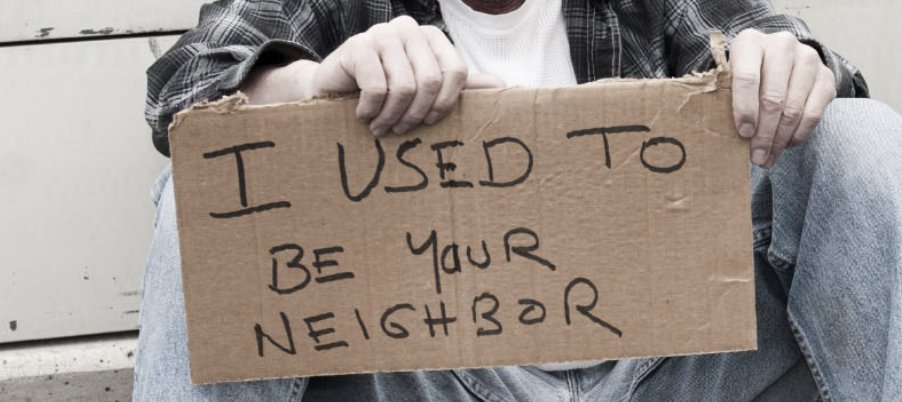
Since Thanksgiving Eve, at least five Vermonters have died after being turned away from the state’s General Assistance Emergency Housing program. Three deaths have been publicly reported, but at least two more can be added to the list. We’re up to five. And counting.

Or shall I say, in the words of End Homelessness Vermont’s Brenda Siegel, five “that we know about.” There is good reason to take her word for it; EHV has done a far better job than the state at keeping in touch with unsheltered people, assessing their needs, and trying to keep them safe and warm. And yes, Siegel is an advocate, but she has no need to exaggerate or embellish; the crisis is quite bad enough as it is.

There may have been more deaths that we don’t yet know about. There may be more by the time you read this post. This is an emergency. If the Scott administration was operating with less pride and more compassion, there would be an immediate summit meeting of state officials, key legislators, shelter providers, and housing advocates to find ways to help more people with available resources. The governor is right about one thing: The motel voucher program is a stopgap. It’s too expensive and doesn’t address any issues beyond roofs over heads.

There are options. There are ways to handle the situation — not perfectly, but better than we are now. The Scott administration has failed to explore other ideas. Instead, its policy has been to use whatever money is on hand to prop up the voucher program while making no provision at all for a better, longer-term solution. “It doesn’t have to be the motel program,” Siegel said. “There are other options. But we cannot keep unsheltering people.”

End of sermon. Now, more grim details.

Continue reading

However Much We’re Taxing the Gambling Industry, It Isn’t Enough

There’s a fire raging somewhere out there, and it’s only a matter of time before it arrives on our doorstep with devastating consequences. And we are not ready for it, not at all.

As you might have gathered from the headline, this isn’t about an actual forest fire, but about America’s biggest growth industry: Online gambling. There was a fair bit of coverage in our media earlier this year after legalization took effect, as initial returns suggested that the business was a big hit in Vermont. But what finally got me to write was a recent episode of The Distraction, a studiedly goofy sports-themed podcast with occasional forays into more serious stuff.

Like the November 14 edition, featuring football writer Arif Hasan. He’s a lifelong gambler himself, but he has a clear-eyed view of gambling’s impact on individuals, the sports world, and society in general. There’s a whole bunch of scary stuff in the interview, and more in an article he recently published (which is partly behind a paywall). But here’s the thing that prompted me to write.

Continue reading

Meandering Toward Re-Election

The latest round of campaign finance reports tells the same old story: Gov. Phil Scott is meandering to re-election, while Democratic challenger Esther Charlestin is on a road to nowhere.

This post will focus on the governor, who is squandering an opportunity to put his stamp on Vermont politics. As is his wont. But first, a moment on Charlestin. She did manage to raise more money than she spent in September, so her campaign actually has two nickels to rub together. But not much more than that.

Charlestin raised $12,921 last month, which was decent by her standards but pitifully small in terms of fueling a competitive effort. Her fundraising total for the entire campaign is a ridiculous $34,522. Recall that Howard Dean set $2 million as the required bankroll for a serious run at Scott, and realize that with a month left before Election Day, Charlestin is 1.7% of the way there. Yikes.

Context: As of October 1, 2022, the famously resource-strapped Brenda Siegel had raised $149,193 — more than four times as much as Charlestin. Double yikes.

Charlestin’s campaign spent $8,626 in September, bringing total expenditures to $30,935, so she enters October with a robust balance of $3,587. Triple yikes with whipped cream and sprinkles on top.

But enough about that. Let’s turn to what Phil Scott is doing. Or, more to the point, what he could and should be doing.

Continue reading

Where Is Our Bureaucratic Superhero of Yesteryear?

Man, we could really use some Pat Leahy right about now.

Not that I have any beef with his decision to retire. It was the right thing to do. But Leahy was our D.C. wizard, our bureaucratic Batman, and now that he’s gone we seem to be struggling with, whaddya know, wielding influence on the federal level.

Leahy wasn’t the most progressive of figures. But his decades of seniority and his insider expertise meant that Vermont punched above its weight on governmental matters, especially when it came to money. I wouldn’t say we’ve got no clout in the post-Pat era, but we’ve got a lot less than we did when he was watching over Gotham.

Before the 2022 election, we had the president pro tem of the freakin’ Senate, plus a key leader of the House Democratic Caucus in Peter Welch. At a time when we were losing Leahy’s pull, Welch’s decision to run for Senate dealt us a double blow.

Now, Welch is a politician with a politician’s ego. It would have been awfully tough for him to turn down a career-capping promotion to the Senate and an exit from the barely controlled madness of the House. But he didn’t do Vermont any favors when he did so. At age 77, he won’t get the chance to reach the upper rungs of the senatorial ladder. And Bernie’s next term will almost certainly be his last, assuming he disposes of Scary Eagle Man in November. We’re gonna be charity cases in the Senate for years to come, and Becca Balint has just begun her ascent in the House. Plus, she’ll almost certainly run for the Senate at the first incumbent-free opportunity, putting us back at the bottom in the House.

Continue reading

We Regret to Inform You that John Rodgers Has Drunk the Kool-Aid

The Republicans’ candidate for lieutenant governor, John Rodgers, is seen as a potential winner for the victory-starved VTGOP: a centrist politician who served in the Legislature as a Democrat and might pull moderate voters away from incumbent Progressive/Democrat David Zuckerman.

Well, maybe we should pump the brakes on that one. Because to judge by the above graphic, Rodgers has taken a Wile E. Coyote-style dive into the deep end of conservative Republicanism.

Two things of note. First, he’s endorsing Andrea Murray, a far-right candidate for state Senate in deep-blue Windsor County. He promotes Murray as “a moderate woman,” which is a goddamn lie. Murray and her husband August were described by the Valley News’ Jim Kenyon as the “ringleaders” of the move to get rid of John MacGovern as chair of the Windsor County Republicans. MacGovern is a very conservative fellow and a very active Republican, but he is not a fan of Donald Trump. That was too much for the Murrays and their ilk; they undertook a long, noisy, divisive, and ultimately successful effort to oust MacGovern. They were so het-up over MacG’s apostasy that they actually filed a lawsuit against him and the Vermont Republican Party. A suit that was basically laughed out of court, but whatever happened to Ronald Reagan’s 11th Commandment?

There is more, much more, to say about Ms. Murray, but that will have to wait for an upcoming post. For now, let’s move on to point two about Mr. Rodgers.

Which is, look at the company he’s keeping.

Continue reading

How Not to Debunk a Myth

The latest edition of “Brave Little State,” Vermont Public’s question-answerin’ podcast, addresses a widely-held belief that our homelessness problem is largely caused by people moving to Vermont to take advantage of our motel voucher program. And addresses it poorly, incompletely, and at great length.

The episode is entitled “Is Vermont’s motel program a ‘magnet’ for out-of-staters experiencing homelessness?” There is no evidence for the notion. In fact, there is a body of research showing that people in distress don’t cross state lines in any real numbers in hopes of accessing better benefits. Reporter Carly Berlin, whose work is co-published by Vermont Public and VTDigger, gets there eventually, but takes a godawful long time to do so. In the process, she manages to distort the basic issue, omit crucial aspects of the story, and get some key facts wrong.

The fundamental problem isn’t with Berlin or her many co-producers and overseers. (A total of seven Vermont Public staffers are cited in the closing credits.) The problem is that the issue was subordinated to the format. This wasn’t a story about homelessness and benefits; it was A Reporter’s Journey In Search Of Truth, filtered through the highly developed process of long-form public radio storytelling pioneered by Ira Glass’ “This American Life” and refined in this age of public media serial podcasting. The end goal of the production is more esthetic than journalistic.

This question can easily be resolved, but that’s not how you build a podcast. A long-form narrative needs a build, a measure of suspense, unexpected twists and turns, even if the actual path is pretty straightforward. Which is how you wind up with a 38-minute-long piece of audio that kind of bungles the assignment.

Continue reading

And So We Trudge Predictably Toward Our Next Humanitarian Crisis

Our political leaders — of all parties — are failing us again. And it was all perfectly foreseeable. In fact, it was quite literally baked into the most recent iteration of Vermont’s grossly inadequate policy on sheltering the homeless.

The damning details are available in “Vermont’s New Motel Room Limits Are Primed to Push Out Hundreds of Households This Fall,” posted Friday by shared VTDigger/Vermont Public reporter Carly Berlin (because homelessness isn’t a big enough issue to warrant separate reportage, apparenty). It’s not a pretty picture, not at all.

The headline should come as no surprise whatsoever, since the “new motel room limits” were designed “to push out hundreds of vulnerable households this fall.” The program is rolling out precisely as intended. Except, as Berlin’s piece makes clear, the looming reality is somehow even worse than that.

Continue reading

One Neat Trick for Concealing the Reach of Your Political Donations (CORRECTION)

Correction. I got a crucial detail wrong in this post. Donors do not file information. The donor info is gleaned from candidate filings. Misspellings and carelessness with donor names and addresses is their fault, not the donors’. The broader point remains, that the blizzard of typos makes it extremely difficult to track donor activity, but that’s not the result of their malfeasance, deliberate or otherwise. Also, my apologies for the delay in correcting; I’ve still got Covid and have precious little energy at all.

In what’s generally been an underwhelming primary season to date, one of the biggest developments has been the outpouring of support going from a bunch of Burlington-area business leaders to a relative handful of candidates. Look at the donor lists of the top earners and you see a bunch of the same guys (well, almost entirely guys) giving four-figure checks to the same people: Stewart Ledbetter, Scott Beck, Elizabeth Brown, John Rodgers, Pat Brennan, etc.

It would be highly instructive to track how much each of these minor tycoons is investing in political centrism and where they’re putting down their markers. And it’s almost impossible to do so, thanks to how the Secretary of State’s campaign finance portal processes donor reports and how the donors seem to be taking full advantage of a loophole on offer.

What’s happening is that donors submit reports with slightly different iterations of their names and addresses. When you search for donors, each report shows up as if it’s a separate person. For instance, if you search for “Lisman, B,” you get not one, but 30 separate matches. If you search for “Broughton, L,” you get 40.

Forty.

And most of them have few if any donations listed. If you want to find out how much Lenore Broughton has given to whom, you’ll have to open each and every one of those 40 in turn. It’s maddening.

Continue reading

Some Impertinent Advice for Bernie Sanders

So, Bernie’s running for re-election. At age 82. Well, we have way too many old politicians who believe they’re indispensable, but Bernie is not anywhere near the top of my list for thinning out the herd. He remains the most prominent voice in America for small-p progressive politics. He is a uniquely impactful figure.

So I’m fine with him running for another term. Although, perhaps ironically, I still think he should have left the Senate in 2018. But we’ll get to that in a minute, after discussing one age-related item he should consider.

Which is, he should stop with the “independent” pose and run as a capital-P Progressive. He can still caucus with the Democrats, but he needs to adopt a party label for the first time since his benighted days under the Liberty Union banner.

Continue reading

The Governor Has No Clothes

For the second time in two years, Gov. Phil Scott suffered a historic-level smackdown on Monday. It only took the Legislature one single day to override six of his vetoes. He was upheld only on H.121, the data privacy bill. Otherwise it was a complete wipeout for The Most Popular Governor in AmericaTM.

Who is also, far and away, the most overridden governor in Vermont history. I knew he was the rootin’est, tootin’est, vetoin’est governor we’ve ever had, but I hadn’t realized that he’s even more of an outlier on the override front.

I’ve cited the Vermont State Archives’ list of veto messages as my source for veto counts (inclluding my count of 52 vetoes for Governor Nice Guy), but I failed to notice that the list also indicates which vetoes were overridden — with an asterisk.

Are you ready for some truly stunning figures? I know you are.

Continue reading