Last week, the unions representing staff and faculty at Vermont State University kind of tossed a grenade in the punchbowl. Not that anybody noticed, even though they issued a press release about it.
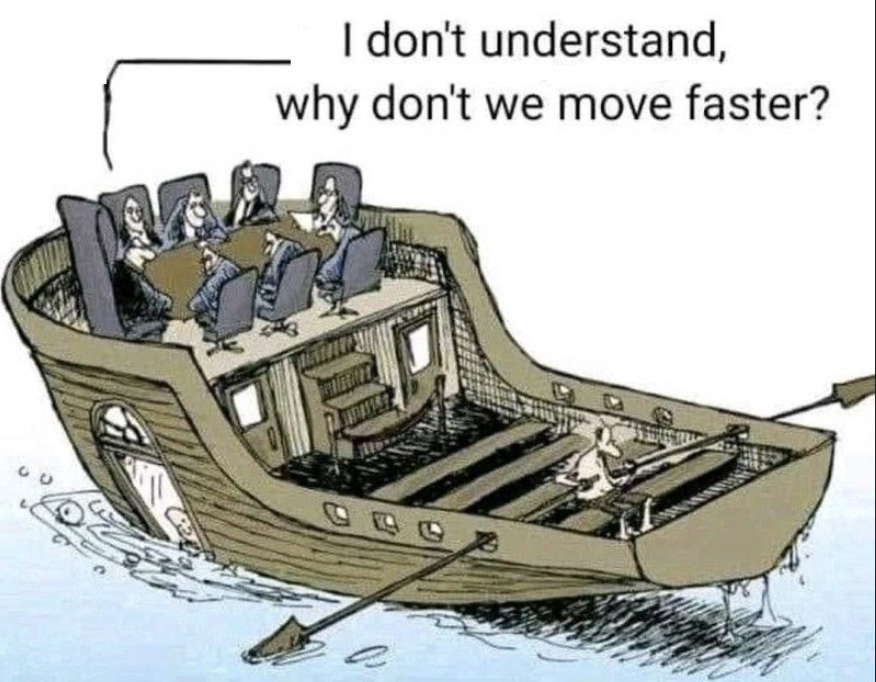
On March 25, leaders of VSU bargaining units from the American Federation of Teachers and Vermont State Employees Association sent a letter (available online here) documenting a dramatic trend of administrative bloat at the financially challenged university.
I must emphasize, as I did when VTDigger’s union went public over the use of AI in the newsroom, that unions typically don’t like to do this. They don’t go public with labor/management issues unless they feel it’s the only course left to them. Unions would rather negotiate and reach agreements.
So when a union takes this step, you know things are serious. And if they’ve got their facts right, then Vermont State University has some big problems.
Well, some more big problems. Which they don’t need, as they’re already in a struggle to survive.
Hey, let’s start with a tangent. Last week’s episode of “There’s No ‘A’ in Creemee” featured deputy state auditor Tim Ashe, now running to succeed the retiring Doug Hoffer in the big chair. And honestly, I thought Hoffer caught a couple of strays. Podcast co-host Andy Julow opined that during Hoffer’s tenure, the office has been “kind of a sleepy position” because Hoffer is not an “in front of a camera kind of guy,” There was no dissent from co-host Joanna Grossman or from Ashe himself.
To which I say, whose fault is that? Hoffer doesn’t chase cameras, but he does try to draw attention to the work of his office. Too often, that work is ignored by the news media and the Legislature. And that’s not his fault.
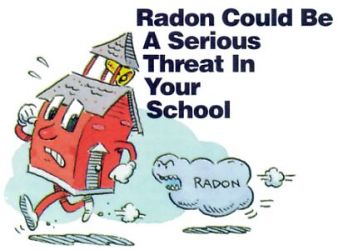
Take last week, for example. Hoffer’s office examined compliance with a law requiring Vermont schools to test their buildings for radon gas. As Hoffer wrote, “Breathing air with radon increases the risk of developing lung cancer and is the second leading cause of lung cancer deaths in the United States after cigarette smoke.” Seems like something we’d want to prevent — especially when it comes to the kids, no?
The law was adopted in 2021 and testing deadlines were extended the following year. As amended, the law required all schools to test for radon by June 30, 2025. However, as Hoffer reported, the law “did not include a reporting requirement.” Kind of a legislative oopsie there. Or a deliberate omission meant to defang the law while creating the appearance of Doing Something.
The result: No one in state government had any data, or any idea whether testing had actually been done. So Hoffer’s team did the work instead. (His report is downloadable here.)
Want to know the results? Our major media outlets apparently didn’t think so, because they didn’t bother covering it. There were stories on WPTZ-TV and in the Rutland Herald and Times Argus, but that was about it.
Gov. Phil Scott’s Education Secretary sent an opinion piece to VTDigger echoing the governor’s talking points from his State of the State Address last week. But the original bore an unfortunate headline, and the text wasn’t any great shakes either.
Headline Number One, as published by VTDigger on the evening of Monday, January 12:
“Stupid,” eh? I get the callback to James Carville’s most memorable concoction, but it bore an unpleasant whiff of condescension toward the governor’s critics. Now, Saunders’ boss has no problem with condescension toward his critics, but apparently someone thought better of the headline. Because by the next morning, “Stupid” had been excised:
It’s a shame, isn’t it, that a sharp-eyed correspondent noticed the original headline and sent me a screenshot before it could be altered?
I can’t say for certain whether the first headline came from Team Saunders or someone in Digger’s editorial room, but I suspect the former. Seems a stretch that a Digger functionary would attach a potentially offensive headline to an essay by a prominent state official.
(There’s an editor’s note at the bottom of the essay that says “Correction: Due to an editing error, an earlier version of this story contained a misleading headline.“It doesn’t identify the source of the headline. Also, “misleading’ is a funny way of saying “offensive.”)
But even without the “Stupid,” there’s something off about that headline. “It’s Not All About Taxes” carries the implication that it’s mostly about taxes, right? And I don’t think that’s the argument the Scott administration wants to deploy.
I’ll say this much for Gov. Phil Scott: He understands the assignment.
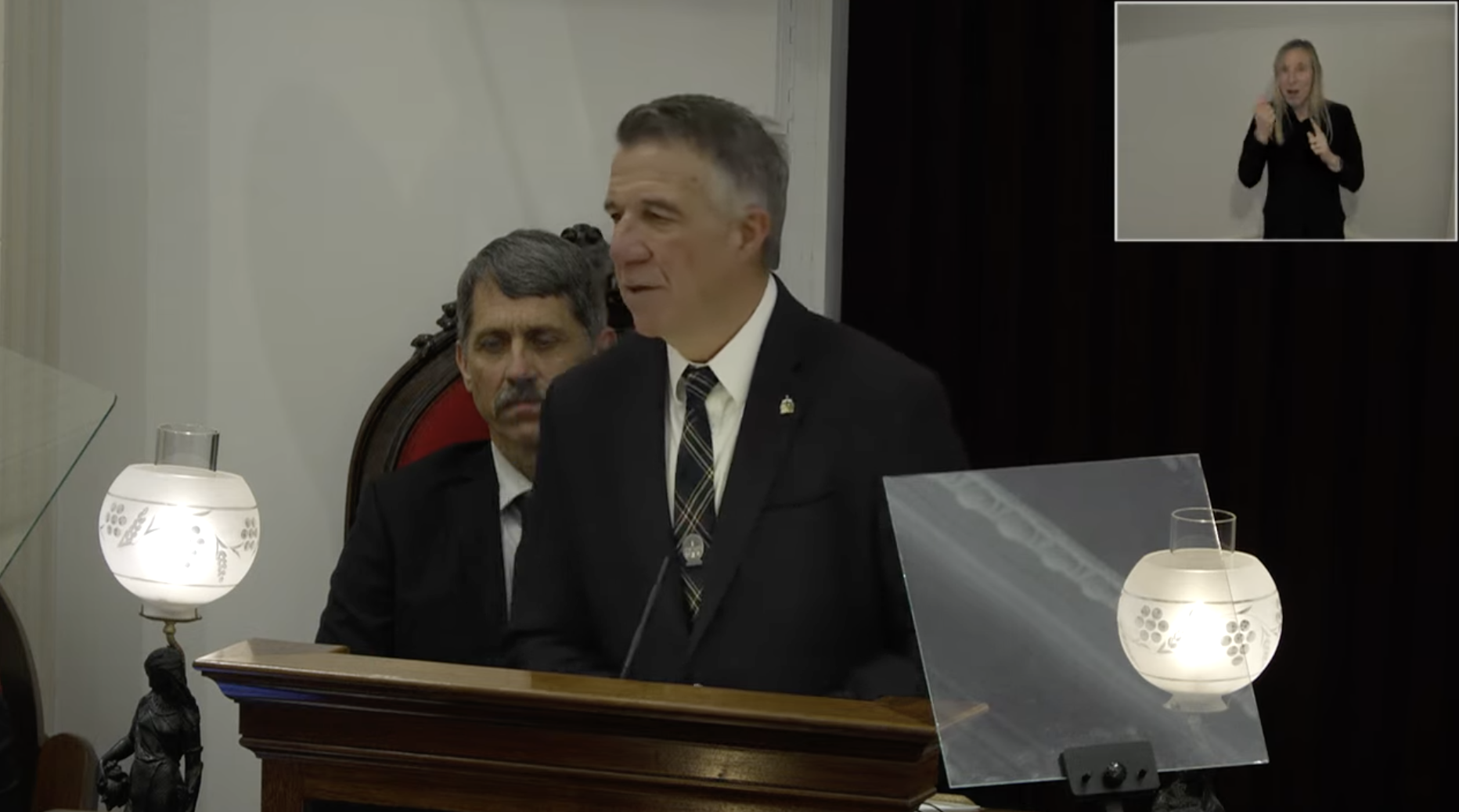
Scott delivered his State of the State address Wednesday afternoon, and virtually every one of its 40-odd minutes was devoted to a single subject: Following through on Act 73, the widely unpopular education reform law of 2025.
Speaking in purely political terms, if he wants the Legislature to keep on track with Act 73, he’s going to have to get out in front and spend heavily from his Scrooge McDuck levels of political capital trying to persuade a reluctant public that his vision is the right one. This speech indicates that he’s well aware of the assignment.
It’s only the first step, of course. If he wants to sell Act 73, he’ll have to get out there, criss-crossing the state, lobbying the Legislature, and attaching his name and image to the process. Phil Scott is the only person who can make chicken salad out of the Act 73 chicken shit.
Not that anyone gave a tinker’s cuss, but last month the Commission on the Future of Public Education issued its final report (downloadable here, scroll down to December 15). The subtly expressed message: a rebuke of Act 73 and the reform process being pursued by Gov. Phil Scott and legislative leaders.
On an alternate Planet Earth, the Commission’s report would have been widely discussed. It would have served as the basis for a wide-ranging transformation of Vermont’s public education system.
But we don’t live on that Earth. We live on the one where the Legislature, in its infinite wisdom, created the Commission one year… and then smashed a pillow over its face the following year.
Refresher: The Legislature established the Commission in 2024 and gave it a full year and a half to comprehensively review the public education system and produce a plan addressing all aspects of the situation. The Commission buried itself in the work, gathering information, holding public hearings, conducting a survey, and consulting with experts and those involved in public education. Then in 2025, legislative leaders followed the lead of the governor, who demanded an immediate, dramatic restructuring of the system in an effort to rein in costs. They passed Act 73, which dramatically diminished the Commission’s remit, created a new high-profile panel, and ordered that body to complete its work in six months’ time.
They could have had an all-encompassing plan in the identical time frame. They could have gone into the 2026 session with a blueprint that addressed educational quality, opportunity, governance and cost. Instead, their substitute task force concluded that its much narrower mandate couldn’t be accomplished in the time allotted and threw the problem right back in the Legislature’s lap. And, as Vermont Public’s Peter Hirschfeld reported this week, Act 73 faces an “uncertain future” because it “may no longer be politically viable.”
Tell me, which scenario would be better? Two guesses, and the first don’t count.
You know, if I were a distinguished Vermonter (no snickering from the back row, please) and the Legislature wanted to put me on a commission or task force or blue-ribbon la-dee-dah, I would tell them to stick their nomination where the sun don’t shine. Because more often than not, those high-profile panels give their best effort only to see it tossed onto a dusty shelf somewhere, thank you so much for your service.
I don’t usually bother writing about op-ed pieces or letters to the editor because (a) who reads them, anyway? and (b) that way lies madness. The temptation is ever present (take, for example, “Farmer” John Klar’s recent lament about grade inflation at Harvard, a topic of conservative whingeing since at least the 1970s), but I do try to avoid it.
C’mon, Burr & Burton is one of the most coddled, protected, politically insulated institutions in the state of Vermont. I mean, we just went through an Act 73 process in which Democratic and Republican leaders stacked the deck in favor of B&B and the other private schools that receive taxpayer tuition dollars. The two most influential lawmakers in the entire process were Senate Education Committee chair Seth Bongartz, who spent nearly two decades on the B&B board, and Senate Minority Leader Scott Beck, a longtime faculty member at St. Johnsbury Academy. One of the highest priorities of the process was protecting the interests of the four big private schools that take public tuition dollars.
It’s not just the flagrant wrongness of Orton’s premise. It’s the quantity of inflammatory prose he packs into a few short paragraphs.
“The drumbeat against” Burr & Burton “is becoming more strident and punitive.” Actually, I’d say “the drumbeat” has been pretty consistent. If it’s getting louder, that’s because our entire public education reform process seems to prioritize B&B and its fellows over all else.
Orton complains that critics browbeat the storied academy “with fallacious charges” and demand “that the school become a public institution.” Nope, I’ve never heard that one. I have heard people say B&B shouldn’t be allowed to take public education dollars without being subject to the same rules as public schools.
Orton again: “There are yowls from the establishment that Burr & Burton costs more.” Again, nope. The “yowls” of reasoned criticism center on the taxpayer subsidy of the private academies. I don’t think anybody cares about the total tuition bill.
Orton then brags that “no taxes are levied for capital improvements” at B&B because its admirers “consistently contribute enough to cover them.” Well, yeah, private schools exist because they serve affluent families and wealthy benefactors able to pony up for expensive infrastructure schemes.
Orton closes by declaring B&B a “success… beloved by parents, students and residents.” And then he gives away the game in his conclusion: “It’s telling that those who can’t compete have set out to diminish Vermont’s premier secondary schools.”
And there it is: Competition.
See, the thing is, public education shouldn’t be a contest with winners and losers. A strong public school system is a public good of tremendous value to its communities, socially and economically. Every taxpayer has an interest in good public schools. Every taxpayer does not benefit from private schools.
Orton is sounding the alarm against an imaginary enemy. The bulk of “the establishment” is firmly in the private academies’ back pockets, sad to say. Our political “establishment,” both Democratic and Republican, supports the academies and enables their special status. The four major academies spend big on Statehouse lobbying, and it pays off in spades. Their critics have been marginalized throughout the decades-long school reform debate.
Sure, public educators advocate for the institutions they’ve devoted their lives to. Sure, there are liberal politicians who’d like to see a fairer playing field in public education. Sure, there’s an active campaign called “Same Dollars, Same Rules,” which asserts that if the private academies accept public dollars, they should abide by the same standards as public schools. But so far, none of those people have made significant headway against the influence of the extremely well-connected private academies.
And while those people disagree with Orton, he vastly overstates the nature of their criticisms and their truly modest goals. I have never heard, for example, a single person of any stature call for the academies to be forcibly turned into public schools.
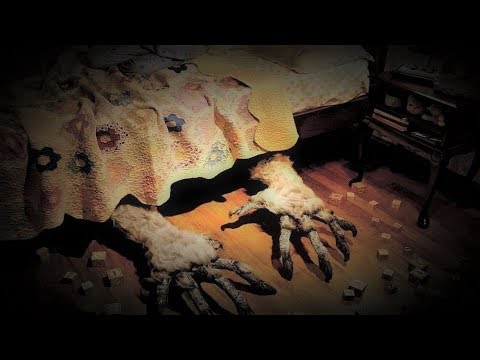
Like many a wealthy American, Lyman Orton sees Communism — or at minimum, socialism — when reasonable people call for reasonable reforms. There are a few dust balls under his bed, and he thinks they are monsters out to kill him.
On Monday, Tax Commissioner Bill Shouldice issued his annual December 1 letter estimating property tax rates for the coming fiscal year. It was completely predictable bad news: Shouldice projects a roughly 12% increase in property tax bills, a figure largely attributable to Our Political Betters’ decision to kick the tax can down the road this year by using one-time money to cut a double-digit increase down to one measly percentage point. They knew, at the time, that (in the words of T Bone Burnett among many others) There Would Be Hell To Pay.
Almost as predictable as the 12% increase is the practically unanimous response from Our Betters: They plan to double down on Act 73, which (a) would have no effect whatsoever on next year’s taxes and (b) promises future cost savings that are unproven at best and chimerical at worst.
Gov. Phil Scott: ““The choice before lawmakers in 2026 is clear: show courage by working together to keep moving forward with [Act 73,] our bipartisan transformation plan.”
Senate President Pro Tem Phil Baruth: “Last session, the Governor and the Legislature worked together to pass a framework for transforming our education financing system. It was not easy; too many opposed any approach but the status quo… The truth is that Act 73’s success depends on even harder work being accomplished this session. I am committed to continuing this mission – in collaboration with the Governor, the House and my colleagues in the Senate…”
Oh, WHAT a brave man, heaping scorn on those who didn’t fall in line as “oppos[ing] any approach but the status quo,” when, in fact, NOBODY wanted to continue the status quo. They just happened to not like Act 73.
After the School District Redistricting Task Force* recommended a voluntary plan instead of new district maps, Gov. Phil Scott responded with guns a-blazin’. And as is often the case when you go guns a-blazin’, there was a bit of an accuracy problem.
*Seriously, who named this thing?
Then again, one couldn’t really expect him to identify the real culprit: the governor himself.
For those just joining us, Scott said that the Task Force “didn’t fulfill its obligation” under Act 73. “They were supposed to put forward three maps for consideration, and they failed,” he said on Thursday. (Not true, actually; more later.) And he blasted Task Force members for being “OK with the ever-increasing property taxes, cost of education, and they don’t want to see change.”
I understand his dismay but he’s being a bit harsh on a group of Vermonters who know more about public education than he ever will, and who gave of their time, sweat and tears to try to meet an unreasonable deadline. He could have at least thanked them for their service. Even if he didn’t mean it.
Especially since the real author of this failure isn’t anyone on the Task Force. It’s the governor himself.
Well, the panel tasked with drawing new school district maps for the entire state has essentially turned down the assignment and tossed the whole mess back into the laps of Our Political Betters.
Instead of completing the assignment contained in Act 73, which was to draw up to three different maps for the Legislature to choose from or ignore), the School District Redistricting Task Force* instead proposed a plan to incentivize voluntary mergers among school districts.
This week’s media roundup focuses on a single subject, which was almost inescapable as I made may weekly tour of Vermont news outlets. That subject is education reform, specifically the process outlined in Act 73, the wide-ranging measure railroaded through the Legislature by Gov. Phil Scott with the active connivance of Senate Democratic leadership. It’s now in the early stages of implementation, and wouldn’t you know, everybody seems to hate the thing.
But first. I took a brief trip to Cornwall, Ontario last week. It’s a smallish (by any standard other than Vermont’s; its population is bigger than Burlington’s) city known to Americans, if it’s known at all, as the Canadian side of an international bridge over the St. Lawrence River. While I was there, I did a little reading about Cornwall and came across the story of the Lost Villages.
I’d been through Cornwall many times while driving to and from my home state of Michigan, but I’d never heard of the Lost Villages. They were ten communities in the Cornwall area that were evacuated and deliberately submerged in the construction of the St. Lawrence Seaway in 1958. Roughly 6,500 people were displaced.
When I was back home and scanning Vermont media for this column, I found a common theme: stories across the state about local reaction to the rollout of Act 73. Reactions that include confusion, budding outrage, school officials trying to forestall the worst effects of the process, and universal dismay from those who work in public education. The closest thing to a positive view was, “Oh well, I guess we have to learn to live with this.”
Which made me realize, this is very much a large-scale, top-down, St. Lawrence Seaway approach to education reform. You know, the kind of thing Phil Scott spent his nonpolitical life doing — big, mechanized projects that might do a great deal of good in the aggregate while doing damage at the granular level. But it’s one thing when you conduct such a project for a large-scale benefit like improving long-haul travel. It’s a whole different thing when you deploy the heavy equipment to try to improve the educational experience of public school students.
Which is the goal of Act 73, right? Right?????
Well, I’m seven paragraphs deep into this piece, so I’d better get to the actual subject, don’t you think?





 The Vermont Political Observer.