Category Archives: Economy

Slicing the baloney with Art Woolf

Expert-for-Sale-or-Lease Art Woolf has outdone himself in this week’s Burlington Free Press column. And that’s saying something, because just about every emission is a small shining jewel of cherrypicked statistics and unexamined dogma.

This week’s, though, hoo boy.

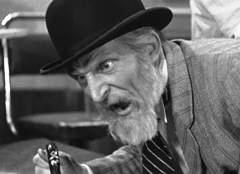
Herr Doktor Professor Woolf. Not exactly as illustrated.

Herr Doktor Professor Woolf. Not exactly as illustrated.

Maybe he’s been reading this blog, because today’s column is a 300-word attack on the idea of taxing the rich. His argument relies on the unlikely, and irrelevant, assertion that rich folks’ incomes are too volatile to be a dependable source of tax revenue.

Which may be true for individual taxpayers, whose incomes shuttle between well-off, rich, and filthy stinkin’ rich depending on the stock market, the purchase or sale of costly assets, and the convenient laundering of wealth to screw the taxman. (Woolf doesn’t mention the many, many tax advantages of being wealthy, and how they might cause volatility in rich folks’ tax payments.)

Woolf spends most of his column puttering around the definition of “rich,” and showing (with carefully chosen numbers) that these folks pay an impressive share of our total income tax revenue.

Well, of course they do. They earn an even more impressive share of our total income.

Not to mention that while our income tax system is fairly progressive, our total tax system is not. Sales taxes hit hardest on the poor and working classes; property taxes hit the middle class. And the income tax isn’t as progressive as it should be.  The rich may pay 40% of Vermont’s income tax revenue, but they sure as hell don’t pay 40% of our total (state and local) intake.

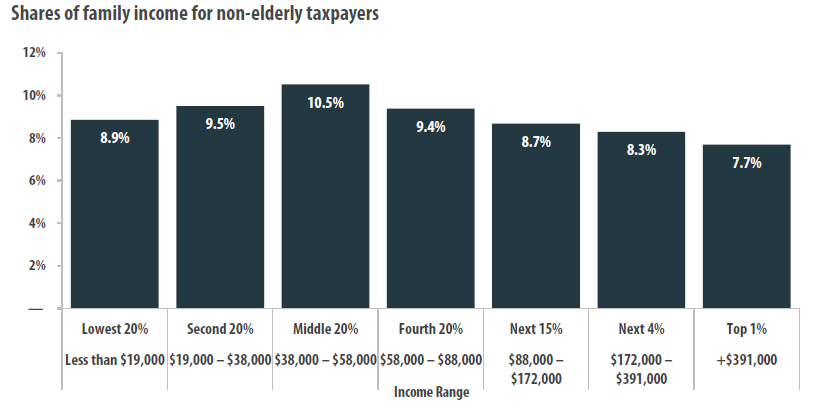
Now, if you look at statistics that Woolf conveniently ignores — total taxation as a percentage of income — you see that the rich pay lower effective tax rates than everybody else in Vermont. Here’s a chart from the Institute on Taxation and Economic Policy that I’ve posted before, but it’s relevant here:

ITEP 2014 tax chart


Take all of our state and local taxation together, the richest Vermonters pay a smaller share than anybody else. Woolf conveniently ignores these figures. And he evades the obvious question they pose:

Did they pay their fair share? That’s a question a philosopher, not an economist, can answer.

Wrong, Perfesser. It doesn’t take a philosopher, or even an economist, to look at that chart and conclude that they don’t pay their fair share.

Woolf’s actual premise, that the state can’t depend on revenue from top earners, is irrelevant. Nobody is arguing for confiscatory taxation. Nobody is arguing that soaking the rich should be the foundation of our tax system. The real argument is fairness: are the rich paying enough? The answer, clearly, is no.

The revenue volatility is one of many serious problems caused by income inequality. The solution to the volatility is a fairer economy — one that doesn’t concentrate the wealth at the top end. A fairer economy would also be a stronger and more stable economy, since supply and demand would be in balance.

Why have our economy and our public finances struggled since the Great Recession? Because there are too many people who can’t afford to buy stuff, and consumer activity is by far our strongest economic driver. That’s why programs like food stamps and the Earned Income Tax Credit provide more economic stimulus than any corporate tax break or across-the-board tax cut: when working people get a little extra cash, they immediately fritter it away on things like food, housing, and heat.

But I digress. Woolf’s argument is misleading and intellectually dishonest. His conclusion is irrelevant to the actual public policy question in play. He also leaves us without a hint of an alternative solution to wealth inequality, unfair taxation, and an economy slumping due to a lack of consumer demand.

Art Woolf To The Rescue!!!

Throughout the history of its big pipeline project, Vermont Gas has been its own worst enemy — alienating landowners, indulging in ham-fisted PR, and repeatedly raising its cost estimates for pipeline construction.

Nonetheless, the odds are still in VG’s favor. Well-meaning protests notwithstanding, if VG can make a plausible economic case, the thing’s gonna get built.

And who’s helping them build a plausible economic case, according to VTDigger?

The construction of the project will create as many as 444 direct and indirect jobs, according to a report by the Vermont consulting firm, Northern Economic Consulting, Inc.

That’s the consulting firm co-owned by our least-favorite economist Art Woolf, he of the reliably awful “How We’re Doing” column in the Burlington Free Press.

Yes, Art’s a professor at UVM, but I suspect he makes a lot more money from NEC than he does for his academic work. His consulting firm has a number of revenue streams:

— Consulting to a variety of high-paying clients, mostly of the corporate persuasion.

— Providing expert witness services for civil suits of all kinds. (“Have you been hurt in a slip and fall accident? Dial 1-800-CALL-ART for expert testimony on your financial losses.”)

— Running an annual Vermont Economic Outlook Conference. The most recent conference was a five-hour affair, with admission priced at a cool $170/person.

— Publishing a monthly Vermont Economy Newsletter, subscription a mere $150/year.

In short, Woolf is more hired gun than objective expert. Which might explain why his weekly columns, more often than not, come across like they were written on behalf of the Associated Industries of Vermont. George W. Bush once told a roomful of wealthy supporters that they were his base; well, the Vermont business sector is Woolf’s base.

So, about his rosy estimate of the pipeline’s economic impact. Without doubt, the vast majority of those 444 “direct and indirect jobs” are temporary, construction-related jobs.

TransCanada has claimed that the Keystone Xl pipeline would create tens of thousands of jobs. But almost all of those are temporary, appearing and disappearing during the projected two-year construction cycle. Operating the pipeline, once it’s built, would take about 50 workers.

As far as I can tell, nobody’s asked Woolf about the quality or duration of those 444 pipeline jobs. But if his math is similar to Keystone’s, then we should expect no more than a handful of permanent positions at Vermont Gas.

Don’t blame Woolf; he’s only doing what bespoke experts do for their money: putting forth the best possible case for his client.

One more thing. The identifier that accompanies Woolf’s column in the Freeploid mentions only that he’s a faculty member at UVM. Nothing about his corporate clients, nothing about the subscriber base for his costly publication. Considering how many business interests are paying Woolf, how often do you suppose there’s been a direct or indirect conflict of interest that’s gone conveniently undisclosed?

Oh, one more one more thing. There’s a typo in the title of last Thursday’s “How We’re Doing.” In the TITLE, for God’s sake. It’s spelled “minuscule,” not “miniscule.” Any copy editors left at the Freeps?


A powerful display of self-interest, enlightened and otherwise

Lt. Gov. Phil Scott And Friends held their little Vermont Economy Pitch thingy last night. I couldn’t attend, more’s the pity. Scanning the available news sources, I see only two reports: one from VPR’s Steve Zind, and one from WCAX’s Eva McKend.

The event’s purpose was to solicit input from the business community on how to improve Vermont’s economy. (And, thinking cynically, position Scott as the business community’s leading advocate in Montpelier.)

Because, as we all know, no one in Montpelier ever listens to the business community. Truly, they are the voiceless among us. Cough, choke.

From what I read, the event failed to produce anything like a consensus. Quite the opposite: it seemingly delivered a parade of self-interest. Speaker after speaker suggested ideas aimed at helping his or her own sector.

Zind has a businessman from Stowe calling for more promotion of tourism. There’s a shocker.

On the other hand, representatives of manufacturing and technology called for the state to market itself less as a rural throwback and more as a great place to live and run a business.

Enough with the covered bridges already! Let’s fill our tourism brochures with pictures of factories, subdivisions, and strip malls!

Here’s my favorite:

Frank Cioffi of the Lake Champlain Chamber of Commerce suggested that up to 10 businesses in each county be designated strategic employers and the state should focus on helping them.

How about that. The number-one cheerleader for IBM says we should focus on the state’s biggest businesses. Seems short-sighted to me; for one thing, big employers often make siting decisions without regard to Vermont policy. Including IBM itself, of course. For another, it’s reactive instead of proactive: we’d be helping the already established, instead of encouraging the up-and-comers who are actually creating new jobs. But what else would you expect from Frank Cioffi?

And here’s a tidbit from WCAX:

Matthew Dodds of Brandthropology says the state has a branding problem…

Gee, the head of a firm that helps clients “steward brands intelligently” thinks Vermont needs better stewardship of its brand.

Next we have an educator who says the biggest problem is, you guessed it, education.

Vermont Technical College President Dan Smith… said employers are eager for the college’s graduates, but financial woes caused by the low level of state funding are preventing VTC from meeting the demand for skilled workers.

One more, and I hate to do this because he’s a good guy. But Cairn Cross of Fresh Tracks Capital, believes the problem is inadequate access to capital. (I do give him credit for spotlighting a single statute, the Licensed Lender Law, as a roadblock. Far better than the usual “cut regulations, lower taxes, permit reform” blah-blah-blah.)

I’m sure there’s some wisdom in all these suggestions, but it adds up to a “Blind Men and the Elephant” scenario, with speakers interpreting the situation in light of their own viewpoints.

VPR’s Zind does report that there were some “recurring themes,” including job training, making housing more affordable, and (yes) access to capital.

But there’s not much new there. And the business community isn’t helping its cause in Montpelier if they’re all preaching from their own separate Scriptures.

Phil Scott’s Business Buzzword Bingo

For those just joining us, Lt. Gov. Phil Scott is planning a big policy offensive (and fundraiser) on Day One of the new legislative session. To wit, a “pitch session” for business leaders to give their ideas on how to fix Vermont’s economy. I can only take this as a direct challenge to the Democratic majority.

Now, in case you thought this event promises to be a big fat snooze… if you saw this as an utterly predictable gathering of likeminded people for the sole purpose of validating preconceived notions… well, you’re probably right.

But I’ve come up with a way to make it more interesting.

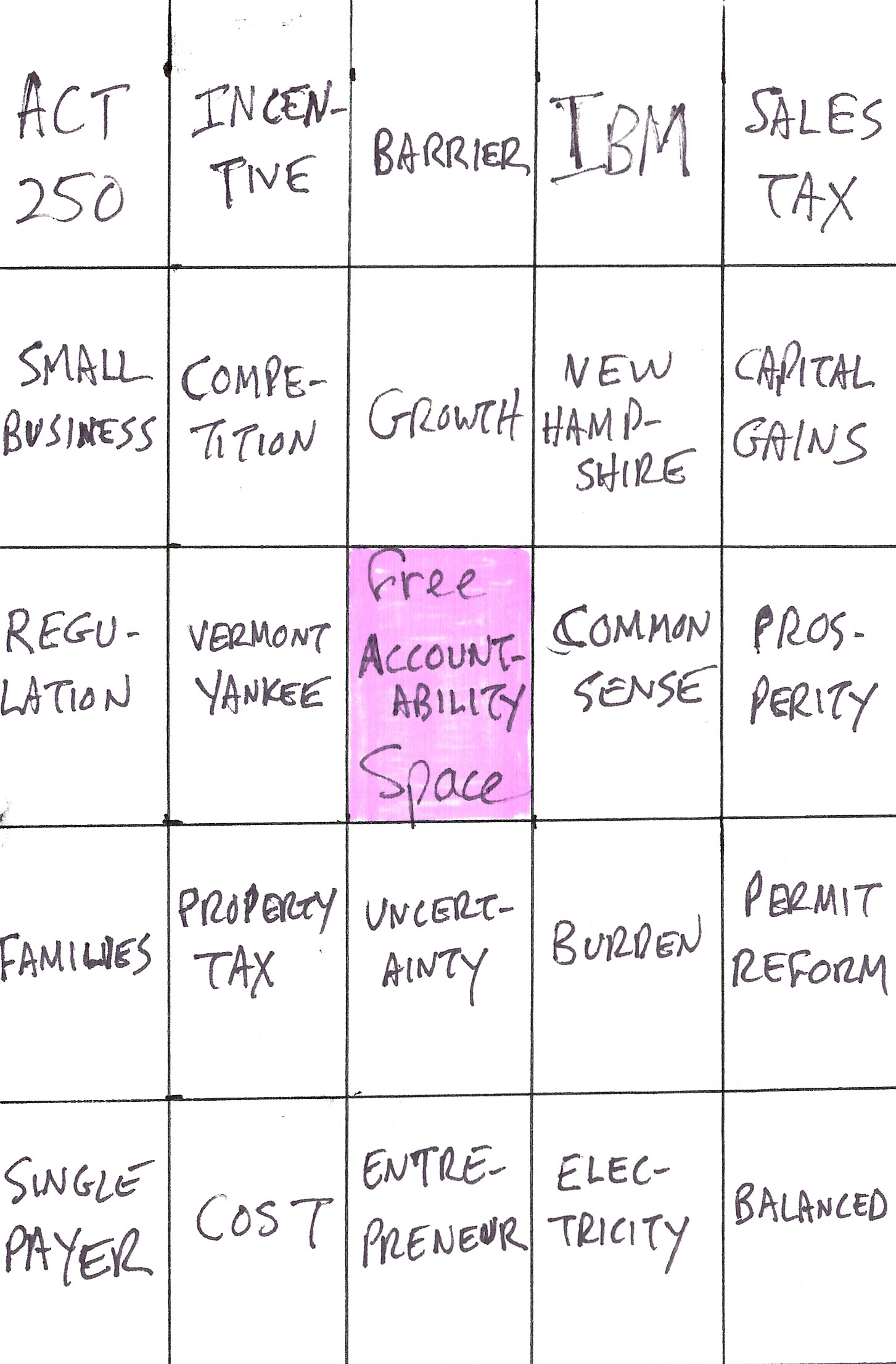
I call it Phil Scott’s Business Buzzword Bingo. Simply print out the image below, take it with you to the “pitch session,” and whenever you hear a buzzword, write an “X” over the corresponding square. When you get five in a row, across, down, or diagonally, shout “BINGO!” You win!

Ground rule: plural or alternative versions of a word are accepted as matches. For instance, “Costs” is a match for “Cost,” and “Entrepreneurial” is a match for “Entrepreneur.”

Come to think of it, you should print out a whole bunch of Business Buzzword Bingo cards, because I have a feeling we’ll get a BINGO every two minutes or so.

Here you go: your very own Phil Scott’s Business Buzzword Bingo playing card. Enjoy!


Phil Scott Bingo card

‘Tis the season for hyping politically convenient survey results

This time, it’s a survey from the completely unbiased HAHAHAHA CNBC comparing the business climates of the 50 states. Here’s a shocker: Vermont didn’t do very well, coming in 42nd in the nation.

One clue that there might be something funky with this survey is the fact that all the Northeastern states were clustered at the bottom: New York 40, New Jersey 43, Pennsylvania 44, Maine 45, Connecticut 46, and Rhode Island dead last.

The only Northeastern states to get out of the doldrums were New Hampshire, tied with Arkansas for 30th, and that business-hating socialist hotbed of Massachusetts at 25.

Right off the bat, I’ve got to believe there’s some sort of built-in regional bias. And with Massachusetts the star performer of the region, it’s hard to see how much of an impact Vermont’s liberal tax-spend-and-regulate environment would have; we can’t be that much worse than Massachusetts. Indeed, the rankings are such a mixed bag that it’s hard to identify useful trends: some factors favor robust social investment (infrastructure, education), some have a clear geographic bias (availability of transportation), some favor large states, some small.

Of course, that didn’t stop VTGOP Chair “Super Dave” Sunderland from glomming onto the survey like Paula Deen on a stick of butter.

Well, there’s the VTGOP analysis, in its full 140-character glory. What say we take a closer look at this survey?

Vermont’s rankings tended toward the extremes. There were ten categories in all. We were near the top in Quality of Life and Education. We were in the middle on a few things (including the oft-criticized Business Friendliness, #31), but right near the bottom on Cost of Doing Business, Cost of Living, Infrastructure & Transportation, and Workforce.

All right, so we’ll take credit for Quality of Life and the excellent education system that the Republicans would like to undercut (gubernatorial candidate Scott MIlne calls for as much as a 30% slash in public school funding). But let’s see why we fare so poorly in those four major categories. CNBC lists the criteria in each category, although there’s no explanation of how the criteria are evaluated and weighted, so it’s only of limited utility.

Cost of doing business. Criteria include state and local tax burden (income, property, business, gasoline), utility costs, wage rates, and rental costs for commercial space.

Why I don't feel sorry for the overburdened rich. From the Institute on Taxation and Economic Policy.

Why I don’t feel sorry for the overburdened rich. From the Institute on Taxation and Economic Policy.

Regarding taxes, first of all I’d note the absence of sales tax, which hits middle- and lower-class residents hardest. For included taxes, CNBC used the official tax rates. However, some of our tax rates are artificially high compared to taxes actually paid. This is especially true for top income earners. Vermont’s official top income tax rate is 8.95%, which is on the high side; but because of generous rules on eligible income, top earners pay an effective rate of only 5.2%. And when you combine all taxes, the top 20% pay a smaller share than any other group.

As for utility costs, yes, they’re relatively high. That’s partly because of Vermont’s relatively aggressive adoption of renewables, but also because of our relative lack of home-grown sources. We don’t have any of our own coal, oil, or natural gas.

On wage rates, well, I’d just as soon have better wage rates than some “business-friendly” states like Texas and Utah and Nebraska. Ditto rental costs: I’m glad we put reasonable limits on commercial development. It’s part of the price we pay to keep our “Quality of Life” score high. (If, like Scott Milne, you’d like to see Vermont look more like the West Lebanon, NH commercial strip, then you’re entitled to your opinion. I guess.)

Cost of Living. A fairly straightforward category. Some of the low ranking is due to social choices (energy and development, see above) and some is inherent in being a small, rural, cold place (food, heat).

Infrastructure & Transportation. This category is a little funky. “Quality of roads and bridges” is only a small part of it. CNBC’s top criteria:

We measure the vitality of each state’s transportation system by the value of goods shipped by air, waterways, roads and rail. We look at the availability of air travel in each state, the quality of the roads and bridges, the time it takes to commute to work and the supply of safe drinking water.

Well, hell. Vermont’s never going to score well on most of that. We don’t produce a lot of goods, so we don’t transport much. We don’t have much of a transportation infrastructure because we’re so small: only a couple freeways, a lot of winding two-lane roads, very little rail or air. And our commute time is long because we’re rural.

Workforce. This is another funky one. Along with education level of employees and number of available workers (we struggle on that one), CNBC puts a lot of stock in right-to-work laws and toothless labor unions. Again, if that makes us a bad place to do business, it’s a trade-off I’m more than willing to make.

There’s one more crucial piece you need to understand about the CNBC ranking. Not every category gets equal weight. In fact, the most heavily weighted category, Cost of Doing Business, is worth 450 points, while Education is worth only 150 points and Cost of Living only 50.

CNBC’s weighting system pushes Vermont farther down the rankings because we generally score worse on the heavily-weighted categories than on others.

Some of the weighting is reasonable, and some of it is standard fiscal-conservative dogma. Education, in particular, seems to be very important to a lot of Vermont businesses, and yet it carries little weight in CNBC’s rankings.

But then, it’s depressingly normal for the business world to focus on the immediate and short-term, instead of the long-term. You’d think that businesses would be smart enough to realize that a little short-term pain (enough tax revenue to support infrastructure, education, and social services) is more than justified by the longer-term gain of doing business in a strong, stable environment rich in social capital.

The survey is somewhat useful if you look beyond the mere rankings and use it to evaluate your state’s strengths and weaknesses. And if you make thoughtful decisions on which factors are worth improving, and which things you’d like to keep the way they are. Even if they don’t absolutely maximize the business climate.


A modest entreaty to our conservation groups

Okay, here I go again, disappointing some of my lefty friends. My request:

Please don’t pursue the Burlington College land. Let the sale to a developer go through, and find another use for the $7 million you’d need to block the sale.

The news kinda got lost in the IBM/GlobalFoundries shuffle and resultant flood of Republican petulance, but Burlington College announced Monday that it would sell most of its 32-acre lakefront property to a real estate developer, who would build a mix of affordable, senior, and market-rate housing. The College desperately needs the money to get out of debt and give itself a fighting chance at survival.

The deal includes a 60-day window for preservation groups to match the purchase price and keep the land from being developed.

And I’m begging you, please don’t.

Look, I realize this is Vermont and we’re going to be inundated by earnest calls to Keep This Land Pristine and Save It For Our Children. But sorry, I’m not on board.

Vermont needs more housing. A recent report by the Champlain Housing Trust and Housing Vermont shows that a lack of housing stock is driving purchase prices and rental rates upward, making housing unaffordable for many. The high price of housing is also a drag on the economy: the report says the housing crunch hurts businesses trying to recruit workers into Vermont. Which we need, to kickstart our stagnant economy and bring more kids into our under-populated schools.

And for the sake of the environment, we especially need new housing in our cities and towns. We don’t need more sprawl, particularly in Chittenden County, which already suffers from the effects of sprawl. Infill housing is good for our environmental footprint.

Every chance for a new development brings a value judgment. Do we want to preserve the land, or do we think the benefits of a development outweigh the preservation interest?

The best answer depends on the specifics of an individual project. But bear in mind: Every time we opt for preservation, we lose property taxes, we keep housing prices high, we make it harder for people to move to Vermont, and we encourage sprawl.

So please. Go ahead and raise $7 million. But use it for something that’s a clear environmental plus, instead of the usual kneejerk reaction against a project that would actually do some good things.

The new boss can’t be as bad as the old boss, right? …Right?

Memory Lane, kids! On November 12, 2012, I wrote a piece on Green Mountain Daily entitled:

Expect IBM to leave Vermont within three years. No matter what we do.

And today comes the news that IBM is “selling” its semiconductor business, including its plant in Essex Junction, for negative $1.5 billion. Yep, it’s paying GlobalFoundries to take the business off its hands. IBM is, indeed, leaving Vermont.

Allow me a little tiny bit of gloating here. Mmmmm, ahhhh.

Okay, enough. Get on with it.

That GMD post was inspired by the work of technology journalist Robert X. Cringely, who’d reported that IBM was in an all-out blitz to shed domestic workforce and slash itself into profitability. My point was that if IBM left Vermont, it’d be because of global corporate strategy. Not because we didn’t build the Circ Highway or our electric rates were too high or then-Senate leader Peter Shumlin once called an IBM lobbyist a “liar.” (Which, Republicans, just stop. It happened years ago. And if a lobbyist and his employer takes lasting umbrage at an offhand comment during the heat of legislative debate, well, they’re just way too damn sensitive.)

So here we are, less than two years later, and IBM is on its way out.

My prediction was right on the facts — but wrong on the implication, that IBM’s Essex plant was a goner. Fortunately, GlobalFoundries sees potential in the plant and/or its skilled workforce. In the short run this is very good news, because the way things were going at IBM, it’s a relief not to have thousands of good jobs and the Chittenden County economy dependent on Big Blue.

However…

While GlobalFoundries is saying all the right things — it plans “to provide jobs for ‘substantially all’ IBM employees at both Essex Junction and East Fishkill who are part of the transferred business,” it assured Governor Shumlin that it “plans to continue employment, investment, and operations in Vermont,” and it told the Burlington Free Press that it is committed to Essex for the “foreseeable future” — this deal should not significantly reduce the concerns over the Essex plant’s future.

After all, it’s not like GlobalFoundries has a lot invested in Essex. It agreed to accept a boatload of money, plus the IBM chip business. And when you combine the GF and IBM capabilities, you’ve got two manufacturing plants in the Hudson River Valley — one of which is a brand-new $8 billion facility — and one up here in Essex. If there’s any consolidation in GF’s future, I’d have to guess it’ll lean to the south.

Aside from the fact that reassurances like these are routine, and worth approximately the toilet paper they’re written on, there are some obvious caveats in today’s crop.

GlobalFoundries says it “plans” to provide jobs for “substantially all” IBM employees at Essex “who are part of the transferred business.” That’s a lot of weasel words in a single sentence. “Plans” can change. “Substantially all” is a matter of definition. And how many in the Essex workforce are NOT “part of the transferred business”? Will they be cut by IBM? If given the opportunity to remain at IBM, will they have to relocate? After all, IBM won’t have a presence in Vermont anymore.

Governor Shumlin is meeting with GlobalFoundries officials later today. Color me cynical, but I’d expect GF to put the screws to the Governor. The corporation will provide generic promises and make very specific demands. And the Governor is in a weak bargaining position: he knows that the Essex plant means a lot more to Vermont than it does to its new owner.

"I have returned from GlobalFoundries with peace for our time."

“I have returned from GlobalFoundries with jobs for our time.”

He might even come out of the meeting with a piece of paper in hand, proclaiming a new deal that’s good for Vermont and for GlobalFoundries.

Not that I could blame him. We’re over a barrel with the Essex plant. Its closure would be a huge blow to our economy. In the short term, the IBM/GF deal is good for the state — if only because I’d hate to continue depending on the good graces of IBM. But a lot of uncertainty remains, and the moral of the story continues to be “don’t put all your eggs in one basket.”

I grew up in Michigan, a state that grew and prospered with the domestic auto industry. The Big Three had its roots in Detroit. It did a lot of good for Detroit. But when the global winds shifted, the automakers had to shift with the times, and Detroit was left to hang. The takeaway: it’s not healthy to be too dependent on one business or market sector. Sooner or later, it’s gonna bite you in the butt.

IBM’s departure is a stark reminder: Vermont’s economy should be as diversified as possible. Eventually the winds are going to shift again, and we need to be ready.

Art Woolf’s arguments of convenience

Welp, Vermont’s Loudest Economist is at it again. Art Woolf’s latest dispensation of wisdom in the Thursday Burlington Free Press is chock full of half-baked research, lazy reasoning, and politically convenient conclusions.

The main conclusion, as is often the case: Vermont sucks.

The topic of Art’s latest “How We’re Doing” effort was outmigration – the fact that Vermont’s population is roughly stable (or stagnant if you prefer, as Art does) and a lot of people are leaving.

This week’s entry in the digital Freeploid is entitled “Ex-Vermonters Vote With Their Feet.” (The print edition had a different title.)

As if every decision to move is a “vote” against Vermont. Every birth, a “yes” vote; every death, a “no” vote. (The Medical Examiner ruling: Death By Taxes.)

popchgsept25The accompanying chart shows three factors in population change: births/deaths ratio, immigration (from outside the US), and Net Domestic Migration. It shows immigration as a constant: we have a relatively small trickle of foreigners setting here. The births/deaths ratio was healthy until 2008, when the birthrate began to drop. But the biggie is Net Domestic Migration, which has been negative since about 2004.

(The chart is, of course, scaled to dramatize the net-migration plunge.)

Woolf chalks up the declining birthrate to our aging population, which is reasonable (although I wonder how much the Great Recession played into it): we do have more people beyond the usual child-rearing age. Woolf speculates that our birthrate will continue to fall as our population ages.

But later, when he’s expounding on the causes of our negative Net Migration, he completely ignores the aging population. Did it occur to him that a lot of our outmigrants are senior Vermonters heading for the Sun Belt? Not to judge by his column:

When people vote with their feet, they are saying something about the desirability of a state.

Those people are saying that despite its many attractions, Vermont is not a popular place for people to live and work.

For some that’s true, but not for an 80-year old who’s tired of hauling firewood and shoveling snow.

Woolf uses our aging population as a cudgel when it’s convenient; he ignores it when it’s not.

Also, as usual, Woolf doesn’t bother to compare Vermont to similar states. The outmigration of young people is a common problem for small, rural states; is Vermont’s better or worse than, say, Maine’s or Wyoming’s? Or northern New Hampshire’s?

Finally, let’s bring up a sacred cow that Woolf would never touch: the role our employers play in making Vermont undesirable. Generally speaking, Vermont’s pay rates are on the low side. Even if you’re talking about comparable jobs, the pay is often lower in Vermont than elsewhere.

Two examples I have some familiarity with: medicine and academics. Pay scales at UVM (and Dartmouth) are lower than at similar institutions elsewhere — sometimes substantially lower. Like, 50% or more. Our institutions get away with that because (a) Vermont offers such a high quality of life that many professionals will settle for a lower salary, and (b) our cost of living is relatively low compared to, say, Boston or New York or even Albany.

Many Vermont employers, especially in technology fields, complain that they can’t find enough qualified workers. Well, maybe they aren’t paying enough. Maybe they’re not recruiting hard enough.

No, that’s not it. Must be the taxes.

To be fair, Woolf doesn’t come out and blame taxes and regulation for Vermont’s outmigration. But he omits a lot of factors that lead to other conclusions: that we have built-in disadvantages, that our employers skimp on pay and aren’t aggressive enough in attracting new residents. And that our aging population is likely a major factor in growing outmigration.

This week’s entry, like many of his columns, is meant to undergird the business point of view — that we need to fling open the door to growth by cutting taxes, regulations, and those pesky environmental laws. As a thorough, honest look at How We’re Doing, the best grade you can give is Incomplete.

Mr. Empty Suit steps to the mic

“I’ve got plenty of great ideas.”

So said Republican Scott Milne during Saturday’s gubernatorial debate. His comment came after Governor Shumlin repeatedly slammed his failure to give “us one single plan” on a variety of issues.

And then Milne, predictably, failed to name any ideas.

Well, he did have one: a two-year cap on property taxes, which would put public school into a dire budget situation because many of their costs will continue to rise. It’d force spending cuts from the top down, the very opposite of his claim to be in favor of local decision-making. But hey, at least it was an idea.

Otherwise, nothing much. At another point he said “I’ve got two ideas.” The first was that the Governor had spent too much time out of state. Which is not an idea; it’s an attack.. The second was the property tax cap.

Sigh.

As I said in an earlier comment, Milne managed to exceed the minimal standard of competence, e.g. he didn’t poop his pants. Shows you how dismal his campaign has been, that keeping his shorts clean seems like an accomplishment.

As for actually putting forward an inspiring message, nope. Not at all. He hammered repeatedly on the same old attack lines he’s used since launching his campaign: Shumlin is “the most progressive, radical Governor” who insists on pursing single-payer health care. Milne’s idea for health care reform?

“I will be working very hard with people to get something figured out.”

That is, word for word, what Scott Milne actually said.

On trying to keep young people in Vermont, his only contribution was to assert that the Shumlin Administration “has not been business friendly,” and Vermont needs “a new tone” in its dealings with business. F-sharp, perhaps?

When asked about problems at the Agency for Human Services, he pivoted back to his attack on the troubled rollout of Vermont Health Connect, and cited it as an example of poor management. When he actually addressed AHS, he said we need an agency that “puts the family first.” How imaginative.

When asked about cutting state spending, he gave a halfhearted shoutout to the discredited Challenges for Change initiative, then said “I’m not into cutting,” and then said property taxes are too high.

Confused?

In his closing statement, Milne referenced his late mother Marion’s run for State House in 1994 when, as Milne tells it, a local politico gave her no chance to win. But she ran anyway and won. And so can Scott Milne, if people only believe. And he closed with a bombshell: “Vermont needs a different path. I believe it needs a more moderate path.”

Having, once again, failed to give any real hint of his preferred path for Vermont. It’s been defined almost entirely in the negative: He wouldn’t repeat the alleged mistakes of Governor Shumlin.

And, as I reported earlier, he’s postponed a meeting with VTDigger’s editorial board because his platform isn’t ready yet.

Scott MIlne’s campaign is very close to flat broke. Its campaign manager just resigned. The best you can say about Milne’s debate performance is that he didn’t flame out. But he did nothing to advance his campaign, to provide a substantive option to Shumlin. Or to Dan Feliciano, for that matter.

He did okay by his standards, but that’s not nearly good enough.

Scott v. Corren, round one: a spirited, informative debate

The two major-party candidates for Lieutenant Governor stood their ground and clearly articulated their positions in their first debate this morning. Incumbent Republican Phil Scott and Prog/Dem Dean Corren debated on WDEVs Mark Johnson Show, broadcasting from a windy, chilly Tunbridge World’s Fair.

(Johnson has posted the audio as a podcast for your listening pleasure. Also, the video is available here, thanks to CCTV.)

Scott and Corren provided the voters with a clear choice… although the Scott option involves his usual bobbing and weaving on the issues. But that’s Phil Scott, and he said as much in his closing statement: if you like the job I’ve been doing, I promise two more years of the same. Corren made a strong, understandable case for his progressive agenda, particularly single-payer health care.

Neither candidate made any notable stumbles. If you went in a Phil Scott fan, you almost certainly left as one. Ditto Dean Corren. Undecideds were given a lot to think about, and a clear choice between two contrasting styles and philosophies.

I also have to say a word on behalf of host/moderator Mark Johnson. He conducted the proceedings without a hard-and-fast format, which often results in a stilted faux-conversation; instead, Johnson was able to maintain a flow and pursue follow-up questions as he saw fit.

The first half of the debate was dominated by health care reform, and especially whether to

Dean & Pete: Best buds

Dean & Pete: Best buds

pursue single-payer. That was to Corren’s advantage; since he has a clear position.

He began with the fiscal case for single-payer. He argued that single-payer would be simpler than the former or current system, and far better for controlling health care costs. It will require new taxes, he acknowledged, but the current system is extremely burdensome; single-payer will reduce the overall burden. As Lieutenant Governor, he would be an advocate for single-payer, communicating its virtues and being a “watchdog” to ensure that the details are done correctly.

Cost control efforts have failed, Corren argued, because no one entity has full control over all the costs. If a reform cuts costs in one area, those costs are actually shifted to an unregulated area. Single-payer would allow for a unified effort to cut costs.

Phil & Pete: Best buds

Phil & Pete: Best buds

Scott remains “skeptical” — his favorite word, as he himself admitted. He wants to see the details before making a decision on single-payer, but he clearly prefers to stick with the current system instead. Which involved a bit of tortured logic: he said that the rollout of Vermont Health Connect has been “disastrous,” but that nonetheless, having a health care exchange “makes sense.”

He also said that reform may be difficult because Vermont is such a small state, and offered the idea of a tri-state insurance “coalition” involving Vermont, New Hampshire, and Maine.  Not sure he articulated the advantage of such an approach, but there you go.

Personality and approach: Scott kinda tried to have it both ways — but hey, that’s the way he is. He played up the advantage of his “collaborative” approach but also claimed that “I stick to my guns.” When asked to cite an example of an issue he feels strongly about, he offered the environment and growing the economy. Not a convincing display of passion or principle; everybody is in favor of both. The devil is in the details.

Corren portrayed himself as a strong progressive voice on the issues. As such, he’d be a valuable part of Governor Shumlin’s team. But at the same time, he’d be independent enough to take stands when he sees fit. As such, he argued, he’d be a better “watchdog” over health care reform than Scott because he truly wants it to be successful: “We need a Lieutenant Governor who will work for reform, not be skeptical.”

Party problems: When asked about past differences between Progs and Dems, including his own criticism of the Dems, he said that was all behind him, and asserted that the Democratic Party and the electorate in general have moved to the left, making a better fit between D and P. “I feel very comfortable working with the Democrats,” he said. “I’m proud of what the Democratic majority has done.”

Scott was asked why the Republican Party struggled so much in Vermont. He blamed perceptions of the national party’s stands, especially on social issues. He said the “core of Vermont Republlicanism” was embodied by leaders like George Aiken, Bob Stafford, and Jim Jeffords, and said “We lost that, and we need to refocus.”

Property taxes and school funding: Scott said he was “disappointed in the Legislature” for failing to tackle the issue this year. He said “we need to do it,” but acknowledged that “it’s difficult.” He said that education costs need to be brought under control and acknowledged that might require some school consolidation. But he said it should be on a “case by case basis” instead of an overall mandate.

Corren said the school funding system has hurt the middle class more than anyone; the wealthy pay a smaller proportion on a per capita basis, and income sensitivity eases the burden on poor and working Vermonters. He advocated expanding income sensitivity to the entire populace — which would presumably shift some of the burden upward. He also pointed out that health care is perhaps the biggest driver of school cost increases, and again stumped for single-payer.

Energy. Corren is a strong proponent of developing renewables, including wind. He referred to the “imagined horrors” of living near wind farms, which won’t make him any friends in the Annette Smith camp. He did say that the state should have a clear plan that includes specific areas where wind should be developed and where it should not.

Scott is, to use his favorite word, a wind power “skeptic.” He declared himself a “big proponent of renewable energy,” but emphasized solar power over wind. He repeated his earlier support for a moratorium on new wind projects.

On the Vermont Gas pipeline, Scott tried to have it both ways, expressing his support for the project as a “bridge to the future,” but also supporting a second look at the project by the Public Service Board. Corren declared himself a “skeptic,” saying the economic and environmental benefits of the pipeline are “not proven.”

Children and DCF: Neither candidate had much to offer. Corren said that “problems persist” but acknowledged that he’s “not sure what to do.” Scott said that the Department of Children and Families is full of “good people doing good work,” and wondered if they needed more resources without committing to it. And he returned to his hobby-horse of economic development, arguing that the “affordability crisis” puts more “stress on families.”

Top priorities: As a closing question, Johnson asked each man what they would pledge to do in the next two years.

Corren: He would “work on the details of health care reform, and make sure we have a sustainable plan.” He also promised to work on jobs and development, particularly in the renewable energy sector. He sees that as a major growth opportunity for Vermont.

Scott promised “the same thing as in the past. A collaborative effort to bring people together as a team to move Vermont forward.”

And then, given the last word, he fired a shot at the Democrats. In the last legislative session, he said, there were hundreds of bills, but only about 20 of them had to do with growing the economy. And most of those, he added, failed to pass.

The truth of that assertion probably depends on your definition of bills that have to do with the economy. But Corren didn’t have the chance to respond.

With that, the debate was over. I have to say that, thanks to Johnson’s stellar work as moderator and two candidates who can articulate their positions well, it was one of the more informative debates I’ve ever heard. Too bad there will only be three more, thanks to Phil Scott’s reluctance.