Category Archives: 2024 election

Statewides: The Haves and the Have Nots

The September 1 campaign finance reports crystallized something we already knew: This is shaping up to be an unsurprising political season because there’s such a deep divide between those on top and those trying to get a leg up. The former include Gov. Phil Scott and a whole bunch of Democrats; the latter include every other Republican minus a few who’ve been blessed by the patronage of Burlington’s business elite.

The exception to the Democratic rule: Esther Charlestin, who entered September financially underwater in her long-odds (and getting longer every day) gubernatorial campaign. Somehow, the financial gap between Scott and Charlestin managed to grow in August.

This isn’t a typo: Charlestin has raised only $21,137 and spent $22,309. On primary night, Charlestin told VTDigger she would “go hard” in the general campaign, which meant knocking on doors, seeking endorsements, and “raising a lot more money.”

But she didn’t do that. For the entire month of August, Charlestin raised $4,505, which isn’t anywhere close to “a lot more money.” I can’t say how much of this is her doing and how much is Democratic donors turning their backs; Charlestin didn’t score any donations above $250, and that came from longtime Progressive stalwart Martha Abbott. Hey, Dems: Do you like your candidate or don’t you?

Meanwhile, Scott continues to raise far more money than he needs, and spend money like he’s got an actual battle on his hands instead of an almost certain walkover.

Continue reading

The Ledbetter Campaign Was an Historic Waste of Resources

The September 1 campaign finance deadline has come and gone. There will be plenty to report on, but we must begin with the final numbers for ex-TV anchor Stewart Ledbetter’s failed bid for state Senate. It’s one for the history books. Ledbetter managed to turn his broadcasting fame and an immense pile of cash into a fourth-place finish in a race for three Democratic nominations.

The carnage: Ledbetter’s campaign raised a total of $68,557, including $10,518 between August 1 and primary day. That has got to be an all-time record for a Vermont legislative campaign. If anyone can think of a more costly effort, I’ll amend this post*. And Ledbetter raised all that money for a primary. He didn’t even make it to the general.

*VPO reader and Middlebury College professor Jason Mittell points out that although Ledbetter had the biggest campaign fund, he was actually “bested” in spending per vote. By Mittell’s reckoning, Elizabeth Brown, business-backed Democratic candidate in the two-seat Waterbury district, spent an incredible $35 per vote received**.

**And we have a winner! Reader David Ellenbogen points out gas station magnate and G.W. Bush megadonor turned ambassador Skip Vallee. He ran for state Senate in 2000 and finished eighth in a race for six seats despite spending (according to Seven Days) an incredible $123,000, including $60,000 of his own money. Vallee remains unchallenged as running the most expensive campaign for a legislative seat in Vermont history. Unlike Ledbetter, however, Vallee at least advanced to the general and spent his wad over the full campaign season, not just the primary.

He spent a total of $58,495 on his campaign, including an amazing $28,962 after the end of July. He was spending money at a frantic pace when many voters had already cast their ballots. It’s understandable, since there must have been a desperate scramble to shovel cash into any available furnace. Even so, he managed to leave more than $10,000 unspent.

Ledbetter got 3,159 votes in the primary. Which meant he spent $18.51 per vote.

Apologies for all the italics, but the numbers are simply astounding. And not in a good way.

Continue reading

So You’re Saying There’s a Chance

I’ve previously discussed the Republicans’ chances of ending the Dem/Prog supermajority in the House, which are essentially zero. Now it’s time for the Senate, where the Republicans do have an actual chance at ending the supermajority — but the odds are stacked against them.

Scene setting: During the current biennium, the D/P contingent totaled 23 while the R’s had only seven. Twenty votes constitute the narrowest of supermajorities, so the Dems have had a nice little margin for error.

The Republicans need to post a net gain of at least four seats in November to end the supermajority, but every seat they pick up makes it harder to override.

Quick assessment: If absolutely everything broke their way, the Republicans could pick up a maximum of five more seats — which would leave the D/P majority with 18, two short of a supermajority. But the chances of that are slim at best. The Republicans are more likely to win a seat or two, which would preserve the supermajority but make overrides harder to achieve. If you spin the scenario the other way, the Dems could hold serve and pick off one Republican seat.

Continue reading

The Vermont Republicans Are Exactly Who We Thought They Were, Part Eleventy-Billion

This is a cropped version of a photo from 2022, but it’s useful in remaking a point I’ve made before: Phil Scott notwithstanding, the Vermont Republican Party is a creature of the far right. Trumpers and conspiracy believers dominate the VTGOP from county committees to state committees to top party officials and, shocker I know, the party’s 2024 ticket. Pictured above: Party vice chair and practicing extremist Samantha Lefebvre, who won a single term in the Legislature by fooling the voters into thinking she was a “common sense Republican” (and lost her bid for re-election because she’d revealed her true colors), current party chair Paul Dame, former governor Jim Douglas and his familiar dead-eyed smile, and Samuel “Two-S” Douglass, currently making his second bid for state Senate. (He ran against Bobby Starr in 2022 and got 42% of the vote. He’s now running to succeed the retiring Starr against deep-pocketed Democratic Rep. Katherine Sims.)

Two-S is a fellow who thinks that Fox News isn’t conservative enough, the acquittal of multiple murderer Kyle Rittenhouse constituted “justice,” and our three biggest environmental challenges include “industrial wind turbines” but not climate change.

He’s also the chair of the Vermont Young Republicans. Yep, another fringe character who’s gained a top position in party circles. Great.

Continue reading

Bernie Does the Business

I tell you, Bernie Sanders may not be running as a Democrat, but at the DNC this week he played the loyal party soldier to the hilt. In his Tuesday speech, he devoted about half his 12 minutes to praising the Biden-Harris administration, quickly ran through his Greatest Hits (to a lukewarm reaction from the crowd, more on that later), and called for an immediate cease-fire in the Middle East without mentioning Israel, Gaza, or Netanyahu, or uttering a single word of criticism for American policy.

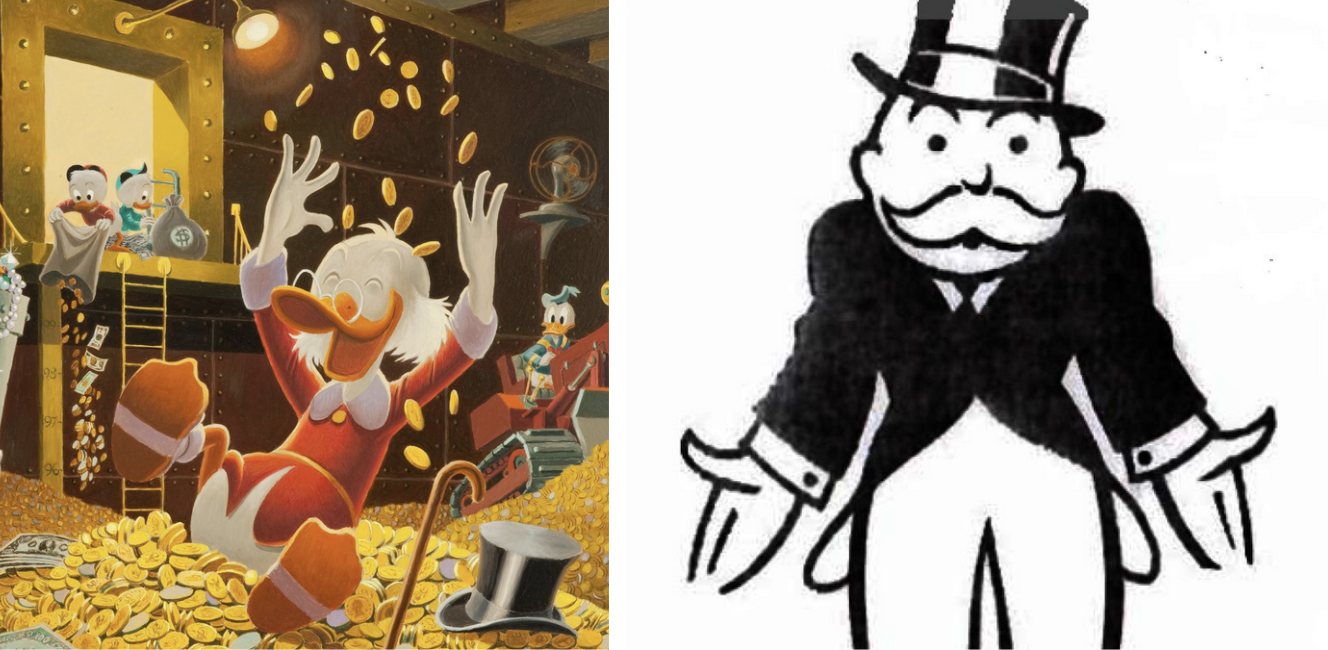
But the biggest tell of all: After his customary slams at “the billionaire class,” his calls to “get big money out of our political process” and his bemoaning of “billionaires in both parties” being “able to buy elections, including primary elections,” Bernie was followed to the stage by Illinois Gov. J.B. Pritzker, who is not only a billionaire, but looks like what a 6-year-old thinks a billionaire looks like. I mean, just add a top hat, vest, and gold pocket watch, and he’d look right at home in a Thomas Nast cartoon. Take away the hair and you’ve literally got the Marvel supervillain Kingpin.

And for what must have been the first time ever at a Democratic convention, Pritzker got applause by boasting of being “an actual billionaire.” You want to talk big money buying elections, Bernie? Pritzker bought himself the top job in Illinois by pouring $323 million into his two campaigns for governor.

The speakers list at major party conventions is a carefully curated thing, calculated to send messages and evoke feelings and impressions in the audience. They knew exactly what they were doing when they put Pritzker after Sanders. Hell, Bernie knew exactly what he was doing when he slammed billionaires buying elections — and Pritzker knew what he was doing when he implicitly dismissed Bernie’s rhetoric.

Continue reading

“I Only Got the Albatross. Albatross!”

Congratulations to the Vermont Republican Party for scrounging up 21 more candidates for state House! That’s right, in a post-primary meeting, the state committee filled a bunch of vacancies on its ticket and brought its total number of House hopefuls to a seemingly respectable 96. VTGOP Chair Paul Dame boasted of an “excitement and energy” not seen in the party since 2014. Funny thing, he skipped over the election of Phil Scott two years later.

Problem is, when you get up close and examine the merchandise, you realize that pretty much all they’ve got is dead albatross.

Dame speaks hopefully of the additional candidates increasing the party’s chances of killing the Dem/Prog House supermajority. Trouble is, I looked over the list of 21 late adds, and only three of ’em have a measurable chance of winning in November.

Albatross!

Continue reading

The Myth of Democratic Intolerance

In the wake of primary defeats suffered by business-backed “Democrats” challenging incumbents, Gov. Phil Scott and VTGOP Chair Paul Dame have taken to blaming everyone but themselves. The primary electorate, said Scott, includes “the extremes” among voters, resulting in “more polarization.” Dame put it less politely, saying the VDP “is no place for moderates any more.”

Yeah, well, bullshit.

Here’s what happened. A few people with no history of involvement in Democratic politics decided to run as Democrats. They were allowed to do so. Their campaigns were generously bankrolled by well-known conservative donors, including prominent Republican figures like former gubernatorial candidate Bruce Lisman. They were openly endorsed on primary day by the sitting Republican governor. And the voters opted for incumbent Democrats instead.

That doesn’t make ’em intolerant. It just means they’re not gullible enough to fall for the okey doke.

Continue reading

Phil Scott’s Cunning Primary Day Plan

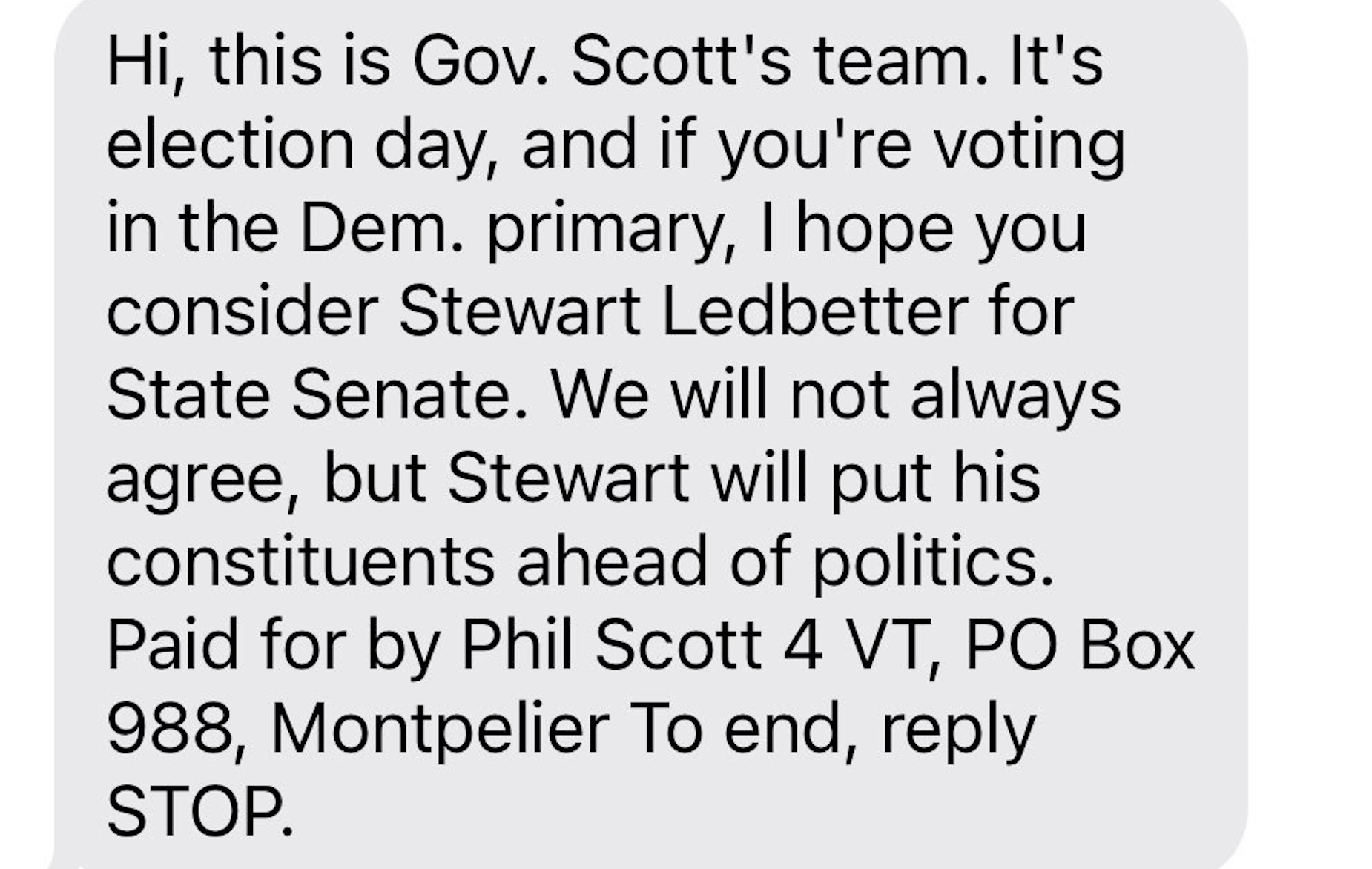
It’s been years since Gov. Phil Scott has had to run a competitive race, and maybe his political team has gotten soft or something. Because when it comes to shooting oneself in the foot, it’s hard to top a Republican governor texting voters in Vermont’s most progressive Senate district on behalf of the centrist candidate. Who, spoiler alert, lost.

I mean, who’s in charge over there? Baldrick?

This wasn’t the governor’s only ill-considered stomp into Democratic primary turf. His team also sent texts on behalf of Elizabeth Brown, faux-Dem challenger to incumbents Tom Stevens and Theresa Wood. Both are committee chairs and influential members of the House Democratic caucus. Ya think they’ll remember this little misadventure with gratitude? Ya think the admin’s relationship with the Legislature just took a small but discernible turn for the worse?

My guess? Either Team Scott is just desperate to move the needle on legislative races or they’ve got too much time on their hands, what with a snoozer of a contest against Dem nominee Esther Charlestin their biggest “challenge.” Maybe they should just take the rest of the year off.

Continue reading

A Happy Little Primary Night Cash Fire

Tuesday’s primary election turned out to be a snooze. The most interesting development was how much money was wasted trying to unseat a small number of Democratic incumbents. They all won, as far as I can tell.

Firmly atop the Futility Rankings is former TV anchor Stewart Ledbetter, who finished fourth in the race for three state Senate seats in the Chittenden Central district. He raised almost $60,000 and spent a bit under $40,000 (tentative). He “earned” 3,159 votes, which cost him and his well-heeled donors about $12.56 apiece. Bargain!

Elsewhere in the “beat the Democrats” game, House Ways & Means Chair Emilie Kornheiser brushed off a challenge from business-backed Dem Amanda Ellis-Thurber, while the Waterbury duo of Reps. Tom Stevens and Theresa Wood defeated “affordability” Dem Elizabeth Brown, who spent gobs of cash and didn’t really come close to pulling off an upset.

Two quick takeaways: If there’s an anti-tax revolution brewing in the hinterlands, it did not show itself in the results. At all. And those allegedly smart business leaders just squandered a whole lot of money trying to push the Democratic caucuses toward the center. They might have scored one small victory, as Danforth Pewter chief Bram Kleppner took a Democratic nomination for House in Burlington. But that’s about it.

Continue reading

Who’s Spending: Another Look at Mass Media Filings

One week ago, I wrote about former senator John Rodgers’ five-figure spend for ads on WDEV radio plus other candidates’ investments in mass media. Several candidates have since reported mass media expenditures; here’s a look at the highlights.

Reminder: The next campaign finance reporting deadline is August 1, but candidates are required to promptly report mass media buys of $500 or more when they occur close to an election.

Let’s start with Rodgers. I noted that if his WDEV buy was part of a broader strategy it could pay off, but by itself it’s a questionable move. It’s a lot of money to spend on a diminished medium and an outlet that only reaches a fraction of Vermont. Well, so far it stands alone: Rodgers has not reported any more mass media spending.

The biggest mass media report from the past week comes not from a candidate, but from the Child Care Victory Fund, a political action committee affiliated with Let’s Grow Kids Vermont. The Fund is apparently trying to protect incumbent lawmakers who supported Act 76, the 2023 bill that made a “quantum leap” in child care investments, and now face primary opposition.

Continue reading