I’ll say this much for Gov. Phil Scott: He understands the assignment.
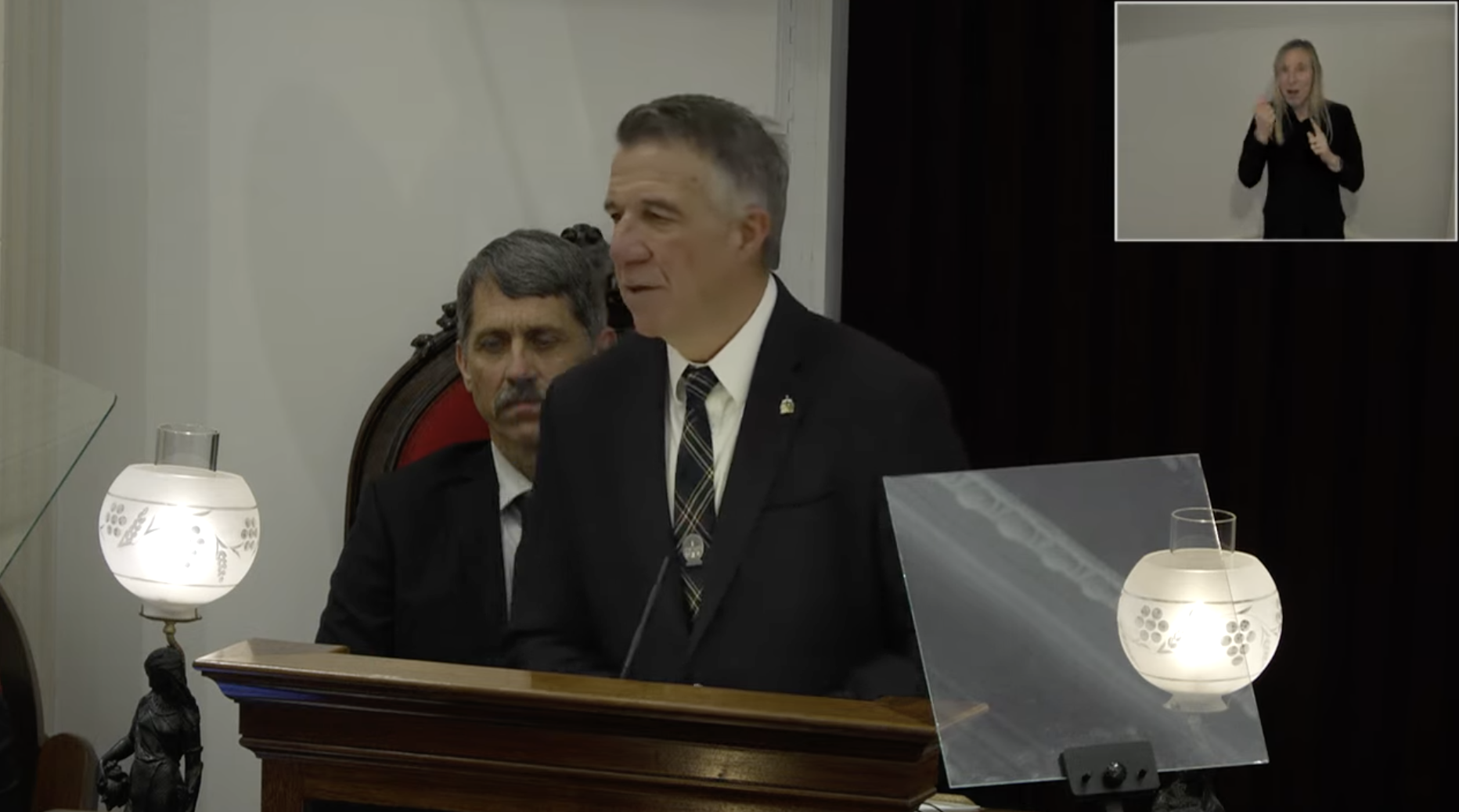
Scott delivered his State of the State address Wednesday afternoon, and virtually every one of its 40-odd minutes was devoted to a single subject: Following through on Act 73, the widely unpopular education reform law of 2025.
Speaking in purely political terms, if he wants the Legislature to keep on track with Act 73, he’s going to have to get out in front and spend heavily from his Scrooge McDuck levels of political capital trying to persuade a reluctant public that his vision is the right one. This speech indicates that he’s well aware of the assignment.
It’s only the first step, of course. If he wants to sell Act 73, he’ll have to get out there, criss-crossing the state, lobbying the Legislature, and attaching his name and image to the process. Phil Scott is the only person who can make chicken salad out of the Act 73 chicken shit.
Before turning his attention to the main course, Scott spent a couple minutes decrying incivility in national politics (without identifying any specific culprits, coughTRUMPcough) and holding up Vermont as a shining counter-example. Which is convenient for his own political standing; the top dog would just as soon his detractors voluntarily defang themselves. And he briefly previewed his coming budget, which he said would include no new taxes.
And then the main event. I confess I only took about a page and a half of notes, because his message was so simple and clear: Reforming the public education system “is not optional, it’s essential.” He threatened to reject any budget or education bill that didn’t include the drawing of a new school governance system involving far fewer school districts.
Scott’s call to civility did not extend to the School District Redistricting Task Force, which he’d branded a failure because it didn’t produce a selection of maps. He sharpened that criticism in his speech by accusing the task force of pursuing “a political strategy to preserve the old system.”
Sigh. I guess I’ve got to say it again. There is NO ONE who thinks the current system should be preserved intact. Everyone agrees on the need for changes, including those who work in the public schools. What they don’t do is swallow the governor’s prescription without question. In his eyes, that amounts to some kind of devious betrayal.
Anyway. Scott was obviously aware of the criticism from many precincts (including this one) that his sole concern with education is its cost. Which is, after all, based on his own persistent complaints about cost and taxes. In his speech, he argued for Act 73 as a way to provide better educational quality and opportunity for all students. Cost containment took a back seat — as though it was an unintended side effect of Act 73 rather than its main goal.
He did argue that Act 73 would cut costs, which is absolutely unproven, and that the savings could be invested in better service for students — and free up more money for state government in general. Which is really a stretch.
But again, he did what he had to do. He made the best case he could. Act 73 was the entire focus of his speech. He made it clear that he would accept nothing but a continued pursuit of the new law, and that he wanted the Legislature to get to work immediately on this issue above all others.
And you know, I may disagree with him and his vision for reform, but he deserves credit for stepping up to the plate. No laying in the weeds, no passing the buck, no letting the Legislature take the bullets for him. He stood front and center for Act 73. Now let’s see him follow through — not only in the Statehouse but across all of Vermont, putting his credibility at risk in support of an unpopular policy.
After all, what’s he got to lose? Democratic leaders in the House and Senate are on board with Act 73. The Democratic Party seems destined to nominate another little-known, underfunded candidate for governor. If he wants another term, and why wouldn’t he, it’s not like supporting Act 73 is going to put him in jeopardy.
 The Vermont Political Observer.
You are absolutely correct. He also pushed for his idea without facts to back it up. Where are the savings? Where is the extra money for paying teachers better AND freeing up money for other items? Its not there with his proposal. So when he says not to use campaign rhetoric…he is forecasting exactly what he is doing. He also worked to cast those of us who are supporting the Task Force work, and who do think there needs to be some reform as not supporting the kids unless it is his proposal that we support. That could not be farther from the truth.
Note: This comment is from former Lt. Gov. David Zuckerman. For some reason it substituted a long string of characters for his name, although the accompanying email address is his.
“He did argue that Act 73 would cut costs, which is absolutely unproven.”
If Ac 46 failed “cut costs,” which seems to be on everyone’s mind now, how is this Act 73 going to do it? I think everyone, including the governor, knows that this won’t cut a dime from the school budgets and that costs will just keep going up no matter what until they finally figure out that they finally have to do something about health care. There’s something else going on with Act 73. As one teacher told me, “if they pass Act 73, that will end public education as we know it.”
The reality is that large scale school district consolidation is going to either:
a) Cost a lot more then we’re paying now (there’s a state full of experience in this field, and I have a good portion of that); or
b) Scott gets his rapist Trump-daddy dream of being allowed to run it all from his special little corner office and thus gets to force unvetted spending reductions.
That’s the options. The task force put forth a proposal and map (yes – there is a map) that makes use of the cooperative services district concept that will result in some immediate and tangible cost reductions while avoiding the cost increases that come with consolidation (think staff contracts, transportation, and such).