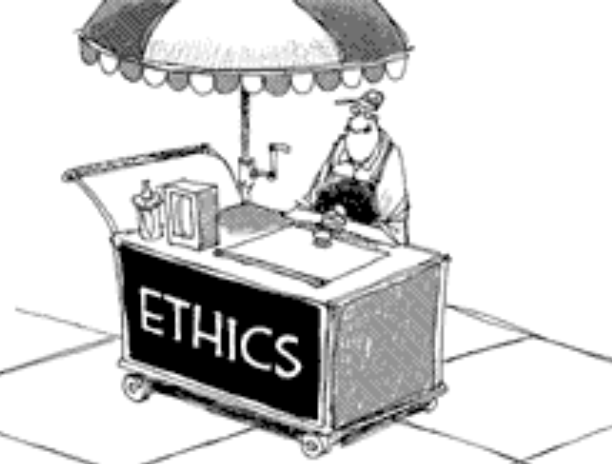
Hey, look: Somebody filed an ethics complaint against two state senators!
We wouldn’t know this, of course, except that the complainant announced the action in a press release. You’d never hear anything about it from official sources, because the Senate’s ethics process is a black hole from which no light can ever escape. Likewise the House’s process, but that’s another story.
The complaint was filed by Geo Honigford of Friends of Vermont Public Education. The targets, familiar to devotees of this here blog, are Sens. Seth Bongartz and Scott Beck. Honigford points out that both men have strong affiliations with private schools receiving public tuition dollars, and both lobbied aggressively for the interests of those schools in recent negotiations over public education reform.
I suppose you could think of Senate President Pro Tem Phil Baruth as an unnamed co-conspirator, since it was Senate leadership that chose to install Bongartz and Beck on the House-Senate conference committee on education reform. Or maybe his right hand, Senate Majority Leader Kesha Ram Hinsdale, could be included as well. She must have had a role in choosing two pro-private school senators to the committee.
Oh wait, Ram Hinsdale is chair of the Senate Ethics Panel, which will consider Honigford’s complaint. Right, right, probably best to leave her name out of it.
The phrase “labored mightily and brought forth a mouse,” which I thought was Shakespeare but turns out to be from Aesop’s Fables, crossed my mind while reading the latest cover story in Seven Days. It chronicles the experiences of two rookie lawmakers in their first session in office, not a bad idea in itself. But the longer I went on reading (it’s long), the more I realized that this story was a mile wide and an inch deep. It traded in the obvious, provided little context, indulged the outsized expectations of the two lawmakers, and did little to justify its length or the sheer quantity of reporting that went into it.
And reporting time, in these days of diminished media outlets, is an extremely precious resource.
The story is the latest installment in “Ways and Means,” billed as “a deeper read on the Vermont Legislature.” It’s been heavily promoted by Seven Days, which secured special funding from “Vermont philanthropists”(see below) to hire reporter Hannah Bassett to explore the Legislature’s competence, efficiency, or lack thereof. It’s been an underwhelming effort so far; Bassett’s been on the case for six months and produced a mere five stories, most of which trafficked in the obvious (Lobbyists have influence! Legislative disclosure rules are weak! The Legislature’s lawyers work really hard!). Still waiting for an in-depth look at The Marble Palace.
A lot of Bassett’s time was invested in this latest effort. She followed the two lawmakers throughout the session, from early January to adjournment in mid-June. The story is rich with detail about their hopes, dreams, and blow-by-blow experiences. But that’s what it is: a compendium of details, a prime example of what editors disdainfully call a “notebook dump.” There was no effort to provide perspective or other points of view. Everything is seen through the eyes of the two principals.
A whole bunch of community journalism in this week’s media roundup, which is great to see. No matter how strong our statewide outlets are (Narrator: They aren’t), our local weeklies are a vital link in the chain. They provide on-the-ground news and information that no one else will. Got some great stories from the local press to tell you about, but first let’s dip a toe into community access television, shall we?
Becca Balint didn’t have to do this. U.S. Rep. Becca Balint did a half-hour interview with All Things LGBTQ, a weekly news/interview show that airs on community access television outlets around the state (and is posted on YouTube). The interview is a couple weeks old, but (a) I only saw it last week and (b) it’s well worth your time. Balint talks about maintaining sanity in Trump’s Washington, the importance of reading books, and even performs a song. Our Congresscritters have plenty of fish to fry, and Balint didn’t have to take time for community access TV, but I’m glad she did.
A grassroots look at the Copley closure. Last Friday evening, Copley Hospital in Morrisville announced it would close its birthing center. I have decidedly mixed feelings about the move — we’re going to see cuts in our community hospitals, and some will be painful — but it’s a real sign of cowardice to announce it after hours on a Friday. Which just meant that ace News & Citizen reporter Aaron Calvin had to give up part of his weekend to turn out a report on the decision. The story was covered by several larger outlets, but only a local paper will focus on what the move will mean for the community it serves.
Friday afternoon brought us, courtesy of VTDigger, a fascinating story from down Bennington way, where local officials have basically waved the white flag over a proposed solar array north of town, planned by “solar developer and lawyer Thomas Melone.” Melone has been highly litigious in this matter, and numerous cases are pending before the courts. Apparently the town Parental Figures have decided to stop paying lawyers and let Melone have his way.
And you know what? In this case, the litigious plutocrat is the good guy.
I’ll sit back for a moment and let the brickbats fly.
Now, I don’t know the history of the case. But I sure as hell recognize a flaming outbreak of the NIMBYs when I see it, and this is a classic example. The opposition to this development goes to outrageous lengths to make its case. Reading this story made me wonder how in holy Hell we will ever get close to meeting our emissions reductions targets. Which, reminder, are established in state law.
First, the obligatory note about Famous Quotes. They’re all a lie, apparently.
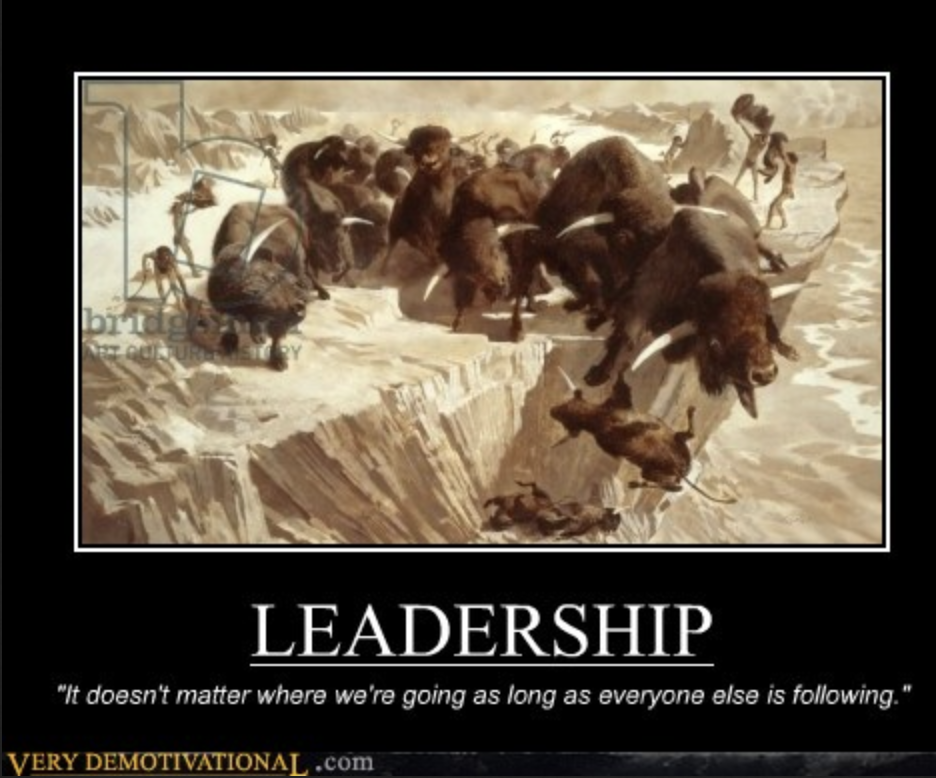
This one is either an “Afghan Proverb” or it was said by Benjamin Hooks or John C. Maxwell or James M. Kouzas, take your choice. I’m just surprised it hasn’t been attributed to the Grand Champions of “I Didn’t Actually Say That”: Abraham Lincoln, Albert Einstein, and Yogi Berra.
Whoever said it, it applies here. The Democratic leadership of the House and Senate played a very dangerous game when they jammed through H.454, the “education reform” bill that’s all about squeezing the public education system and protecting the interests of Vermont’s big private schools. Yeah, they won. They got their grand bargain with Gov. Phil Scott. But at what cost?
It’s almost unheard of for a major bill to pass a legislative body with most of the majority lawmakers voting “No,” and that’s exactly what happened here. Virtually all the Republicans voted in lockstep with the governor, while most Democrats in the House and Senate spurned their leadership and rvoted against H.454.
There’s a reason such a maneuver is almost unheard of, and it’s expressed in my headline. “This broke the Democratic caucuses” is what one majority lawmaker told me, and added that House and Senate leaders “are isolated and insulated from their caucuses.”
Need I say that this is an unhealthy situation, and that it bodes ill for the 2026 session and the November elections? Need I add that leadership needs to put in some serious time mending fences? They should, but based on past performance I have little confidence that they will.
Belated weekly roundup of the best reportage in Vermont, postponed due to the education reform vote and related stuff. Reminder: Although this post is coming out on June 18, it only covers material posted/published/promulgated no later than the 15th.
Glenn Russell strikes again. The best part of VTDigger’s Friday story about Gov. Phil Scott and the Legislature coming together on an education reform bill? Glenn Russell’s photograph. Not reproducing it for copyright reasons, so click on the link and enjoy.
Mmm, that’s the good stuff. In a single image, Russell perfectly captures the House-Senate conference committee dynamics that led us down this prickly path. The three Senate conferees are pictured. Two of them, Sens. Seth Bongartz and Scott Beck, strike identical poses, leaning forward, peering intently over their pushed-down glasses, holding copies of draft legislation, looking more than a bit skeptical of their House counterparts. The third Senator, Ann Cummings, leans away from the table with an expression that says, quite clearly, “I want nothing to do with these jamokes.”
In case you haven’t been reading me lately, Democrat Bongartz and Republican Beck share a common background and purpose. Both have substantial ties to the private schools that hoover up public education dollars, and both repeatedly centered those private institutions in what was supposed to be a discussion of how to improve the public schools. To capture all that in a single image? Chef’s kiss.
My weekly roundup of the best of Vermont journalism will again be posted late, most likely Wednesday. The delay in posting is because of the Legislature holding its final vote on H.454, the education reform bill, on Monday. Had to leave the decks cleared for that. And before I can get to the best of Vermont journalism, I have to begin with a massive media fail that reflects our sadly depleted news ecosystem.
Last week, a House-Senate conference committee was meeting to try to hash out a compromise education reform bill. The six conferees (three Senate, three House) met multiple times. Every meeting was warned in advance and was open to the public. And we got virtually no coverage at all of their highly impactful deliberations.
Now, I know legislative hearings can be a big fat drag. You can spend hours on an uncomfortable chair, sharing a tiny room with too many people, and wind up with nothing at all to report.
But this wasn’t your average legislative hearing, not at all.
So the Legislature, in all its not-quote-infinite wisdom, has approved H.454, the sweeping “education reform” bill. In doing so, it pressed a gun firmly to its own neck. This bill threatens to backfire big-time if they don’t fix it next year, so in passing this bill they set themselves up for an even more contentious education debate — this time during an election year.
Yeah, no pressure.
As I’ve noted previously, the bill’s best feature is its raw unpalatability. To me, it’s virtually certain that H.454, in its current form, will never take effect. It’s political poison in so many ways that lawmakers will have no choice but to reopen this Costco-supersized can of worms next January.
Monday’s the big day, or so they tell us. The full House and Senate are scheduled to vote on the education reform Grand Bargain, which will never take effect in its current form even if it survives the big votes.
Still, major drama. The vote is not a sure thing by any means, despite the unified support of Gov. Phil Scott and Democratic and Republican legislative leadership. Many members of both parties realize the bill would negatively impact their local schools — districts in Democratic areas could see significant spending cuts, while rural Republican districts could see a wave of school closures and higher property taxes. The Democrats are also hearing it bigly from school officials and labor union constituencies.
Maybe legislative leadership can crack the whip firmly enough to scratch out a win, if only with the threat of a midsummer return to the Statehouse at the behest of Gov. Phil Scott. But as I wrote previously, leadership’s best argument is that they can all come back next year and overhaul the overhaul. In other words, hold your nose and vote for it, just so we can declare victory and get the hell out of here. Inspiring.
First of all, “Declare victory and go home” is apparently one of many “famous quotes” that were never said at all, or never said by the person credited with saying them. (Usually Winston Churchill. Or Albert Einstein. Or Yogi Berra. Peas in a pod.) Details below, if you want to stick around.
Second of all, the “handshakes across the table” picture is not nearly as dramatic or satisfying when it’s taken from the viewpoint of the center-table cameras used to transmit legislative hearings. But I wasn’t there for the Big Moment, so I had to make do.
Now to the business at hand. After weeks of wrangling and repeated brushes with failure, legislative leaders and the governor reached a grand bargain of sorts on reforming public education finance and governance. Sounds impressive, right? But maaaan, the articles about this achievement are chock full of caveats and red flags. The more you read, the less monumental it seems. Really, it looks like a way for all concerned to engage in the Statehouse’s favorite participatory sport, kicking the can down the road.
If you think that’s overly cynical, I give you the words of none other than Gov. Phil Scott, who endorsed the bill and promised to twist Republican arms to try to get it past the entire House and Senate, an outcome that’s far from assured. Here’s how the governor described what this bill would do:
I believe it will put us on a path to stabilize property tax pressure for working Vermonters, while also putting us on a path to much needed governance reform that will unlock more opportunities for our kids.
The Phrase That Pays is “on a path.” This isn’t the actual transformation of our education system. This puts us “on a path” to transformation.
In other words, this bill is never going to take effect in its present form — even if it does pass the Legislature on Monday. Scott also predicted a return to the education reform issue next year, and he doesn’t think it will be any easier than this year.
Need more evidence that Our Betters just wrote themselves a “Get Out of Jail Free” card? Start with the fact that the bill wouldn’t take effect until 2028, a full year later than the governor had wanted. That’s plenty of time for second thoughts and rewrites.
Besides that, the bill is loaded with escape hatches, “off ramps” (Vermont Public’s Lola Duffort), and “is replete with unknowns and contingencies, and requires years of phase-ins and -outs before it takes full effect” (VTDigger’s Ethan Weinstein).
Now, that’s lawmaking.
But to even get to the point where those off ramps and contingencies can be deployed, this bill has to survive a vote of the full House and Senate. The governor himself predicted that some Republicans and some Democrats would vote “no.” (Almost certainly some Progressives will as well, but I think Scott sees the Progs as a rounding error or something.) Senate Minority Leader Scott Beck, who played a crucial role on the Committee of Conference that produced this bill, plans to spend the weekend urging his fellow Republicans to vote “yes,” and predicted plenty of uncomfortable and difficult conversations. “The conversation will definitely start with a lot of ‘no’s,” he said.
Which makes all the sense in the world. This bill would impose significant tax increases on some districts, mainly Republican ones, and force significant spending cuts in other districts, mainly Democratic ones. It would also lead to widespread school closures, almost entirely in rural areas. Honestly, if I were a Republican lawmaker, I’d have a hard time voting “Yes” because it would clearly NOT be beneficial to my constituents. And if I were a Democratic lawmaker, I’d have a hard time voting “Yes” because the bill would almost certainly force cuts in the public education system.
You and I won’t be privy to those arm-twistings, but I’ll bet you a shiny new dime that one of the key arguments will be “Don’t worry, this bill will never take effect. We’ll fix it next year.”
Speaking of which, you know what would come in real handy? A fully-empowered Commission on the Future of Public Education, the august body created by the Legislature last year and tasked with presenting a reform plan by the end of 2025. Given the obvious fact that this bill is deeply flawed and probably designed to never take effect, it sure would be nice to have a robust report from the Commission on how to fix this mess.
But wait, the governor and Legislature sidelined the Commission in their rush to Get Something Done This Year, even if it’s not the Right Thing. It still exists, but it’s in a limbo state, with no clear vision of what it’s supposed to accomplish and no institutional backing. Or as VTDigger’s Corey McDonald put it this week:
Now, as education reform proceeds, with only minor input from the body, the future of the commission tasked with studying the future of public education in Vermont is, itself, uncertain.
Well, that’s unfortunate.
For all the wrangling and the weeks of overtime, for all the struggles that split the House and Senate and will certainly divide the Democratic and Republican caucuses on Monday, we are nowhere near consensus on education reform. The governor himself predicted that next year’s debate on education reform will be “just as challenging, if not more” than this year’s. Great.
But hey, the Committee of Conference got its magical handshake moment, and that’s the best they could have hoped for.
Postscript. “Declare victory and go home,” or some variation on that theme, is universally credited to Vermont U.S. Sen. George Aiken. The phrase was a half-serious attempt to bring an end to the Vietnam War.
Except that, well, apparently he never said it. That’s according to Vermont historical journalist Mark Bushnell, who found that Aiken’s actual words were far more circuitous than the punchy, pithy version that now adorns many a QuoteFancy image. Here’s Busnell’s quotation of Aiken from the Congressional Record:
“(T)he United States could well declare unilaterally that this stage of the Vietnam war is over — that we have ‘won’ in the sense that our Armed Forces are in control of most of the field and no potential enemy is in a position to establish its authority over South Vietnam.”
That thing about “in control of most of the field” was a damn lie, and I suspect Aiken knew it. At best, we controlled the big cities and our military outposts.
But that’s not all. Aiken didn’t actually want us to “go home.” He wanted us to take a step back from aggressive military engagement in favor of “intensive reconnaissance,” whatever the hell that means. One of the causes of our defeat in Vietnam was a lack of reliable intelligence: We were incapable of doing effective reconnaissance because of language and cultural barriers, and South Vietnam was a corrupt basket case incapable of much of anything. According to Bushnell, Aiken did not believe the U.S. could or should leave Vietnam.
So much for our favorite wise man. But hey, you know, he’d probably feel right at home in our current education reform debate.







 The Vermont Political Observer.