

Hearty congratulations to the good people of Hyde Park, who have “amicably resolved” a dispute over the siting of a homeless shelter. “Amicably” is the word chosen by VTDigger’s social media poster to describe a deal that will severely restrict the civil rights of shelter residents, so the amicability does not extend to the unhoused.
The story as a whole, originally posted by the News & Citizen of Lamoille County, betrays a complete blind spot where the unhoused are concerned. Nowhere are their thoughts or feelings expressed, nowhere are they seen as anything other than pawns in a game. And I must confess a similar blind spot; the import of the story didn’t hit me until housing activist Josh Lisenby pointed it out on Twitter, which I refuse to call X. In fact, I borrowed the headline of this post from one of Lisenby’s tweets.
The tale of this amicable resolution is a tawdry one all round. It begins with Lamoille Community House proposing to open a shelter at what is now the Forest Hill Residential Care Home. That much is fine; cue the tawdriness, in the unshocking form of a California tech entrepreneur who looks, well, exactly how you’d expect he looks.

Saul Costa, said entrepreneur, owns a 4,000 square foot second home in Hyde Park that’s kinda-sorta adjacent to the site of the proposed shelter. I say “kinda-sorta” because Costa’s manse is on a 42-acre parcel, so I’d say he has plenty of lebensraum to work with. In fact, here’s a bird’s eye view of Costa’s property.
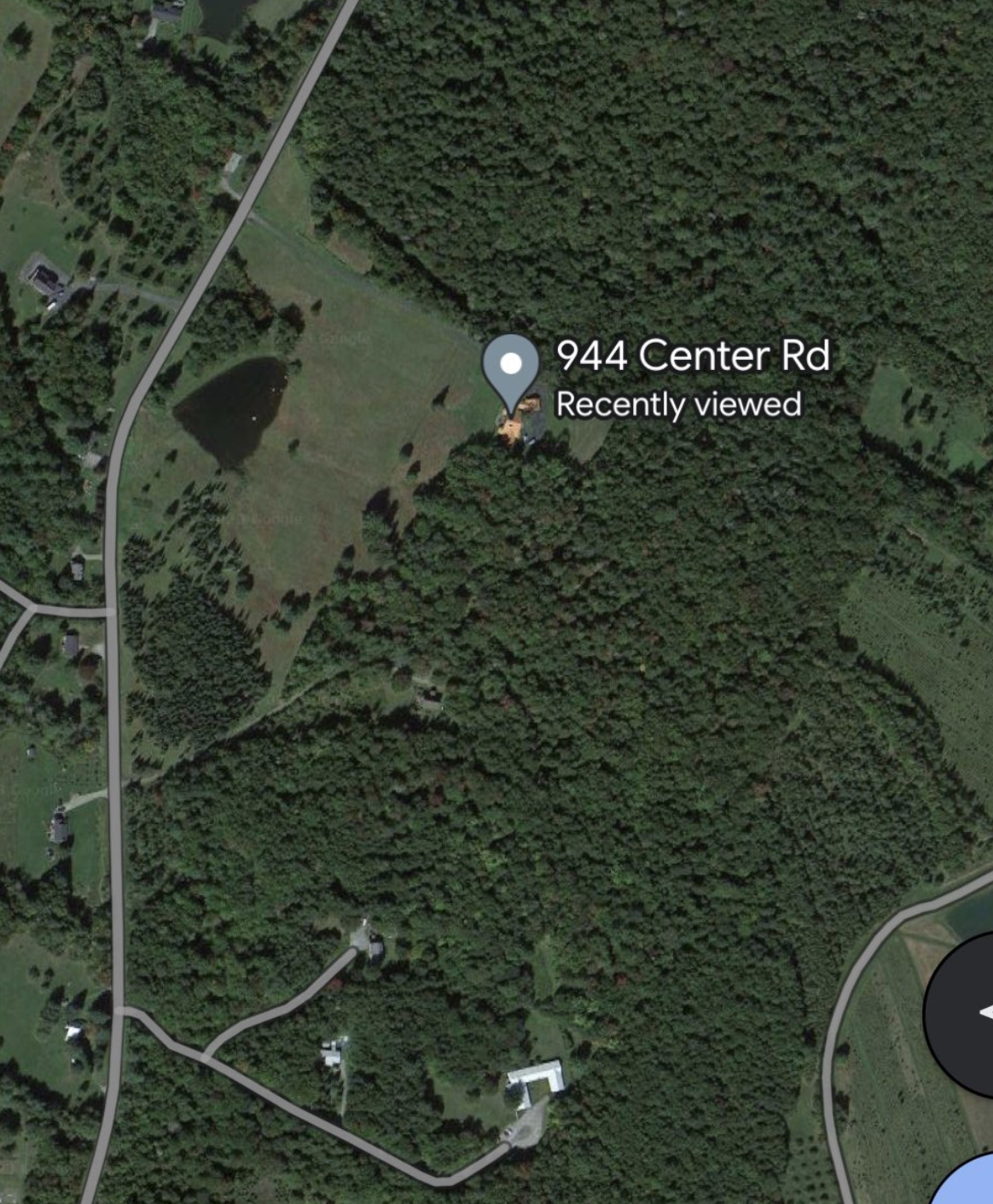
I’d say he’s got quite the buffer on all sides. Still, he was so upset over the plan that as soon as he heard of it he flew to Vermont to meet with local officials.
His stated concerns revolved around shelter inhabitants getting loose in the neighborhood which, he said, “would have resulted in foot traffic through the front yards of local residents,” which, in turn, might compromise “the safety of the families in the area” and lead to “drug use outside the facility’s property, and damage to local residents’ property,”
Sounds like he’s fully absorbed every available stereotype of the unhoused.
Costa wanted the Community House to provide transportation to and from the shelter and otherwise guarantee that no residents would be allowed to roam free. After all, as the News & Citizen noted, “Though it’s his second home, he doesn’t think of it as a vacation home.”
Awww. No really, it’s a beloved little 4,000 square foot, 42-acre hideaway, the only place on Earth where the software mogul can unleash his inner child. How dare the unhoused trample their dirty, dirty feet all over the landscape of his dreams?
The good news is that the situation was “amicably” settled with a minimum of impact on the unhoused — oh wait, here are some details of the agreement:
- A limit of 21 residents at a time, and “they must be in need of crisis housing.”
- No camping on the property.
- No visitors at the shelter without the express permission of the Community House.
- “Residents at the property will not be allowed to leave the property except when being transported to areas outside of the neighborhood; the shelter must provide transportation for residents.”
Yeah, well, what you’ve got there is “a prison, not a shelter.”
What you’ve also got is grounds for a civil rights lawsuit. Back on June 21, the Vermont ACLU released a letter sent to municipalities regarding the likely rise in homelessness following the expiration of the state’s motel voucher program. It included the following paragraph:
While cities and towns may enforce constitutionally valid laws and ordinances regarding the use of public property, in recent years we have seen repeated examples of people being no-trespassed from public property in violation of their constitutional rights. But public property is just that—public. Municipalities may not exclude people from public property without providing adequate procedural protections.
In response to a request for comment on the situation, the ACLU provided a statement via email that said, in part, that the Hyde Park agreement “would restrict the free movement of unhoused people. We are actively investigating the civil liberties and legal ramifications of this situation.”
Well now, that doesn’t sound very amicable at all.
We’ll see where this goes. The ACLU’s menacing noises might convince town officials to value the rights of shelter residents on the same level as your average mansion-ownin’ tech bro. On the other hand, town officials might decide the shelter is more trouble than it’s worth. Or Costa might sue; I’m sure he’s got lawyers in bespoke suits on retainer, and I’m sure he can afford to deploy a carload of them to try to get his way.
Which would be a shame, because Vermont badly needs more shelter space and this kind of rabid NIMBYism is a big reason why we’ve got the second highest rate of homelessness in the nation. It’s also a great argument for taxing the hell out of wealthy owners of second homes, but that’s a topic for another day.


Thank you.
Rep. Diane LanpherAddison-3VT House Appropriations, ChairSent from my iPhone
<
div dir=”ltr”>
<
blockquote type=”cite”>
Now we have a “software mogul” who bought a nice piece of Vermont and objects to having a shelter for the homeless next door. Maybe he has been to Burlington. I have a friend who says many places there are a drug disaster under the guise of homeless. But Saul Costa is a nice diversion from a bunch of charlatan legislators like Baruth and what’s her name speaker of the house who walked away from their responsibility to do SOMETHING for the people who were going to lose housing, and they knew that for a year.
You have a hard time selling progressives or liberal democrats to me. They could care less. Pure horse manure.