Monthly Archives: February 2021

Another Baby Step in the Long, Treacherous Journey to Ethical Standards

Couldn’t resist.

Hey, guess what! Vermont is one of only three states without any enforceable ethics standards in law. Let’s hear it for Vermont Exceptionalism!

The effort to change that state of affairs has been percolating along at a barely perceptible pace for years now. At every step along the way, it’s met with opposition by state lawmakers, who tend to be very protective of their rights and obligations. The basic argument is, “Vermont is better than that! We don’t need no stinkin’ ethics law!”

Which is like saying we don’t need speed limits because Vermonters are inherently safe drivers. The vast majority of public officials do their jobs right, just like the vast majority of Vermont drivers abide by the speed limit. But that doesn’t mean we don’t need police patrolling the roads.

The latest turn in this long, depressing saga came Friday afternoon, when the House Government Operations Committee approved H.135, a bill that makes a few minor changes in how the Ethics Commission does its business. Still secret, still unfunded, still toothless. The bill got unanimous support after committee leaders assured members that the bill didn’t really do anything.

Left for future debate are the tough items: Adopting a Code of Ethics in state law, deciding how enforcement will work, whether the Commission should have any powers, and whether it should have a big enough budget to maybe hire at least one full-time staffer. (Right now, the only paid person is Executive Director Larry Novins, and he’s part-time. You call the Ethics Commission, you’ll likely be shunted to voice mail.)

After the jump: A little history, and a look ahead.

Continue reading

The Legal Clusterf* Around Public Dollars for Religious Schools

You know you’re onto a hot mess when, in the course of a one-hour hearing, a situation is described as “a potential landmine of constitutional issues” and a passage between Scylla and Charybdis, and a leading Constitutional scholar can’t even guess where the courts are going on the issue.

Such was the state of affairs before the Senate Education Committee Wednesday afternoon. The five solons took testimony on how, or whether, the state must pay tuition to religious schools. The short answer is “yes,” under certain circumstances. The long answer is, “yes,” but exactly how we should do it is an impenetrable thicket of non-ambiguous court decisions and costly legal maneuvers.

And if you don’t, under any circumstances, want your tax dollars going to, say, The Lord’s Anti-Semitic Academy Of Creationist Heteronormativity, well, you’re shit out of luck.

The “credit” for this morass can be awarded to the John Roberts Supreme Court. In a 5-4 decision (along ideological lines) in the 2019 case Espinoza v. Montana Department of Revenue, the high court ruled that the state of Montana could not exclude religious schools from a program that doled out tax credit-funded scholarships for schoolkids.

Vermont doesn’t have a program like that, but if a community chooses not to operate public schools, the state pays tuition for the town’s kids to attend one of a handful of approved private schools, like St. Johnsbury Academy and Burr and Burton Academy. If you apply the Espinoza standard to Vermont, the state must throw the program’s doors open to any qualified private school, religious or not. And “approved” can’t be decided on the increasingly frayed principle of church/state separation.

“The Supreme Court has been moving the goalpost in favor of funding religious institutions,” said Vermont Law School Professor Peter Teachout, the Legislature’s go-to guy for thorny constitutional issues.

After the jump: Fasten your seat belts, it’s gonna be a bumpy ride.

Continue reading

The Ghost of Jeb Spaulding Returns

Somewhere, Jeb Spaulding is saying “I told you so.”

The former chancellor of the Vermont State College System fell on his professional sword last spring by unveiling a plan to decimate VSCS in order to save it. In the ensuing uproar, he resigned.

Well, the new leadership has totted up the cost of saving the system — and it’s one hell of a price tag. On Tuesday, Spaulding’s successor Sophie Zdatny (pronounced just like it’s spelled) told the House Appropriations Committee that the state needs to pour another $203 million into the system over the next six fiscal years.

That’s on top of VSCS’ base appropriation of $30.5 million a year.

And that’s in addition to round after round of projected cost-cutting that would mean significant reductions at all VSCS campuses.

None of which would begin to address the system’s $150 million in deferred maintenance. Well, if VSCS sells or demolishes buildings in the downsizing process, that cost would go down somewhat.

All of this is necessary, Zdatny said, to return the system to fiscal sustainability. (Her presentation can be downloaded from the committee’s website.)

There’s one significant difference between Zdatny’s plan and Spaulding’s. The latter called for the closure of both Northern Vermont University campuses plus the Randolph campus of Vermont Technical College. Zdatny would keep all the system’s campuses open — but with a substantially reduced footprint at each location.

In order to follow through on the plan, the system would need $51 million on top of the $30.5 million base for fiscal year 2022. The additional need would decrease over time, from $51M in FY22 to $18M in FY27. After that, VSCS could maintain operations on the $30.5 million base.

How? By slashing $5 million a year off expenses in each of the next six years.

Seems as though Jeb had a point after all.

Continue reading

Three Mulligans and Counting

Lookin’ a little sweaty there, bud.

Submitted for your consideration: Michael Harrington, commissioner of the Department of Labor, and three-time offender against good government.

The latest offense is a massive cockup in printing IRS Forms 1099 for Vermonters who collected unemployment benefits in 2020. Tens of thousands of people received forms that contained other people’s personal information instead of their own, which is a low-tech kind of privacy breach in our age of digital hacking.

This will require a costly fix. DOL will reprint all 180,000 forms and mail them all out, plus it will provide prepaid envelopes to those who got bad 1099s so they can return the faulty forms at no cost. Harrington also said his department has contacted the Attorney General’s office as required by state law, in case there are legal repercussions.

VTDigger reports that this is DOL’s second data breach since the pandemic began. The first, back in March, saw DOL send nearly six thousand Vermonters’ Social Security numbers to employers not connected with their cases.

But while it was the second data breach, it was the third major administrative failure by DOL during the pandemic.

Deets after the jump.

Continue reading

Vermont’s Female Inmates Shouldn’t Expect Sanitary Facilities Anytime Soon

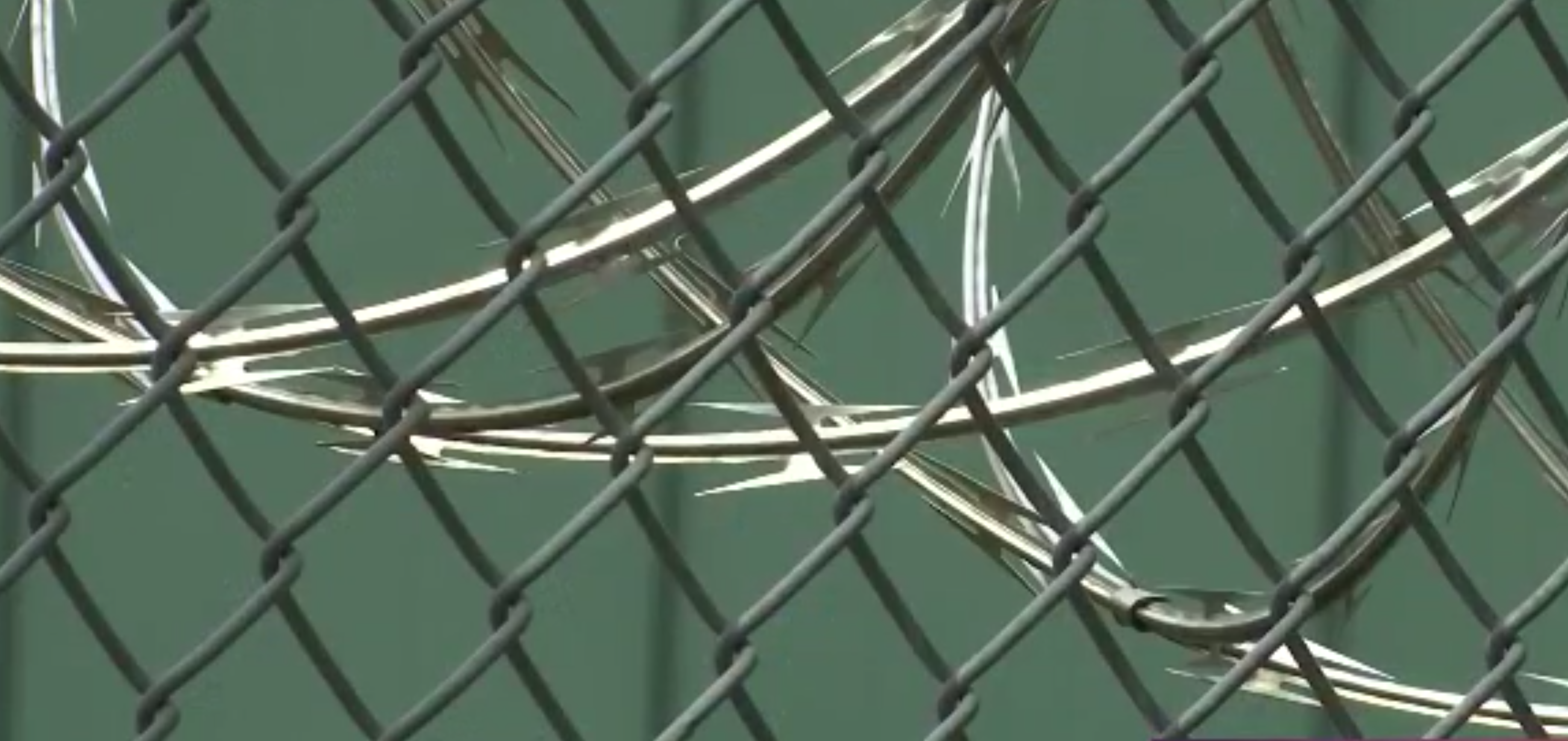
The good news: The Scott administration’s capital spending request includes money for a new women’s prison.

The bad news: It’s gonna take years for anything to actually happen.

The proposed capital bill would allocate $1.5 million over the next two fiscal years toward a replacement for the outdated and unsanitary Chittenden Regional Correctional Facility, a.k.a. the state women’s prison. That money is nothing more than a down payment; the stated purpose is for “Planning and Design, Outside Consultants.”

That’s right, at least two years of planning lies ahead before anything concrete will be done.

As a reminder, the Seven Days expose that started all this was published more than a year ago, and included this lovely nugget:

Soon after women prisoners were moved to the South Burlington facility in 2011, a group of local nonprofits documented the presence of worms and drain flies in the showers, inadequate heating and cooling systems, and a dearth of toilets. In a report released last month, Vermont Interfaith Action described a “depressing, hopeless atmosphere” within the prison.

Everyone agrees that the women’s prison is kind of a hellhole, but the inmates will just have to be patient, won’t they?

After the jump: Work begins on legislation to address the DOC’s dysfunctional culture.

Continue reading

A Case Study in Arguing Against Your Own Interests

“Right to Repair” ought to be a simple, straightforward concept. But when it gets inside the legislative process, all sorts of complications arise.

The background: Large manufacturers want to keep taking your money long after you’ve purchased their product. They do this by severely limiting access to parts and manuals, and by voiding warranties if you try to fix it yourself or take it to an unauthorized repair shop. So you’re locked in to the manufacturer for service and parts, which is always more expensive than DIY or your local technician.

In response, some states have adopted Right to Repair legislation, which requires manufacturers to lower those barriers. The concept is, if you buy something you own it (incredible notion, that) and you have a right to take it outside the manufacturer’s ecosystem.

A Right to Repair bill was introduced by Sen. Chris Pearson in 2018. It got derailed, thanks mainly to a blizzard of testimony from high-priced suits representing the manufacturers. The Legislature passed a stripped-down version calling for, you guessed it, a study committee. That panel did its business in 2019, and produced a mealy-mouthed report that didn’t come to any firm conclusions.

Which brings us to now.

Rep. Emilie Kornheiser, D-Brattleboro, has introduced H.58, a Right to Repair bill specifically aimed at farm equipment. It got an initial hearing last Wednesday before the House Agriculture & Forestry Committee. That hearing was yet another case study in why this common-sense legislation gets all tangled up in outlandish worst-case scenarios and a curious solicitousness for the interests of big business.

The gory details… after the jump.

Continue reading