Monthly Archives: August 2020

A Hero’s Journey

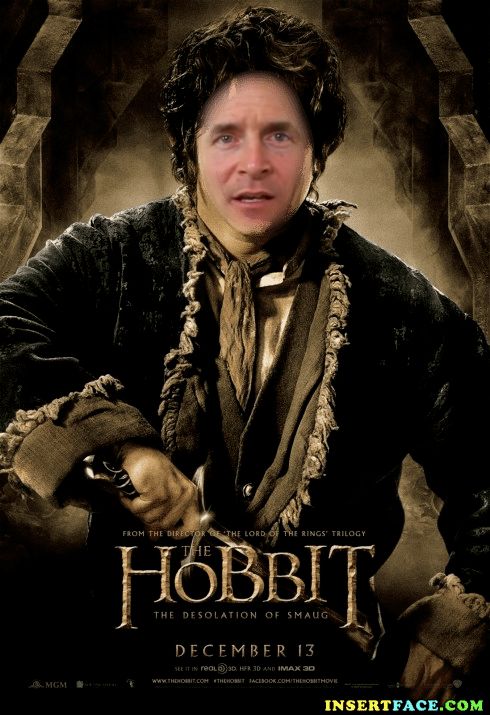
He has a hobbit’s chance.

David Zuckerman, that is. Having won the Democratic gubernatorial primary, he now faces an epic adventure in his attempt to defeat Gov. Phil Smau– I mean, Scott.

If the election were held today, Scott would win in a walk. But there is a path to victory for our friend the Zuckerhobbit. Not gonna be easy, though. And quite a few factors are largely out of his control.

As I get to play the role of J.R.R. Tolkien, here’s the long and winding road to a Zuckerman victory.

First, he needs a bunch of money right quick. Zuckerman’s campaign entered the month of August with a cash balance of $42,000. He also had a $26,000 surplus from previous campaigns. At the end of July, he reported several mass media buys totaling $15,000 that weren’t included in his August 1 financial report. I conclude that his actual cash balance on 8/1 was $27,000. Add in the surplus, and you’ve got $53,000.

To be competitive in a statewide race for governor, you need to have — conservatively — at least a million bucks. Preferably a million and a half. Between the launch of his candidacy and the end of July, Zuckerman raised $347,000. In the 2016 cycle, which had some different deadlines, Dem nominee Sue Minter had raised over a million bucks by mid-August. He has to pick up the pace at a time when liberal donors have plenty of calls for their money, including the race for president, the battle for a U.S. Senate majority, and efforts to turn state legislatures blue in time for the 2022 redistricting wars.

Second, he needs not to wake the dragon. In this case, the Republican Governors Association. So far, the RGA has committed very little money to defending Scott. But that could change in an instant. If the RGA sees evidence of a rising Zuckerman insurgency, it can pour in boatloads of cash in an instant. In 2016, it spent more than $3 million to get Scott into the corner office. It can, and will, do so again if Scott looks vulnerable. Zuckerman has to hope that the dragon doesn’t wake up until late October or thereabouts. Seems unlikely; the RGA is smarter than that.

Continue reading

The Dems’ Campaign Begins With a (Literal) Bang

Besides that, Mr. Sullivan, how did you like the play?

When outgoing state Rep. Mary Sullivan agreed to emcee this morning’s post-primary Democratic unity rally, I doubt that she realized she was taking her life into her hands. But there, right in the middle of her introductory remarks, came a-tumblin’ the state flag of Vermont, crashing down within inches of her head, rattling the podium on its way to the earth.

Undaunted, Sullivan continued to speak. Although afterward, there might have been some sharp words for whoever set up that flag.

That wasn’t the only cock-up of the morning. The microphone was not correctly tied into the Facebook Live feed of the proceedings, so most of the speakers could barely be heard. A note must also be passed to whoever wrangled that podium, which was too tall for a couple of the speakers — Sen. Debbie Ingram and President Pro Tem In Waiting Becca Balint. They looked like old drivers peeking over the wheel to get a glimpse of the road.

The speakers’ list was comprehensive. The winning and losing candidates for governor and lieutenant governor were there (except for Carcajou), as were the rest of the party’s candidates for statewide office, U.S. Rep. Peter Welch, designated hitters for our two U.S. Senators, and legislative caucus leaders.

All the speakers touted unity. Not all were specific about their calls. In fact, it wasn’t until the sixth speaker that someone actually endorsed the party’s nominee for governor, Progressive/Democratic Lt. Gov. David Zuckerman. It was Attorney General T.J. Donovan who broke the ice, “proudly” endorsing Zuckerman and lite-guv nominee Molly Gray and devoting the bulk of his remarks to praise for the Democratic ticket.

Continue reading

Initial Thoughts on a Robust Primary

So many votes, they barely fit

With the exception of the 462-candidate pile-up that was the Chittenden County Democratic Senate primary, it was an election night bereft of drama. The big races turned out to be uncompetitive, and all were called early in the evening. Which is not to say it wasn’t interesting, at least not to political dead-enders like me. So, thoughts in no particular order:

The Laracey Effect is strong. My own invention, the Laracey Effect is named for Mel Laracey, a deputy city treasurer in Ann Arbor, Michigan many moons ago. He decided to run for State House in an extremely competitive primary. It did not go well; he finished in the back of the pack. Because everyone in and around City Hall knew him, he thought that meant everyone knew him. But in truth, the vast majority of voters had no connection to City Hall.

Tim Ashe is well known in Burlington and Montpelier. He and pretty much everyone else thought that made him well known across the state. Not true. And when the pandemic prevented him from campaigning until the end of June, his fate was sealed.

I thought Molly Gray was going to win, but I was far from certain about it. Turned out she won easily. More easily in a competitive four-way race, in fact, than David Zuckerman did in (effectively) a two-way race. Zuckerman beat Rebecca Holcombe by 10,552 votes. Gray beat Ashe by 11,679, and came within 510 votes of Zuckerman’s total.

Ingram, by the way, was an even bigger victim of the Laracey Effect, believing she had a substantial statewide profile. She finished a distant fourth, and was never a factor in the race. So was former legislative counsel Peter Griffin, who ran for the House seat being vacated by Kitty Toll and finished a poor second.

Expanded mail-in voting was a resounding success. Record turnout when neither of our Senate seats were on the ballot, and with little apparent drama in either race for governor. With universal mail voting available in November, we’re on course to set another turnout record. It’s also a strong argument for mail voting everywhere — that is, if you like maximizing participation in our democracy. At least two of our three political parties do.

There was a lot of unhappiness with the Democratic gubernatorial choices. There were 6,569 write-in votes, more than six percent of the total. (Most of them presumably cast for Gov. Phil Scott.) There were 7,739 blank ballots for governor. Think of that: Seven percent of those who bothered to cast votes couldn’t be bothered to choose a gubernatorial candidate. That’s stunning. And seems to reveal a broad dissatisfaction with the choices on offer. One more sign that Zuckerman has some serious work to do.

Continue reading

The Corrections Culture

Corrections Commissioner James Baker continues to make the right noises. On Friday, after news that more than two-thirds of Vermont inmates at a Mississippi for-profit prison had tested positive for coronavirus, Baker talked of accountability and responsibility and the need for a culture change inside his department.

Now, if only he can make it happen. The DOC is a hidebound place, full of long-tenured employees whose kneejerk reaction is to defend the status quo.

In one of his first actions, Baker sent two DOC administrators to Mississippi to get a first-person look at things. He said he was “reassured” upon hearing their reports.

Not so fast, my friend. One of the two who made the trip was DOC facilities operations manager Bob Arnell. That’s the Bob Arnell who was once the superintendent of the state’s extremely troubled women’s prison.

I’m sure ol’ Bob knows all about problematic institutional culture. After all, he became superintendent after the inglorious departure of his predecessor, David Turner, who requested reassignment in 2012 “days after a report emerged that condemned the conditions” at the prison. (Turner, “a veteran employee” of the DOC, was shuffled elsewhere in the department.)

And we all know that, ever since, the women’s prison has been the very model of excellence. Oh wait.

In recent years, …guards have sexually assaulted inmates, harassed female employees, and pursued sexual relationships with women who have left the prison but remain on furlough, probation or parole — and, therefore, under DOC supervision.

That’s from a December 2019 story by Paul Heintz of Seven Days, reporting on widespread allegations of sexual misconduct and drug use in the prison — and the almost complete lack of DOC response to all of it. Except to threaten retaliation against inmates who had the guts to complain.

I don’t know how long Arnell was in place at the facility, but let’s conclude he didn’t have any perceptible impact on the “culture.” But I’m sure if he says everything is hunky-dory in Mississippi, we can take his word for it.

Continue reading

Where Are The Ashes Of Yesteryear?

Objects In The Mirror May Be Fuzzier Than They Appear

The following was written in 2003. I’d ask you to guess the author, but I’ve already given away that game.

I should be a Democrat. From Massachusetts, mother a teacher and father a civil servant, family of Kennedy-philes… I’ve got a long life of political activism ahead of me. My loyalties are to ideas and not a party, so if my energies are not going to the Dems, they’ll be going somewhere else.

… Younger people like myself can understand the importance of getting the message to different types of voters. But we also understand the nature of a chameleon, and we don’t want to vote for a leaf and elect a reptile.

That’s a short excerpt from “Letter from a Democratic Party Pooper, and it was indeed penned by Young Tim Ashe, progressive firebrand. The letter was included in Crossroads: The Future of American Politics, written in 2003 by the future governor of New York, Andrew Cuomo. (This tidbit came to my attention courtesy of urban archeologist and Twitter buddy Ed Adrian.)

In the letter, Ashe bemoans the Democratic Party’s habit of tacking to the center. He certainly sounds like a former Bernie Sanders staffer and future Progressive Party officeholder. He doesn’t sound much like Ashe the Senate President Pro Tem, who’s known for cosseting the chamber’s old guard, a cadre of change-averse centrists.

So. Which Tim Ashe is running for lieutenant governor?

Continue reading

The Mississippi Oopsie

Gov. Phil Scott called it a “shortcoming.” I’d put it in the realm of “humanitarian disaster.” He said “we should have pressed harder.” I’d say his administration failed to press at all.

To be fair, Scott’s comments came yesterday, when there were *only* 85 known positive Covid-19 tests among Vermont’s 219 inmates housed in a for-profit Mississippi prison. Today that total jumped to 147.

So maybe now he’d rephrase his remarks. And maybe now his Susan Collins-style disappointment will spark some real action. Maybe some heads will roll.

But I doubt it. That’s not his style. After all, he gave no thought to replacing Melissa Jackson as head of the Vermont Veterans’ Home after she traveled to Washington, D.C. to give Congressional testimony in person (when she could have done it via Zoom) and then, upon returning to Bennington, spent five hours in her office before going into self-quarantine.

Jackson called it “poor judgment” instead of the more appropriate “dereliction of professional responsibility.” And Scott’s comms chief Rebecca Kelley issued a statement saying “the governor is not sure it warrants her removal but certainly deserves additional discussion.”

Yeah, let’s have additional discussion. Maybe appoint a committee or something. Or just express concern and move on. Nothing to see here, folks.

Continue reading

On (Whining About) The Media

In my almost-a-decade following #vtpoli, one of the recurring themes is how losing candidates carp about media coverage. If only the press had taken me seriously… if only they’d done an expose of my opponent… if only they’d focused on ideas instead of the horse race… if only.

You mostly hear it from marginal types, including just about any Republican not named “Phil Scott” running for statewide office, ideological extremists, or Vermin Supreme-style perpetual candidates.

The latest entry in this parade is Brenda Siegel, doughty Democratic candidate for lieutenant governor. She’s gone so far as to call a press conference for Wednesday morning “to discuss the frontline communities and forgotten voices that have continually been marginalized in recent elections across the country, including the current Vermont Lt. Governor’s race.”

I’ll bet you a shiny new dime that she’ll point to herself as one of those “forgotten voices that havbe continually been marginalized.” It’s true that campaign coverage has mainly focused on the supposed front-runners, Molly Gray and Tim Ashe. And lately, has focused on attacks, counterattacks and fundraising rather than issues.

As a progressive policy advocate and single mom, Siegel comes from a decidedly unconventional background. And yes, that means she doesn’t get taken as seriously as Ashe, a veteran pol, or Gray, a newcomer who’s wowed the Democratic establishment. This, despite Siegel’s decent showing in the 2018 gubernatorial primary, where she finished third in a weak field.

Does she have a point? Well, kinda. But mostly no.

Continue reading

Finally, those stupid Travel Maps are good for something

Useless Travel Map, June 30 edition

I have previously railed against the state’s Travel Map, which is supposed to let out-of-state visitors know whether they can enter Vermont without self-quarantining. Roll the tape, please.

C’mon, now. Do you really expect out-of-staters to look up and obey this map? Which, by the way, changes weekly — so don’t pre-plan a visit for two or three weeks from now, because your county might turn yellow or red.

That was just one of multiple objections to the map. But finally, I’ve found a way in which it’s legitimately useful: it quantifies our collective feeling of dread.

Looking at multiple maps in sequence shows how the virus is spreading, and illustrates exactly why Gov. Phil Scott finally imposed a mask mandate. The map above was released on June 30; here’s the July 10 version.

As a reminder, each area is a county. “Green” counties have low Covid rates, so their residents can travel to Vermont without restriction. But on July 11, there was already a lot more yellow and red, and a lot less green, than on June 30.

Now here’s the latest version, released on July 31.

Continue reading

Aside From the Pandemic, It’s a Great Time to be Phil Scott

The last pre-primary campaign finance reports are in, and the big winner is… yep… Your Governor, Phil Scott.

Not that he raised much money. In fact, he raised so little that it’s clear he feels no urgency whatsoever. (Of course, he’s spending minimal time campaigning as long as the pandemic still hovers, but c’mon, if he had to raise money he’d find ways to do it.)

The latest fundraising reports cover the month of July, basically. During that time, Scott raised a mere $19,000 — bringing his campaign total to $99,000. (Numbers of more than four figures are rounded to the nearest thousand.) Even more telling is how much money he spent: A measly $1,133 for the entire month.

(Interesting entry in Scott’s “Expenses” column: $218.44 in fees to ActBlue. Which means the Democrats’ number-one online fundraising tool is serving as a conduit for Phil Scott?)

Scott is not afraid of John Klar. He’s not afraid of Rebecca Holcombe or David Zuckerman. He’s not afraid, period.

The other gubernatorial reports reinforce Scott’s apparent bulletproofness. Whoever wins the Democratic primary is going to emerge with little or no money in the bank, and the national Democratic donors aren’t coming to the rescue.

After the jump: The Dems’ respective hauls and the race for Lite-Guv.

Continue reading