Monthly Archives: November 2014

Say, what month is it? And when’s the election?

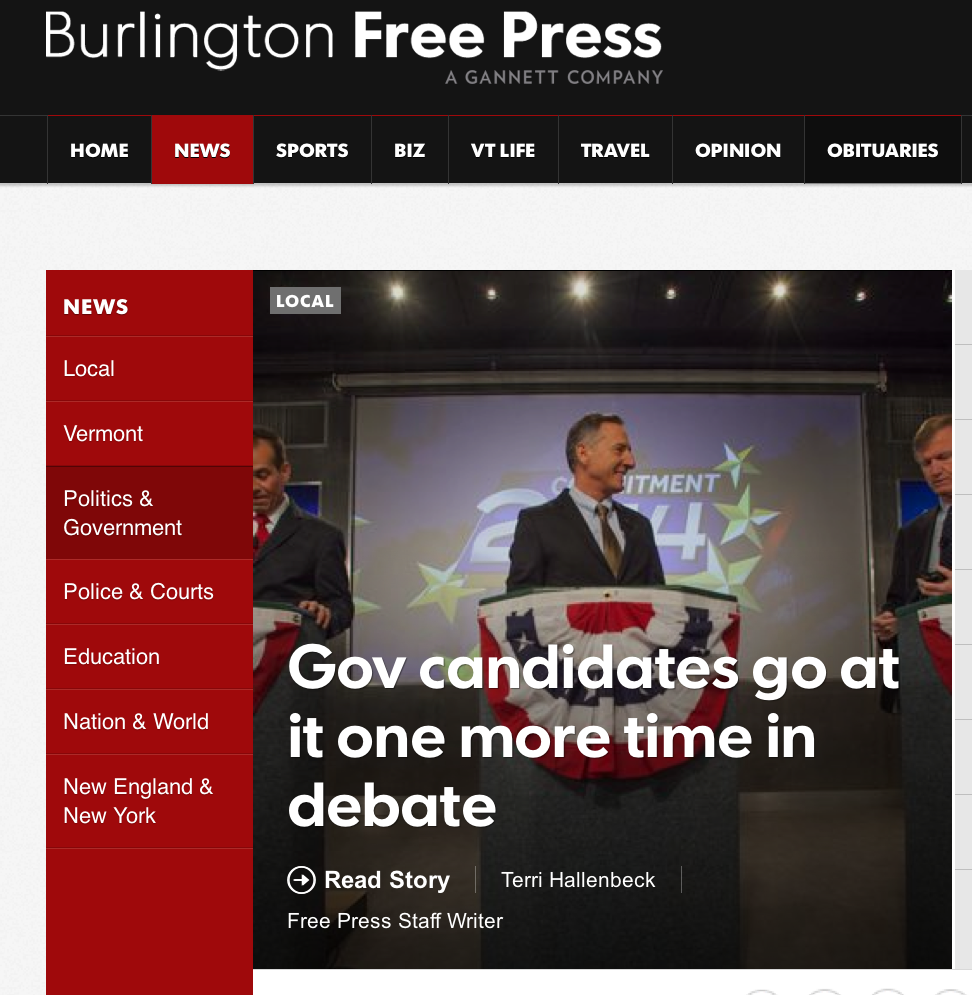
Not to say that the Burlington Free Press has cut back coverage of state politics and policy since it jettisoned its entire Statehouse bureau… and not to say that its remaining staff is spead way too thin… but if you visit the Freeploid’s homepage, then click “News” and then click “Politics and Government,” this is what you’ll see.

Screen Shot 2014-11-16 at 4.42.56 PM

That’s a story from October 29, by since-departed Statehouse reporter Terri Hallenbeck, about the final pre-election gubernatorial debate.

Of course, the Freeploid has done some reporting on state politics since then. But this is an incredibly sloppy bit of work, especially for a newspaper publisher that fancies itself a multi-media content delivery service.

Wake up, Free Press webmaster.

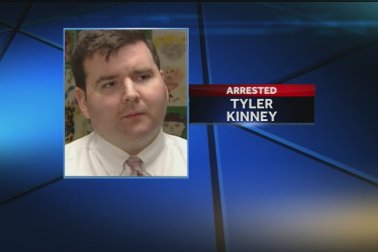
The most pertinent questions about the Colchester cop

I sense the fine handiwork of the WPTZ graphics department.

I sense the fine handiwork of the WPTZ graphics department.

Every time I read about the case of Tyler Kinney, the Colchester officer who faces federal drug and gun charges, the same thing keeps coming to mind.

How in the blue hell did this go on so long?

Here’s a guy who was on the force for twelve years, and occupied one of its most sensitive positions — keeper of the evidence locker — for two and a half years. He was stealing stuff out of the locker, he had a “heroin addiction for an extended period of time,” and he was sharing his swag with a career criminal with a rap sheet as long as your arm and two felony convictions.

On top of all that, Kinney’s addiction and malfeasance came to light accidentally, after an unrelated search of the career criminal’s home. Absent that coincidence, Kinney might have gone on stealing stuff and destroying God knows how many prosecutions that depended on secure evidence storage.

News coverage of the case, so far, has focused on Kinney himself. But what of the institutional framework around him?

The overarching question breaks down into two parts.

1. What kind of internal oversight does the Colchester police have on its evidence locker and the sole keeper thereof?

2. What is the department’s drug testing policy for its officers? Does it have any? How often does it conduct tests? What drugs does it test for?

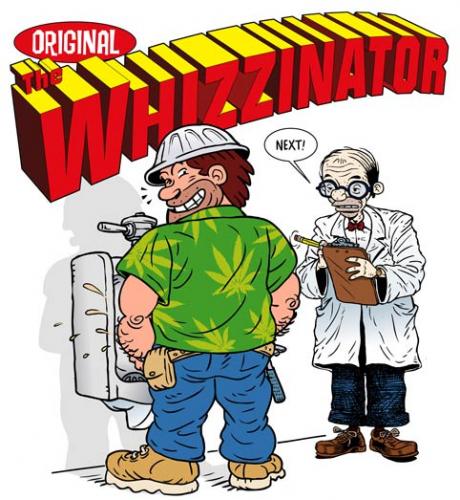
the_whizzinator_83385And how are the tests conducted? Is the officer monitored while, ahem, providing a sample? Or is there opportunity to game the test via the Whizzinator route?

The Colchester Police Department should answer these questions in detail. Necessary reforms must be enacted. If internal policies were not followed, those responsible should answer for their inactions.

Lest we lay all of this at the feet of Colchester Police Chief Jennifer Morrison, allow me to note that she’s only been there for a little over a year. The previous Chief, Charles Kirker, who had been chief for the previous 34 years, needs to give some answers too. Especially in light of this sentence from a softball Burlington Free Press interview on the occasion of his retirement:

My philosophy has always been to delegate to subordinates because you allow them to grow.

Yeah, nothing could possibly go wrong with that.

Beyond Colchester, the same questions should be put to the Department of Public Safety. What are the standards for the State Police? Are there standards that local police agencies must meet?

If not, why not?

If a drug-addicted officer can occupy a critical position of trust for two and a half years, only to be caught by accident, then either there was a complete breakdown in the Colchester police, or there are systemic shortcomings that must be addressed.

That’s all. I’ll hand this over to the watchdogs of the media.

A question for Mahatma the All-Knowing

Dear Mr. Milne,

You have floated the notion that the Legislature ought to drop its traditional practice of electing the top vote-getter in gubernatorial elections in which no candidate won a majority. Instead, you say, lawmakers should act like an Electoral College, casting their votes based on which candidate won their district.

Okay, a completely novel idea that flies in the face of precedent. But it does raise a question.

If a lawmaker represents a district where a single candidate won a majority of votes, then it’s clear that you’d want the lawmaker to reflect the constituency.

Now…

What about a district in which no gubernatorial candidate won a majority? Where the top finisher earned a plurality? What should that lawmaker do?

Example: in Washington County, you finished barely ahead of Governor Shumlin. If you only earned a plurality in the county, why should you be entitled to claim the votes of all three state senators?

Your underlying argument is that a plurality does not provide a clear mandate. Stands to reason, then, that a plurality edge in a given county does not constitute a mandate for its senators. Right?

What, then, do those senators do?

If you say “Vote for the plurality winner,” then you are a hypocrite.

The other two options are, (1) those lawmakers should be free to vote their conscience, on whatever grounds they make their decisions, or (2) they should try to cobble together an IRV-style “ideological majority” from their county’s returns and vote for the candidate who earned their imaginary majority.

What we’ve done here is opened a big ol’ can of worms. And I think this is one reason why past lawmakers hewed to the precedent of electing the top vote-getter regardless of party affiliation. (And why, on those rare and ancient occasions they diverged from precedent, there was always something funny about it.)

Now, you being you, I don’t expect a straight answer, just more of your argument-of-convenience, throw-stuff-against-the-wall style of reasoning.

But I thought I’d ask.

Thanks,

John Walters

The limits of introspection

It sounds like Governor Shumlin has reached the end of his post-election navelgazing after ten entire days, and he has found that the reasons for his shocking near-defeat are largely external. Yes, he accepts responsibility for failing to listen to Vermonters and he promises to do better on that score. But as for the widely-held notion that there was a personal message in the election results? Not so much.

You talkin' to me?

You talkin’ to me?

Shumlin appeared on WDEV’s Mark Johnson Show this morning (podcast should be up shortly), and Mark opened the hour with a pretty solid grilling of the Governor about the whys and wherefores of the gubernatorial election.

When asked what messages he took from the returns, Shumlin named two:

— On policy, “there’s a feeling that folks are frustrated” on pocketbook issues, school spending, and continuing wage stagnation for middle- and working-class people. Which is not just a Vermont problem, he was quick to point out, but a national trend, for which he can bear no special responsibility.

— A vaguely-defined brace of regional and local issues. The Vermont Gas pipeline may have cost him votes in Addison County, and his support for ridgeline wind was a problem in the Kingdom. Aside from those two examples, no specifics.

I can accept that Shumlin was confronted by local concerns as he campaigned around the state, but I haven’t seen any evidence for a localized rejection of him. When I looked at four state senate districts, in different parts of the state, I saw a very clear trend: the Governor polled consistently behind Democratic senate candidates, by a similar margin in each of the four counties.

The general message, he said, was “You’ve got to listen more… Don’t get too far out in front of the troops.”

And then Mark tried to explore the personal dimension. Was the election about policies, or about Shumlin personally?

Safe to say he didn’t want to touch that with a ten-foot pole. “I’ll leave that to the pundits,” he said.

Mark followed up with a direct reference to the Jeremy Dodge land deal, which seemed to resonate with a lot of voters. And not in a good way. Shumlin pivoted immediately to generalities: “I’ve got to do my job better going forward.”

Mark: Was this all about policy, then?

Shumlin: I’ll  leave that to the pundits.

Earlier in the interview, Shumlin had said he fully expected a close election because of what he heard on the campaign trail, and his own campaign’s internal research (which he wouldn’t give any details about). At this point, Mark returned to that idea: Didn’t you hear anything from Vermonters about your own style, your personality? Why not talk about it?

Shumlin: “I have talked about it.” Back to generalities: “There were lots of messages in this election.” And then it was eyes forward to the “tough decisions” that lie ahead. “I’ve got to roll up my sleeves and get back to work.”

A bit later, Mark noted that while Vermont Gas might have cost him votes in Addison County, that didn’t explain Shumlin’s troubles in the Burlington suburbs, where he polled poorly and the Dems lost multiple House seats. His only response was another reference to general “economic frustration.”

All in all, he made it pretty clear that he’s closed the book on the past and is ready to “roll up his sleeves and get back to work.” Nothing more to see here folks, move it along.

I can’t say I’m surprised by the lack of personal introspection, but I am disappointed.

If this election was about policy not personality, then I’m left wondering why one individual so badly underperformed the rest of the Democratic ticket. Why the Governor was almost thrown out of office, while his party retained a strong grip on the legislature?

He did admit that he’d gotten a bit distant, that he was listening to the same small group of people too much. And he committed himself to getting around the state more, and holding open public events (of an unspecified kind) that would get him in touch with a broader variety of viewpoints. And that’s a good thing, as far as it goes (and if it really happens).

But clearly, there are dysfunctional elements in his administration and his own conduct, and it sounds like he’s unwilling to go there. Which, in my view, is a huge opportunity missed.

Is this the time for business as usual?

It’s an annual rite at this time of year: a changeover in the upper levels of the administration. It usually involves some key departures, a shuffling of the deck, and the elevation of those who have served in a lesser capacity.

The latter began on Wednesday for the Shumlin Administration, with promotions for press liaison Sue Allen, campaign manager Scott Coriell, and education adviser Aly Richards. Loyal servants, rewarded for their work.

But should they be?

I have nothing against these folks. As far as I know, they deserve their promotions. But a broader question is on my mind:

Praise and promotions were freely distributed when Shumlin was riding high. Should the same be true after a poor administrative year and a disastrous campaign?

Further: Are these promotions a sign that Shumlin, at some fundamental level, doesn’t get it? That it’s business as usual on the fifth floor?

The Governor has made the right noises. But the current situation calls for a lot more than that. You can say “The buck stops here” all you want, but if the buck stops and gets tossed in a drawer, it’s a meaningless statement.

After the election, I saw a gleam of hope: Shumlin does his best work in crisis, as we saw after Tropical Storm Irene. This election was the closest thing to a personal Irene for Shumlin. My hope was that he would seize the opportunity, thoroughly evaluate everything he and his people do, and boldly set a new course.

So far, given his frequent deferrals to legislative leadership and his dispensation of Jobs For The Boys (And Girls), I’m having my doubts.

In addition to a personal reckoning by Shumiln, there ought to be a personnel reckoning. During the campaign, I wrote that the continued problems of Vermont Health Connect called for some clear direction and, probably, the rolling of some heads.

In addition to Doug Racine’s, that is. Racine may have had his failings at Human Services, but it wasn’t like he got a lot of help from Shumlin. Plus, he had little to do with Vermont Health Connect. He was expendable, not because he was the biggest problem, but because he wasn’t really part of the team. Mark Larson, who was far more responsible for VHC but was clearly one of the boys, was shunted to the side but kept his title and is still drawing a salary for duties and responsibilities unknown.

Is Governor Shumlin capable of evaluating his staffers and functionaries with the cold eye of reason, and demoting or defenestrating those who’ve contributed to his administration’s malaise?

We’ll see. He promises more personnel changes to come. But I have to say I’m not optimistic. If the changes have more to do with the desires and ambitions of his staff than with a sorely-needed overhaul of the Shumlin Machine, then his third term is off to an inauspicious start.


Lower your expectations, good people

It didn’t sink in until after I’d written my previous post about Governor Shumlin’s news conference, but there was a clear theme running through it all.

Don’t expect much.

Especially you liberals out there.

It seems the Governor was determined to extinguish whatever hopes might still have existed for a small-p progressive administration. Some have argued, like Yours Truly and nanuqFC at Green Mountain Daily, that the real message of last week’s election is that Shumlin lost his liberal base. If he’d simply polled as well as Senate Democratic candidates, he would have sailed to re-election.

But nope. His takeaway was that we need more triangulation, more compromise, and no big new initatives.

On health care, clear signs of a retreat from single-payer. On the budget, admission that a perpetually sluggish economy will force draconian changes. On school finance, crafting a cheaper system will be job one. He gave a preliminary thumbs-down to environmental groups’ expected call for a carbon tax. And, although he personally favors legalizing marijuana, he’s going to defer to legislative leadership on the issue.

Overall, a constant refrain of cooperation, consultation, consensus, listening and learning. (No mention of “leadership.” Or “liberal.”) And do you think the ever-cautious Democratic legislative majority will be in any way emboldened by the loss of ten colleagues? I think that’s a big fat no.

I can’t say this is a surprise. Shumlin’s own instincts and his financial base, if not his electoral one, lead him in a centrist direction. And as a purely practical matter, he emerges from the election in a significantly weakened position vis-a-vis the legislature; he is in a bad position to make demands when he did so much more poorly than they did.

But if anybody was holding out hope that Shumlin would respond to crisis with a new burst of energy and a determination to cement his legacy? There’s no sign of that so far. This could drive a wedge into the already fractious relationship between Shumlin and the liberal base.

2016 might be a good year to be a Progressive candidate.

Shumlin: “We have a structural deficit” and other happy tidings

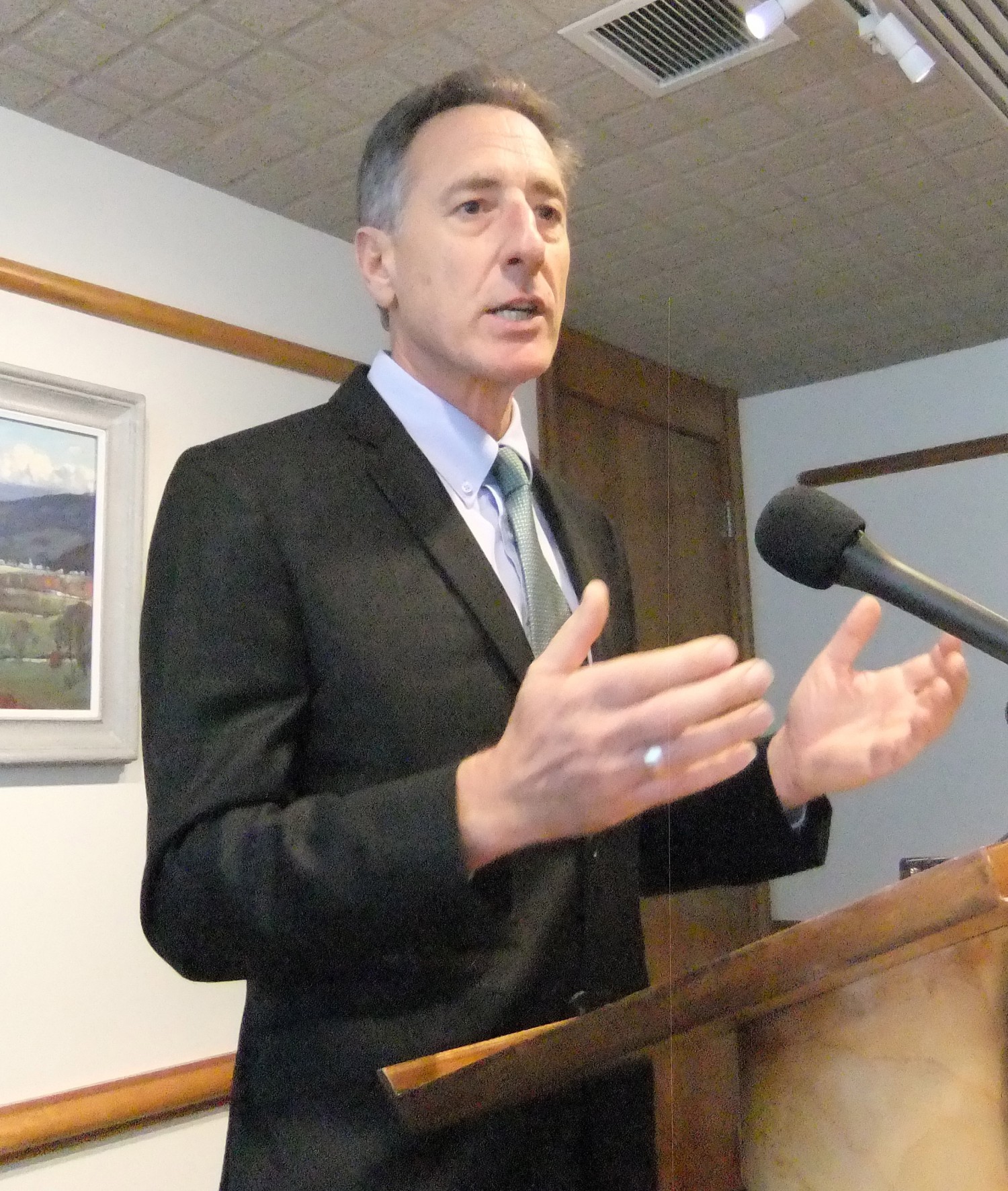
The Governor addresses the multitudes. (The bearded man begging for change is Dave Gram of the Associated Press.)

The Governor addresses the multitudes. (The bearded man begging for change is Dave Gram of the Associated Press.)

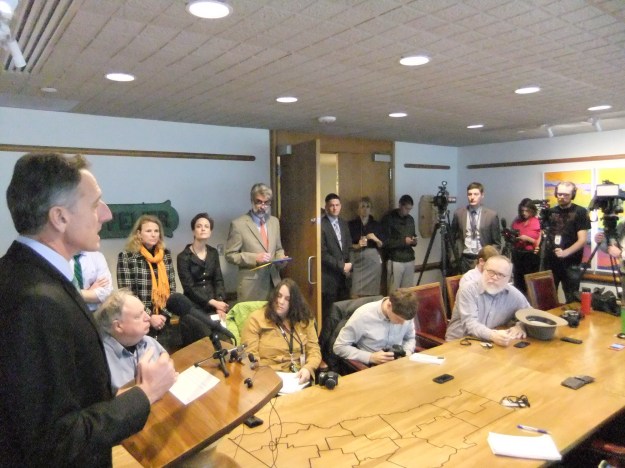
An uncharacteristically subdued Governor Shumlin held an agenda-free news conference this morning. I emphasize “agenda-free” because his past practice has been to piggy-back news conferences onto photo opportunities or policy announcements, leaving much less time for general questions.

Today there were a lot of questions and a lot of substance. In no particular order…

The Vermont Health Connect website will go back online this Saturday, which happens to be the first day of open enrollment. So the relaunch will come on the last possible day. Gee, hope things go right; there’s no margin for error.

Shumlin pronounced himself “optimistic,” saying “I’m encouraged by what I’m hearing.” But given how often he, and we, have been burned in the past, he was reluctant to make any predictions. “I’m always hoping it will work.”

— He dismissed Republican calls to shut down VHC and go with the federal exchange, and he had several good arguments. First of all, it’s far too late to make the change this year, so we’d be limping along with VHC for another year in any case. And there are signs it’s finally getting on track. “We’re turning a corner,” he said. “Why not give it a chance?”

There’s also the fact that the federal exchange’s premium subsidies aren’t as generous as Vermont’s. Switching to the federal system would mean higher premiums for thousands of Vermonters who earn between 100-300% of the poverty line.

And, as he pointed out, the US Supreme Court may well strike down federal subsidies, in which case only states with their own exchanges will be able to offer subsidies.

— Get ready for a slam-bang legislative session. Shumlin is still talking about the next step in health care reform (see below), the legislature is hell-bent on property tax and/or school funding reform, Shumlin is talking about significant changes to energy policy, and perhaps worst of all, the quote atop this post: “We have a structural deficit at this point.” Meaning huge challenges in fashioning a budget. That’s a hell of a lot of big, contentious issues to tackle.
Temba, his arms wide.

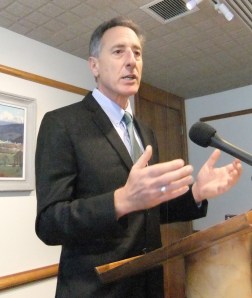
Temba, his arms wide.

— Speaking of the budget, Shumlin acknowledged that Vermont and many other states “thought the recovery would be more robust,” and its weakness has caused revenue shortfalls. He’s talking about a second round of rescissions in this year’s budget, although he said nothing is final just yet. And he’s talking about major changes in next year’s budget in order to put an end to annual budget crises.

He wants to put the state on a more sustainable path. Which must be making a few Republicans chuckle, since they’ve been preaching this for years. On the other hand, Shumlin has a valid point: the recovery has been weak. If we’d had a normal recovery with decent wage gains, our tax revenue would be stronger and we wouldn’t be facing this dilemma. The big news on this front is that the Governor now believes we’re facing years of sluggishness, and we need to ratchet down the budget to make it sustainable.

When asked whether this might mean tax increases, he didn’t rule them out, but he made it clear that his first choice is to rein in spending.

— On the push for single-payer health care, he repeated his longstanding support for the idea, but acknowledged that in the wake of the election, everything is on the table. He is aiming for a system that combines affordability with universal access to health care. His preference remains single-payer, but it’s looking like we might settle for less than that.

— He made it clear that yes, he won the election, and he has no doubt that he will serve a third term. He pointed to Vermont’s long tradition of electing the top vote-getter when no one wins a majority: ‘The person who gets the most votes, wins.” He cited the 2002 election for Lieutenant Governor, in which he and Progressive Anthony Pollina combined for a liberal majority but Republican Brian Dubie won the most votes; he and Pollina urged lawmakers to elect Dubie, which they did.

— On school funding and organization, he declared “We have a spending problem,” with high per-pupil costs and administrative structures. In some cases, he said, small class sizes can be harmful to achievement rather than helpful. He’s not in favor of mandatory school consolidation, but it’s clear he will push for consolidation by trying to convince local districts that it’s in their best interest.

He did mention the idea of “prioritizing funding to schools that voluntarily consolidate.” That kind of legislative payola may be effective, but it kinda stretches the definition of “voluntary.”

— In a less wide-ranging news conference, his comments on energy policy might have made headlines. They’re likely to get lost in today’s news. He noted the pending sunset of the SPEED program, which has helped spur the renewables industry in Vermont but has also created controversy because it allows the sale of “green” energy credits in other markets. He and the legislature are working on “ideas to replace SPEED.”

He was asked about the prospects for a carbon tax with offsetting cuts in other taxes — a plan likely to be announced tomorrow by a coalition of environmental groups. He was cool to the idea, saying “It’s tough for a small rural state to do it alone,” and pointing particularly to its impact on gas stations near our state borders. He prefers a regional carbon tax instead; but he said he’s had no conversations with other northeastern governors about the idea. Methinks the enviros will have a hard time gaining traction, when you combine Shumlin’s reluctance with an extremely busy legislative session.

— Finally, he was asked about marijuana legalization. He said he wants to wait until the release of a report on the idea in January before proceeding, but noted that “I support legalization. The question is “when.”

Milne declines recount; Republican trolling to continue

Note: This post supersedes the earlier one entitled “Super Dave Stands Pat.”

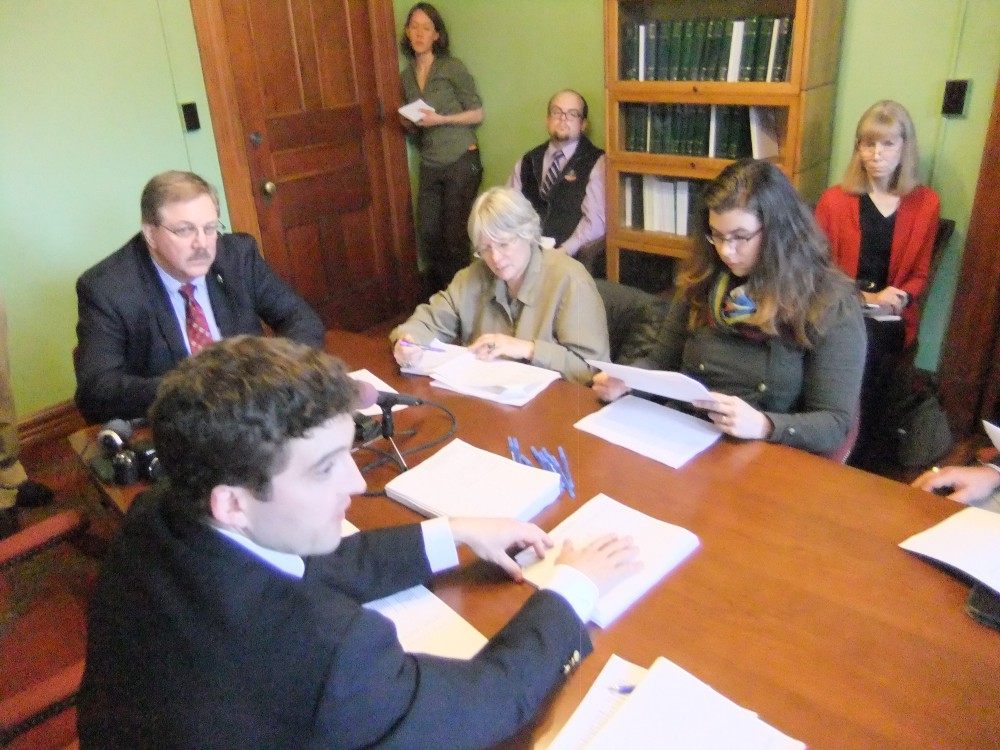
The tedious business of democracy. Clockwise from front: Director of Elections WIll Senning, Secretary of State Jim Condos, Crystal Zevon of the Liberty Union Party, and Kelly Mangan of the Progressive Party. (And at right rear, former Free Press reporter Nancy Remsen.)

The tedious business of democracy. Clockwise from front: Director of Elections WIll Senning, Secretary of State Jim Condos, Crystal Zevon of the Liberty Union Party, and Kelly Mangan of the Progressive Party. (And at right rear, former Free Press reporter Nancy Remsen.)

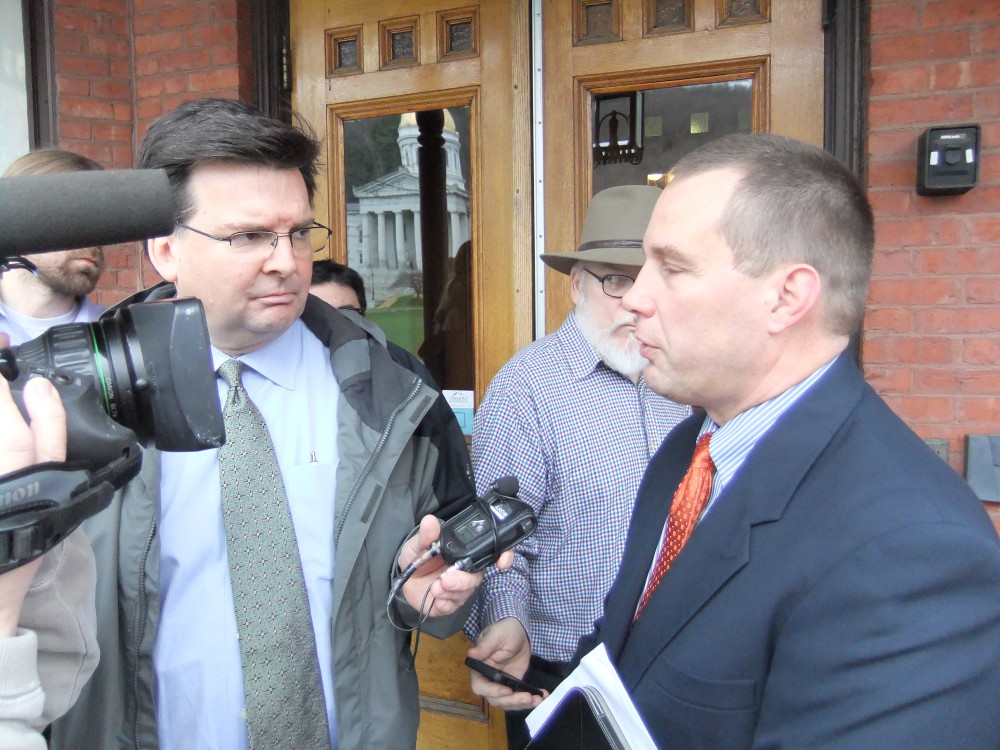
The state board of canvassers met this morning in a hot, sticky conference room full of media folks awaiting the Big News.

Which, of course, was a complete anticlimax; the election results posted on the Secretary of State’s website were quickly confirmed, with Governor Shumlin holding a 2,434-vote lead over Scott Milne.

A couple hours, later, Milne issued a press release from his secure undisclosed location (seriously, I don’t know how this guy would handle it if he had to meet the media on a regular basis) saying that he would not request a recount. And adding the customary passive-aggressive note: “I trust that Peter Shumlin won the plurality.”

In other words, “I’m pretty sure Jim Condos didn’t steal this puppy.”

Also, he noted that “this race is one of the closest in Vermont history,” and Shumlin’s performance was extremely weak for an incumbent. In other words, “I lost, but I really won.”

And black is white, and war is peace.

Anyway, mighty white of him to forego the recount. But on the larger issue — will he pursue the race into the Legislature? — he was less forthcoming.

Milne plans to address the press and public in an announcement next week regarding the Legislature’s Constitutional duty in January.

“Next week,” by Milne’s standards, might be anytime between tomorrow and Christmas Day.

But I’m not surprised that he’s continuing to troll the entire state with his novel reasoning that the loser should be declared the winner. He’s not alone; VTGOP chair “Super Dave” Sunderland attended the canvassers’ meeting, and did some heavy trolling afterward.

Uh, Dave... I don't think Stewie's buying it.

Uh, Dave… I don’t think Stewie’s buying it.

He told the media that it’s not up to Milne whether to pursue the legislative option because “The Constitution lays out the process that needs to happen. There’s no avoiding a vote in January. It’s required.”

Which is technically true, but in the past, losing candidates have voluntarily withdrawn before the legislature’s vote, to banish uncertainty and allow the winner to get on with the business of governing.

His advice for the candidate?

My advice to Scott is to follow his instincts and do what’s best for Vermont. We certainly have a clear popular vote winner, and you know, how it breaks down in the Legislature district by district tells us maybe a little bit different story, and I think Scott’s weighing those options right now.

Ah, the district-by-district canard. An argument that’s never, ever been raised before in Vermont history. Don’t believe me? Well, Paul Heintz went to an unimpheachable source: former state archivist Gregory Sanford, who said that Milne’s district-by-district idea “simply has no precedent.”

Sanford also outlined all three times when the top vote-getter was not elected governor, and all three had a distinctly fishy smell:

In 1789, legislators ditched incumbent Thomas Chittenden in favor of Moses Robinson after the former was ensnared in a sketchy land deal. In 1835, lawmakers cast 63 inconclusive ballots before giving up and letting lieutenant governor Silas Jennison serve as acting governor. And in 1853, the Democrats and Free Soil Democrats teamed up to steal the state’s top jobs from the Whigs, whose slate of candidates won pluralities.

But Sunderland? This guardian of the Vermont Way is clinging to Milne’s non-precedent. When the former state representative was asked how he would vote if given the chance, he danced around for a while before giving a kinda-sorta answer:

Well, I think every election is different. And I think every legislator is different year to year, session to session, district to district. My district, in this election, voted strongly for Scott Milne, and I would definitely take that into consideration, unless there were some other um strong um… uh… some strong push from a personal conscience standpoint, um, I think I’d be inclined to vote the way my constituents voted in my district. But that’s not to say there might be exceptions.

Yup, the Republican trolling continues apace. They know that the legislature is not going to ignore precedent and choose the loser over the winner. But they want to keep the question open as long as they can, to distract our attention and pester the Democrats.

Super Dave stands pat

The state board of canvassers met this morning. Also, the sun rose.

Nothing unexpected; Gov. Shumlin’s margin over Scott MIlne is 2,434 votes.

Afterward, VTGOP chair “Super Dave” Sunderland spoke to the media. He couldn’t say whether Milne would ask for a recount; he’d have to do so by the end of the day today. Milne, as expected, wasn’t there.

On the larger question, Sunderland kept alive the Repbulican narrative that the Legislture might well choose to elect Milne instead of Shumlin. Indeed, he went so far as to say that if he were still in the legislature, he’d vote for Milne.

More details later.

Metapost: Old Three Hundredth

This is the 300th post on theVPO. Seemed like a good time for a few reminders, especially since I seem to have picked up a lot of new readers in the past couple of weeks.

The contents of this blog are my own creation. This is a place for commentary and analysis of Vermont politics (and the political media) from my point of view, drawing on my thirty-odd years as a journalist and political observer. Having reached the dawn of my senior years, and having found no place for myself in Vermont’s small and shrinking journalistic ecosystem, I decided to make a place of my own. The advantage is I run the joint; the disadvantage is that the rewards are entirely of the intangible variety.

I am a liberal, but not a doctrinaire one. Some of my opinions are not widely shared in liberal circles — for instance, I think development and growth are good things when done in a reasonable manner. For another instance, I don’t think the Vermont Gas pipeline is that big a deal. Also, I don’t shy away from criticizing liberal officeholders when they deserve it. If anything, I try to hold them to a higher standard; they are, after all, carrying my flag.

This site has existed since late June, and it has given me quite a lot of intangible satisfaction.  Readership has consistently grown, which means a lot of people are getting something out of this and the word is spreading. I appreciate your time and attention; I try to be informative and entertaining, and to shine my own unique light on our politics. My only currency is my credibility, and your readership is a nice validation. I thank you, whether you come here for information, entertainment, or (for my many conservative readers) a little something to purge the bile.

I invite you to follow this blog. In the right-hand column, you’ll see a “Follow” button. Click that, submit an email address, and you’ll get a notification every time I write a new post.

I welcome comments. I have enabled comment moderation, which means I have to approve a comment before it goes up. But I’m very generous about it; my grounds for trashing a comment have mainly to do with spam and really abusive stuff.

Thanks for visiting. I hope you come back.