Monthly Archives: October 2014

The new polls, part 2: The only thing Shumlin has to fear is Shumlin himself

(See also part 1, which addressed the Phil Scott/Dean Corren results.)

The latest gubernatorial poll from the Castleton Polling Institute (courtesy of WCAX-TV) is a picture of stagnation, with an electorate disappointed in the incumbent, but finding no acceptable alternatives. The results are right in line with other recent surveys, with the helpful addition of Dan Feliciano clarifying the picture somewhat.

The numbers: Shumlin 47, Milne 35, Feliciano 6, and undecided at 8.

A secondary result, underpinning the above: 45% approve of Governor Shumlin’s performance, 41% disapprove. Bad numbers for an established incumbent, especially for one who was in the 60s at his height.

But while the poll is bad for Shumlin, it’s also bad for his challengers. As WCAX’s dueling analysts put it:

“I don’t think Mr. Milne has given the public a reason to vote for him and that is what Mr. Milne’s challenge is going to be in the next six weeks,” said Mike Smith, Republican political analyst.

How about a shot of 5-Hour Energy?

How about a shot of 5-Hour Energy?

“I think these numbers show that there’s one candidate against Peter Shumlin and that is Peter Shumlin,” said Steve Terry, Democratic political analyst.
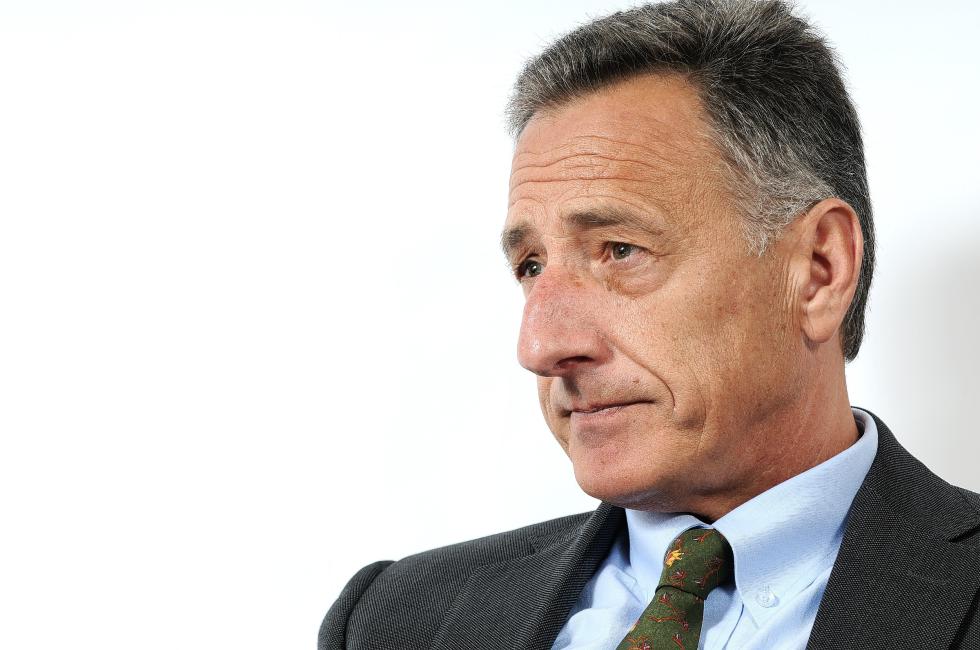
Milne is stuck in the mid-30s. And Feliciano, for all the insider buzz about his candidacy, is only taking a small chunk of the conservative vote. Six percent is a lot for a Libertarian, but not much for someone who’d positioned himself as the real alternative to Shumlin. As I wrote before, there’s a whole lot of value in the Republican brand, and a deep loyalty among core Republican voters.

As for the independents and undecideds, they’re stuck. Given the 41% Milne/Feliciano total, I infer that Milne has gained a small number of centrists simply by Not Being Shumlin, while he’s lost a few percentage points to Feliciano among the True Believers. Overall it’s a wash, and not nearly enough to win. And the Governor is the only candidate with the resources to get his message out between now and Election Day. Although the big headline was that Shumlin is under the 50% mark, he still stands a solid chance of not only gaining a pure majority, but getting up into the mid-50s. That’d be a decent, if not overwhelming, mandate.

So, in a solidly blue state, why are Shumlin’s numbers so mediocre? The experts point to the obvious: Vermont Health Connect, the human services troubles, and the Jeremy Dodge land deal.

The first two I buy. The last, nope. I don’t think anybody outside the political media remembers that deal. After initial missteps, Shumlin dealt with it wisely and effectively. Remember “it’s not the crime, it’s the coverup”? Well, in the Dodge deal, there was no coverup. There was a fast and fair resolution.

All right, so now I have to offer my own explanation. In two words:

The doldrums.

Which is partly the VHC and human services problems. But more than that, it’s the lack of real, tangible, landmark achievements.

Which is reflected in Shumlin’s third campaign commercial, focusing on the GMO bill. Now, nice as that bill was, it was a sideshow in this year’s legislative session. And, as Paul Heintz pointed out, it’s a stretch to give the Governor much credit:

For years, Shumlin said he backed GMO labeling in concept, but believed that mandating it was legally perilous. He argued that any such attempt would suffer the same fate as Vermont’s 1994 law requiring dairy products produced with recombinant bovine growth hormone to be labeled as such. The Second Circuit Court of Appeals struck it down in 1996 and awarded damages.

But leave that aside for the moment. The bigger question: Is the GMO bill really the Governor’s signature accomplishment for 2014?

I guess it is. Given the size of the Democratic majority and the big issues facing Vermont, that’s a little bit underwhelming. And I think the voters are underwhelmed. One of Scott Milne’s best lines in yesterday’s WCAX debate concerned school funding: “The Governor had huge approval ratings and big majorities, and he didn’t do anything.”

Shumlin’s signature issue, single-payer health care, is still a mystery shrouded in an enigma. He can’t brag about it, because he hasn’t done it yet. Or even offered a plan. That’s not exactly motivational.

There are solid reasons to defend the Governor’s record. He’s dealt with the aftermath of the 2008 recession and Tropical Storm Irene. He’s had to pull rabbits out of his hat to keep the state budget under control as the federal stimulus funds ebbed away. He’s also taken some good, incremental steps in areas like human services and college affordability. The minimum wage hike was nice. He’s done a lot on renewable energy. His opioid initiative holds great promise, but has yet to bear fruit.

Those are not accomplishments to be sneezed at. They are strong indications of substantial administrative competence. That’s important. But it’s not inspirational.

I think that, more than anything else, Vermont voters are uninspired. When Shumlin launched his active campaign in early September, his challenge was to light a fire in his supporters — and perhaps even in himself. So far, he hasn’t really done it.

IF he does it between now and Election Day, he’ll get into the mid-50s. If he doesn’t, he’ll limp across the finish line in the 50-52% range.

Bit by bit, ever so slowly, Scott Milne is turning himself into a candidate

It’s way too late, of course. As I’ve said before, Milne is now doing the kind of stuff he should have done six months to a year ago: traveling the back roads of Vermont, meetin’ folks. Getting his name out there. Learning the ropes of a brand-new trade: running for statewide office. Becoming a halfway competent debater.

Fundraising.

That kind of stuff.

Shumlin/Milne at WCAX debateAnd if you squint a little bit and look closely at last night’s debate performance on WCAX-TV, you can get a glimpse of a real live candidate emerging from the primordial ooze.

It’s way too late, of course. But I’ll give him credit: Milne was a lot less twitchy and erratic than he was a few weeks ago. He was reasonably calm most of the time. When he wasn’t speaking, he held his face practically motionless. Which was a good thing, because WCAX used a split screen much of the time. He scratched his nose a couple times, but he didn’t pick it.

His message remains a mess. He recycles the same handful of tired attacks on Governor Shumlin (how many times did he say “reckless experiment”?). He works in snide little comments at every opportunity. (He responded to a viewer question about his vision for Vermont’s future by saying, ungrammatically, “My vision is a governor that doesn’t make promises that end up broken.” Cute, but not at all visionary.)

He also made a royal botch of his opportunity to ask Shumlin a direct question. His opening was so rambly that co-moderator Kristin Kelly had to interrupt, “Do you have a question for the Governor?” After which he meandered slowly through the firing of Doug Racine as head of Human Services, and Racine’s statement that he hadn’t met with Shumlin in over a year, Shumlin’s out-of-state travel… and at the end, his actual question was a batting-practice fastball down the middle of the plate: “Can you look in the monitor and tell them you’ll be a better Governor in the next two years?” Which gave Shumlin the opening to turn the question immediately back to his agenda.

Stupid.

And most of all, Milne still has nothing like a coherent plan for his hypothetical governorship. He has little or nothing to offer on health care, the state budget, school funding and governance, social services, or the economy. He preaches caution on all fronts; he says he will “listen before I act.” On multiple occasions, he said he would sign specific bills that he disagrees with — apparently signaling that he would frequently defer to the Legislature. As Shumlin pointed out, that’s an odd definition of leadership.

And once in a while, just when you least expect it, he slips out a scrap of a policy idea. Answering a question about improving the economy, he tossed off a passing reference to “tax incentives.” No details, no elaboration. Just a couple of quick words, and then onward.

This is how you roll out a major policy proposal? Really?

I’ll say this. Scott Milne has improved — from an F to maybe a C minus. Give him another 18 months or so, he might turn himself into a credible contender for the governorship.

Wait a minute… checking the calendar here… nope, sorry, he doesn’t have 18 months. He has less than four weeks.

Like I said: it’s way too late, of course.

@bfp_fail: We interrupt this debate to bring you a picture of Peter Diamondstone nodding off

Well, I tried to watch it.

The Burlington Free Press hosted a gubernatorial debate at noon today, and livestreamed it online.

Or tried to.

The first half hour was fine. After that, it kept freezing and crashing. I spent most of the ensuing half hour waiting for isolated bits of audio. Which, as Darcie Johnston pointed out on Twitter, always seemed to happen when Peter Diamondstone was talking. And the frozen image on the screen was usually Diamondstone with his eyes closed. Around 1:00, I gave up.

The Freeploid can’t blame its failure on too many viewers, either. There was a counter onscreen that tracked the number of viewers, and the highest it hit was 74. That’s not enough to crash a livestream.

Well, it shouldn’t be, anyway.

Of course, since the Freeploid only yesterday announced a corporate “reset” that includes forcing newsroom staff to reapply for their jobs, this disaster may have been an inside job. Whatever the cause, it’s a dismal performance.

Speaking of dismal performances, Scott Milne continued to hammer on the shortfalls, real and imagined, of the Shumlin Administration without offering any plans of his own.

Single-payer? Let’s wait six years.

How to cut the budget? Get rid of the governor’s SUV and out-of-state travel.

When asked for specific cuts, he tried to make a joke, talked about bringing in smart people from outside who’d be willing to take pay cuts to work in his administration, made a half-hearted call-out to the long-discredited Challenges for Change, and concluded by saying “I don’t know.”

School funding? He slammed Shumlin for failing to make tough choices, but offered nothing of his own.

And, according to the Freeploid’s Twitter feed (I’d stopped watching the unwatchable livestream by then), MIlne actually said he’d unveil a Lake Champlain cleanup plan by Election Day. 

Sheesh.

At one point, he briefly paused his attacks on Shumlin to day “It’s easy to be a Monday morning quarterback. I’m talking about the future.” And then he resumed the attacks.

Milne has managed to dribble out a few ideas, inadequate and half-assed though they are: a two-year statewide property tax freeze, Challenges for Change, maybe a regional health care exchange. But with less than four weeks until Election Day, he remains the Man Without a Plan, with apologies to Fred Tuttle.

His excuse is that he doesn’t “have a background” in government. Well, sure. But is that a positive asset for filling our top executive position? What if an applicant came to Milne Travel and said “I don’t have a background in the travel business, but you’re doing a terrible job and you should hire me”?

And even if you put a value on bringing in a fresh perspective, why can’t Milne consult with some of his “expert advisers” and come up with a few specifics? He doesn’t need years of government experience to do that.

I’ll say it again: I had some hopes for Scott Milne when his campaign began. And there’s plenty of room for an informed critique of the Shumlin Administration. But he’s just been a disaster.

Postscript. I’d slam the Freeploid for its inexplicable decision to invite Peter Diamondstone and not Dan Feliciano, except that it led to the most entertaining moment of the debate. Diamondstone wasn’t there at noon; he appeared at about 12:10, panting furiously. And continued to pant for a couple of minutes, directly into his microphone, while Milne was trying to answer a question.

The new polls, pt. 1: Vote for Bud

Yesterday brought new polls in the races for Governor and Lieutenant Governor. I’ll get to the Shumlin/Milne numbers later. This post will address the easy one: Phil Scott 58%, Dean Corren 24%.

Yeah, that race is over. Commence victory lap.

Corren’s 24% is bad enough, but the worse news is Scott’s 58. Corren would not only have to sweep the undecideds to make this competitive, he’d have to unconvince almost 10% of Scott voters. That ain’t happening.

The poll is credible, coming from the Castleton Polling Institute (and commissioned by WCAX-TV). The 4% margin of error is a drop in Phil Scott’s bucket.

Corren’s response, of course, is defensive optimism, per VPR:

“It was done… before our ads started to kick in. And we’re going to be doing a lot more ads,” Corren says. So I think it’s mostly a name recognition thing.”

Which raises a question about Corren’s campaign strategy. As of October 1, he’d spent about one-fourth of his $200,000 publicly-financed warchest. He waited an awfully long time to amp up a race between a basically unknown challenger and an extremely well-known incumbent.

Maybe he was misled by the success of his drive for public financing, or the outcome of his write-in bid for the Democratic nomination. Corren’s got an enthusiastic core following, but that doesn’t help him in the general campaign. In the language of beer, Dean Corren is Heady Topper: a tremendous niche-market success.

Phil Scott is Budweiser. Uninspiring, bland, perennial best seller.

You can see the contrast in these words from Corren, meant to support his candidacy but actually outlining the reasons Phil Scott will win:

“You have an incumbent who has spent four years doing things that make everybody in the state feel like he’s a nice guy and not hold him to account on any particular issues, and really know where he stands on issues, because he’s done a really good job of ducking that.”

Yeah, exactly. Everybody in the state thinks “he’s a nice guy.” And he’s running for the ultimate nice-guy office. Also, being a nice guy makes him the perfect token Republican: he’s not going to aggressively challenge the status quo.

Now, there’s no way the final result is going to be anything like 58-24. I expect Corren to gain 15-20 percentage points. He’ll almost certainly do better than Cass Gekas’ 40% two years ago. But not nearly enough to matter.

Heady Topper’s great. But it’ll never challenge Bud.

The Brave New World of Journalismism is Upon Us

Oh boy, here we go… apparently Executive Editor Michael Townsend now occupies the Burlington Free Press Chair in “Good News” Editorials, recently vacated by Jim “Party City” Fogler. Because there it is, the dawning of the thorough Gannettization of Vermont’s Largest Newspaper, under the ominous title “Free Press Resets for the Future.”

The piece begins with a lengthy humblebrag about a recent Dan D’Ambrosio story on IBM that Townsend labeled “epic,” “readable and educational.”

Epic, eh? Guess that puts Homer in his place.

We are Gannett. You will be assimilated.

We are Gannett. You will be assimilated.

Right off the top, I had a strong feeling I was wading through bullshit. There was the title, first of all. But also because it was such a lengthy “soft lede” as they say in the news biz that I figured Townsend was burying the bad stuff; and finally, because I’ve been watching the news about how Gannett newspapers are “resetting for the future.”

By forcing all their newsroom staff to re-apply for their jobs. By cutting total newsroom staff. By getting rid of the formerly rigorous editorial process and relying on reporters to crank out publication-ready copy. By promoting clickbait over serious journalism. And by tearing down the walls between news and sales.

At FreePressMedia, we, as the rest of our colleagues in the Gannett company, are resetting the structure of the newsroom to better enable us to focus on the information and the presentation that you tell us via choice are most important, including accountability journalism and topics that Vermonters are known to be passionate about, such as the environment, local food and the creative economy. These changes are significant for our operations to produce content more tuned to the digital experience.

Part of this resetting is developing a new operational structure to enable us to focus more on the local content that deeply interests readers. With systemic changes in the media business in recent years including changes in approach, format and staff size, we are redefining journalism jobs for the future and our vibrant website, BurlingtonFreePress.com. During the next several weeks, the staff will apply for these jobs with new expectations. We expect time for adaption to the change in structure.

Emphases mine.

“You tell us via choice” means “we’ll abandon journalistic principles and pursue the stories that generate the most pageviews.” See that list: “The environment, local food and the creative economy”? What’s missing?

Oh, how about politics and public policy? Health care, welfare, corrections, infrastructure, taxation, investigative journalism, to name a few. Even transparency, until now a Freeploid bugaboo.

“Redefining journalism jobs” means higher expectations for production, along with lower salaries and worse benefits.

And “staff will apply for these jobs” meaning, well, senior writers, you’re probably S.O.L. We want younger, cheaper staffers more comfortable with multimedia technology.

Yesterday’s retirement announcement by senior writer Sam Hemingway suddenly makes a whole lot of sense. He saw the writing on the digital wall.

I’d expect a bunch more to follow him out the door, voluntarily or otherwise.

Dear Shumlin Administration: Please heed the words of Uncle Barack

President Obama got in a brief tick of turmoil a while back when his approach to foreign policy was summarized as “Don’t do stupid shit.” Which, as the political equivalent of the Hippocratic Oath, makes a world of sense to me.

And I wish our leaders in Montpelier would frame it and hang it over their desks, because it sure would come in handy when dealing with Vermont Health Connect. The latest, ICYMI:

Thousands of Vermont Health Connect customers who signed up to pay health care premiums online recently received email notices directing them to pay through a website that is offline.

Vermont took down its health exchange Web portal Sept. 14…  But the state and its contractors apparently forgot during the intervening three weeks to cancel an automated email blast that directed roughly 6,500 people who signed up to make payments online. Those people, about 20 percent of the website’s commercial customers, were directed to visit vermonthealthconnect.gov to view their premium invoice.

(ahem.)

NNNNNOOOOOOOOOOOOO!!!! 

Stop it! Just stop it!

Stop doing stupid shit!

“Apparently forgot,” eh? Maybe some of you should come to work tomorrow and find that your keys no longer work because your bosses “apparently forgot” to let you know about your change in employment status.

This bout of apparent forgetfulness happened under the new contractor, Optum, and under the revamped administrative team of Harry Chen and Lawrence Miller, so we can’t blame this on the dearly departed (CGI, Doug Racine) and the recently rendered invisible (Mark Larson).

I’m a strong supporter of the current iteration of health care reform, and I have high hopes for single-payer. As a result, I’ve too readily accepted Administration assurances that they’ve learned their lessons, they’re working hard, they’ve got a handle on it, and they’ll fix it.

This time, as Bullwinkle T. Moose used to say, for sure.

But I am getting tired of defending the Governor and getting the ground cut out from under me. Maybe that’s why a new poll shows him with a 45% favorable rating against 41% unfavorable. In spite of the fact that he’s running for re-election against the legendary comedy team of Mr. Blandy and Mr. Fringey.

So, Shumlin team, please tell me there won’t be any more screwups, revelations of past blunders, delays, or embarrassing emails to the very constituents who (a) were in line to benefit from Vermont Health Connect and would love to see it work, and (b) now have every reason to be royally pissed off at the authors of this reform.

A protest vote for Doug Racine is startin’ to look awfully tempting.

El Jefe brings a chicken to the doctor

Sometimes I wonder if John McClaughry is serious, or if he’s just trolling us all.

I don’t comment on his opinion pieces very often, because he’s so far beyond the pale that it’d be kind of like commenting on an alien civilization. One that considers Ayn Rand a creeping pinko.

Well, this time I’m pretty sure that El Jefe General is under the bridge, snickering. Because his latest effort, dutifully posted by VTDigger, betrays a woeful ignorance of our history. Or at best, a view of our history through coke-bottle-thick rose-colored glasses.

Screen Shot 2013-11-08 at 1.01.59 PMIn it, El Jefe calls for a return to those Good Old Days when health care was a matter of mutual aid instead of government intervention.

We’re not talking the days before Obamacare, or the days before Medicare. We’re talking pre-Franklin Delano Roosevelt. Because as we all know, FDR ushered in the decline and fall of True America. Take it away, El Jefe…

Health care a century ago relied largely on “friendly societies,” that first appeared in the UK as early as 1793. These were self-governing mutual aid societies that promoted ethical behavior, healthy lifestyles, and “the temperate interchange of social feeling” for the afflicted. They also provided medical care, sick pay, and funeral arrangements for members and their families.

… In the U.S. clones of the friendly societies began to appear in the early 1800s under the name “fraternal organizations,” exemplified by the Odd Fellows and the Loyal Order of Moose. These lodges established orphanages, hospitals, banks, schools, retirement homes, newspapers and insurance companies. They sponsored “lodge practice,” where the local lodge members selected and employed a doctor.

Ah yes, the Good Old Days, when all you had to do is join — freely, without a hint of coercion — with your fellows to ensure that all your needs would be met. McClaughry bemoans the repression of these free movements at the hands of the medical establishment, insurance companies, and, of course, the Big Bad Government.

El Jefe paints an attractive picture. Too bad it’s conveniently incomplete. If you were subject to the tender mercies of a “lodge doctor,” before the days of medical regulation and licensing, your life and health were probably in the hands of a quack or a well-meaning tradesman with little or no training.

Let’s just imagine a “lodge doctor,” even a well-intentioned one, trying to cope with the complexities and marvels of modern medicine. (Hey, let’s put him in charge of Ebola containment!)

For more, let us turn to one of my favorite texts: “The Good Old Days — They Were Terrible!” by noted historian/archivist Otto Bettmann, founder of the Bettmann Archives. Published in 1974 and still in print, it’s a breezy, compact deflation of cherished myths about the olden times. Many of which are dearly held by El Jefe.

“The country doctor of old… was actually no more than a venturesome prescriber. Because his diagnosis was based on guesswork his therapy was totally unreliable. Sometimes it cured — often it killed. …general practice in the United States was backward, commercial and often fraudulent.

“The lack of education and proper licensing exposed the sick to hordes of ignoramuses masquerading as doctors. More a trade than a profession, medicine attracted not the sons of the elite — who preferred law or theology — but mediocrities who saw a chance to get rich quickly.” 

Many of America’s “medical schools” were little more than diploma mills, offering a sheepskin after a few months of training.

“Doctors had little professional prestige; indeed many were considered ‘crude, coarse and ignorant, contributing to social butchery by keeping their patients ill.'”

This was American medical care during John McLaughry’s Golden Age of unfettered liberty. Considering all of that, I guess it’s no wonder that John’s little boys’ club, the Ethan Allen Institute, hasn’t hired its own lodge doctor.

Honestly, McClaughry’s essay makes Sue “chicken to the doctor” Lowden look like Anya Rader-Wallack.


Waving the bloody shirt in Pennsylvania

The scoundrel finds his last refuge.

The scoundrel finds his last refuge.

Tom Corbett is a desperate man.

The Republican Governor of Pennsylvania is way, way down in the polls in his fight for re-election. Somewhere between 15-20 points down to Democrat Tom Wolf. And there’s a really messy scandal coming to light about his time as state Attorney General: eight of his staffers were enthusiastically sharing porn by email. Two men who became top Corbett Administration officials have had to resign. Others are hanging by a thread.

So Tom Corbett could use a nice big fat distraction. And he’s got one, courtesy of Goddard College’s commencement invitation to Mumia Abu-Jamal.

Corbett’s response: a proposed bill that would bar convicted criminals from seeking publicity from their crimes. The bill is now fast-tracking its way through the Legislature; if it gets into law, expect it to be struck down as a violation of the First Amendment.

But no matter. Corbett’s not seriously interested in the bill; all he wants to do is wave the bloody shirt, and turn the spotlight away from the cratering of his political career.

The bill, according to lead sponsor Mike Vereb, “would allow crime victims or prosecutors acting on their behalf to bring a civil action to halt conduct by an offender if it causes the victim or the victim’s family severe mental anguish.” He slammed Goddard for giving Mumia a platform to deliver a “taxpayer-funded rant.”

Let’s take the latter first. Mumia’s remarks, according to those — unlike Vereb — who actually read them, were the usual blandly inspirational stuff of commencement addresses. He did not speak of the crime that put him behind bars for life. He did not mock the family and friends of the late Officer Danny Faulkner. He did not recite the lyrics to “Fuck Tha Police.” 

If the family and friends of Danny Faulkner are suffering any severe mental anguish, it’s not because a small liberal-arts college in a small Vermont town invited Mumia to give a brief recorded address to 20 students. It’s because of all the conservative ragemongering that capitalized on the event.

Mike Vereb said, “The words of the victims should be louder than the criminals.” Well, they would have been if people like Mike Vereb had let the Goddard event pass quietly by.

In fact, they still were louder. A whole lot louder. How many people actually heard Mumia’s words? And how many have heard the words of Faulkner’s family, friends, and supporters?

It’s people like Mike Vereb and Tom Corbett who are indulging in taxpayer-funded rants. They are the ones causing “severe mental anguish” by endlessly reciting the details of the crime and pushing the Faulkner family back into the spotlight. And, figuratively, waving Danny Faulkner’s bloody shirt for a brief moment of political advantage.

Could somebody please draft a bill that would bar public officials from going on taxpayer-funded rants that cause severe mental anguish?

We’re Number 39! We’re Number 39! We’re Number 39!

A survey of women’s representation in elective office came out a few days ago, and it found good old progressive liberal hotbed Vermont way down in 39th place among the 50 states.

And who was number one? That neighboring hotbed of retrograde conservatism, New Hampshire. Best in the nation. 38 places ahead of us.

The survey comes from a group called Representation 2020, which is working toward gender parity in public office. It measured each state by proportion of women in Congressional delegations, statewide elective offices, state legislatures, mayoralties, and county executive positions. (Oops, Vermont doesn’t have any of those.) And it assigned a score to each state, on a scale of 1 to 100. A score of 50 would indicate gender parity.

No state got there, naturally. The top six states managed to get into the 30s.

Vermont? To paraphrase Nigel Tufnel, we go all the way to eleven.

Eleven. 

We get top marks in one category — women in the lower house of the legislature. 42% of our state representatives are women; we earned ten points for that. Which means, of course, that we really suck at everything else. The only other point we got was for State Treasurer Beth Pearce. To tick off some of our dismal statistics:

— We’ve never elected a woman to Congress.

— We’ve only had one female governor, Madeleine Kunin.

— Although we do very well in the state House, we don’t do so well in the Senate: only eight women out of 30, roughly 26%.

— None of our five largest cities has ever had a female mayor. EVER.

— Currently, only one of our eight cities has a female mayor.

So, House of Representatives aside, why is Vermont politics such a pickle party? I spoke with Sarah McCall, executive director of Emerge Vermont, a nonprofit whose goal is “identifying, training and encouraging women to run for office, get elected, and to seek higher office.” The most notable graduate of EV’s first training round is Windham County Democrat Becca Balint, who’s virtually assured of a seat in the state Senate after finishing second in the party primary. (Two seats up for grabs; no Republicans running.) She will replace the departing Peter Galbraith, which I mention only because I never get tired of saying “the departing Peter Galbraith.” Tee hee!

McCall says Vermont has a “great track record” in the House, but there seems to be a glass ceiling above that. She identifies a number of factors limiting women’s upward mobility:

— Small state, small number of high-level seats.

— “No term limits,” and “incumbency is very strong in Vermont.”

— A lack of women in the positions that usually feed into high office: mayoralties, and the State Senate.

McCall describes the next few years as a critical time, because the members of our Congressional delegation will retire sooner or later, and Governor Shumlin will likely move on after another term or two. “Madeleine Kunin thought there’d be women following in her footsteps,” she says, but there were none. We lost a whole generation. Now, “we’re building the pipeline, making sure we have women in position, ready to go, when opportunities open up.”

Of course, they’ll face a challenge from the men of the next generation, who’ve been biding their time waiting for our gray-haired solons to retire. I suppose it’d be too much to ask those men to set aside their own political aspirations for the sake of some equity.

And before anyone starts yammering about “affirmative action” and “choosing the most qualified,” here are a few words on that subject from Ms. McCall.

She says there’s a “misconception” that women need to beef up their resumes to be competitive. It’s the other way around, in fact: “Women are usually more qualified, because they believe that they need to be overprepared before running for office.”

I’ve seen the same phenomenon in the ranks of the clergy: just about every female minister/pastor/priest/rabbi/etc. I’ve ever met has struck me as extremely qualified: learned, intelligent, and empathetic. It’s because a woman still has to jump through a lot of hoops to get into the clergy, so only the best and most determined get in.

Emerge Vermont, by the way, is currently seeking applicants for its second round of training. The application deadline is November 10, and the training starts in January. Prepare now, to run in 2016!

Also, EV is having its big annual celebration on Wednesday, October 15 at the Shelburne Museum. They’ll be honoring Madeleine Kunin on the 30th anniversary of her election as Governor. Information on all this good stuff at EV’s website.

I wish them well. We could certainly use a lot more gender equity in Vermont. In this category at least, New Hampshire puts us to shame. How ’bout we start closing the gap?

A heapin’ helpin’ of credulity at the Bennington Banner

The toughtest task for a daily newspaper — especially a small, cash-strapped one — is to fill the Monday morning news hole. Little or no staff over the weekend; a shortage of easy stories, like public meetings, official releases, and news conferences. So I can sympathize with the folks at the Bennington Banner for seizing on a story with a grabby header: Vermont ranks near the bottom in a national ranking of “parental input” into their children’s education.

Or, as the Banner ineptly put it:

Vermont recently ranked 45th out of the 51 states and Washington D.C. in a report designed to rank states based on how much power parents have over their childrens’ education.

Hey, congratulations to Puerto Rico! I guess they achieved statehood while nobody was looking.

There’s also the small matter of the double-plural form of “children.” But that’s not why I’m writing.

Why I’m writing is that the Banner swallowed, hook line and sinker, a bogus “study” from an ersatz “reform” group, the Center for Education Reform, which is part of the American Legislative Exchange Center (ALEC) web of innocuously-named astroturf organizations. And whose governing board is loaded with high-profile proponents of for-profit and charter schools.

If the Banner had spent two minutes on The Google, it could have uncovered that extremely relevant information, instead of regurgitating CER’s pregurgitated propaganda.

But really, you didn’t even need to go that far to realize that something was rotten in Denmark. Just take a gander at CER’s four — count ’em, four — criteria for evaluating parental input, thoughtfully entitled the Parent Power Index:

School choice, charter schools, online learning, and teacher quality.

Okay, the first two are gimmies. The only form of parental “input” recognized by CER is whether parents can choose their kids’ schools. Which kinda-sorta ignores the most important kinds of parental input available at every public school: teacher conferences, interactions with administrators, school board meetings, and school board elections.

See, public schools are, well, “public.” And members of the public can have just about as much input as they choose to have. Most teachers and administrators welcome parental involvement in their children’s education. And in my years covering school board meetings, I’ve seen countless examples of boards bending over backwards to accommodate the squeaky wheels among their constituencies.

If your idea of “parental input” is limited to one single act of choice, not unlike going to Walmart to buy a new microwave, then I feel sorry for your children. But that’s how CER sees it.

The other two criteria sound more benign, but not when you read the fine print.

“Teacher quality” isn’t a measurement of, oh, the actual quality of a state’s teachers. It amounts to this: Are there state-mandated annual teacher evaluations? Are tenure and retention tied to those evaluations?

In other words, have the teachers’ unions been whipped into subservience?

As for the fourth, “online learning,” CER advocates the availability of “a full-time online caseload.” Which is great, if you want your kid’s education supplied by the University of Phoenix or some other for-profit scam artist.

I’m not saying there’s no place for online learning in K-12 education. But is it really one of the four pillars of “parental input”? No freakin’ way.

In short, this CER report is pure ALEC-style horse hockey. And the Banner should be ashamed of itself for uncritically serving it up to its readers.