Tag Archives: Vermont State Ethics Commission

News You Should View: Return of the O.G.

OK, having delivered some extra-credit rants about the successes and missteps of Vermont news media, it’s time to get back to basics. Here’s my weekly roundup of content worth your attention.

Well, someone cares about ethics. I don’t know how this is a scoop, but congrats to WCAX-TV’s Calvin Cutler for reporting the latest in Vermont’s lack of commitment to ethics in government. (And brickbats to the rest of our media for ignoring a pretty important development.) The dismaying news is that the state Ethics Commission has paused on giving advice to local governments because, shocker, it doesn’t have the resources to handle the task. See, the Legislature expanded the Commission’s remit to include advising municipalities. Not enforcing, good God no, why would we need that? But at the same time, the Legislature (as always) failed to provide adequate funding for the expanded responsibilities. So when the Commission experienced “a big spike” in local-government ethics complaints and requests for guidance, it simply couldn’t handle the workload. Great!

Trump’s impact on Vermonters, part eleventy-billion. From The St. Albans Messenger, a story about how cuts in federal food aid are likely to resonate in Franklin County. The news is bad, of course. But what made me sit up and take notice are the striking statistics on food insecurity in the county. As the Messenger’s Aidan Schonbrun reports, 11.6% of Franklin County households were on food assistance as of 2023 — and that figure is above 30% in Richford, the county’s most food-insecure town. Does that not strike you as disconcertingly high? It really drives home the potential impact of federal cuts. Well, that and the failure of our economy to provide decent incomes for working folk.

Continue reading

If Only There Was a Comparison in Literature or Film for How Avidly the Legislature Guards Its Autonomy

In yet another blow against ethics and good government, the House has unanimously approved a bill that would roll back a provision in last year’s ethics reform bill.

You heard right. Unanimously.

And the bill in question was H.1, meaning it was the first piece of legislation to be formally introduced in the House this year.

Priorities, you know.

Per VTDigger, last year’s bill would require the House and Senate’s own ethics panels — you know, the ones that operate as complete black boxes concealed from public view? — to consult with the state Ethics Commission under some circumstances.

The key word being “consult.” No decision-making power or authority would be conferred upon the Commission. But even requiring consultation was a bridge too far for The People’s Representatives. H.1 was drafted to “cure” the “problem” with last year’s legislation. And the House passed it without ever taking a roll call vote. Everybody wanted this thing, but nobody wanted to be on the record.

Continue reading

If the Legislature Is Becoming More Professional, How About Better Ethics Rules?

The Vermont Legislature has a well-established policy of avoidance when it comes to ethical standards. You see it in the weak-ass State Ethics Commission, which has no investigative or enforcement authority. You see it in the House and Senate ethics panels, which conduct their business behind closed doors (when they even bother to meet) and have never, ever taken action against one of their own.

And you see it in the useless financial disclosure rules they set for themselves. This has come to the fore with VTDigger’s multi-part exploration of lawmakers’ disclosures. It finds, no surprise to anyone who’s been paying attention, that the requirements are so minimal as to negate the purpose of disclosure, which is to reveal potential conflicts of interest.

Also, there’s no enforcement mechanism and no penalties for failing to disclose or failing to file at all. It’s amazing what happens when a group of people gets to set their own rules, isn’t it?

One of the excuses floated for this studied laxness is that Vermont Has A Citizen Legislature and lawmakers shouldn’t be expected to consent to fidiuciary proctoscopies in order to serve. They kinda-sorta have a point, although their citizenship doesn’t prevent abuses or change their obligation to serve the public interest.

But now the Legislature is taking a big step toward professionalism — at least when it comes to pay and benefits. Does this merit a revisit of ethics and disclosure rules? You bet it does.

Continue reading

Hey, the Most Pointless Job in State Government Is Open!

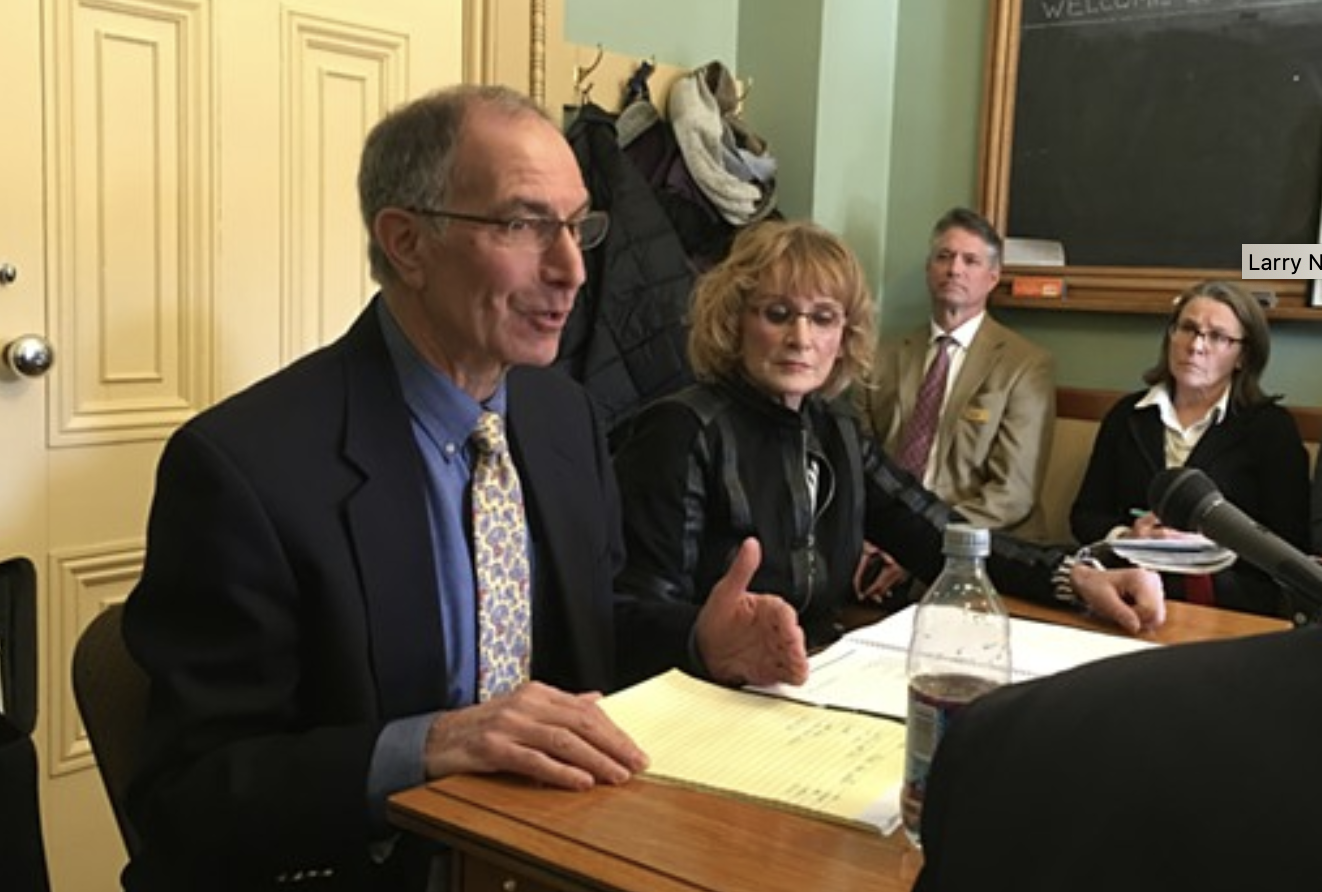
Let’s pour one out for Larry Novins, who just resigned as executive director of the Vermont State Ethics Commission. He earns full credit for lasting almost three years in a job with no resources, no power, and no real reason for existing besides allowing the Legislature to look like it gives a good goddamn about ethics.

Which, in reality, it doesn’t. Shame on all of ’em.

Novins’ departure was noted in a press release from the commission, which prompted absolutely zero coverage from the political press. It’s too bad, because he did his level best in service of a hopeless, thankless cause. That would be “governmental ethics in Vermont.” Nobody cares, man. Nobody cares.

The Ethics Commission has had a brief and undistinguished history, by design. It has managed to cling to existence despite the fact that it was clearly designed to fail, Norquist style. Its single accomplishment prompted a tsunami of negative reaction, and was ultimately scrubbed from the books.

And one other thing. All of the Commission’s work — all of it — is exempt from public records and open meetings law. If they did ever do anything, we wouldn’t know about it.

In case you think I’m exaggerating, here’s what Novins himself said in September 2019:

Continue reading

Another Baby Step in the Long, Treacherous Journey to Ethical Standards

Couldn’t resist.

Hey, guess what! Vermont is one of only three states without any enforceable ethics standards in law. Let’s hear it for Vermont Exceptionalism!

The effort to change that state of affairs has been percolating along at a barely perceptible pace for years now. At every step along the way, it’s met with opposition by state lawmakers, who tend to be very protective of their rights and obligations. The basic argument is, “Vermont is better than that! We don’t need no stinkin’ ethics law!”

Which is like saying we don’t need speed limits because Vermonters are inherently safe drivers. The vast majority of public officials do their jobs right, just like the vast majority of Vermont drivers abide by the speed limit. But that doesn’t mean we don’t need police patrolling the roads.

The latest turn in this long, depressing saga came Friday afternoon, when the House Government Operations Committee approved H.135, a bill that makes a few minor changes in how the Ethics Commission does its business. Still secret, still unfunded, still toothless. The bill got unanimous support after committee leaders assured members that the bill didn’t really do anything.

Left for future debate are the tough items: Adopting a Code of Ethics in state law, deciding how enforcement will work, whether the Commission should have any powers, and whether it should have a big enough budget to maybe hire at least one full-time staffer. (Right now, the only paid person is Executive Director Larry Novins, and he’s part-time. You call the Ethics Commission, you’ll likely be shunted to voice mail.)

After the jump: A little history, and a look ahead.

Continue reading

State ethics panel whitewashes its own past

This week, the Vermont State Ethics Commission withdrew its October 2018 advisory opinion about Gov. Phil Scott’s relationship with DuBois Construction, the firm he co-owned before becoming governor. It was a thorough exercise in retconning: The panel retroactively changed the rules of its own game.

Ironic, isn’t it, that a government body that’s all about ethics would try to whitewash its own past. It has even removed the original opinion from its website, replacing it with the following brief statement:

The Vermont State Ethics Commission at its September 4, 2019 meeting approved Executor Director Larry Novins’ recommendation to withdraw Advisory Opinion 18-01 issued on October 1, 2018. The opinion discussed the governor’s financial relationship with his former company which contracts with the State of Vermont. The Commission concluded that the process used at the time was incorrect.

Yeah, great, whatever. I don’t know why the commission chose to make this move almost a year after the fact. I suspect (but cannot prove) that there was pressure from the Scott administration to remove this blemish from the gov’s record. After all, Scott and his minions seem far more concerned about the opinion than anyone else in state government or politics. The voters certainly didn’t care when they overwhelmingly re-elected the guy last November.

To recap the DuBois saga… When Scott became governor, he had to divest himself of his half-ownership in DuBois, which frequently bids on state contracts. His $2.5 million stake represented the lion’s share of his own net worth.

The simplest remedy was to sell his share. Problem is, DuBois’ net worth is tied up in land, buildings and equipment. And a $2.5 million bank loan would have been a millstone around DuBois’ neck. Scott’s solution: He financed the loan himself.

That removed him from ownership and management. However, it tied up most of his net worth in a long-term loan to DuBois, and it provided a nice $75,000 per month year income stream from the company’s monthly payments. In short, Scott had no ownership interest, but he still had a huge financial interest in DuBois’ prosperity.

And that’s clearly a violation of the state ethics code as it’s currently written.

Of course, part of the commission’s retconning exercise is a rewrite of the ethics code. Something tells me it will be carefully crafted to put DuBois-style arrangements in the clear. The other part is a rewrite of its internal processes, which will prevent future cases like l’affaire Scott.

The commission’s current processes were established by legislation in 2018. Those processes occur entirely behind closed doors, exempt from open-meetings and public-records law — with one exception: The issuance of advisory opinions at the request of state officials, employees, or anyone else. Those opinions were the only commission function subject to public release.

It was the “anyone else” that triggered all this mess. The Vermont Public Interest Research Group requested an advisory opinion instead of filing a complaint, because VPIRG wanted the end product to be made public. And it got exactly what it wanted. The state ethics commission ruled that the DuBois deal was in violation of the ethics code — and released that opinion, as it was bound to do.

The opinion was not enforceable. It was purely advisory. But Scott didn’t like it, not one little bit.

Ironically enough, neither did Democratic lawmakers, who might have been expected to exploit the opinion for political gain. Instead, legislative leaders sided with the governor, and raked the commission over the coals during the 2019 session. Their intent, they asserted, had never been to allow outsiders to seek advisory opinions. Well, they had only themselves to blame; they wrote the law that allowed such a move. The commission made submissive noises and promised to make changes, so the legislature dropped any effort to rewrite the law.

And now the commission is following through on the submission routine.

Let me make one thing clear. I don’t suspect the governor of any actual wrongdoing. He’s an honest guy, and it would take a determined (and criminal) effort to subvert the state’s contracting process.

But the ethics code is designed to prevent the appearance of conflict as well as actual conflict itself. I know Scott was between a rock and a hard place on how to divest from DuBois. But ethical standards exist for a reason.

Retconning the standards to benefit a single individual who’s in a tough spot is fundamentally antithetical to the purpose of having an ethics code in the first place. It’s just one more sign that no one in state government is actually serious about ethics — they just want to make it look like they’re serious, so folks like me and VPIRG will shut our yaps and go away.