Tag Archives: Vermont Press Bureau

Okay, who replaced John Campbell with a pod person?

The Political Reporter is a flocking creature. It tends to congregate in large numbers where there’s a commotion or a generous food supply — or, sometimes, for no apparent reason.

On Friday, the flock gathered at the Senate Judiciary Committee’s hearing on the gun bill — the reduced version of S. 31, Now Expanded Background-Check Free!   (Correction: it’s now S.141 for those keeping score at home.)

It wasn’t the most important thing going on that day. I’d be hard-pressed to put it in the top five, actually; supporters and opponents are all het up about the bill, but I’m not. As a gun control measure it’s a teeny tiny baby step. As a potential threat to Second Amendment rights, it’s… well, it’s not. The Domino Theory was discredited way back in Vietnam.

So I was elsewhere on Friday afternoon. More on that later.

The only thing that was interesting about it, to me, was captured by the Vermont Press Bureau’s Neal Goswami: 

Senate President Pro Tem John Campbell, D-Windsor, an original sponsor of S.31, pushed [Committee chair Dick] Sears hard to advance a bill. He spent considerable time in the Judiciary Committee, often seated near Sears, monitoring its progress.

“I think his behavior has been fascinating,” Sears said.

His attention was bothersome to Sears, and prompted the veteran lawmaker, who is known to express his displeasure at times, to offer Campbell total control earlier this week.

“There was one point where I asked him if he really wanted to chair the committee,” Sears said.
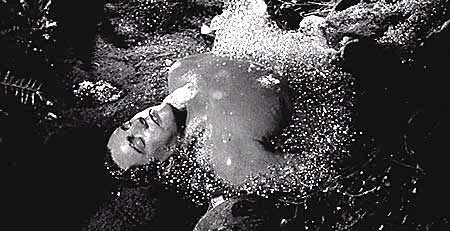
John Campbell, recently seen taking a restful nap. (Not exactly as illustrated.)

John Campbell, recently seen taking a restful nap. (Not exactly as illustrated.)

This is highly unusual, to put it mildly. I haven’t checked the record in detail, but I’d say this is unprecedented in Campbell’s frequently undercooked tenure as Pro Tem.

First, I don’t recall him ever being inspired about a piece of legislation. Serene detachment has been the order of the day. (I recall a time when I was watching Senate debate from the balcony. Campbell sat at his desk leafing through a woodworking catalog, paying no attention to the debate. It was inspiring.) It’s rare, like a snow day in Hell, for Campbell to show real passion for an issue.

Second, this is rather a blatant violation of Senate comity. I daresay it’s not unusual for a Pro Tem to pull the levers behind the scenes (it’s pretty unusual for Campbell, but not for your average Pro Tem), but it’s downright bizarre for a Pro Tem to publicly show up a committee chair. Sears’s reaction was actually rather diplomatic. Well, diplomatic for Sears, who guards his turf like the alpha male he thinks he is. Although there’s no truth, as far as I know, to the rumor that he tinkles a little on the Judiciary Committee doorjambs every morning.

Third, Campbell’s even making noise about openly opposing Gov. Shumlin.

“The governor made it very clear how he feels about this bill. He doesn’t support it,” Campbell said. “The governor is very powerful and the administration is very powerful. As such, I guess I had to step up my involvement.”

Superman: “As such, I guess, I had to stop the runaway train.”

So it’s weird doings on the gun bill. Campbell’s normal posture, when an issue gets divisive, is to stay the hell out of the way. There have been many occasions during his tenure when a bit of leadership — or arm-twisting — would have broken a logjam and avoided unnecessary strife. In moments like these, John Campbell usually stays out of the way.

I don’t get the sudden onslaught of passion for a bill that simply doesn’t do that much. Makes me wonder if that’s the Real John Campbell or an alien-crafted facsimile.
Revenge of the Slummin’ Solon

Aww, just when I thought we were rid of the guy, his tainted legacy comes back to haunt us.

GalbraithI speak of the person formerly known as The Most Hated Man in the Senate, Peter Galbraith. In a building full of people convinced that their shit don’t stink, he stood out for his towering self-regard. He saw himself as a master lawmaker and deal-broker, when in fact he was an egotistical meddler always willing to block the process if he thought things could be done better.

By which I mean, of course, that things should be done the way he wanted them done.

One of his more notorious episodes is now making life more difficult for his former Senate colleagues, who now have to relitigate the aid-in-dying law because of a classic Galbraithian power play.

Back in the spring of 2013, after an exhaustive debate across multiple sessions, the state legislature was poised to enact a bill that would have allowed terminally ill patients to seek lethal medication under strictly controlled conditions. The version that passed the House was modeled on Oregon’s successful law.

The Senate vote was expected to be very close. And at a crucial moment, Galbraith and another guy I’m pleased to call “former Senator,” Bob Hartwell, forced a radical rewrite of the bill that basically stripped away all the controls and protections. Galbraith was the driving force behind the idea; he wanted aid-in-dying without any state controls. The idea appealed to no one else, but he refused to budge. In the end, a House-Senate conference committed settled on a Frankenstein monster of a bill that imposed Oregon-style protections at first, but is set to remove them in the year 2016.

It was a ridiculous bill, but it did get aid-in-dying onto the books. And by all accounts, it’s been a success so far: very few people have used it, and even fewer have actually taken a fatal dose, but it does provide a safety valve for those truly in extremis without posing any visible danger to anyone else.

It works. But because of the Galbraith-Hartwell maneuver, the bill has to be reopened this year. Otherwise, we’d enter a Wild West situation, as the Vermont Press Bureau’s Neal Goswami outlines:

If the law is not changed, physicians will no longer be required to tell patients in person and in writing of their diagnosis, prognosis, range of treatment options, risks of taking medication and probable result of taking medication.

Nobody wants that. But thanks to Galbraith and Hartwell, the issue has to be reopened. This week, the Senate Health & Welfare Committee held a hearing on a bill that would continue the current protections beyond 2016. This has given opponents of aid-in-dying a second crack at killing the legislation. According to Goswami:

… opponents of Act 39 will look to repeal it and have allies in the Legislature who will sponsor amendments with that purpose when the legislation to keep the safeguards hits the Senate floor.

Great. We spent endless hours debating aid-in-dying and arrived at a substantial consensus. The resulting bill has worked as intended. But now, in a session already overloaded with contentious issues like the budget, taxes, Lake Champlain cleanup, education reform, and health care, we may have to live through a repeat of the 2013 debate.

And we have Peter Galbraith and his running buddy Bob Hartwell to thank for that. I really, really hope we’ve seen the last of those two assclowns.

A little shameless, and ironic, self-promotion by the Freeploid

Okay, so the Washington Post’s Chris Cillizza puts out a list of the best political reporters in each of the 50 states. He describes the list as a combination of reader recommendations and his own knowledge. It’s fair to assume that the farther away he gets from Washington, the more dependent he is on his readers.

Take Vermont, for instance. Cillizza’s list was sadly incomplete and, in two instances, ironically off-target.

He names four reporters. Paul Heintz of Seven Days; no problem there. Kyle Midura of WCAX; he does a fine job by TV standards.

The other two: Mike Donoghue and April Burbank of the Burlington Free Press.

Hahahahaha.

Nothing against either of them; they’re perfectly cromulent reporters. However…

— Neither is primarily a political reporter. Both are on the Freeploid’s vaguely-named Accountability Team. The Free Press draws heavily on the Associated Press for its political coverage.

— It was only a couple months ago that the Free Press jettisoned its political reporters, Terri Hallenbeck and Nancy Remsen. Both would be better choices for Cillizza’s list than Donoghue and Burbank.

The thickly-laden irony isn’t stopping the Free Press from celebrating its dubious honor. Three Freeploid functionaries have Tweeted the big news; here’s one of them.

Nice, Aki. I’m sure your former colleagues are sharing a bitter laugh.

As for Cillizza, he clearly doesn’t know much about Vermont media. He completely ignores VTDigger and VPR, two of the three best outlets for state political news. The Digger diss isn’t surprising, since he named it the Best Political Blog in Vermont two years ago. Small problem there: VTDigger isn’t a blog. It’s a professionally staffed news operation.

Cillizza does acknowledge the possible incompleteness of his list, and he has added people to it since he first posted it. I’ve sent him an email with my suggestions, and perhaps he’ll include them.

My top three noms: Anne Galloway of VTDigger, Peter Hirschfeld of VPR, and Neal Goswami of the Vermont Press Bureau. If I expanded things a bit, I’d include Dave Gram of the AP, Stuart Ledbetter of WPTZ, Bob Kinzel of VPR, and Mark Johnson of WDEV. Mark doesn’t report as such, but his daily radio show is the best single platform for discussion of state politcs and policy.

On the subject of Vermont’s true Best Political Blog, modesty forbids me.

No smoking guns in the Gruber file

Now I know how Neal Goswami’s been spending his spare time lately:

The Vermont Press Bureau obtained nearly 2,400 pages of emails between Jonathan Gruber and state officials that detail the work Jonathan Gruber, an MIT economist, has been doing for the administration.

Woof. That’s a lot of emails to wade through. The result of all that work was published in the Sunday edition of the Mitchell Family Organ. (The article is paywalled; if you don’t subscribe, Get Thee To A Library.)

So what did he find? More impolitic comments about stupid voters and conservative pundits? Arrogant pronouncements over how he’s gonna pull the wool over our eyes?

Er, no.

Emails… highlight the administration’s work since the summer preparing a long-awaited financing plan for Gov. Peter Shumlin’s proposed universal, publicly financed health care plan.

… In a July 7 email to Michael Costa, Shumlin’s deputy director of health reform and the tax expert spearheading the administration’s financing plan, Gruber expressed unbridled enthusiasm at the opportunity to help the state craft a single-payer health care plan.

In short, the emails depict a top-shelf policy expert avidly engaged in a very difficult project, and using his economic model to test countless iterations of single-payer.

And seeing Vermont as a ground-breaking opportunity: “I think we have a chance to make history here,” he said in a July email.

Goswami describes a lengthy, painstaking process that seems to validate Gov. Shumlin’s claims that he couldn’t release his plan because it wasn’t ready yet. This was, the emails show, a long, tough slog. Which still continues; reform chief Robin Lunge expressed confidence that the plan would be ready by late December, but only after an all-out effort.

It’s a fascinating read if you’re a policy wonk. But it doesn’t provide provide any new evidence for legitimate attacks on Gruber or single-payer.

Which is not to say there’s no room for illegitimate, partisan attacks:

Many emails that included details of the administration’s plan were redacted, with the administration citing executive privilege.

“Aha!”, I can almost hear Darcie Johnston crying. “Redacted! Cover-up!”

Partisans will certainly look at it that way. Especially since, according to Goswami, the Shumlin administration had an interesting rationale for adding a provision to Gruber’s contract stating that he “may advise the Governor on policy matters.”

That provision was added, not because Gruber would actually provide any policy advice, but simply to lay the foundation for a claim of executive privilege.

Lunge… said the clause in the contract was included to protect her policy advice to the governor. Gruber has not contributed policy advice to the governor, according to Lunge.

Got that? Lunge generated policy ideas… Gruber ran them through his model… and Lunge used his information to shape her policy ideas. But since she had to give her policy ideas to Gruber, his work must be privileged.

It makes sense, but it also provides fertile ground for conspiracy theories.

And it creates some concerns about government transparency: Lunge told Goswami that “the same provision is also included with other contractors.”

If that’s true, then we ought to be less worried about Jonathan Gruber and single-payer, and more worried about broadening claims of executive privilege.