Tag Archives: Ruth Hardy

“This Broke the Democratic Caucuses”

First, the obligatory note about Famous Quotes. They’re all a lie, apparently.

This one is either an “Afghan Proverb” or it was said by Benjamin Hooks or John C. Maxwell or James M. Kouzas, take your choice. I’m just surprised it hasn’t been attributed to the Grand Champions of “I Didn’t Actually Say That”: Abraham Lincoln, Albert Einstein, and Yogi Berra.

Whoever said it, it applies here. The Democratic leadership of the House and Senate played a very dangerous game when they jammed through H.454, the “education reform” bill that’s all about squeezing the public education system and protecting the interests of Vermont’s big private schools. Yeah, they won. They got their grand bargain with Gov. Phil Scott. But at what cost?

It’s almost unheard of for a major bill to pass a legislative body with most of the majority lawmakers voting “No,” and that’s exactly what happened here. Virtually all the Republicans voted in lockstep with the governor, while most Democrats in the House and Senate spurned their leadership and rvoted against H.454.

There’s a reason such a maneuver is almost unheard of, and it’s expressed in my headline. “This broke the Democratic caucuses” is what one majority lawmaker told me, and added that House and Senate leaders “are isolated and insulated from their caucuses.”

Need I say that this is an unhealthy situation, and that it bodes ill for the 2026 session and the November elections? Need I add that leadership needs to put in some serious time mending fences? They should, but based on past performance I have little confidence that they will.

Continue reading

News You Should View: Worth a Thousand Words Edition

I’m starting this post with a tip o’the hat to Glenn Russell, ace photographer for VTDigger. His thankless task is to get good images out of the Statehouse, that notorious den of tiny rooms and bad lighting. Seriously, it’s a terrible place to be a photographer. But Glenn got one hell of a shot for Digger’s story about the state Senate’s unfortunate education reform bill passing a key committee. For those in the know, the image was a masterful piece of reporting. It showed Gov. Phil Scott’s right-hand man Jason Maulucci talking to Senate Education Committee chair Seth Bongartz on a bench in the hallway. Not that I’m saying Democrat-in-name Bongartz colluded with the Republican administration on a bill that seems to lean decidedly to the right, but Russell’s image definitely paints that picture. Fair or unfair, I loved it.

Not that our next entry doesn’t deserve top billing. Journalist David Goodman devoted his latest edition of the “Vermont Conversation” podcast to an interview with freed detainee Mohsen Mahdawi. Apparently, Mahdawi consented to the interview only if Goodman conducted it during a walk in the woods near Mahdawi’s home in the Upper Valley. You come away from the hour with a clear picture of this alleged threat to national security as a devout Buddhist whose activism is purely nonviolent. Also with a clear picture of a real Vermonter — a person with a deep love for, and profound connection to, the Vermont landscape. Beautiful piece of work, not to be missed.

Continue reading

Senate Leadership Cooked the Books on Education Reform

You know what’s a really great indicator of success? When a legislative body takes on a vital issue, and comes up with a “solution” that everybody seems to hate.

Well, that’s exactly what we’ve got with the state Senate’s education reform plan, which was approved last week by the Senate Finance Committee. Better still: the people who hate it the most are in the Democratic majority. Seriously, the only Senators who have anything good to say about this thing are Republicans.

And their words constitute the very definition of “damning with faint praise.”

Take, for instance, Sen. Randy Brock: “everybody… is coming away somewhat or entirely disappointed,” but “doing nothing is even a worse option.” Senate Majority Leader Scott Beck favors the bill, but warns that it could bring substantial tax increases to economically disadvantaged communities. Great!

Democrats, meanwhile, could barely conceal their contempt. “This bill will be devastating to our education system,” said Sen. Ruth Hardy. “I’m extremely uncomfortable with all of this,” said Sen. Martine Laroque Gulick, about whom more later. Senate Finance Committee chair Sen. Anne Cummings, who held her nose and voted yes, “can’t remember ever feeling as bad about a vote as I do on this one,” and she’s been in office since 1997, so she’s taken a few votes. Sen. Thomas Chittenden, who voted for the bill in committee, said he might well vote “No” on the Senate floor.

To judge by the published comments, it’s quite possible that when this bill gets to the full Senate, it will get more votes among minority Republicans than majority Democrats. Which is a remarkable development for one of the most significant bills of the entire session.

Continue reading

Repeat After Me: “It’s Only a Movie”

Sen. Chris Bray seems to have contracted a mild case of the fantods regarding his prospects for re-election to a [checks notes] seventh term in office. He’s raised quite a bit of money, and he’s spent even more than he’s raised. Before the August primary, he and fellow Addison County Sen. Ruth Hardy spent big against a challenge from Rep. Caleb Elder that, frankly, was doomed from the start. As I said in my previous post, incumbent senators just don’t lose unless they’ve committed gross malfeasance, aged beyond the electorate’s tolerance, or done something equivalently heinous.

And now, Bray is spending beyond his means against a surprisingly well-funded challenge from Republican Steven Heffernan (and a not-nearly-so-well-funded challenge from Republican Landel Cochran). And I get it; in his position, he shouldn’t be taking anything for granted. But I’m here to tell you that Bray ain’t losing. Heffernan’s odds are roughly equivalent to a snowball in a very hot place.

Look. Besides the fact that incumbent senators never lose, there’s the district. It’s been a full generation since Addison sent a Republican to the senior chamber: Tom Bahre in 2000, the year of the great civil unions backlash. Since then, two Democrats every two years for a grand total of 22 elected Dems to zero Republicans. In 2022, Bray and seatmate Ruth Hardy each received more than 33% of the vote, while third-place Republican Lloyd Dike lagged with 16.4%. Republicans have routinely finished far out of the running in Addison, except for those years when the GOP didn’t even bother to field candidates.

Yes, Heffernan is a more credible figure than Dike, one of the radical right hopefuls who co-signed a 2022 newspaper ad denying that global warming exists and asserting that greenhouse gases are actually good for us and the planet. Heffernan isn’t one o’ them. But he’s not winning, either. Not in Addison, not in a Senate race against two established Democratic incumbents.

Continue reading

Being a Senator: A Lesson in Two Parts

2021 is a singularly difficult year to be a first-term lawmaker. You can’t get a feel of the place. You can’t have the casual conversations that make life easier. You can’t grab a colleague for a brief word of explanation about something that’s hard to understand.

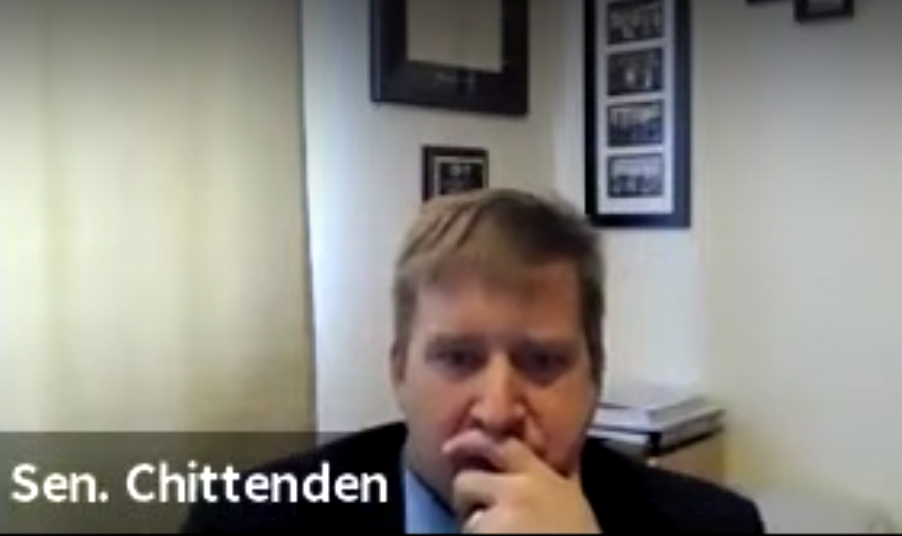
That said, I have to note a couple of troubling passages in the maiden voyage of Sen. Thomas Chittenden, D-Chittenden. On two separate occasions last month, he acted less like a senator than like a state representative from a specific community. In hearings on Burlington-area transportation improvements and school funding, he spoke entirely on behalf of his hometown, South Burlington.

On February 19, the Senate Transportation Committee held a hearing (video available here) on potential improvements to I-89 in the Burlington area. Nothing’s happening imminently; the committee and VTrans are looking a few decades into the future, assessing options for handling traffic flows that will almost certainly increase from the already heavy volumes of today.

The committee and a VTrans official discussed options for making the Burlington area interchanges work better. One of the options is a new exit on I-89 at US-116/Hinesburg Road. This hypothetical Exit 12-B would provide a direct pipeline into South Burlington.

Well, Chittenden gave a strong (and rather parochial) endorsement to the 12-B idea.

Continue reading

An Unsettling Incident in Senate Finance

Senate Finance Committee chair Ann Cummings is a mixed bag. She’s not the most imaginative or energetic policymaker; she barely bothers to campaign and waltzes to re-election every two years. She’s one of the many veteran senators with a very well-developed sense of entitlement.

On the other hand, she knows her stuff. That’s nothing to sneeze at when it comes to issues as complex as taxes and state revenue.

But that didn’t seem to be the case during a Thursday committee hearing. Quite the opposite; she was shockingly uninformed on one of the biggest financial issues facing state government in 2021. I couldn’t believe it at first, but then she did it again.

The subject was S.59, a bill introduced by Sen. Cheryl Hooker and four other senators. The bill is an attempt to address the glaring shortfalls in the state teachers’ and public employees’ pension funds — an issue brought to the forefront by Treasurer Beth Pearce this year. After having defended the funds throughout her tenure, she started ringing the alarm bell on funding shortfalls and advocating substantial changes.

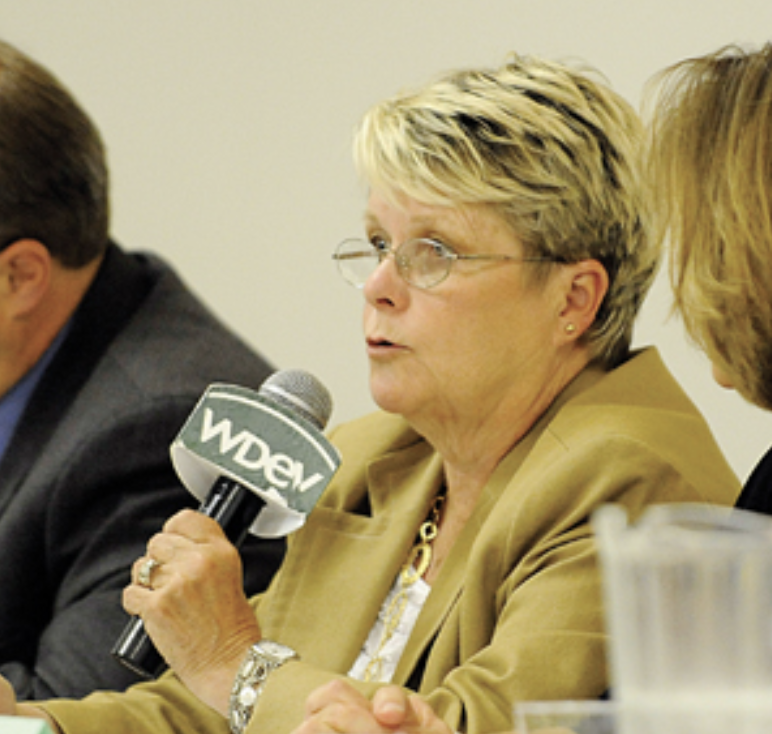
The Dem-dominated Legislature now faces a choice between finding a big new pot of money for the funds, and imposing pain on two of the party’s most important constituencies. S.59 opts for the former; it would add a 3% income tax surcharge on Vermonters with incomes of $500,000 or more, and devote the revenue to filling the hole in the pension funds. Sen. Ruth Hardy, a member of Senate Finance and an S.59 co-sponsor, presented an initial look at the bill. It didn’t go well.

Pearce’s pivot has been the unexpected policy story of 2021 (so far). She’s been making the rounds of relevant legislative committees, laying out the problems and presenting lawmakers with the unpleasant policy choice described in the previous paragraph. On February 4, she offered her pension testimony to Senate Finance.

One week later, Cummings made it clear she didn’t have a clue about Pearce’s position or the status of the pension plans.

Continue reading

The Luckiest Man in Vermont

Gov. Phil Scott issued his budget address today (YouTube video here). It was an astoundingly pain-free occasion, considering that we’re in the throes of a pandemic that’s been holding our economy hostage for almost a year now. In fact, rather than proposing painful cuts, Scott offered a generous scattering of funds for a wide variety of programs that, he said, will put Vermont on a sounder footing going forward.

How? Simple. The tsunami of federal Covid relief money. Scott’s budget includes $210 million in one-time money from the feds. As we heard from state economists Tom Kavet and Jeffrey Carr last week, federal money has prevented an economic collapse and even contributed to a boom in some sectors.

Throughout his political career, Phil Scott has benefited from little-known and/or underfunded Democratic opposition in races for state senate, lieutenant governor and governor. In his six races for statewide office, the closest result was the 2010 contest for lieutenant governor — seven percentage points over Steve Howard. He gets credit for being an appealing political figure, but he sure hasn’t had to fight very hard.

And now, once again, he’s the luckiest man in Vermont. You’d think a shattering pandemic would lead to massive cutbacks, but no. Scott could once again boast of a budget that wouldn’t increase taxes or “existing fees.” And according to Kavet and Carr, the state economy will continue to be buoyed by federal infusions for the next two fiscal years. Which will make it a lot easier to craft a pain-free state budget again next year and, if he runs for a fourth term, he may well be unbeatable once again.

Continue reading