Tag Archives: renewable energy

The briefest of persecutions

That didn’t take long.

After an investigation that lasted a couple of weeks or so (and probably involved nothing more than reviewing documents and law books), the Attorney General’s office has declined to pursue any charges against anti-renewables scold Annette Smith for practicing law without a license.

Being an obstacle to progress and a spreader of misinformation, well, those aren’t illegal. So Public Enemy Number One of Vermont’s renewable energy goals will carry on, tilting at windmills and fomenting baseless fears amongst the populace.

Too bad the investigation was so brief. Too bad for her sake, that is; she was relishing her self-proclaimed role of Free Speech Martyr. Her organization, Vermonters for Exporting Our Ecological Damage a Clean Environment, was raising money on her alleged persecution.

Those days are over.

Not really; I’m sure she will proudly brandish this incident as “proof” of the Blittersdorf/Iberdrola/Gaz Metro/Peter Shumlin/Illuminati plot to bring her down.

Continue reading

Who speaks for renewables?

The anti- wind and -solar crowd had a big to-do at the Statehouse yesterday, wearing construction-type green vests and lugging all kinds of props as they pressed their case for the current iteration of anti-renewables legislation: a ban on ridgeline wind and “local control” over siting decisions.

This post is not about their arguments. This post is about the absence of response from those who supposedly favor renewable energy.

With the exception of VPIRG, our environmental groups have been curiously silent. On paper, they support renewables as part of a broad-based effort to combat climate change. But in practice, they stay off the battleground.

Disclaimer: I don’t have pipelines into their war rooms, and I don’t know the details of their lobbying efforts. I’m judging based on what I can see. And what I see is an extremely active anti-renewable movement and a distressingly quiescent response.

I’m talking VNRC, the Conservation Law Foundation, and the Sierra Club among others. They all pay lip service to renewables, but what do they actually do? Where is the pro-renewables gathering at the Statehouse?

Continue reading

Energize Vermont’s cockamamie political analysis

Here’s something I bet you didn’t know.

Widespread unrest over the state’s renewable energy policy was responsible for Governor Shumlin’s near-defeat in 2014.

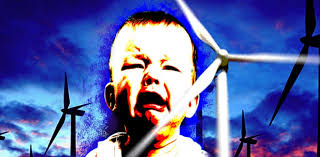
Actual piece of anti-wind propaganda from Ireland. I'm more afraid of Giant Baby than the turbines. But maybe the vibrations turned him into Babyzilla.

Actual piece of anti-wind propaganda from Ireland. Personally, I’m more afraid of Babyzilla than the turbines. But maybe the vibrations turned him into Babyzilla. Hmm.

Well, that’s the story being peddled by our buddies at Energize Vermont, an anti-renewable nonprofit whose funding sources are entirely opaque. They’re branding it as “The Vermont Energy Rebellion,” which allegedly poses an existential threat to the Democrats in 2016.

But let’s go back to 2014, the year that Scott Milne allegedly surfed the wave of anti-renewables anger to within an eyelash of the governorship. The fevered imagination of Energize Vermont focuses on the key constituency of Craftsbury, population 1,206.

Hey, you in the back: stop laughing!

Continue reading

State of the State: Tough sledding

Governor Shumlin’s State of the State address wasn’t quite the nothing-burger you might expect from a lame duck. But if early returns are anything to go by, the actual impact of his address may be a lot closer to a nothing-burger.

There were a few notable initiatives and ideas, but most of them got slapped around almost as soon as he left the podium. And I’m not talking about the predictable Republican naysaying; I’m talking about Democratic criticism. In past years, Shumlin has had a very hard time rescuing high-profile initiatives that get off to a rocky start at the Statehouse, and that’s likely to be even more true in his lame-duck year.

Other ideas are sure to garner opposition on January 21, when the Governor delivers his final budget address. That’s when he’ll have to explain how he wants to pay for new or expanded programs that cost money. (As opposed to, say, paid sick leave, which won’t cost the government a dime.) In the past, the Legislature hasn’t reacted kindly to Shumlin’s budget-cutting suggestions (see: Earned Income Tax Credit, 2013), and he hasn’t reacted well to legislative alternatives.

We can break down the new stuff into two categories: items that will cost money, and those that won’t. At least they won’t cost the state any money.

Continue reading

So you say we can’t do it…

Well, this is timely.

No sooner do I write a post about Vermont’s leading climate change deniers, than here comes a real success story from an unlikely place:

In less than 10 years, Uruguay has slashed its carbon footprint without government subsidies or higher consumer costs, according to the country’s head of climate change policy, Ramón Méndez.

In fact, he says that now that renewables provide 94.5% of the country’s electricity, prices are lower than in the past relative to inflation. There are also fewer power cuts because a diverse energy mix means greater resilience to droughts.

Until recently, Uruguay was as fossil fuel dependent as the next country. But it developed a sane, balanced, not at all extremist policy that has reaped incredible benefits in a short amount of time: “…renewables account for 55% of the country’s overall energy mix (including transport fuel) compared with a global average share of 12%.”

And they’re meeting more than 90% of their electricity demand “without the back-up of coal or nuclear power plants.”

How did they do it? The sensible way.

There are no technological miracles involved, nuclear power is entirely absent from the mix, and no new hydroelectric power has been added for more than two decades. Instead, he says, the key to success is rather dull but encouragingly replicable: clear decision-making, a supportive regulatory environment and a strong partnership between the public and private sector.

I strongly recommend reading the whole article. It’ll put a smile on your face and a little bit of hope in your heart.

Of course, it’ll also make you wonder why in hell we can’t do it here.

Oh hey look: another VTGOP climate change denier

Here’s a little compost sprinkled on your cornflakes, courtesy of one Eileen Rodgers, “communications director for the Burlington Republican Committee”:

Along with plotting to place wind turbines on 200 miles of ridge lines and scheming to occupy thousands of acres of our fields with solar panels, the central planners in Vermont are busying themselves with projects that are guaranteed to squeeze our cars off the roads.

There’s a whole lotta hate in that little paragraph, which is the kickoff of an opinion piece by Rodgers posted on VTDigger this morning. Plotting, scheming, central planners squeezing our cars off the roads.

So tell me, when exactly did Old Joe Stalin resurrect himself and take over Vermont?

In the guise of Bill McKibben, no less?

Climate change has been a very convenient phenomenon. It has given a sense of validity to all sorts of projects the big guys support. Energy from the wind and sun will take care of our electricity needs and our transportation needs will be met with … bicycles!!

Yeah, that’s… uh, wait, nobody is saying any of that. Except maybe the voices in Eileen Rodgers’ head.

And “big guys”? Since when are Republicans against “big guys”?

Continue reading

Will the VTGOP run an anti-renewables campaign?

Sign, sign, everywhere a sign…

— 2010 Republican gubernatorial candidate Brian Dubie emerges from five years of political hermitage to reveal himself as a vocal anti-wind advocate. He insists his stance has nothing to do with a proposed wind farm near his house, ahem.

— Lt. Gov. Phil Scott, the likely GOP gubernatorial candidate, doesn’t like ridgeline wind. He has described a road-to-Damascus moment when he was biking in rural Vermont, saw wind turbines on a ridgeline, and thought they looked ugly.

— Former Douglas Administration Ag Secretary Roger Allbee comes out of the weeds with an essay questioning whether wind and solar energy are in keeping with “Vermont’s environmental heritage,” which he describes in extremely rosy terms.

— Senate Minority Leader Joe Benning, a potential candidate for Lieutenant Governor, has expressed (on this very site) his opposition to any more large-scale renewable projects in the Northeast Kingdom.

— Then you’ve got VTGOP Chair David Sunderland, who has said “there’s science on both sides” of the climate change issue.

Taken together, that’s quite a few signs that the Vermont Republican Party will be running an anti-renewable campaign in 2016. Well, they’ll dress it up as favoring local control and taking “sensible” action (meaning little or none) while providing plenty of lip service about climate change.

This is one of the potential negative effects of a Phil Scott governorship: he would be a major obstacle to further progress on renewables.

Continue reading

They paved (a tiny bit of) paradise and put up solar panels

VTDigger’s Friday feed is infected with a bit of uncharacteristic headline fearmongering.

HIGH SPACE DEMANDS FOR VERMONT’S FUTURE SOLAR FARMS IF ENERGY STAYS LOCAL

The story concerns a presentation to the Legislature’s Solar Siting Task Force by Asa Hopkins of the Public Service Department. And by “HIGH SPACE DEMANDS,” it means Hopkins’ estimate of between 8,000 and 13,000 acres of solar panels statewide. That’s assuming we are to meet our legally-mandated goal of 90% renewable energy by the year 2050.

Wow. That sounds like a lot of land.

Is it?

Not really. The state of Vermont has almost 6,000,000 acres. A conscientious reporter (or editor) might have thought to include that fact.

So, if you take the upper end of the estimate, solar panels would cover two-tenths of one percent of Vermont. (A conscientious headline writer might have asked whether “HIGH SPACE DEMANDS” is an accurate characterization.)

You know what? I’d take that, if it means getting 90% of our energy from local, renewable sources.

Continue reading

Vermont’s New Working Landscape

Vermonters have a long, sometimes storied, sometimes notorious, history of working on our land. In the latter category we have, among others, the sheep boom of the early 19th Century that left vast forests converted to pasture; the near-clearcutting of the entire state during the lumber (and wood construction) boom of the later 19th; the complete trashing of our waters by riverbank industries; and our modern-day violations of the Clean Water Act, caused in large part by agriculture and inadequate public water treatment.

Throughout it all, Vermont has been a working landscape with a tenuous, inconsistent relationship to the environment. Fortunately, we never found exploitable resources like coal or precious metals or oil. Also fortunately, the population has remained small enough that we’ve never been able to damage the environment beyond its incredible ability to regenerate.

But whether we were engaged in massive sheep farming, clearcut lumbering, industry, dairy farming, or shopping malls and subdivisions, the one constant is that we live in a “working landscape.” We have often celebrated that fact. And indeed, long-familiar aspects of the working landscape — even if they cause environmental degradation — are cherished parts of our way of life.

Myself, I’m looking forward to the next evolution of Vermont’s working landscape: the integration of renewable energy, the creation of a closer-to-home energy supply, the diminished dependence on fossil fuels and on massive “renewable” sources elsewhere, such as Seabrook Nuclear and the destructive hydro projects in northern Quebec.

Continue reading

Maybe now Kevin Jones can find himself a new hobby

Yesterday, the Federal Trade Commission gave a light wrist-slap to Green Mountain Power, telling GMP to “be more clear” in how it advertises renewable electricity while closing the books on a complaint of deceptive marketing.

The allegation had come from the usually reliable folks at the Vermont Law School, and in particular the unreliable Kevin Jones, who’s had a bee in his bonnet for years about Vermont’s SPEED program, which allows utilities to sell renewable energy credits out of state. Jones’ complaint is that selling RECs is basically a shell game, allowing Vermont utilities AND the out-of-state REC buyers to both claim they’re producing “green energy.”

Technically true, but with a couple of giant caveats.

SPEED was designed to encourage development of renewables at a time when they were not financially competitive. Vermont utilities could build renewables and recoup some of their costs through the sale of RECs, thus cushioning the blow to ratepayers. And it was designed from the beginning to be a temporary program; it will expire in 2017, and the legislature is crafting its replacement this year. SPEED is going away on schedule, having achieved its mission.

Jones also ignores the fact that, whether or not RECs were sold, their sale allowed us to adopt renewables more quickly than we could have otherwise. Real power was generated, and it reduced the overall need for fossil fuels.

The complaint also seems to rely on a misperception of electricity generation and consumption. Power enters the grid from all kinds of sources, is distributed through the grid, and consumed — all in real time. Unless you live off the grid, there’s no telling where your electricity comes from at any given moment. GMP can promote its commitment to renewables, but it cannot promise you that your power comes from the solar farm down the road, a hydroelectric dam in northern Quebec, a fossil fuel-burning plant in Massachusetts, or the big nukes at Seabrook. That’s true with our without SPEED.

I wrote about this a couple months ago and you can read more there, so I won’t belabor the point here. Suffice it to say I’m glad to see the FTC close this case. And once the legislature passes the next iteration of power regulation, I wish Mr. Jones luck in finding a new binky.