Tag Archives: Mark Johnson

Sorrell versus the record, part 1: the MTBE deal

Earlier this week, former Mark Johnson Show host Mark Johnson produced his first podcast for his new employer, VTDigger. It was a 50-plus-minute interview with Attorney General Bill Sorrell, headlined by Our Eternal General’s stout denials of any wrongdoing. (It was also an excellent example of Johnson’s interviewing skills. His departure from WDEV was a big loss for our public discourse, and I look forward to his Digger podcasts.) Sorrell is, of course, the subject of an independent investigation for campaign finance-related activities.

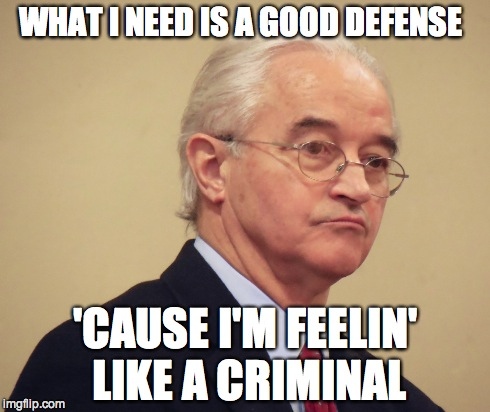
SorrellCriminalThe interview reveals Sorrell in all his self-centered, fumblemouthed glory. He is, as always, the innocent target of politically motivated attack and quasi-journalistic hit pieces. But it’s worth taking a close look at how he explains himself, and comparing that to what’s on the record so far. (The independent investigator, Tom Little, is famously tight-lipped about his work, so we have no clue what he may have discovered.)

I’m breaking this up into parts because otherwise, it’d be horrifically long. This installment, Sorrell’s explanation of the MTBE lawsuit, is itself pretty damn long. If you don’t want to read the whole thing, the bottom line is: Sorrell’s interpretations and recollections are self-serving, and often at odds with the facts. In my judgment, it’s unclear whether Sorrell violated the law; but his behavior and his insidery relationships with key players are disturbing at the very least. There is an appearance of wrongdoing, whether there was actual wrongdoing or not.

Continue reading

Oh, by the way… the carbon tax? It’s dead.

(Note: I’ve updated this post to include more quotes, because the interview is now available online.)

You may have missed the news amid all the hugger-mugger over the inaugural protest, but the Legislature’s top advocate for a carbon tax has already thrown in the towel.

Rep. Tony Klein (D-East Montpelier), chair of the House Energy and Natural Resources Committee, was one of the headliners at last November’s news conference announcing a broad-based push for a carbon tax. “I’m going to push really hard on this,” he said.

Well, that was then. This is now.

There’s not gonna be [a carbon tax] this year. It’s not gonna be passed out of my committee or any other committee.

Klein said those words on January 8, Inauguration Day, in an interview on WDEV’s Mark Johnson Show. I caught the interview when it aired, but it got lost in the Inaugural Shuffle. Sorry about that.

After Klein’s declaration, Johnson asked him why there would be no vote.

It will not pass because, one, the Speaker told me it won’t pass. [chuckle] And two, the way it came out to the public, with a real lack on our part of preparation, there was a pretty scary reaction to it. I accept that; that was a mistake.

That’s a reference to the immediate reaction to the November presser. I’m not sure how he would change the rollout; my own view is that it seemingly came out of nowhere. There wasn’t any build, just a big announcement. At the same time, I’m not sure if any other strategy would have made a difference; too many top Democrats simply don’t like the carbon tax. Well, put it this way: they don’t want Vermont to go it alone: they want a regional or national approach.

Klein concluded:

I’m certainly not going to ask the members of my committee to vote on something that may cause a lot of discomfort, especially if it’s not going to go anywhere.

Which is wise chairmanship. I can’t argue with it. I can’t even argue all that much with Shap Smith’s reputed diktat, because this is already shaping up to be one hell of a session without considering a tax on fossil fuels during home heating season.

It’s too bad, because with oil prices currently low, it’d be a great time to enact a carbon tax. After all, the price of gas is a buck and a half cheaper than it was nine months ago; as proposed in November, the carbon tax would add 45 cents to the price of a gallon of gas. And, lest we forget, 90% of the revenue would go into broad-based tax cuts and targeted rebates for low-income Vermonters.

Klein said his attention would turn toward “aggressive funding” of weatherization and other efficiency measures. Which would be great, except we’re in a budget situation that would seem to rule out “aggressive funding” of anything. If Klein’s committee passes a significant expansion of efficiency measures, we can expect to see it expire on the surgical table of House Ways and Means.

The carbon tax proposal was a carefully-crafted plan that would have minimized the pain on Vermonters, reflected the true cost of fossil fuels in their price, and made a huge dent in Vermont’s carbon footprint. I’m not surprised to see it fall in the face of unpleasant political realities; I’m just sad to see it happen so quickly. Not with a bang, but a whimper.

A passel o’ peevishness on Inauguration Day (Part One)

Many a knicker was tightly knotted yesterday, judging by some of the statements made and actions taken at the inaugural ceremony.

Most of the collywobbles arose from the protest by advocates of single-payer health care. Many politicians were vocally incensed at such goings-on. And some of the protesters were shocked — shocked — that they might be handled roughly by police.

The rest of the peevishness came from Republicans reacting, even more childishly than usual, to Gov. Shumlin’s inaugural address. I’ll cover that in a separate post.  Back to the demonstration.

The folks from the Vermont Workers Center went a bit too far when they disrupted the closing benediction. Otherwise their protest was peaceful if occasionally intrusive.

The assembled dignitaries, however, just couldn’t stomach this disturbance of their sacred space. Sen Dick McCormack wins the honor for Biggest Overreaction; he called the protest “fascist.” Protip for public figures: never ever ever ever ever use the word “fascist” unless you’re talking about a violent, oppressive, murderous regime.

Sen. Bobby Starr, D-Hicktown, resorted to the “You Kids Get Off My Lawn” meme: “I think they should get a job.” Dirty hippies!

Senate Penitent Pro Tem John Campbell was among several lawmakers who told protesters they were hurting their own cause.

Snort. As if.

Two points. First, single payer is dead for the foreseeable future. Second, any lawmaker who casts a future vote because of yesterday’s demonstration is failing his/her duty.

And the Governor, speaking today on WDEV’s Mark Johnson Show, said the protesters had “hurt the cause” by showing a “lack of respect for the process.”

Awww. Would that be the same process (and the same governor) who built up their hopes and expectations for years, only to dash them all in a single moment? Shumlin reaped the benefits of single-payer advocates’ support through three election cycles, and then abruptly trashed it all.

Advocates are understandably upset about that, and the inauguration of Peter Shumlin was an appropriate time to express their outrage. It was, in fact, the perfect time. The Governor shouldn’t play with people’s beliefs, and expect to be shielded from the consequences by his sense of decorum. As a Mark Johnson Show caller pointed out, disruption is the only way for people who feel disenfranchised to make their voices heard.

So, no sympathy for the hurt fee-fees of our distinguished leaders.

Not that the protesters are without blame. The single moment where things went too far was during the closing prayer. Protesters were outside, singing. One of them, Ki Walker, entered the balcony and continued to sing. A protest organizer later claimed that Walker thought the ceremony was over. But Walker was right there at center stage. He could see that the ceremony was continuing. And he kept on singing.

Afterward, he explained himself to Seven Days’ Paul Heintz:

 “Our tone was, like, nice or whatever,” Walker said.

Duuuuuuude. 

But the Whiniest Protester Award goes to Sheila Linton, who was part of the group occupying the House floor after the ceremony. When police began trying to remove the group, very politely, she refused to move or speak. When they tried to lift her arms, she began screaming as though they were using a chainsaw. (You can see the video on Seven Days’ website.)

Okay, here’s a lesson for Vermont’s Junior Gandhis. Your commitment to passive resistance  includes the possibility of what one trooper called “pain compliance” — the application of discomfort to those who resist police action. And this wasn’t Bull Connor with firehoses and Dobermans; these were state troopers acting with restraint and deliberation. Sorry, Ms. Linton, no sympathy here.

The demonstration itself was relatively mild, Mr. Walker being a notable exception. So was the police response. People on both sides got way more upset than they should have been.

The best reaction came from House Speaker Shap Smith, quoted by the Vermont Press Bureau’s Neal Goswami:

“I think this was an incredible example of the openness of our democracy,” he said. “In the people’s house, people are allowed to petition, and I would expect that over the coming weeks, we’ll talk with people about setting up hearings.”

Measured, reasonable, respectful. Just about perfect.

(Still to come: VTGOPeevishness.)


Dan, the man whose outer shell of principle conceals a melty nougat center

My man Mark Johnson hosted Dan Feliciano, Libertarian candidate for Governor, on his eponymous radio show Monday morning. And I have to say, it was a puzzling and underwhelming performance.

Feliciano proclaims himself as the candidate of principles. Those rock-solid beliefs include pulling the plug on single-payer health care, cutting state spending, and opening the public school system to competition and choice. Feliciano articulated those points clearly.

…………. But then, when it came down to details, Dan Feliciano revealed himself to be almost as soft and squishy as Scott Milne. On issue after issue, Feliciano punted on specifics. The details would be worked out later on, or he’d have to consult with these people or those people, or a new policy would be crafted through a collaborative process. It seemed to me that Feliciano was trying to preserve ties to his Libertarian/conservative base without closing the door to any centrist or independent voters.

A prime example: His two-faced response to a listener question about marijuana legalization. Feliciano began by saying “If a bill came across my desk, I would sign it.” But then he raised public-safety questions, claiming that there was no “appropriate test” for driving under the influence of marijuana.

So, he’d acquiesce to a bill that he sees as a threat to public safety. Hmm. How principled.

The question of legalizing heroin came up. This is a Libertarian principle, decriminalizing any “victimless crime.” Feliciano dodged, lamely offering that such a bill “wouldn’t pass the Legislature” and there are many other things higher on the priority list.

I am shocked, shocked, to hear such weasel words coming from a Libertarian.

Feliciano’s approach to health care reform didn’t stand up under scrutiny either. He wants to ease state regulations to entice more insurers to enter the marketplace, with the ensuing competition working its usual magic. But he’s surprisingly vague on how he’d attack the regulatory burden. He doesn’t call for the dismantling of the Green Mountain Care Board; he just wants it to be  “more of an overseer, less of a policymaker,” and that it needs to be “more accountable to the people.”

Including, perhaps, the popular election of its members.

That goes beyond lame, all the way to harebrained.

Feliciano was boxed into a corner on what regulations to cut, because he’s already been burned by questioning the community-rating system, which bars insurers from charging inflated prices to the old, sick, and high-risk. It’s a bete noire of the far right, but it’d be political poison to call for its repeal. So instead, he offers only the vague “our regulatory environment is too restrictive” and says he will “talk to insurance companies about what makes Vermont so onerous.”

Now, that’s right out of the Scott Milne playbook.

Johnson then reminded Feliciano that community rating was the single factor in driving many insurers out of Vermont. Feliciano’s response: if Vermonters want community rating we’ll keep it, but “I think there’s still opportunity — there must be something else that drove the companies out of the state.”

Oh, Dan, Dan. I thought you were a man of principle.

Later on, when the subject of health care returned, Feliciano tossed out a weak appeal to price advertising for medical services. He actually mentioned laser eye surgery as an example.

Do I have to enumerate the problems with that example? Perhaps I do. Well, laser eye surgery is a very specific and highly automated process. Unlike most medical procedures, your choice of practitioner doesn’t markedly change the odds of success.

When you get into the trenches of medical work, it’s not a matter of specific identifiable procedures; it’s a course of treatment, it’s an educated response to complications. It’s seeing the patient through to recovery. For many patients, it’s a multidisciplinary effort to combat a variety of different conditions in a single body. You can’t post that stuff on a billboard.

And Feliciano ought to know this. He’s got a special-needs daughter, and during the interview he talked about his family’s struggles to get her the best possible treatment. He praised his high-quality insurance coverage that allowed, among other things, a course of care at Johns Hopkins.

But when it comes to health care reform, he wants up-front pricing. And if you don’t want to settle for the cheapest provider, then he says, “If you want to pay a little more, you’ll have to pay something.” If I interpret that correctly, he means “you’ll pay for everything extra.”

Which doesn’t fit my definition of universal coverage, but I guess I’m just an old radical progressive softy. And to ask a hard-hearted question, if Feliciano had been seeking specialized care for his daughter under a Dan Feliciano health care system, would he have been willing to pay the extra freight? Including her treatment, fully covered by his insurance, at Johns Hopkins? That’d cost him a pretty penny under FelicianoCare.

There was also a dismal exchange on cutting the state budget. Johnson asked Feliciano for two or three examples of specific cuts.

Feliciano didn’t come up with any. He began by noting that the lion’s share of general fund spending is on Human Services and Education,  so that’s where he’d look for the biggest savings. But no specifics; just a call for a refocusing on “our core services.” As opposed to the Truffles ‘N Premium Cable Package we currently offer our welfare recipients.

And then he fell back on a truism from his days as a business turnaround specialist: “In my experience, in the private and public sectors, we can cut five to ten percent easily.”

Oh, really? He can’t offer a single line item, but it’d be easy to cut ten percent. Wow.

Things also got weird on school reform. Feliciano trotted out the school choice/voucher idea, in which “class sizes will get larger and outcomes will get bigger.” I think he meant “better,” but… how do larger class sizes, by themselves, lead to better outcomes?

But the real topper was when he said he’d “get everybody together to design a system, and if it didn’t work, we’d need an exit strategy.”

“If it didn’t work”?? You’re going to upend the entire public education system and you don’t know if it’s going to work? Good God.

In his closing response, Feliciano made a belated return to Libertarian dogma. Johnson asked him why the Democrats are so dominant in Vermont. After an unsettling series of nervous chuckles, he credited the Dems for “framing issues in terms of social problems, not individual responsibility,” and relying on “scare tactics” to induce a sense of “learned helplessness” in the hearts of We, The Sheeple.

Well, I, for one, am insulted. Am I a liberal because I’ve been brainwashed by the Democrats?  Have I abdicated my personal responsibility for some false promise of social equality?

Sorry, but no way, Jose. I am a liberal because I see the inequities and shortcomings of the free market system. And I see in government, as imperfect as it is, the only real counterweight to the raw power of capitalism. I don’t want to end capitalism, I just want to rein in its excesses. And there are lots of those.

So no, Dan, I am not a sheep. I am a person who, out of my own experience and knowledge, has freely chosen to believe in a robust role for government in our society. I’ll thank you to stop insulting me and all the other Vermonters who share my beliefs.

But I digress. Let’s just say that Dan Feliciano does best in small doses. When he has to talk at greater length, the many holes in his game become obvious. And the biggest one of all is that, when push comes to shove, he’s got the same basic ideas as Scott Milne: Elect me, and we’ll figure out the policies later.

The boy in the bubble

Scott Milne is honestly convinced he’s got a chance to beat Governor Shumlin.

He thinks, in spite of all available evidence, that all he needs is for voters to believe, and the Evil Pirates of the media to stop insisting his candidacy is dead.

He do believe in fairies. He do. He do. 

He do believe in fairies. He do. He do.

So, how did a successful businessman, who must be keenly aware of the hard knocks of the real world, become so self-deluded?

Well, he’s living in a bubble. And he’s mistaken that bubble for reality.

He spends his time on the stump, interacting with people who hate Governor Shumlin and yearn for deliverance. They welcome his presence and cheer his words.

Everybody else, he never sees. He’s living among a small, self-selected, and heavily skewed sample of Vermonters.

This is his experience everywhere he goes. It’s intoxicating stuff for someone who’s never played at this level before.

On the other hand, he never holds news conferences, so he hasn’t experienced that ego-deflating fandango. From the looks of things, he has little contact with fellow Republicans who are now regretting the day they ceded their precious nomination to him. (Has he ever, even once, made a joint appearance with Phil Scott since the launch of his candidacy?) He’s got a small campaign staff who also have little experience, and are presumably loyal to their man.

Inside the Milne Bubble, there’s a broad groundswell across the state that will carry him to the governorship. Surely, he believes, stuffy old Eric Davis must be wrong; after all, our Pundit Laureate is up in his ivory tower all day, while Scott Milne travels among the Real People of Vermont. Surely Milne’s experiences are more significant than Davis’ private musings.

And when the fairy dies on Election Night, Scott Milne will know who to blame. Not himself, and not the people of Vermont. The real killers will be Eric Davis, Mark Johnson, Anne Galloway, Paul Heintz, and the rest of those damn pirates.

Mahatma’s meltdown

Scott Milne, the man who famously called himself “Gandhi-like,” is finding that it’s awfully hard being a pacifist when the bullets are flying. He made an unplanned call to WDEV’s Mark Johnson Show on Friday morning and… well… spent about 20 minutes ranting about the media’s unfair treatment of the Milne campaign. And specifically impugning the good name of Our State Pundit Laureate, Eric Davis. That will never do, Mr. Milne.

Davis had been a guest during the first hour of the program. He and Johnson discussed the gubernatorial race. The consensus was that Governor Shumlin had left himself vulnerable because of various scandals and issues. And that it’s too bad the Republicans didn’t have a better candidate, because Scott Milne had made a mess of things.

Apparently it was enough to make even a Gandhi-like person’s blood boil. A little while later in the show, Milne called in to rebut Davis’ analysis. Or to slap it around, anyway. At great length and in pretty extreme terms: at one point, he accused Davis of “laughing at me.” Sorry, Mahatma, I don’t think I’ve ever heard Eric Davis laugh at anyone. If he’s anything, he’s a straight arrow, cautious to a fault.

Here’s a sample of Mahatma’s Meltdown:

When you’re bringing people on the air that influence people with, ah, you know, tenured professorships from elite institutions, you need to ask the tough questions and bring out the contradictions in what they said. If you look back on Mr. Davis’ track record of picking things in Vermont over the last few elections, it’s not stellar. And I think it’s a form of, uh, you know, uh, you know, journalistic malpractice. You just let him get away with saying some of those things.

I’m sure the folks at Middlebury College are happy to be considered an “elite institution,” but otherwise, good God. Eric Davis’ track record hasn’t been perfect, but it’s been awfully good. That’s why he’s the go-to political analyst for Vermont media. He knows his stuff, he’s conscientious, he doesn’t take chances, and he certainly doesn’t engage in gratuitous attacks. He has earned the respect he is given by the media and by news consumers.

Milne railed against the notion that his campaign lacks ideas. Which isn’t accurate; what we say is that he lacks policy positions and proposals. Milne’s definition of “idea” includes such things as “Peter Shumlin spends too much time out of state” and “the economy isn’t growing quickly enough.” What Milne is criticized for is his real, true, honest-to-God lack of proposals. He tries to make this a virtue by saying, on issue after issue, that he’s going to get all parties together and work out the best solution.

That’s awfully thin gruel. And besides, his current definition of ideas is at odds with what he was saying earlier on: that he would spend August attacking Shumlin, and start rolling out his own proposals in September. He hasn’t delivered on Part 2. “Give me 30 days,” he said on July 25. It’s been 50 days since then.

Milne also repeated one of the more extraordinary statements he’s made during the campaign:

I am uncomfortable about calling people and asking them for money to support a public policy campaign, and feeling 100% like I don’t owe them something afterwards.

I guess you could say that has a certain freakish nobility. But it’s a fantasy: Politicians have to raise money. Yes, there’s too much money in politics. But Milne has raised a laughably small amount — and virtually all of it from his family, friends, and his own back pocket.

Now we know why. He doesn’t want to ask for money, and he doesn’t want to be obligated.

Somebody should. tell Phil Scott about this. He’s been raising money right and left from contractors and gas companies and rich Vermonters and his vast network of cronies, and insisting that it doesn’t make any difference in his politics. Scott Milne would beg to differ.

Somebody should also tell the Scott Milne of midsummer about this. At the time, he said he planned to raise and spend about $200,000, which would be enough to wage an “unconventional campaign.” As of early September, he’d raised about 20% of that total. And since then, his full-time professional campaign manager has resigned. And we haven’t seen any TV ads or mailings or yard signs or any other tangible measures of an adequately resourced organization.

Milne was upset Eric Davis’ characterization of his campaign as “running on fumes.” He said, “If [Davis] hasn’t talked to my bank, he has no way of saying that.” And he pointed to his paid staff of five people as evidence he had money.

And then he contradicted himself.

We’ve got a strategy. Granted, it’s not perfect. I’m going to make mistakes. But I think our strategy is, you know, we’re running an insurgent campaign. We’re going to use our lack of money as best we can as an asset.

“Our lack of money.” Yep, he said it.

And about this “insurgent campaign” stuff. Yes, Milne is running an unconventional campaign. And yes, Eric Davis and Mark Johnson and me and all the rest of the punditocracy are basing our judgments on political convention: you have to take time to build name recognition, you have to generate news coverage, you have to have a robust infrastructure from the central office to the grassroots, you have to have a decent amount of money to run advertisements and do mailings and staff phone banks and print signs and all that other stuff of retail politics. You have to have ideas and positions that give people positive reasons to vote for you. You need a certain capacity for public speaking and pressing the flesh and handling the media.

And, preferably, you need a track record of accomplishment in the public sector.

Scott Milne has none of that. And he’s made a bunch of obvious blunders.

And so, when measured against every available standard for judging a campaign, Milne comes up short.

Now, if his “insurgent campaign” taps into a vast unseen reservoir of support, then all us conventional thinkers will get our asses kicked on November 4.

And I, for one, will be more than willing to admit I was wrong.

But I am extremely confident that I’m not wrong.

Of course, if Milne loses it’ll be Eric Davis’ fault.

What I need are people who want change and balance in Montpelier, to be naive enough to believe that they can make a difference by voting. And having people like Eric Davis that don’t think that, there’s a  lot of that, but somebody like you giving him a microphone week after week, when he’s got a track record he has of saying things that are factually inaccurate, I believe he purports an awful lot of opinions like they’re facts and you let him get away with it, and I don’t think that’s fair.

He went off the rails in mid-sentence there, but his point was that Eric Davis’ negativity was going to keep him from building momentum, and cause him to lose the election.

Sigh.

Like I’ve said before, pundits and reporters and even little old partisan bloggers like me simply don’t have that kind of influence. The vast majority of voters have already made up their minds. And the rest of ’em won’t spend the next seven weeks poring over media coverage of the campaign. The crowd of political junkies who pay a lot of attention to this stuff is a very small crowd indeed.

No, Mahatma, Eric Davis won’t kill your insurgency by the power of his punditry. Peter Shumlin will kill it with his superior organization, warchest, and advantages of incumbency. The Vermont Republican Party will kill it with its nonexistent grassroots organization, lack of resources, and internal divisions. The voters will kill it because a solid majority of them are liberal or progressive, and the Democrats have a built-in advantage.

And Scott Milne will kill it with his lack of political experience and smarts, and his poor performance on the public stage.

By all conventional measures, Scott Milne has run a terrible campaign. And I’m a guy who, when Milne first came on the scene, had some hope that he’d turn out to be a solid representative of moderate Republicanism. If he were doing a good job, I’d be reporting as such. But he’s not.

Jim Douglas: It gets worse

As I reported a couple days ago in this space, Jim Douglas’ new memoir includes a passage that accuses Governor Shumlin of public corruption — of giving a seat on the Vermont Supreme Court to Beth Robinson, a political ally, as a reward to her and to an important constituency. Here it is again:

“The Senate leader, who succeeded me in the governorship, was a strong proponent of gay marriage. Since he was nominated by a scant 200 votes in the Democratic primary, their support may well have provided the margin of victory. He later reciprocated by appointing one of the leading lobbyists of the movement to the Vermont Supreme Court.”

The key word there is “reciprocated.” Douglas is saying that there was a quid pro quo — one of the state’s highest offices was bartered away as a political reward.

Well, on September 11, Douglas was a guest on WDEV’s Mark Johnson Show. When Johnson asked him about the passage, Douglas doubled down — claiming that Robinson is unqualified:

With all due respect to the Justice, I think it’s hard for most Vermonters to believe that she would have risen to the top of the pack but for her leadership on that issue.

“With all due respect,” my ass. Jim Douglas is saying that Beth Robinson had no business being chosen to the high court, and that this is so obviously true that “most Vermonters” would have a hard time believing she was nominated on merit.

Johnson, taken aback by this rather bold assertion, asked if Douglas really believed she was appointed because of her work on the marriage equality court case.

She obviously became well known because of that, and, um… [long pause] who knows?

A wonderful piece of passive-aggressive political attack. Johnson asked “What do you base that on?” Douglas offered no evidence; instead he quickly changed the subject.

His comments about Robinson were baseless and mean-spirited. They’re of a piece with his allegation that Shumlin made a corrupt deal to put her on the high court.

Which, I say again, should have been the top headline news out of Douglas’ memoir. I remain stunned that, with the exception of Mark Johnson, no one in the media has mentioned it at all.


Jim Douglas accuses Governor Shumlin of public corruption

The most dramatic moment of Saturday’s gubernatorial debate had nothing to do with the 2014 campaign or the positions of the four candidates. Instead, it came at about the 36-minute mark, when moderator Mark Johnson asked Governor Shumlin about a passage from former Governor Jim Douglas’ memoir, “The Vermont Way.”

Here is the direct quotation from Douglas’ book, as read by Johnson:

“The Senate leader, who succeeded me in the governorship, was a strong proponent of gay marriage. Since he was nominated by a scant 200 votes in the Democratic primary, their support may well have provided the margin of victory. He later reciprocated by appointing one of the leading lobbyists of the movement to the Vermont Supreme Court.”

Am I the only one who is shocked by that?

Jim Douglas is accusing Peter Shumlin of public corruption at the highest level — of giving away a seat on our state’s highest court as part of a political deal. By doing so, he implies that the recipient of Shumlin’s putative largesse, Beth Robinson, is unqualified to be on the Court.

Jim Douglas has said repeatedly that he isn’t in the business of criticizing his successor. He sure has a funny way of showing it.

Not only did Douglas think this, not only did he say it — he committed it to writing in his own official account of his years in office. (His editor/publisher, Democratic State Senator Chris Bray, allowed it to stand. What was he thinking?)

This is despicable, and Douglas deserves full criticism for it. And it is certainly not, in the words of his self-aggrandizing title, “The Vermont Way.”

Funny thing, though: Every media outlet in the state produced stories about the Douglas memoir. As far as I know, not a single one mentioned this passage, in which Jim Douglas accuses Peter Shumlin of public corruption. A crime.

Mark Johnson was the first, and only, media person to report this.

Most of the media accounts of the Douglas memoir (aside from Paul Heintz’ hard-hitting review in Seven Days) were softball affairs. They sorta mentioned Douglas’ long-held grudges against the media, but otherwise downplayed anything that might be controversial or reflect badly on Douglas. That is a remarkable failure by our watchdogs of the Fourth Estate.

By the way, the other three candidates for Governor recognized a white-hot potato when they saw it. None expressed the tiniest bit of criticism for Shumlin or Robinson. They all, including Republican Scott Milne, backed away from the question as fast as they could. None even mentioned the name “Jim Douglas.” A wise choice.

The Four-Ring Circus: First thoughts on the gubernatorial debate

Still to come: longer takes on Scott Milne and Dan Feliciano. (As Milne would say, “Stay tuned!”) For now, overall grades plus miscellaneous notes:

The first gubernatorial debate of the campaign, broadcast live on WDEV Saturday at 11 a.m. (from the Tunbridge World’s Fair) was a spirited affair, kept lively by moderator Mark Johnson who, IMO, should be Vermont’s Moderator Laureate, the #1 option for all our debate needs. All four candidates — Governor Shumlin, Scott Milne, Dan Feliciano, and Emily Peyton — gave good representations of themselves. In the case of one candidate, that was a good thing.

(Audio of debate available via Mark Johnson’s podcast. Video courtesy of CCTV.

First off, overall grades.

Peter Shumlin: A. Did what he had to do. Spoke forcefully and clearly, presented his point of view, and defined the race to his advantage. Because of the four-candidate format, Shumlin wasn’t fully tested on responding to attacks, particularly over health care reform. I’m really hoping there’s at least one face-to-face debate between Shumlin and Milne. That would be a real service to Vermont voters, more so than paying lip service to “fairness.” Fairness is nice, but in truth, the vast majority of voters are only going to consider two of these folks, and they deserve to see how Milne and Shumlin measure up in a direct encounter.

Dan Feliciano: B-. He did give a solid accounting of his candidacy. He did present some actual ideas, unlike Mahatma over there. Strictly grading on quality of presentation, he came across as a credible candidate. The biggest problem: his views are not shared by the vast majority of voters. To the extent that they got a clear view of Feliciano, they almost certainly decided that he’s not their man. Credit to his advance team for planting some shills in the audience, though.

Scott Milne: C. The top headline from this debate, in truth, was “Scott Milne Doesn’t Poop Himself.” Sounded a lot more coherent than in previous interviews, such as his notorious Mark Johnson disaster. He was fully programmed with talking points, attacks on Shumlin, and even pre-planned “ad libs” meant to play to the crowd. However, there were three huge drawbacks:

— He was handicapped by the four-person format. He had a hard time engaging Shumlin directly, which is what he has to do.

— He often sounded pre-programmed. His delivery was rushed, even frantic at times, as though he was trying to get through his talking points before time ran out.

— He still hasn’t defined his campaign positively. He had to fall back on his standard “Stay Tuned” promise when asked for specifics. His lack of clarity allows Shumiln an easy, and accurate, attack line: Milne has no ideas.

Emily Peyton: No grade. Who cares. Go away.

Really, I mean it. Her presence added nothing to the debate. She could have provided a service by giving voice to the leftist critique of Shumlin on taxes, campaign finance, and human services, plus his endangerment of single-payer health care because of the inept rollout of Vermont Health Connect. But her views are too quirky for that. She’s a unique combination of progressive, libertarian, and classic Vermont weirdo. She has no business being allowed in the gubernatorial debates.

Bonus demerits for turning her closing statement into an infomercial for hemp. Shameless. And pointless.

During the debate, she complained over a perceived slight from Johnson, and asserted that she’d nearly been shut out of the debate. For which she blamed sexism. I certainly believe that we need more female candidates and officeholders, and one of the only knocks against the Democratic Party is its failure to promote women to top offices. But that doesn’t mean you let an unqualified nutjob onto the stage simply because she has the requisite gender characteristics. No more Peyton. Please.

The Milne Transcripts, part 3: The cellphone incident

Note: It’s taken me longer than expected to spin out this series. I finally finished transcribing the whole damn hour last night. From now on, the postings will be more frequent. Promise!

On Friday, July 25, Republican gubernatorial candidate Scott Milne appeared on WDEV’s Mark Johnson Show for an hour-long interview — his first extensive media appearnce since the official launch of his candidacy. It was, to put it candidly, a trainwreck. Lots of stumbles, abrupt changes of subject, talking points cut off in the middle, bad reasoning, and transparent fabrications.

But the most inexcusable moment came about 15 minutes in. What’s rule #1 if you’re a high-profile figure going into a live media appearance?

Turn off your damn cellphone. Or hand it to your trusty aide.

Naturally, rule #1 was unknown to the newbie candidate. We pick up the action in the middle of a lengthy discourse on the management failings of the Shumlin Administration…

When you look at that, and you sort of do this, you know, they’re sort of branding their, you know, Team of Rivals by bringing all of his primary opponents or most of his primary opponents into running state agencies, I don’t think those were good management choices.  I mean one, n, no, um — [his cellphone has started ringing] no, um, just —

Milne pulls his cellphone out of his pocket, but seems unsure what to do. After a few seconds, Johnson bails him out:

Just tell ’em to call into the program. It’s much easier. 244-1777 is our local number, toll free 877-291-8255, we’ve been talking with Republican gubernatorial candidate Scott MIlne.

That gives Milne a chance to fumble with his phone and finally shut it off. It took him a full 15 seconds. And then came a feeble attempt at humor:

Thanks for turning your phone off, Mark.

He chuckles. Johnson does not.