Tag Archives: Green Mountain Daily

A child’s treasury of thoughts about David Zuckerman

Hey Dave, I went to the Burlington Winter Market on Saturday. Bought some of your fine veggies, but you weren’t there. Presumably spending a happy Saturday at the Senate Dems’ Convocation of Cowards. Maybe next time.

Anyway, organic farmer and state senator Dave Zuckerman is now a candidate for Lieutenant Governor, running in the Democratic primary and seeking the Progressive nomination as well. I didn’t attend his kickoff event last Thursday; but here are a few thoughts on Zuckerman and the Lite-Gov race.

The most interesting participant in Thursday’s festivities, per media reports, was Senate Minority Leader Phil Baruth, who gave a hearty endorsement — “come hell or high water” — of the Prog/Dem Zuckerman. This was a big surprise to me; given the level of Dem>Prog antipathy up Burlington way, I assumed that area Democrats would stand behind Kesha Ram. Without regard to quality; just on the basis of not wanting to help a Progressive win.

Baruth’s stated reasoning boiled down to “I trust him,” a phrase he repeated at least three times. So, he doesn’t trust Kesha Ram?

Continue reading

What’s your favorite boondoggle?

Hey look, the state’s talking about boosting passenger trains! Cue the Republican Outrage Machine.

The [Vermont] Agency of Transportation has issued its first statewide rail plan in nearly a decade. The proposal envisions new passenger routes to Burlington, Montreal, Manchester and Bennington…

… The combined price tag for the 20-year plan totals $665 million, well more than the $380 million in state and federal funding anticipated over the same time frame.

I can hear it now: a waste of taxpayer dollars! Unconscionable subsidies for a bygone system! Passenger rail serves only a small affluent clientele of train buffs!

Republicans, after all, have been trying to kill Amtrak for years because they believe passenger rail should pay its own way.

Which sounds nice in theory, makes a good sound bite. Problem is, there isn’t a transportation system of any kind that can stand on its own two feet. They all require massive subsidization.

Roads and highways, well, that’s easy. Construction and upkeep is entirely a taxpayer-funded enterprise, with the very occasional exception of toll roads. If we actually apportioned the costs on the basis of usership, the cost of long-distance trucking would go through the roof. Cargo trains would suddenly seem like a bargain by comparison. And if inter-city commutes reflected their true costs, well, let’s just say CCTA would have to greatly expand its LINK service.

But air travel is the big enchilada. An airport manager once told me, “Airports inherently lose money.” The infrastructure and security costs are borne by taxpayers, most of whom rarely or never use the facilities. (Talk about taking from the poor and giving to the rich.)

Continue reading

Vermont’s new mental health system will have more inpatient beds than the old one

I wouldn’t blame Jay Batra if he felt personally vindicated today. Maybe even a little bit smug. VTDigger’s Morgan True: 

The state wants to replace a temporary psychiatric facility in Middlesex with a permanent structure twice the size, officials told lawmakers last week.

… Last June Vermont opened the doors of the Vermont Psychiatric Care Hospital in Berlin, but the system still lacks the capacity to keep people with acute psychiatric needs out of emergency departments.

How about that. “…the system still lacks the capacity…”

Vermont’s new, decentralized, community-oriented system currently has 45 beds: 25 at VPCH, 14 at the struggling Brattleboro Retreat, and six at Rutland Regional Medical Center. If/when the Middlesex facility is built, the system will have 59 beds.

Before Tropical Storm Irene, the Vermont State Hospital had 54 beds. After Irene, the Shumlin administration insisted, repeatedly, that if we had a more robust community-based system, we wouldn’t need that many inpatient beds. In the process, it ignored the counsel of psychiatric professionals, who said that 50 was the bare minimum.

What’s happened since then? The administration has slowly, quietly, built the system back up. And it has found that, yes indeed, those professionals knew what they were talking about.

Let’s take a trip in the Wayback Machine to Tuesday, December 13, 2011

Gov. Peter Shumlin announced on Tuesday that his administration plans to replace the Vermont State Hospital in Waterbury with a decentralized, “community-based” plan with 40 inpatient beds in four locations around the state. …

The unveiling of Shumlin’s proposal came on the same day a top mental health psychiatrist called for almost the exact opposite of what the governor proposed. Dr. Jay Batra, medical director of the state hospital since 2009 and a professor at UVM, told lawmakers at a hearing on Tuesday that the state should have one central mental health facility serving 48 to 50 patients in order to provide the best clinical treatment and best staffing model.

That, from a lengthy VTDigger account of Shumlin’s announcement, which was made in the conspicuous absence of Dr. Batra. At the time, Shumlin was planning on a central hospital with as few as 16 beds. It was a well-intentioned effort to avoid the serious problems that had plagued VSH in the past. But it was a misdirected effort, pursued against the advice of those actually in the field.

At the time, I wrote some highly critical stuff about the administration’s plan, and I got some active pushback from administration officials who basically accused the psychiatric community of professional puffery — overstating the need for their own expertise.

Now, it’s safe to say that the administration was wrong.

Assuming the Legislature approves the $11.4 million Middlesex facility, the mental health system will have more beds than before Irene, and those beds will cost more than a similar number at a single, central State Hospital. How much more, I don’t know. But the system has had persistent problems hiring and maintaining the staff it needs for the specialized care its patients require. Those problems are exacerbated when the beds are spread among four separate facilities.

Also unknown is how much money was [mis]spent on the long and winding road to get exactly where the experts thought we should go in the first place. Plus, we are left with a system that’s almost certainly more expensive to operate and harder to administer because of its geographic spread.

One of Governor Shumlin’s great strengths is his decisiveness. He can assess a situation quickly, make a decision, and carry it through. Well, it’s a strength when he’s right. When he’s wrong, and he stubbornly insists on staying the course, that same decisiveness is one of his great weaknesses.

The need for SPEED

Vermont’s SPEED program is in the news again. And, as is usually the case, much of the coverage misses the point. As does all of the criticism.

SPEED, for those just joining us, is short for Sustainably Priced Energy Enterprise Development. It was enacted by the legislature in 2005; its aim was to encourage development of renewable energy, which at the time was in an embryonic stage and suffered from competitive disadvantages.

(It was more expensive than fossil fuels. Which, of course, benefit from tax credits and other forms of government largesse, and the harm they do to the environment is not factored into their pricing, so they are much cheaper than they ought to be.)

As I explained in a nice long 2013 thumbsucker on Green Mountain Daily:

SPEED was designed to surmount the chicken-or-egg problem with renewables: the upfront investment is relatively large, making renewables uncompetitive at the beginning. Over time, their costs drop dramatically because, well, they’re renewable: no need to keep on buying fuel. SPEED provided a market-based solution to the initial-investment problem by allowing utilities to sell long-term contracts for renewable power. Without SPEED, adoption of renewables in Vermont would have been much, much slower.

The program’s critics say the trading scheme means that our renewables are, in effect, enabling the use of dirty energy elsewhere. In particular, SPEED’s been used as a punching bag by opponents of wind and solar power.

Today, there are stories on VTDigger (pretty good) and VPR (not so good) about the Shumlin administration definitely (VTDigger) or possibly (VPR) planning to phase out SPEED in 2017.

Well, hell. That was the plan from the very beginning. SPEED was meant to goose the renewables market. And it’s worked: according to VTDigger, “The state has built wind, solar and other renewable power generation that could supply about 15 percent of the state’s electric retail sales.” That’s substantial progress.

Rep. Tony Klein, D-East Montpelier, displays some of his vast knowledge.

Rep. Tony Klein, D-East Montpelier, displays some of his vast knowledge.

SPEED was designed to be temporary, and was set to expire in 2017. It could have been extended, to be sure; but one of the House’s top energy people, my own state representative Tony Klein, has been saying for a long time that SPEED would sunset on time.

And on Saturday, Governor Shumlin told the House Democratic caucus that SPEED would be scuttled on schedule. VPR’s John Dillon somehow missed this; he has the administration merely considering a change to SPEED. (The VTDigger story has the administration “calling for an end” to SPEED, which is closer to the mark but not quite there.) In his story, Dillon gives extensive time to the Vermont Law School’s Kevin Jones, who’s had a bug up his butt about SPEED for a long time.

“For me, it’s at least a step in the right direction for the Public Service Department and the Shumlin administration for finally acknowledging that the SPEED program does not work in terms of providing any climate mitigation,” he said. “As a matter of fact, it has increased Vermont’s carbon footprint, by something, according to their analysis, like 70,000 tons in greenhouse gas emissions in 2013 alone.”

Jones’ interpretation is ignorant at best, disingenuous at worst. The DPS and administration are not “finally acknowledging” anything; they are letting SPEED expire on schedule.

And the purpose of SPEED was not to immediately mitigate Vermont’s carbon footprint; it was to hasten development of renewables so our longer-term footprint would decrease.

Also, SPEED may have “increased Vermont’s carbon footprint,” but only technically: the renewable credits were sold out of state, but the energy was still being produced, thus reducing the region’s carbon footprint while  — again, technically, and only in the short term — increasing our own.

Finally, a misperception from VTDigger’s article:

The state’s goal is to generate 20 percent [of electricity via renewables] by 2017, but there is no requirement in state law that this power is to be sold to Vermont customers.

This reflects a fundamental misunderstanding of electric markets. In the absence of large-scale storage technology, electricity is produced, transmitted, and consumed all at the same time. The power grid is a regional creature, networked to the national grid. There is no way to tease out which energy came from where and ensure its consumption within the state of origin. Such a “requirement in state law” would be technologically laughable.

Vermont’s power — renewable, dirty, Vermont Yankee, whatever the source — goes into the grid at the same time as power from out-of-state sources; it’s shunted around the grid to where it’s needed at that moment, and consumed. It’s like taking a cup of your tap water, pouring it into a bucket of water, and then wanting to take back your own water. Can’t be done.

Which is at the heart of the anti-SPEED absurdity. The renewable energy whose development was fostered by SPEED went into that big bucket. Whether or not it was immediately credited to Vermont’s account, it exists, and it helps reduce the region’s dependence on dirty energy.

The SPEED program has had a purpose. It has served that purpose well. Now it’s time to move on. And we will.

You can put it on the board: Dean Corren will be the Democratic nominee

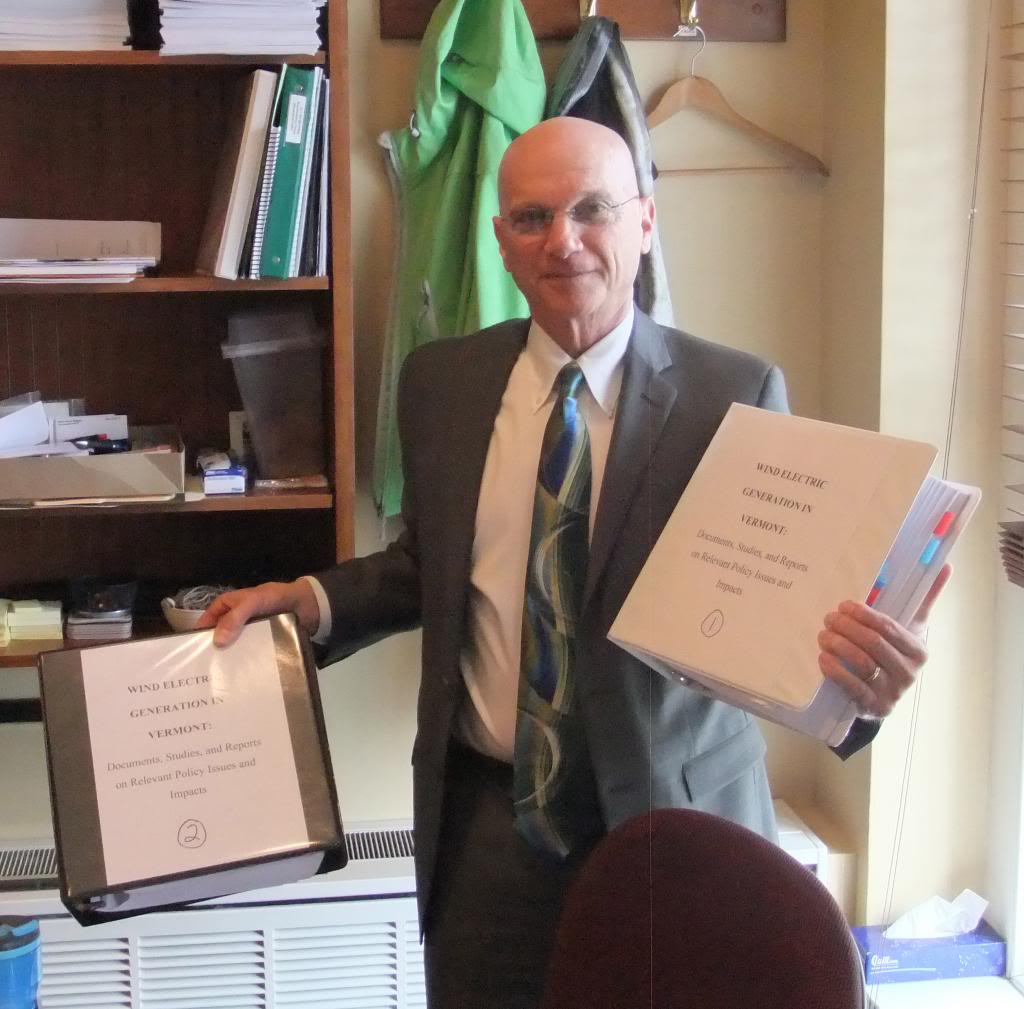
Notwithstanding efforts by certain determined Phil-o-philiacs, the extant signs and portents indicate that Progressive Dean Corren will win the Democratic nomination for Lieutenant Governor, and will appear on the November ballot as a Prog/Dem. A fashionable outfit these days, no?

To recap: Corren had actively sought support from the Democratic State Committee and campaigned for write-in votes in yesterday’s primary. Counterpunching were some supporters of incumbent Republican Phil Scott; they urged Democratic write-in votes for Scott.

No official count will come until Tuesday, but everything I’m hearing points to a fairly easy Corren win. There are counts from a few scattered communities, all with lopsided Corren totals. There’s the feeling among top Democrats not named John Campbell or Dick Mazza, that Corren’s won the thing. And there’s this from a Corren banner ad on Green Mountain Daily:

There were thousands of write-in votes so we won’t know the official outcome for a few days, but it looks good.

Which is about as close as a candidate can come to shouting “Whoopee!” before the count is official.

Assuming all this holds true, and I’m bettin’ it does, the next step will be securing an endorsement from the Democratic State Committee. And that also looks to be in the bag. He got a very positive reception at the DSC’s last meeting, but there was no move to endorse before the primary. If Corren does indeed win the vote, the state committee is almost certain to go along. Personally, I’d strip out the conditional: he will get the state committee endorsement.

He may not get a lot of tangible support beyond that, however. Because Corren qualified for public financing, he can’t accept additional donations — and that seems to include participation in the statewide Coordinated Campaign. But Corren has the means to run a competitive campaign on his own. And the most important thing, by far, is securing the Democratic line on the November ballot. You can put it on the board: he’s done it.

The strange case of the missing memoir

May 29, 2012: a night that will live in blandness.

Then-WCAX anchor Kristin Carlson sits down with former Governor Jim Douglas for a friendly  interview about the ex-Guv’s autobiography, which was said to be on its way to the printer. Release date: fall 2012. And, as Carlson said in her intro,

During his four terms as Governor, Jim Douglas was seen as a leader who carefully guarded what he said publicly. But now, he’s opening up about his time as Governor and his nearly four decades in elective office.

“Opening up,” heh? This oughta be good.

What follows, of course, is anything BUT good. In fact, it was a textbook display of that signature Jim Douglas combination of blandness and insufferability.

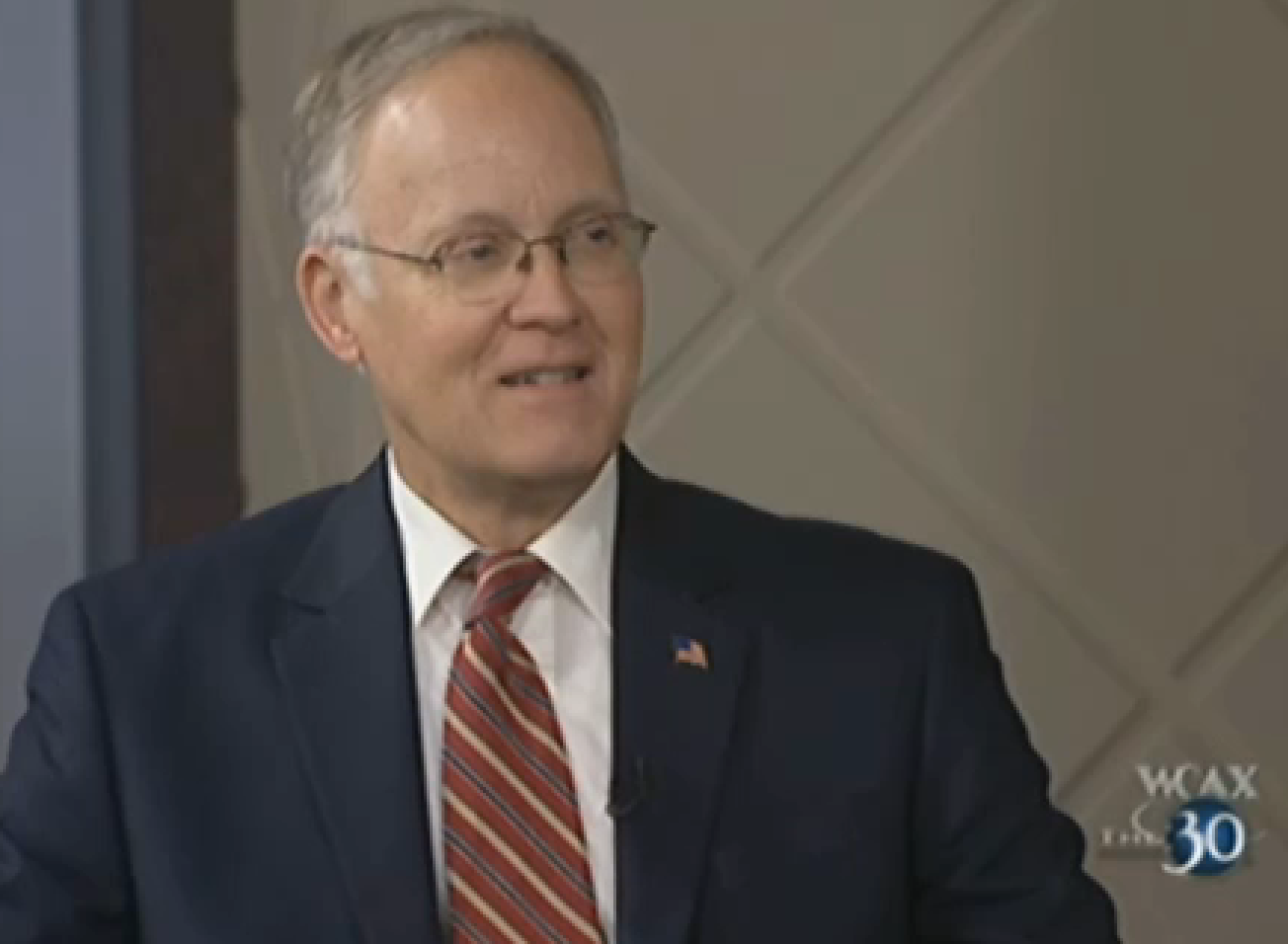
The classic dead-eyed Jim Douglas "smile"

The classic dead-eyed Jim Douglas “smile”

The ex-Guv hints that “there will definitely be some surprises.” And then absolutely refuses to even hint at a single solitary surprise. Sample colloquy:

Douglas: “… the stories I haven’t had a chance to tell.”

Carlson: “Such as?”

Douglas: “Well, you’ll have to wait, Kristin. but I’ll, I’ll have some stories.”

When pressed, Douglas offered a vague list of subjects, “even the press.” He hinted that his book would chronicle the failings of the Vermont media.

What failings?

“Well, I think you’ll have to wait and see what I write.”

Carlson made one more try, asking about one of the book’s alleged themes: “How a Republican can win in Vermont.” Any hints?

“Well, I’ll get into more detail, obviously, in my memoirs…”

Well, thank you, Governor Douglas, for saying absolutely nothing about the topic of this interview. And thank you for wasting our viewers’ time.

Carlson was too much of a pro to vent her annoyance. But Christ on a cracker, that was a thoroughly painful six minutes. The word that came to mind unbidden was “jackhole.” Jim Douglas deigned to grace Channel 3’s airwaves with his presence, and damn it, his presence is all they’re gonna get.

This trip down Memory Lane was prompted by an inquiry from fellow Green Mountain Daily stalwart “BP,” who emailed the group asking whatever became of the Douglas memoir.

The answer? Nothing, apparently. There’s no hint of any publicity after that brief May 2012 outburst. There’s no hint of a Douglas autobiography appearing anytime since, nor any inklings of a pending publication.

There was a book published in 2011, before the WCAX interview, entitled “The Douglas Years: Dedicated to the People of Vermont.” It’s currently ranked #2,523,904 on Amazon.com’s sales chart. But I seriously doubt this is the purported memoir. For one thing, there’s the date discrepancy.

But mainly, “The Douglas Years” is mighty thin gruel, even by Douglas’ standards. It’s a little over 200 pages long. More than half of that is taken up with photographs and transcriptions of Douglas speeches. As for the content, it’s a painfully dry (even by Douglas’ standards) recitation of issues that faced Vermont during his Administration and how they were dealt with. It reads as though it was written by committee.

(No, I haven’t bought the book; I’ve just thumbed through it using Amazon’s “Look Inside” feature. The Table of Contents alone nearly put me into a coma.)

So I have to conclude that the Great Jim Douglas Autobiography is, after more than two years, missing in action. Did Douglas balk, like a spooked showhorse, when he came face-to-face with putting those closely-guarded stories in print? Did his publisher take one look at the manuscript and judge it unreadably stiff and boring?

I’ve put out a few inquiries via email and to my tens of Twitter followers; so far, no responses. I’ll update if I hear anything.